• Get involved.
    We want your input!
    Apply for Membership and join the conversations about everything related to broadcasting.

    After we receive your registration, a moderator will review it. After your registration is approved, you will be permitted to post.
    If you use a disposable or false email address, your registration will be rejected.

    After your membership is approved, please take a minute to tell us a little bit about yourself.
    https://www.radiodiscussions.com/forums/introduce-yourself.1088/

    Thanks in advance and have fun!
    RadioDiscussions Administrators

Worst TV stations ever

I wonder if BG was originally in the Nashville market and WBKO ended up joining ABC in the late 1960s as Nashville and Louisville had weak ABC affiliates at the time.

Bowling Green was indeed in the Nashville market at one time. It doesn't appear as its own market until the 1978 Broadcasting Yearbook, and even then, in several years it was comprised of non-contiguous counties. As of 2018 it was a small cluster of six counties to the north and east of Bowling Green, mostly cannibalized out of the Nashville market.
 
Also at the time, many of the rural homes did not have cable and there were not many translators in SE Kentucky

In Eastern Kentucky, then as now, getting OTA TV is a matter of catch-as-catch-can. There may have been locations where WKYH was the only commercial station available. Reception can depend on what side of the mountain you are on.

Oddly enough, there were several translators of WLOS from Asheville NC in SE Kentucky. Obviously such a station would provide absolutely no local news or public affairs content to that area.
 
In Eastern Kentucky, then as now, getting OTA TV is a matter of catch-as-catch-can. There may have been locations where WKYH was the only commercial station available. Reception can depend on what side of the mountain you are on.

Oddly enough, there were several translators of WLOS from Asheville NC in SE Kentucky. Obviously such a station would provide absolutely no local news or public affairs content to that area.

WLOS was likely popular in SE Kentucky with translator and CATV owners as it was likely the easiest primary ABC affiliate to be picked up as Lexington, Knoxville, and the Tri-Cities all had ABC on UHF in the 1970s and UHF signals didn't travel as far as VHF signals
 
WLOS was likely popular in SE Kentucky with translator and CATV owners as it was likely the easiest primary ABC affiliate to be picked up as Lexington, Knoxville, and the Tri-Cities all had ABC on UHF in the 1970s and UHF signals didn't travel as far as VHF signals
I think you've got something there. WHTN Huntington WV (Channel 13, now WOWK and CBS) could have gotten ABC down as far as Pikeville, possibly even Jenkins and Hindman (the picture probably wouldn't be much at that point), but beyond that, WLOS was often the best bet. Add to that, reception (at least enough to feed a translator or cable head-end if it were perched on a high mountain) was possible due to WLOS's transmitter on Mount Pisgah, which was able to get all the way down to Newberry and Fairfield counties in SC. I've picked up WLOS, back in the analog day, with a single rabbit ear in both Newberry County (rest stop on I-26) and at Pine Mountain Resort Park near Pineville in Bell County. Their coverage area was huge.
 
With the help of translators, WLOS could get into six states (North Carolina, South Carolina, Tennessee, Kentucky, Virginia, and Georgia) and was probably the ABC affiliate of choice in Knoxville before WATE (Ch. 6) switched from NBC to ABC. WLOS was carried on cable in Athens, GA, but even without cable it came in better than WXIA, Atlanta's ABC affiliate at the time. And Newberry County got the Greenville-Spartanburg-Asheville edition of TV Guide, while the next county south, Lexington, got the South Carolina edition, which included all the other markets in the Palmetto State but not the Upstate stations.
 
Frankly, Nashville still has a weak ABC affiliate. The 1973 channel swap of Chs. 2 and 8, which put ABC on Ch. 2 and PBS on Ch. 8 really didn't achieve its objective, since a lot of people never adjusted their antennas to bring in ABC on the new channel. But Bowling Green had an ABC affiliate by this time because Ch. 13 had picked up ABC while the Alphabet Network was still on Ch. 8 in Nashville.

Sort of off-topic but what's unique about Nashville is that NBC affiliate WSMV does best in the rural parts of the market while CBS affiliate WTVF is stronger in Nashville and the suburbs. In most markets NBC does better in and around the city while CBS is stronger in the countryside. Some of this is attributed to Ch. 4's longtime association with country music, going back to WSM radio, but if you were to watch WTVF's newscasts you'd soon understand why Ch. 5 has a more urban appeal; folksiness is largely absent from their newscasts.
 
With the help of translators, WLOS could get into six states (North Carolina, South Carolina, Tennessee, Kentucky, Virginia, and Georgia) and was probably the ABC affiliate of choice in Knoxville before WATE (Ch. 6) switched from NBC to ABC. WLOS was carried on cable in Athens, GA, but even without cable it came in better than WXIA, Atlanta's ABC affiliate at the time. And Newberry County got the Greenville-Spartanburg-Asheville edition of TV Guide, while the next county south, Lexington, got the South Carolina edition, which included all the other markets in the Palmetto State but not the Upstate stations.

If I had to guess, WTVK was probably fairly popular in Knoxville and Knox County, but throughout the rest of eastern Tennessee, WLOS likely had more viewership, possibly due to that wicked knife-edge propagation enabled by the Smoky Mountains. The 1977 Television Factbook Services Volume shows WLOS carried on cable as far north as London KY, and supposedly the signal was picked OTA, not via a translator. And until WKPT came on the air, WLOS was the default affiliate for the Tri-Cities market. An Asheville-Bristol-Johnson City market would have made as much sense as GSA did, but things didn't rattle out that way.

There was a very sharp cleavage between the two TV Guide editions you note. The GSA edition carried no Columbia listings, while the SC edition had nothing from the Upstate. The older Carolina-Tennessee edition, which also got as far south as Newberry County, had a huge offering of listings, Knoxville, Tri-Cities, GSA, and Charlotte. They split that edition in the early 1980s into Bristol-Kingsport-Johnson City, Greenville-Spartanburg-Asheville, and rolled Chattanooga into a new Knoxville-Chattanooga edition.
 
I wonder if BG was originally in the Nashville market and WBKO ended up joining ABC in the late 1960s as Nashville and Louisville had weak ABC affiliates at the time.
Yes, Bowling Green was originally in the Nashville market. WLTV-TV (now WBKO-TV) secured ABC affiliation in early 1967 after being an independent since its sign on in 1962. Nashville's ABC affiliate, WSIX-TV at the time, put a weaker signal into Bowling Green than WSM-TV (NBC and now WSMV-TV) and WLAC-TV (CBS and now WTVF-TV), so ABC was the logical choice.
 
I remember watching WKYH-TV Channel 57 from Hazard, Kentucky when I was a kid visiting my grandmother in Eastern Kentucky during the 1970's. I remember that WKYH had a 6:00 PM newscast weeknights but can't remember if they had a 11:00 PM newscast weeknights. The station did not have any local newscasts during the weekends. WKYH news was mostly the news anchor reading a sheet of paper and showed very few news films. They even had the local obituary announcements during the newscast. WSAZ-TV from Huntington, WV had better local newscasts than WKYH-TV did. I remember that on Saturday nights, WKYH had a hour long local tv show at 7:00 PM called Jamboree that had bluegrass, country, and gospel music. Jamboree had local singers on that show that couldn't sing very well.

Back during the 1970's, my grandmother lived in Floyd County near the Floyd-Knott County line. Her cable tv service was from Hindman in Knott County. I remember that during the 1970's, the cable tv service from Hindman carried WSAZ and WCHS but did not carry WHTN later WOWK from the Charleston-Huntington market. It also carried WJHL and WKPT but did not carry WCYB from the TN-VA Tri Cities market. It wasn't until the mid 1970's that it carried a independent tv station, WTCG-TV 17 from Atlanta, Georgia. It did not carry other independent tv stations such as WXIX from Cincinnati back then. I remember that WTCG was the only independent tv station that the cable tv service from Hindman carried back then.

Then during the early 1990's, Knott County switched from the Charleston-Huntington DMA to the Lexington DMA. Today, the cable tv system in Knott County now only carry tv channels from Lexington while the cable tv systems in Floyd County still carry tv channels from Charleston-Huntington.
 
I remember watching WKYH-TV Channel 57 from Hazard, Kentucky when I was a kid visiting my grandmother in Eastern Kentucky during the 1970's. I remember that WKYH had a 6:00 PM newscast weeknights but can't remember if they had a 11:00 PM newscast weeknights. The station did not have any local newscasts during the weekends. WKYH news was mostly the news anchor reading a sheet of paper and showed very few news films. They even had the local obituary announcements during the newscast. WSAZ-TV from Huntington, WV had better local newscasts than WKYH-TV did. I remember that on Saturday nights, WKYH had a hour long local tv show at 7:00 PM called Jamboree that had bluegrass, country, and gospel music. Jamboree had local singers on that show that couldn't sing very well.

Back during the 1970's, my grandmother lived in Floyd County near the Floyd-Knott County line. Her cable tv service was from Hindman in Knott County. I remember that during the 1970's, the cable tv service from Hindman carried WSAZ and WCHS but did not carry WHTN later WOWK from the Charleston-Huntington market. It also carried WJHL and WKPT but did not carry WCYB from the TN-VA Tri Cities market. It wasn't until the mid 1970's that it carried a independent tv station, WTCG-TV 17 from Atlanta, Georgia. It did not carry other independent tv stations such as WXIX from Cincinnati back then. I remember that WTCG was the only independent tv station that the cable tv service from Hindman carried back then.

Then during the early 1990's, Knott County switched from the Charleston-Huntington DMA to the Lexington DMA. Today, the cable tv system in Knott County now only carry tv channels from Lexington while the cable tv systems in Floyd County still carry tv channels from Charleston-Huntington.
There are a few WKYH videos on youtube from Labor Day 1985 from cable
 
I remember watching WKYH-TV Channel 57 from Hazard, Kentucky when I was a kid visiting my grandmother in Eastern Kentucky during the 1970's. I remember that WKYH had a 6:00 PM newscast weeknights but can't remember if they had a 11:00 PM newscast weeknights. The station did not have any local newscasts during the weekends. WKYH news was mostly the news anchor reading a sheet of paper and showed very few news films. They even had the local obituary announcements during the newscast. WSAZ-TV from Huntington, WV had better local newscasts than WKYH-TV did. I remember that on Saturday nights, WKYH had a hour long local tv show at 7:00 PM called Jamboree that had bluegrass, country, and gospel music. Jamboree had local singers on that show that couldn't sing very well.

Back during the 1970's, my grandmother lived in Floyd County near the Floyd-Knott County line. Her cable tv service was from Hindman in Knott County. I remember that during the 1970's, the cable tv service from Hindman carried WSAZ and WCHS but did not carry WHTN later WOWK from the Charleston-Huntington market. It also carried WJHL and WKPT but did not carry WCYB from the TN-VA Tri Cities market. It wasn't until the mid 1970's that it carried a independent tv station, WTCG-TV 17 from Atlanta, Georgia. It did not carry other independent tv stations such as WXIX from Cincinnati back then. I remember that WTCG was the only independent tv station that the cable tv service from Hindman carried back then.

Then during the early 1990's, Knott County switched from the Charleston-Huntington DMA to the Lexington DMA. Today, the cable tv system in Knott County now only carry tv channels from Lexington while the cable tv systems in Floyd County still carry tv channels from Charleston-Huntington.
I never saw WKYH live when they were an NBC affiliate owned by the Gormans. I suppose they did about the best they could with less-than-ideal logistics , limited financial resources, and a dodgy signal over difficult terrain. Having to pick NBC programming off WCYB or WLEX didn't help matters any. When they were bought by Garvice Kincaid's company, and had the resources of WKYT to draw upon, they took a quantum leap in quality, and their news operation now (having Gray's resources to draw upon) compares very favorably to any small market in the country. I have to imagine that obituaries were common in very small markets comprised of small towns, IIRC WOAY did the same thing (may be having a false memory there).

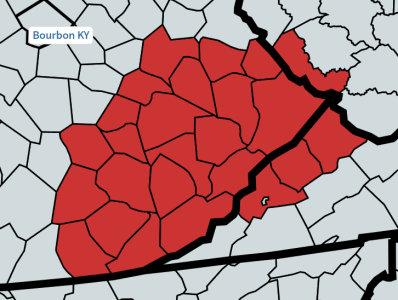
As I've noted elsewhere, beginning in the late 1970s, the Lexington market was able to peel away several counties from the Charleston-Huntington, Tri-Cities, and Knoxville markets, though at this point, to snag any additional counties would probably not be possible. Leslie County has ping-ponged back and forth between Lexington and Tri-Cities, and is now this island of the Tri-Cities market surrounded by other markets (and, to add insult to injury, can't get WYMT via satellite for that reason). Letcher and Harlan counties are in a similar predicament. The C-H market has been nibbled around the edges on all sides, most recently losing Athens County OH to Columbus (that had to hurt!). I would say that every county in Eastern Kentucky would, in a perfect world (for them), like to get Lexington stations along with WYMT (except for the area north of I-64 for which WYMT is of no interest), and retain only WSAZ as a legacy station in the areas that have historically relied upon it, but that will never happen. Charleston might as well be in a foreign country where Eastern Kentucky viewers are concerned, but from Vanceburg down to Pikeville, Charleston provides the default ABC and Fox affiliates, as well as duplicating WYMT's CBS programming on WOWK in the southern part of Kentucky's C-H market area.
 
Thank you @Mr Tony for the WKYH videos on Youtube from Labor Day 1985 on cable.

The videos brings back memories. I remember that on the cable tv system, the pictures on WKYH were fuzzy back then. I recall that the station id and call letters for WCYB from Bristol, Virginia were seen on WKYH.
 
I remember that years ago Pike County, Ohio used to be in the Charleston Huntington market and it is now in the Columbus, Ohio market. The only other county in Southern Ohio that the Columbus market could take away from the Charleston Huntington market is Vinton County, Ohio.

I believe that had the FCC years ago allocated VHF channels in Eastern Kentucky, I believe Eastern Kentucky would have their own tv market. If it had one VHF stations say in Hazard, Paintsville, Prestonsburg, Pikeville, and Whitesburg, it would have covered a wide area of Eastern Kentucky.
 
Thank you @Mr Tony for the WKYH videos on Youtube from Labor Day 1985 on cable.

The videos brings back memories. I remember that on the cable tv system, the pictures on WKYH were fuzzy back then. I recall that the station id and call letters for WCYB from Bristol, Virginia were seen on WKYH.
Sometimes, when stations are rebroadcasting programs from another station, the ID for the parent station slips through. This used to happen when WSVA (now WHSV) Harrisonburg VA picked up ABC from WMAL. (Ironically enough, WSVA tried to juggle all networks, and now, as WHSV, a combination of subchannels and LPTVs allows them to do the same thing, this time with five networks, with no juggling.)
 
I remember that years ago Pike County, Ohio used to be in the Charleston Huntington market and it is now in the Columbus, Ohio market. The only other county in Southern Ohio that the Columbus market could take away from the Charleston Huntington market is Vinton County, Ohio.

I believe that had the FCC years ago allocated VHF channels in Eastern Kentucky, I believe Eastern Kentucky would have their own tv market. If it had one VHF stations say in Hazard, Paintsville, Prestonsburg, Pikeville, and Whitesburg, it would have covered a wide area of Eastern Kentucky.
Hypothetically, Columbus could snag Jackson County and even Scioto County, but neither is likely. Jackson County can pick up both Columbus and C-H OTA, whereas with Scioto County, to pick up Columbus OTA would be a real hat trick, and would require idealized height and location.

I have to doubt there would have been enough VHF channels to give each of those towns its own. And you still have the Charleston-Huntington market very close by (but, to be fair, the same could be said of Beckley-Bluefield-Oak Hill). A market such as you describe would have begun probably at Johnson and Martin counties in Kentucky, then down to Harlan and possibly Bell counties, and could have possibly even included Buchanan County VA and Mingo County WV. IOW, it would have had roughly the same counties as those which rely on WYMT as their "local" station. In the west, it would probably have broken midway between Hazard and Lexington.
 
Last edited:
I'd just add that even though Scioto County is in the C-H DMA, Columbus stations have been viewed there on cable uninterruptedly since the 1960s, and one year, WBNS even achieved 50%+ viewership per Television Factbook. At present WSYX and WBNS are carried there. Scioto County's economic and cultural links to the Charleston-Huntington area are tenuous at best (though WQCW is licensed to Portsmouth), and if OTA conditions were better, they could very well fall into the Columbus market.

At one time, Columbus and some Cincinnati stations penetrated all the way down to Ohio's southern border via cable (curiously, I don't think WKRC was ever carried), but today, as far as I'm aware, Ironton in Lawrence County gets no in-state Ohio television whatsoever (unless you count WQCW, which is basically just another set of subchannels for WSAZ).
 
They could really use a low-power translator of either WOSU or WOUB in Ironton or Portsmouth. At one time you had WPBO, but it was shut down and its spectrum sold at auction. The case was made that you had duplication from WPBY and WKAS, but public TV often has a mandate to cover the entire state (or portions thereof, in the case of far-flung corners of the state served).
 
There should be quite a bit on WLBT 3 in Jackson here in Radio-Info Classic TV as we have had some extensive discussion on the station probably over a year ago. A search should turn up a couple of threads on the subject.

The worst I have seen is WJAN-TV 17 in Canton, Ohio (1967-77) which also has been written up quite a bit here on the boards..Only 5 days a week broadcasting at the start.No color till around 1969-70..Very old, obscure movies and when they did get Syndicated product it was considered 3rd-4th rate programming.
WJAN was beyond horrible. Worked there as a fill in anchor. Bad equipment, not talent staff.


Back
Top Bottom