• Get involved.
    We want your input!
    Apply for Membership and join the conversations about everything related to broadcasting.

    After we receive your registration, a moderator will review it. After your registration is approved, you will be permitted to post.
    If you use a disposable or false email address, your registration will be rejected.

    After your membership is approved, please take a minute to tell us a little bit about yourself.
    https://www.radiodiscussions.com/forums/introduce-yourself.1088/

    Thanks in advance and have fun!
    RadioDiscussions Administrators

MMJ Reporters in E. WA Making Less Than Working Fast Food

ANyone who applies for this ia gonna be green, fresh, just out of broadcast school or college or whatever and will stay 6 months to a year.

Anyone whos been in the business mroe then a year who takes this job is undervaluing themselves.

Over the years, ive applied for a few jobs and when i found out what they were offering or i applied in a quick rush to be at the top of the pile and then did the math.. it wasnt worth it and i backed out, professionally...... came up with some good way to bow out
 

Umm check the DMA ranking and it partially explains why the HR and GM of KNDO gave the wage the way they did it's market rank in Spokane is 67 according to this recent study.
 

Umm check the DMA ranking and it partially explains why the HR and GM of KNDO gave the wage the way they did it's market rank in Spokane is 67 according to this recent study.

KNDO isn't in Spokane. It's in Yakima. The Tri-Cities market (Yakima, Pasco, Richland) is market #116.
 
Sure, but a credible, competent MMJ for slightly more than someone working the drive through at Burger King?
As I said; you get what you pay for.

Sometimes its useful to take money out of the equation, and see who is applying because this is what they want to do, as opposed to someone looking for a salary with benefits. It's been my experience that salary isn't always a measure of competence.
 
When I began my TV news career in 1981, Reno was widely considered a starter market, with a population slightly below that of the Tri-Cities Washington market today.

Minimum wage (both federal and state) was $3.35 an hour. I started at $7.95---more than double minimum wage at the time---and (incredibly) 70 cents an hour more than the current federal minimum wage 43 years later.

It has gotten way worse in smaller markets, and for that matter, major market TV isn't paying what it used to.
 
When I began my TV news career in 1981, Reno was widely considered a starter market, with a population slightly below that of the Tri-Cities Washington market today.

Minimum wage (both federal and state) was $3.35 an hour. I started at $7.95---more than double minimum wage at the time---and (incredibly) 70 cents an hour more than the current federal minimum wage 43 years later.

It has gotten way worse in smaller markets, and for that matter, major market TV isn't paying what it used to.
The low pay levels of small-market television - and radio, of course - were amply communicated to us students at the University of Missouri School of Journalism. In the 1970s. That, plus unpaid internships - which the rich kids from the East Coast could do but in-state students of modest means such as me couldn't afford to do. Of course, the thinking was, pay your dues in the small markets and then work your way up. But the rate at which that set of tactics succeeded wasn't very encouraging. It's not better now. As you point out, even major markets are retrenching on pay.

There's also a generational shift going on. This has been especially notable at prestige operations, such as the Bay Area's KTVU. KTVU had a stellar team of reporters, most of whom have now aged into retirement. Some of their replacements are good, but others just don't compare.

Journalism never was particularly lucrative except for a few people. (There did seem to be better opportunities in print once one managed to come onboard a regional newspaper. And sales.) The compensation supposedly came through fulfilling a call to perform public service - and, in TV, through some form of celebrity - though unlike other forms of public service, someone else was making money off journalists' labor.

I've heard that there's now something of a labor shortage in TV news, even causing occasional outright cancellation of newscasts. I'm not surprised.

Praise the Lord that I discovered IT and then cybersecurity where, for now at least, talent is valued and usually compensated accordingly, even if it is a cost center and not a revenue generator. Providing insurance is lucrative, regardless of form.

Apologies for sounding jaded and not even managing to say something even offhandedly silly this time.

 
Anyone who gets in broadcasting for the money will never be happy.

I remember driving on the Garden State Parkway and realizing that the toll taker was making more money than me. But I would never want to do his job regardless of how much it paid. And I bet he'd love to switch places with me.
 
The low pay levels of small-market television - and radio, of course - were amply communicated to us students at the University of Missouri School of Journalism. In the 1970s. That, plus unpaid internships - which the rich kids from the East Coast could do but in-state students of modest means such as me couldn't afford to do. Of course, the thinking was, pay your dues in the small markets and then work your way up. But the rate at which that set of tactics succeeded wasn't very encouraging. It's not better now. As you point out, even major markets are retrenching on pay.
A lot of the kids who come out of J-School have the camera presence of a frightened cat. They might be able to get a first job in some place like Paducah or Yakima, but will wash out of the business if they don't improve a lot in that first year.
 
A lot of the kids who come out of J-School have the camera presence of a frightened cat. They might be able to get a first job in some place like Paducah or Yakima, but will wash out of the business if they don't improve a lot in that first year.

Which is pretty much how it's always been.

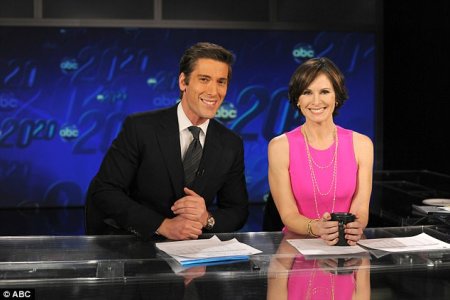
When I left Reno for Las Vegas in 1984, they hired a kid straight out of J-School to replace me:

3FD0488500000578-4462932-Professional_life_Vargas_admitted_previously_that_she_battled_al-a-1_...jpg

Elizabeth Vargas (seen here co-anchoring 20/20 with David Muir on ABC a few years back).
 
Last edited:
Sometimes its useful to take money out of the equation, and see who is applying because this is what they want to do, as opposed to someone looking for a salary with benefits. It's been my experience that salary isn't always a measure of competence.
It's easy for someone who is a broadcast veteran and made a decent income to make that assertion. Having ties to Eastern Washington State, I can tell you that it isn't cheap to live there anymore. Sure, that area has a much lower cost of living than King County on the West side of the State, but I submit it would be very difficult to live on a full-time minimum wage salary, let alone having to pay for your clothing and transportation. This whole idea of using what amounts to paid interns as MMJ's, is an idea that does nothing more than degrade the quality of the product along with crushing the ambition of potentially valuable future talent. It's hard to be enthused about your job when you're forced to live in your car because someone waiting tables at Denny's is making more than you.
 
It's easy for someone who is a broadcast veteran and made a decent income to make that assertion. Having ties to Eastern Washington State, I can tell you that it isn't cheap to live there anymore. Sure, that area has a much lower cost of living than King County on the West side of the State, but I submit it would be very difficult to live on a full-time minimum wage salary, let alone having to pay for your clothing and transportation. This whole idea of using what amounts to paid interns as MMJ's, is an idea that does nothing more than degrade the quality of the product along with crushing the ambition of potentially valuable future talent. It's hard to be enthused about your job when you're forced to live in your car because someone waiting tables at Denny's is making more than you.

Exactly. In my example above of my starting gig in TV news in Reno, my salary is $53,838 adjusted for inflation---in a market that at that time had fewer people than Tri-Cities does now. If they pay the top of the range indicated in the ad, that person's gonna get $35,360.


And I'll bet you that nobody in their first gig at a station in Reno now is making $53,838.
 
It's hard to be enthused about your job when you're forced to live in your car because someone waiting tables at Denny's is making more than you.

That's a choice every person has to make. This is a small, locally owned TV station, not Tegna or some big corporation. You want to work for a mom & pop? This is what you get. It's not representative of the jobs available. You may have to travel to get better pay.

Keep in mind that Washington has one of the highest minimum wage laws in the country. Minimum wage in Alabama, Georgia, Idaho, Indiana, Iowa, Kansas, Kentucky, Louisiana, Mississippi, Oklahoma, Tennessee, Utah, and more is $7.25.
 
That's a choice every person has to make. This is a small, locally owned TV station, not Tegna or some big corporation. You want to work for a mom & pop? This is what you get. It's not representative of the jobs available. You may have to travel to get better pay.
Nope, those stations are all owned by Sinclair.
Keep in mind that Washington has one of the highest minimum wage laws in the country. Minimum wage in Alabama, Georgia, Idaho, Indiana, Iowa, Kansas, Kentucky, Louisiana, Mississippi, Oklahoma, Tennessee, Utah, and more is $7.25.
Sure, but there are parts of all those States, except maybe Utah, where the average cost of living is a quarter of Washington State. I started in the business making minimum wage, but was still living at home and 16 years old, not on the air. You didn't get to actually go on the air until you were knowledgeable, tested, and ready. Even then, you received a living wage by that time.
Now, if you can set up a prosumer camera and stand in front of it with no adequate periods of coaching, that's good enough. Just another example of degrading the quality of journalism and reporting to protect the number of sellable news blocks. The problem is; just like radio, consumers eventually won't watch lackluster content, speeding the march to getting their news exclusively from social media and A/V sources from TikTok and YouTube.
 
Status
This thread has been closed due to inactivity. You can create a new thread to discuss this topic.


Back
Top Bottom