• Get involved.
    We want your input!
    Apply for Membership and join the conversations about everything related to broadcasting.

    After we receive your registration, a moderator will review it. After your registration is approved, you will be permitted to post.
    If you use a disposable or false email address, your registration will be rejected.

    After your membership is approved, please take a minute to tell us a little bit about yourself.
    https://www.radiodiscussions.com/forums/introduce-yourself.1088/

    Thanks in advance and have fun!
    RadioDiscussions Administrators

Drake Vs. Sklar

In the first issue of R&R in 1973, KDAY's Chief Engineer, Andy Laird wrote a column that probably explains a lot o what they were doing. It's on page 18:

Totally, totally off-topic, but that issue was interesting to me, as someone who was a teenager in the St. Louis metropolitan area then, for its reports about:
1) The incipient start of KWK's time off the air, which stretched to nearly five years before Doubleday got it back on the air.
2) The fire at progressive rocker KADI and KSLQ's help in getting the station back on the air - but that time off the air was the impetus that got me to switch to KSHE. KSHE has become legendary. KADI is long gone.

I went back to look for any Post-Dispatch articles from that time - I had forgotten that we were in the middle of a newspaper strike then! Amazingly, some of the "strike newspapers" from that year have been preserved.
 
Hey but like we are still uniquely so SoCal; Tha-Four-ooh-Five, theee OC! I do miss the old names too but mostly miss being younger.
Yes. Some specific examples: Roads with proper names attached to them tend to be called "the" more often, not only in L.A. , but in other big cities also.
I was listening to traffic reporter Abby Ryan on WBBM Chicago tonight, and she is referring to roads with proper names as "the Eisenhower" and "the Kennedy" ( These are expressways leading out of downtown Chicago to the northern suburbs and western suburbs). But she is referring to interstates simply by number and not by "the".

Listening to KNX reporter Sioux-Z Jessup tonight, and she is referring to freeways by number, preceded by "the". i.e., as you said, Robert, "the 405", etc. I lived in So Cal for 60 years, drove the freeways almost every day, and that's how we referred to them.

We did not put the "Interstate" prefix before the freeway name and then also call it "the". For example, we never said "the Interstate 405", "the Interstate 10", and so forth. And L.A. traffic reporters tend not to do that.

I lived in Orange County for almost 40 years. My impression is that "theeee O.C." was a term used by people who lived outside Orange County, such as L.A. County, Riverside Co., San Bernardino Co., etc. Those of us who actually lived there simply called it "Orange County." Not sure when traffic reporters working in radio started calling it "theee O.C." It might have been back in the early aughts with the advent of the tv show by the same name. JMO -- Daryl

To add: San Bernardino County, Riverside County, and eastern parts of Los Angeles Co. are often referred to as "the Inland Empire" or "the I.E.", which may have provided a context for "theee O.C.", but without the long vowel "e" sound.
 
Last edited:
To add: San Bernardino County, Riverside County, and eastern parts of Los Angeles Co. are often referred to as "the Inland Empire" or "the I.E.", which may have provided a context for "theee O.C.", but without the long vowel "e" sound.
Only the areas of San Bernardino and Riverside counties that are "surrounded by mountains" from Pomona to Redlands to Hemet to Corona to Riverside to Corona are the Inland Empire. Some consider it to also include the adjacent mountain communities or foothill communities like Calimesa, Hemet, and Arrowhead.

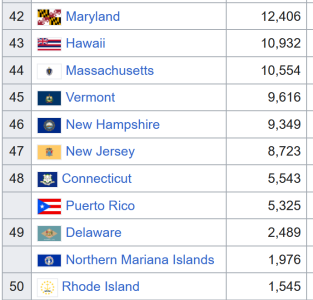
San Bernardino Country has a second "major market" which is the High Desert from Victorville to Barstow, while Riverside County has the Palm Springs Metro and a "ton of desert" all the way to Blythe. San Bernardino Country at over 20,000 square miles is the largest one in the US, bigger than the smallest 9 U.S. counties.

1709279083266.png
 
Yes. Some specific examples: Roads with proper names attached to them tend to be called "the" more often, not only in L.A. , but in other big cities also.
I was listening to traffic reporter Abby Ryan on WBBM Chicago tonight, and she is referring to roads with proper names as "the Eisenhower" and "the Kennedy" ( These are expressways leading out of downtown Chicago to the northern suburbs and western suburbs). But she is referring to interstates simply by number and not by "the".

Listening to KNX reporter Sioux-Z Jessup tonight, and she is referring to freeways by number, preceded by "the". i.e., as you said, Robert, "the 405", etc. I lived in So Cal for 60 years, drove the freeways almost every day, and that's how we referred to them.

We did not put the "Interstate" prefix before the freeway name and then also call it "the". For example, we never said "the Interstate 405", "the Interstate 10", and so forth. And L.A. traffic reporters tend not to do that.

I lived in Orange County for almost 40 years. My impression is that "theeee O.C." was a term used by people who lived outside Orange County, such as L.A. County, Riverside Co., San Bernardino Co., etc. Those of us who actually lived there simply called it "Orange County." Not sure when traffic reporters working in radio started calling it "theee O.C." It might have been back in the early aughts with the advent of the tv show by the same name. JMO -- Daryl

To add: San Bernardino County, Riverside County, and eastern parts of Los Angeles Co. are often referred to as "the Inland Empire" or "the I.E.", which may have provided a context for "theee O.C.", but without the long vowel "e" sound.
I had forgotten this completely ... The Orange Curtain! With Winston Churchill's Iron Curtain Speech as a reference, I think outsiders gave the Orange Curtain name as a joke due to its then heavy slant toward the Republican party. Being abrevaheads today we shortened it to The OC. It sounds kinda chic to still use, I guess. Re: Radio, L.A. folks did not just get up one day and decide to jettison the habit of using the old freeway names. Habits die hard, but they are easily relinquished with repetition. And nothing is more repetitious than radio. So I still give radio and T.V./newspaper too, the credit for the change.
 
And in the Bay Area and Sacramento, it's just the number and direction----"101 Northbound", "280 Southbound", etc.

BUT---San Francisco started out referring to freeways by names, too---the Bayshore, the Nimitz, the Embarcadero---they just chose to break the habit that the L.A. area has held onto.
Actually, some of those names are still very much in colloquial use in the Bay Area.

The grammar, as I understand it:
Interstate 80 is usually "Interstate 80" except within San Francisco proper.
101 is always "101" - except for the "Central Skyway" in San Francisco - sometimes. (It's hard to tell where 101 becomes 80.)
4, 24, 238 (basically a glorified complex ramp), 242, 280, 380, 680, 780, and 980 are always referred to by number. All are freeways but 4, 24, and 242 are not Interstates. There are moves afoot to tear down 980, which is just an extension of 24 into downtown Oakland.

South Bay freeways are always referred to by number.

Santa Clara county expressways, a separate system of 50 mph roads with only occasional stoplights, are always referred to by name. No one remembers the county highway numbers (the ones on the blue pentagon signs) anyway.

Freeways often referenced by name:
  • The Nimitz (880) through Oakland and San Leandro but not south of 238.
  • For historic reasons, it's not common to call the segment of 880 between the Bay Bridge and downtown Oakland the "Nimitz". That segment replaced the double-decker Cypress Freeway, which pancaked during the 1989 earthquake with fatal results.
  • The MacArthur Freeway (never just "MacArthur" since there's a MacArthur Boulevard in Oakland) on 580 in Oakland and San Leandro.
  • The Bayshore (80 & 580 - technically 80 eastbound and 580 westbound at the same time) between the MacArthur Maze and Albany.
No one refers to 580 from Castro Valley to Livermore as the "Arthur H. Breed Freeway", nor is Highway 24 in Oakland referred to as the "Rumford Freeway".

Highway 13, where it's a freeway in Oakland, can either be referred to as "Highway 13" or as the "Warren Freeway". (Earl, not Elizabeth)

The Embarcadero Freeway (which was 480) is a special case. The referendum to tear it down failed in 1986 but Mother Nature held her own referendum in 1989 during the World Series, rendering that double-decker unsafe, and that was that, Rose Pak notwithstanding.
 
Actually, some of those names are still very much in colloquial use in the Bay Area.

The grammar, as I understand it:
Interstate 80 is usually "Interstate 80" except within San Francisco proper.
101 is always "101" - except for the "Central Skyway" in San Francisco - sometimes. (It's hard to tell where 101 becomes 80.)
On the Peninsula, San Mateo County specifically, it's 101 that is alternately referred to as "The Bayshore [Freeway]". (Also see below.)
4, 24, 238 (basically a glorified complex ramp), 242, 280, 380, 680, 780, and 980 are always referred to by number. All are freeways but 4, 24, and 242 are not Interstates. There are moves afoot to tear down 980, which is just an extension of 24 into downtown Oakland.

South Bay freeways are always referred to by number.
See comment above.
Santa Clara county expressways, a separate system of 50 mph roads with only occasional stoplights, are always referred to by name. No one remembers the county highway numbers (the ones on the blue pentagon signs) anyway.

Freeways often referenced by name:
  • The Nimitz (880) through Oakland and San Leandro but not south of 238.
  • For historic reasons, it's not common to call the segment of 880 between the Bay Bridge and downtown Oakland the "Nimitz". That segment replaced the double-decker Cypress Freeway, which pancaked during the 1989 earthquake with fatal results.
  • The MacArthur Freeway (never just "MacArthur" since there's a MacArthur Boulevard in Oakland) on 580 in Oakland and San Leandro.
  • The Bayshore (80 & 580 - technically 80 eastbound and 580 westbound at the same time) between the MacArthur Maze and Albany.
I've usually heard I-80, in Alameda and Contra Costa Counties, alternately referred to as "The Eastshore (or East Shore) [Freeway]".

101 is synonymous with "The Bayshore".

Sorry if it looks like I'm writing code, but this requires a bit of boolean precision.
No one refers to 580 from Castro Valley to Livermore as the "Arthur H. Breed Freeway", nor is Highway 24 in Oakland referred to as the "Rumford Freeway".

Highway 13, where it's a freeway in Oakland, can either be referred to as "Highway 13" or as the "Warren Freeway". (Earl, not Elizabeth)

The Embarcadero Freeway (which was 480) is a special case. The referendum to tear it down failed in 1986 but Mother Nature held her own referendum in 1989 during the World Series, rendering that double-decker unsafe, and that was that, Rose Pak notwithstanding.
 
On the Peninsula, San Mateo County specifically, it's 101 that is alternately referred to as "The Bayshore [Freeway]". (Also see below.)
[...]
I've usually heard I-80, in Alameda and Contra Costa Counties, alternately referred to as "The Eastshore (or East Shore) [Freeway]".
Thank you; it didn't look right to me but the correct names escaped my grasp this morning.

Sorry if it looks like I'm writing code, but this requires a bit of boolean precision.
It needs a case (switch) statement!
 
For anyone still wondering how a thread on RD goes off-topic, this one's a perfect example.

  • Someone makes a passing reference as to where a set of radio towers for a station being discussed are/were, but has to take a shot at the L.A.-area habit of putting "the" before the highway number.
  • Someone (in this case and often, me) steps in to explain who does that and why.
  • Other folks find something worth commenting there and "Drake vs. Sklar" ends up "Bayshore vs. Eastshore".

And you pay not a penny more!
 
For anyone still wondering how a thread on RD goes off-topic, this one's a perfect example.

  • Someone makes a passing reference as to where a set of radio towers for a station being discussed are/were, but has to take a shot at the L.A.-area habit of putting "the" before the highway number.
  • Someone (in this case and often, me) steps in to explain who does that and why.
  • Other folks find something worth commenting there and "Drake vs. Sklar" ends up "Bayshore vs. Eastshore".

And you pay not a penny more!
I was hesitant even to bring it up, to be honest, but it's one of those California things. I'm also about to finish reading John King's Portal: San Francisco's Ferry Building and the Reinvention of American Cities. So the history of the Ferry Building, since I was in the vicinity of the Ferry Building every day for almost 20 years - and often had lunch and bought other food there - has been very much on my mind, and is intertwined with the history of the Embarcadero Freeway. I never witnessed that freeway in person, but the photos of it leave me horrified. American cities generally are very bad about turning their backs on waterfronts and river banks (St. Joseph, Missouri and its equally horrible Interstate 229, I'm looking at you); San Francisco did a spectacular job of fixing that and I got to enjoy it for a couple of decades.
 
For anyone still wondering how a thread on RD goes off-topic, this one's a perfect example.

  • Someone makes a passing reference as to where a set of radio towers for a station being discussed are/were, but has to take a shot at the L.A.-area habit of putting "the" before the highway number.
  • Someone (in this case and often, me) steps in to explain who does that and why.
  • Other folks find something worth commenting there and "Drake vs. Sklar" ends up "Bayshore vs. Eastshore".

And you pay not a penny more!
Sorry if I led the discussion off-track Michael. I was born in Hollywood and lived in L.A. until age 33. I don't mean to "take a shot" at the area, but only to point out how silly the broadcasted "the" highway numbers sound to everyone outside of that one metro.

I really wanted to point out two things:
1. KDAY 1580, in its heyday, had such a beautiful, hifi signal. So why can't we have that now? I think the lower modulation levels were the key, buy maybe EQ and lack of compression has a place.
2. KGFJ 1230 with 1000 watts and NO TOWER (100 W on Sundays) was the number 2 or 3 station in 1969. To me, they sounded like an R&B KHJ with the same Drake system of Jingles and DJ restrictions. They did seem to put pre-emphasis on the bass.

AM radio won't survive as a money making enterprise. We all know that. But shouldn't we expect at least some kind of non commercial success with tower-less 1000 watt stations as a prototype pattern for the near future?
 
Sorry if I led the discussion off-track Michael. I was born in Hollywood and lived in L.A. until age 33. I don't mean to "take a shot" at the area, but only to point out how silly the broadcasted "the" highway numbers sound to everyone outside of that one metro.

I really wanted to point out two things:
1. KDAY 1580, in its heyday, had such a beautiful, hifi signal. So why can't we have that now? I think the lower modulation levels were the key, buy maybe EQ and lack of compression has a place.
2. KGFJ 1230 with 1000 watts and NO TOWER (100 W on Sundays) was the number 2 or 3 station in 1969. To me, they sounded like an R&B KHJ with the same Drake system of Jingles and DJ restrictions. They did seem to put pre-emphasis on the bass.

AM radio won't survive as a money making enterprise. We all know that. But shouldn't we expect at least some kind of non commercial success with tower-less 1000 watt stations as a prototype pattern for the near future?
The best KGFJ jingle (which today can be found somewhere on You Tube) was: "KGFJ, The Sound of Success". And they really lived up to that jingle.
 
I don't know enough about L.A. area highways to know if they had tolled roads that far bacin 40s or whatever decade it is/was, but maybe people called them "freeways" because that let everyone know you didn't have to pay to use them. All I know is when moving to Ohio in 1970, I can remember a few people calling them "freeways" but gradually "interstate XX" was being used. I don't ever remember them being called freeways when I was growing up in Florida but right now it seems that any new road they build down there is a toll road. I think it's eventually going to get to the point that they put a toll booth at the end of everyone's driveway.
 
I don't know enough about L.A. area highways to know if they had tolled roads that far bacin 40s or whatever decade it is/was, but maybe people called them "freeways" because that let everyone know you didn't have to pay to use them.
I was told by the Metro Traffic folks that it was "Free" as in free of stoplights and intersections.
 
I don't know enough about L.A. area highways to know if they had tolled roads that far bacin 40s or whatever decade it is/was, but maybe people called them "freeways" because that let everyone know you didn't have to pay to use them. All I know is when moving to Ohio in 1970, I can remember a few people calling them "freeways" but gradually "interstate XX" was being used. I don't ever remember them being called freeways when I was growing up in Florida but right now it seems that any new road they build down there is a toll road. I think it's eventually going to get to the point that they put a toll booth at the end of everyone's driveway.

You and David are both right. Southern California did not have toll roads then, and it was free of cross-traffic…making “freeway” a seemingly obvious choice.
 
Here in Buckeye, we're on a Freeway of Love in a Pink Cadillac Gremlin.

Returning to topic: you could Drake out of the market and make it work just about anywhere else. Can't say the same about Sklar.. his success was a NYC thing.
 
I was told by the Metro Traffic folks that it was "Free" as in free of stoplights and intersections.
Metro nailed it. It relates to real estate easement. The term was coined in 1930's by an urban planner from New York, born during the American Civil War and died before the first known freeway in the U.S. was built. It has no intersections or private entrance ways, stores and factories, homes, other buildings. No sidewalks and free from pedestrians. In general, it will allow a free flow of vehicular traffic. Freeway isn't really an original California term at all, but in Calif. we set the standard! Tolls are just an inefficient way IMHO collect $ to pay for roads and existed before the interstate system and tolls applied to bridges too. Somebody has to do the work and pay for it, nothing is free. Calif. pays thru taxes on gas, tires, car reg. renewal fees. Now back to Car Radio. Partial source: U.S. Dept. Transportation
 
Last edited:
Here in Buckeye, we're on a Freeway of Love in a Pink Cadillac Gremlin.

Returning to topic: you could Drake out of the market and make it work just about anywhere else. Can't say the same about Sklar.. his success was a NYC thing.
But there were successful WABC clones with PAMS jingles, I think, in the early 1970's. I don't know how extended this presentation was, but it was a very worthy and likable competitor. As you say; maybe it had a more East Coast feel. But the two in the same market? KFRC won out on AM but in NYC, drake was on FM, AM was still the top dog. Drake still had the top markets for AM. Drake beat Sklar in this format, and importantly had the best available or really good AM sticks in the top markets, except Chicago, no room at the AM Inn there with Super CFL and WLS, sorta similar to ABC NY. West coast ABC stns. were established talkers. To me the format presentation were equals in appeal.
 
Last edited:
But there were successful WABC clones with PAMS jingles, I think, in the early 1970's. I don't know how extended this presentation was, but it was a very worthy and likable competitor. As you say; maybe it had a more East Coast feel. But the two in the same market? KFRC won out on AM but in NYC, drake was on FM, AM was still the top dog. Drake still had the top markets for AM. Drake beat Sklar in this format, and importantly had the best available or really good AM sticks in the top markets, except Chicago, no room at the AM Inn there with Super CFL and WLS, sorta similar to ABC NY. West coast ABC stns. were established talkers. To me the format presentation were equals in appeal.
I could write a dissertation on this subject, but don't have the time. So this will have to suffice:

1. Yes, there were other stations that licensed the PAMS packages that originated at and for WABC. (In fact, that was part of the deal with WABC. Sklar worked with Bill Meeks at PAMS to create jingle series that he thought would work at WABC, and they then got market exclusives on them in NYC. PAMS would then customize the package for other stations in other markets, and a lot of the development costs had already been underwritten by ABC. But ... no, these other stations were not WABC clones. Nobody was a WABC clone. It was a unique station, with a format that was superficially imitatable, but not really. Because it was more than the sum of its parts. The jocks, the music research and selection,the news operation, that unique sound, the jingle packages (which sometimes had cuts from earlier generations of packages intermixed with the current package), the aural cacaphony of jingles upon jingles over ramps, the way the jocks interacted with each other, the management, the sales force, the rules for how all this was knit together. I never heard anyone do it quite the same, or quite as well.

2. WOR-FM, as much as I liked both the pre-Drake format and the Drake/Sebastian Stone 50% Gold format, was not a direct competitor to WABC. It wasn't a level playing field in 1967 (or the subsequent half-dozen years). WABC's jock roster was unusually stable. WOR-FM was a revolving door of California guys who largely didn't like NYC and wanted back to the West Coast. And who weren't paid competitively, because it was still FM. Maybe if Drake had been able to get his hands on WOR-AM, with its 50Kw signal, it might have been a more even playing field. Or it had been 1977, when FM was largely on that level playing field with AM. But that was not to be, because RKO General was not run by idiots, and no matter how big Bill Drake's eyes and ambition were, they were not about to kill their golden goose in Market #1 for him.

3. Drake was an easier format to clone. WFIL in Philly was a pseudo-Drake station, but Drake never consulted there and it still was highly rated, with great talent and excellent format execution. That was true in a number of other markets. They may not have had the Drake fairy dust sprinkled on them, but they still managed to clone the format and succeed. TTBOMK, nobody ever had a success like WABC, even when a station like KYA in SF hired as their PD the former Asst PD from WABC, Julian Breen. They held their own against KFRC, until they finally collapsed in the early/mid '70s. Mike Hagarty has documented that competition very well in an earlier thread on the SF or LA board. (Can't recall where it is, but seek and ye shall find.)

 
I could write a dissertation on this subject, but don't have the time. So this will have to suffice:

1. Yes, there were other stations that licensed the PAMS packages that originated at and for WABC. (In fact, that was part of the deal with WABC. Sklar worked with Bill Meeks at PAMS to create jingle series that he thought would work at WABC, and they then got market exclusives on them in NYC. PAMS would then customize the package for other stations in other markets, and a lot of the development costs had already been underwritten by ABC. But ... no, these other stations were not WABC clones. Nobody was a WABC clone. It was a unique station, with a format that was superficially imitatable, but not really. Because it was more than the sum of its parts. The jocks, the music research and selection,the news operation, that unique sound, the jingle packages (which sometimes had cuts from earlier generations of packages intermixed with the current package), the aural cacaphony of jingles upon jingles over ramps, the way the jocks interacted with each other, the management, the sales force, the rules for how all this was knit together. I never heard anyone do it quite the same, or quite as well.

2. WOR-FM, as much as I liked both the pre-Drake format and the Drake/Sebastian Stone 50% Gold format, was not a direct competitor to WABC. It wasn't a level playing field in 1967 (or the subsequent half-dozen years). WABC's jock roster was unusually stable. WOR-FM was a revolving door of California guys who largely didn't like NYC and wanted back to the West Coast. And who weren't paid competitively, because it was still FM. Maybe if Drake had been able to get his hands on WOR-AM, with its 50Kw signal, it might have been a more even playing field. Or it had been 1977, when FM was largely on that level playing field with AM. But that was not to be, because RKO General was not run by idiots, and no matter how big Bill Drake's eyes and ambition were, they were not about to kill their golden goose in Market #1 for him.

3. Drake was an easier format to clone. WFIL in Philly was a pseudo-Drake station, but Drake never consulted there and it still was highly rated, with great talent and excellent format execution. That was true in a number of other markets. They may not have had the Drake fairy dust sprinkled on them, but they still managed to clone the format and succeed. TTBOMK, nobody ever had a success like WABC, even when a station like KYA in SF hired as their PD the former Asst PD from WABC, Julian Breen. They held their own against KFRC, until they finally collapsed in the early/mid '70s. Mike Hagarty has documented that competition very well in an earlier thread on the SF or LA board. (Can't recall where it is, but seek and ye shall find.)
Thank you for your treasure trove of info and the clone clarification. So Sklar didn't seek to have WABC copied as it were. It was just more of a jingle thing.

An aside; This comparison of two radio programming greats
seems to me loosely reminiscent of the famous and inventive McDonalds brothers and the eventual genius business buyer/planner and distributor, Ray Kroc who was basically a real estate guy- but he owned and leased the land and buildings that the franchises were built on. Broadcast real estate was a bit trickier. Drake maybe had better distribution opportunities.
 
Last edited:
Status
This thread has been closed due to inactivity. You can create a new thread to discuss this topic.


Back
Top Bottom