
We were talking about amateur radio, but your point is noted. Considering Hurricane Katrina happened 24 years ago, a lot has changed when it comes to media consumption like...oh, smartphones?WWL 870AM provided critical information to coastal communities in Louisiana and Mississippi during and after Katrina. A lot of evacuees sheltered in Houston would tune in for frequent updates.

-
Get involved.
We want your input!
Apply for Membership and join the conversations about everything related to broadcasting.
After we receive your registration, a moderator will review it. After your registration is approved, you will be permitted to post.
If you use a disposable or false email address, your registration will be rejected.
After your membership is approved, please take a minute to tell us a little bit about yourself.
https://www.radiodiscussions.com/forums/introduce-yourself.1088/
Thanks in advance and have fun!
RadioDiscussions Administrators
You are using an out of date browser. It may not display this or other websites correctly.
You should upgrade or use an alternative browser.
You should upgrade or use an alternative browser.
Saving AM Radio
- Thread starter BruceB
- Start date

The infrastructure was not really that shaky... the issue is that PR is an Island and can not depend on interconnections to provide emergency power.Okay one, on an island with shaky utility infrastructure and equally weak government emergency services. One could consider that an 'outlier' example, not the norm.
Emergency services are actually pretty good. Bit when the very rugged terrain produces thousands of road wash-outs and destroyed bridges, even the best teams can't respond. This is the sort of thing that could isolate South Florida, or Coastal Main or many other areas in a major disaster.
The way official information is to be disseminated today is via EAS. The question is whether that system worked and provided ongoing information.How about in a big state like Texas during the big freeze a couple years ago? Crickets.
What about last week during the tornadoes across the U.S. midsection? Crickets.
One has to question why Apple opted for satellite instead of an FM radio tuner
Because you can do things with satellite that you can't with FM:
Connect to a satellite with your iPhone - Apple Support
With iPhone 14 or later (all models), you can connect your iPhone to a satellite to text emergency services, request roadside assistance, message friends and family, and share your location — all while you're off the grid with no cellular and Wi-Fi coverage.
Such as GPS and that kind of thing
IMHO the AM analog function setting should be required on all radios. Minimum costs very few if any royalties to pay During a massive power failure the noise floor should be at early 1930's levels so powers less than 100 watts should cover 20+ miles easy. Each county, township or Parish's 911 should have a 100 watt transmitter pre wired to be run by a generator at their emergency services center. It should be tuned to a local AM channel that has coverage for that area. If they can't EAS "control" that transmitter (power failure at station or bad phone lines) then use the emergency transmitter. If any AM is all digital and is seized for EAS service then it should switch back to analog automatically while in emergency service. They should have an alternative frequency to use if they can't "seize" that station and it continues regular programming.
In that type of scenario, let's say a cyber attack on the electric grid, exactly what could be said on broadcast radio that would be of any real help?Mark: As I pointed out earlier, over-the-air, radio transmission is essential for national security. In the case of a natural disaster or a terrorist attack, the internet could be down, Cellphone towers could be down. Even electricity can be out, but radio stations with back up power supplies can still provide help and information to people with car radios and battery operated portable radios. Radio transmission is essential to the security of our nation

I’ve heard of emergency services personnel in other countries firing up transmitters like these during natural disasters. People tend to band together in groups during these situations, and if only one person in the group has a radio, then they can disseminate information.Each county, township or Parish's 911 should have a 100 watt transmitter pre wired to be run by a generator at their emergency services center.
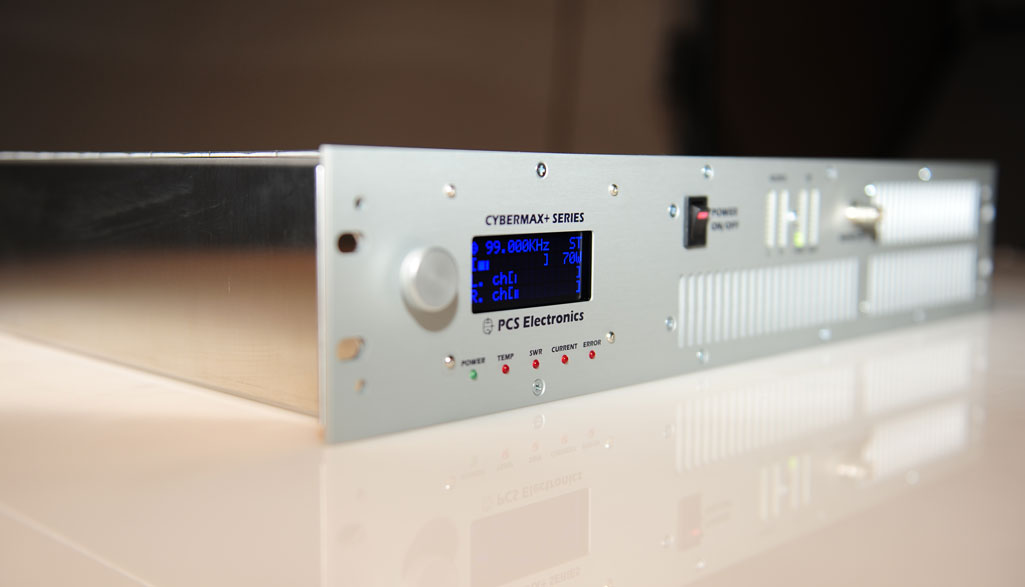
New AM transmitters - ABC of FM AM DAB+ DRM radio transmitters
Our AM transmitters feature solid-state PWM modulators, DSP audio processor and DDS signal source. Available at powers up to 500W and for MW and SW bands.
www.pcs-electronics.com
AM is fine. It will survive as long as it remains useful and is not a financial strain on whoever is operating an AM station.
Since this conversation has gone down the EAS rabbit hole. I'm curious if any one who has responded to this thread actually have anything to do with maintaining an EAS unit a licensed broadcast station. To take it a step father, any one posting take care of a PEP station?
Since this conversation has gone down the EAS rabbit hole. I'm curious if any one who has responded to this thread actually have anything to do with maintaining an EAS unit a licensed broadcast station. To take it a step father, any one posting take care of a PEP station?
Don't tell me we're dropping balloons with AM radios attached again.Wow so now we are down to reinstating Conelrad. I find it interesting how so many have no clue.
Maybe install a string with a tin can from each house to the local emergency service location.

Yes, but they're consoles from the 1930s, so I recommend you wear head protection if you go outside...Don't tell me we're dropping balloons with AM radios attached again.

Nothing, really.In that type of scenario, let's say a cyber attack on the electric grid, exactly what could be said on broadcast radio that would be of any real help?
Utilities have control centers staffed 24x7 as well as "tech down" procedures that can be deployed in the event of technology failures.
The Christmas Eve cyberattack on Ukraine in 2015 was instructive in so many ways. Service was restored to most of the affected areas in about six hours, though old-style manual operations continued for months afterwards.
How do you keep the tubes from breaking?Yes, but they're consoles from the 1930s, so I recommend you wear head protection if you go outside...
Scott, we need practical solutions here!

A lot of jurisdictions already have that sort of thing, a city-run TIS. My city doesn't have one, but the next city down the freeway has one, and it gets out reasonably well. How useful it would be in an emergency is a good question. I doubt that many in that city are truly aware the TIS exists.IMHO the AM analog function setting should be required on all radios. Minimum costs very few if any royalties to pay During a massive power failure the noise floor should be at early 1930's levels so powers less than 100 watts should cover 20+ miles easy. Each county, township or Parish's 911 should have a 100 watt transmitter pre wired to be run by a generator at their emergency services center. It should be tuned to a local AM channel that has coverage for that area. If they can't EAS "control" that transmitter (power failure at station or bad phone lines) then use the emergency transmitter. If any AM is all digital and is seized for EAS service then it should switch back to analog automatically while in emergency service. They should have an alternative frequency to use if they can't "seize" that station and it continues regular programming.
The city I'm in (Lafayette, a suburb of SF located along Highway 24 just west of Walnut Creek) has one.A lot of jurisdictions already have that sort of thing, a city-run TIS.
It's operated by the police department and operates on 1670 AM. Apparently it is relatively new, as the signs I see reading "In case of emergency, tune to 1670 AM" are fairly new, probably not much more than 4 or 5 years old).
In the daytime, it covers pretty much everywhere between Moraga to the south, Orinda to the west, Briones reservoir to the northwest, Walnut Creek to the east and almost to Martinez to the northeast (there's apparently a Mexican flamethrower on 1670 whose skywave signal tends to bury it in the more distant fringe areas at night, but even then, it still covers downtown and most core neighborhoods – including mine – quite well, which is good since that's the target area).
Why they didn't choose something more modern like FM or something else, I don't know, but apparently they still see AM as a viable tool for notifying the public during emergencies, so in that context, removing AM from cars – one of the few places where radios are still common – would seem to be kind of stupid (how would anyone hear what the PD has to say on 1670 if nobody has a radio capable of receiving it?)
Yes, most people would simply use their ever-present smartphones if they need emergency info (especially here), but when something bad happens, there's always the risk that cell service will likely be the first to go out, and having a fallback system in place is important for that reason.
c

WWL wound up simulcast on six AM and FM stations owned by Clear Channel and Entercom in the immediate aftermath of Katrina, so it is possible that one might have never listened to 870 within the city metro during that time.WWL 870AM provided critical information to coastal communities in Louisiana and Mississippi during and after Katrina. A lot of evacuees sheltered in Houston would tune in for frequent updates.

Good Morning, New Orleans
During Hurricane Katrina, it was old-fashioned radio, not newfangled insta-media, that served as a lifeline for people battered by the storm. In the dark chaos of the Louisiana Superdome, or the lonely quiet of their homes, people along the Gulf coast huddled around battery-operated devices...
 www.newsweek.com
Oh yeah, I feel incredibly lucky! From my travels, it seems like my area is a very rare one. There's even an AM station that plays Casey Kasem's AT40 re-runs on Sundays within range. Usually it's a pretty typical 70s/80s classic hits playlist with the same tired stuff so I don't listen much, but I always try to catch AT40. So cool to be able to listen on a transistor radio.I wish it was like that over here!
Aside from KCBS, local AM is pretty much a wasteland here as far as good old fashioned, English-language music goes, with the few good oldies/classic hits stations (KYNO Fresno, KVMI Visalia, and KEJB Eureka) being too far away to hear except at night, and even then only when conditions are good (KVIN was a good station in that it was close and powerful enough that I could actually hear it in the daytime; my heart sank when they flipped to Punjabi music early last year (how many Punjabi station do we need here?! There are already at least a couple of them, with one notably on 1170).
c
I've actually decided to buy an original, AM-only radio for my '66 Corvair that I daily drive all summer long (it had a crappy 90s aftermarket radio in it when I purchased the car, and I replaced that with a 70s in-dash AM/FM/8-track unit in it). I'll now put a classic 8-track unit under the dash and I'll be all set. Can't even remember the last time I've flipped the radio to FM - everything I ever would want to listen to is on AM. It'll be nice to have push-buttons, too
Ahh you reminded me... there's also a jazz station within listening range, too. However, it's at the top end of the dial and is a bit tricky to get without a decent bit of interference. That said, I do listen occasionally. Jazz on AM is such an interesting combination. I actually really enjoy it and would definitely listen more often if the station came in better.Which one is 'Beautiful Music' (as opposed to 'Smooth Jazz')???
And Beautiful Music... yes, it is an honest to goodness beautiful music station. They play instrumental renditions of pop songs from the 60s-80s. Nothing vocal. It's very relaxing to tune in to while driving around.
Key point. If people don't know it exists, then what good is it?I doubt that many in that city are truly aware the TIS exists.
Ah, here we go. Thread hijack back to Mr. Peabody's Wayback machine to discuss long-discarded formats and technology. Had to happen eventually.And Beautiful Music... yes, it is an honest to goodness beautiful music station. They play instrumental renditions of pop songs from the 60s-80s. Nothing vocal. It's very relaxing to tune in to while driving around.
And that's a great point. Nobody is claiming (with any knowledge of how the business works) that the government will step in and sunset the band, nor will all the AM broadcasters suddenly stop one day. It's simple supply and demand. Once demand eventually ends, there is no longer need for supply.AM is fine. It will survive as long as it remains useful and is not a financial strain on whoever is operating an AM station.
I have, I have!!Since this conversation has gone down the EAS rabbit hole. I'm curious if any one who has responded to this thread actually have anything to do with maintaining an EAS unit a licensed broadcast station. To take it a step father, any one posting take care of a PEP station?