We wish.VHF TV is a distant memory.

-
Get involved.
We want your input!
Apply for Membership and join the conversations about everything related to broadcasting.
After we receive your registration, a moderator will review it. After your registration is approved, you will be permitted to post.
If you use a disposable or false email address, your registration will be rejected.
After your membership is approved, please take a minute to tell us a little bit about yourself.
https://www.radiodiscussions.com/forums/introduce-yourself.1088/
Thanks in advance and have fun!
RadioDiscussions Administrators
You are using an out of date browser. It may not display this or other websites correctly.
You should upgrade or use an alternative browser.
You should upgrade or use an alternative browser.
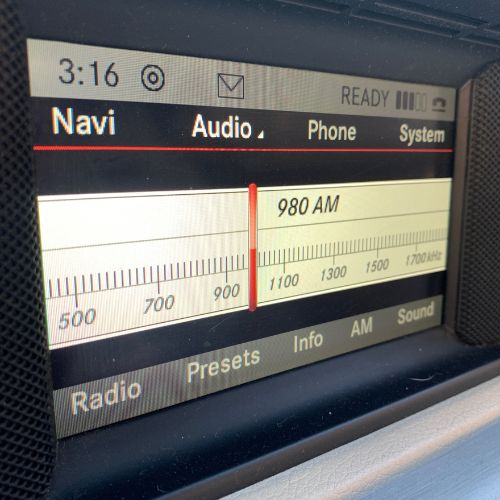
Saving AM Radio
- Thread starter BruceB
- Start date

K.M. Richards
Program Director, The Eighties Channel™
VHF TV is a distant memory.
We wish.
Let's try this, since the VHF channels are indeed still being used:
Analog TV is a distant memory.
A cell phone isn't going to alert me. I only have one because my phone company wanted so much money for faster internet that I nearly changed to Time Warner and got a very basic cell phone in case my power or cable went out, which would mean the phone would go out."No we don't" what?
K.M. Richards
Program Director, The Eighties Channel™
A cell phone isn't going to alert me. I only have one because my phone company wanted so much money for faster internet that I nearly changed to Time Warner and got a very basic cell phone in case my power or cable went out, which would mean the phone would go out.
I'm sorry to say that confirms your status as an "outlier".

My phone alerts me about everything. Breaking news will hit my phone before I hear it anywhere else.A cell phone isn't going to alert me. I only have one because my phone company wanted so much money for faster internet that I nearly changed to Time Warner and got a very basic cell phone in case my power or cable went out, which would mean the phone would go out.
K.M. Richards
Program Director, The Eighties Channel™
My phone alerts me about everything. Breaking news will hit my phone before I hear it anywhere else.
I get the impression that Chimp's definition of a "very basic cell phone" is a flip phone, which indeed lacks those warning capabilities.
Outlier.
Yes, I stand corrected.Let's try this, since the VHF channels are indeed still being used:
Analog TV is a distant memory.

That is a broad statement. Government by any party is supposed to protect its citizens, whether from foreign powers or from harmful materials in the pillow you buy at WalMart.The bill to save AM radio in cars seems to be moving forward in the House with bipartisan support:
More Voices Express Elation Over AM Act's Progress In US House - Radio Ink
Support for the AM Radio for Every Vehicle Act continues to build as it moves toward a full House vote after leaving committee.radioink.com
I don't get it.
- Republicans are supposed to support free markets. If the auto-makers find that their customers don't care about AM they should not be forced to include it.
That does not matter; the point is that the service most likely to be the "last man standing" in a big alert is AM radio. Look at the aftermath of the hurricane in Puerto Rico: 90% of cellular service down, some for months, all electricity down for days at best, months at worst. No TV for several weeks and then with limited coverage. Cable TV totally out. Landlines out for over 90% of the Island. But one AM station survived and it happened to be the best all news station with people who knew what to do.
- In an emergency, will it occur to most people to tune into AM radio? I don't personally know anyone who listens to AM radio. And that's not just people under 50. I started to stream AM stations about a decade ago and now I pay little attention to their dial position but I'd say about half have either moved to FM or added an FM simulcast.
Nobody is going to shut down AM stations. There are still lots of them making money, although as many as can are adding FM. But in an emergency, the AM will reach vastly greater distances than the FM would.
- I'll bet most people's portable AM radios are on a shelf in the basement with oozing batteries. A better solution would be for the Government to shut down the AM band and repurpose the 50,000 watt towers strictly for emergency use. Then make available, for free, small emergency alert devices. The cost per unit would be minimal.
But the average age of a car in the US is about 12 years. It would take over a decade just to get half of all cars to have that service unless existing software defined audio systems can be retrofitted. Still, how would the radio know when it needs to switch?
- The info systems in cars should be programmed, in an emergency, to switch to the emergency AM signal from whatever mode they're in. That would be a useful mandate in the name of safety.
The AAO, American Association of Outliers, rejected his membership application as being "too extreme".I'm sorry to say that confirms your status as an "outlier".
And when the very fragile phone system "breaks"?My phone alerts me about everything. Breaking news will hit my phone before I hear it anywhere else.
And it does break. Look at some of the more recent cases, such as the New Orleans and Puerto Rico hurricanes, as well as partially during last month's extensive power failures around the Houston, TX, market.
On the other hand, the latest round of satellites Musk is populating the sky with have higher power and higher gain antennas and can be used to provide text and messaging services almost immediately (now under testing) and voice phone later once there are more "birds" up there.
At that point, short of WW III blasting us to Kingdome Come, we will have cellular service in the most remote areas and most underdeveloped nations.
But for the moment, the simplest and most ancient technology is the easiest to maintain in operation and that is AM radio.
There may be text message capability, but I've never had it with me to find out. I see a text message after the fact.I get the impression that Chimp's definition of a "very basic cell phone" is a flip phone, which indeed lacks those warning capabilities.
Outlier.
It totally makes sense for Low Earth Orbit satellites to be the relay point that works where there is no cell coverage. Starlink is a great option right now for many who could never have Internet before. But it still doesn't work under foliage. If you're in a forest, sorry. I don't know for certain, but I've been told it uses 10.7 GHz and up. That explains it, of course. Any idea what frequency Musk is using for these tests?On the other hand, the latest round of satellites Musk is populating the sky with have higher power and higher gain antennas and can be used to provide text and messaging services almost immediately (now under testing) and voice phone later once there are more "birds" up there.
Dave B.
Surprising would be a text message that you saw before it was sent.There may be text message capability, but I've never had it with me to find out. I see a text message after the fact.
Found it!It totally makes sense for Low Earth Orbit satellites to be the relay point that works where there is no cell coverage. Starlink is a great option right now for many who could never have Internet before. But it still doesn't work under foliage. If you're in a forest, sorry. I don't know for certain, but I've been told it uses 10.7 GHz and up. That explains it, of course. Any idea what frequency Musk is using for these tests?
Dave B.
1.6 to 2.7 GHz. This document describes many of the hurdles.
Dave B.

That only happens for psychicsSurprising would be a text message that you saw before it was sent.

And time traveling terminatorsThat only happens for psychics
Or time traveling terminator psychic, Kenny KingstonatorAnd time traveling terminators
Note that neither of the two main parties has anywhere near a majority of registered voters. There are approximately as many "Independents" as there are registered voters for either of the parties.Exactly. All these partisan radio hosts that always rant about government "subsidies" (i.e., anything they don't approve of) and "let the market decide" suddenly get amnesia and cheer for their gubberment subsidy and using the muscle of big government to achieve their narrow partisan political ends.
One of the many downsides of one-sided talk radio where everything is the other side's fault, even though their precious political party is a minority party, supported by a small fraction (27%) of Americans.
In radio, a 5% share of audience is large for a talk station. That is significantly less than the registered members of any party. So when we talk about politics and radio formats, we have to look at where an audience is available. Intents on doing a liberal or progressive radio format have not been successful (and the reasons are a totally separate subject).
Republicans also believe in free speech, as well as national safety and security. Keeping AM radio in car soundsystems costs pennies compared to other government mandates. And the Federal government has tons of mandates on automobile and other vehicle design as well as equipment. You can't have a car or truck on the road if it hasn't passed some government muster -- whether it's in the manufacturing phase or registering for use on the road. Even the fuel used is all highly regulated by Federal as well as State governments.The bill to save AM radio in cars seems to be moving forward in the House with bipartisan support:
More Voices Express Elation Over AM Act's Progress In US House - Radio Ink
Support for the AM Radio for Every Vehicle Act continues to build as it moves toward a full House vote after leaving committee.
I don't get it.
- Republicans are supposed to support free markets. If the auto-makers find that their customers don't care about AM they should not be forced to include it.
- In an emergency, will it occur to most people to tune into AM radio? I don't personally know anyone who listens to AM radio. And that's not just people under 50. I started to stream AM stations about a decade ago and now I pay little attention to their dial position but I'd say about half have either moved to FM or added an FM simulcast.
- I'll bet most people's portable AM radios are on a shelf in the basement with oozing batteries. A better solution would be for the Government to shut down the AM band and repurpose the 50,000 watt towers strictly for emergency use. Then make available, for free, small emergency alert devices. The cost per unit would be minimal.
- The info systems in cars should be programmed, in an emergency, to switch to the emergency AM signal from whatever mode they're in. That would be a useful mandate in the name of safety.
"Free market" principles only go so far with road vehicles. Even under Republican governments.
Redundancy in emergency communications systems is better than non-redundancy, especially when it costs pennies on the dollar to provide for the extra emergency communications medium.
Most AM listening is in cars. The portable radio issue is a straw man. Even FEMA acknowledged that most AM listening during a massive catastrophe (like the Juan De Fuca earthquake) would be in vehicles. Shutting down radio stations just because you think it's a great idea would go against the First Amendment as well as the Fifth Amendment's takings clause, being that AM radio stations are businesses, and forcing them to shut down without due process and/or adequate compensation would be Constitutionally problematic. So your suggestion that the cost would be 'minimal' really isn't how it would play out. Right now there are around 4K AM stations in the US. Even if the total cost would be minimal when compared to the Federal budget, if enough stations insisted on due process (i.e., they ought the taking in court) it would cost the Federal government a lot more than just leaving things be.
Agreed on #4, although it would cost the car companies more to add the programming than just keep AM available, as is, in the car soundsystems.
FM may be on the chopping block in a few years, as removing all radio from cars could save the automakers some money. Bluetoothing your phone into the soundsystem is cheaper for car companies than having the FM / AM chip, audio chip, the extra programming needed to include the Radio into the interface, as well as the antenna and extra wiring needed for FM as well as AM.
The hams don't even use the spectrum they've got. Although hams may get use of the AM band eventually (maybe 25-35 years?), by then there won't be enough hams to use it, much less the rest of the bands.Can you imagine having a ham band from 540 to 1710 KHz? If AM radios are still mandated in cars by then, will the manufacturers be told to enable single-sideband reception in them? Or will the calls for the band's elimination grow louder as drivers begin to die off after falling asleep at the wheel while listening to Joe in New London and Elmer in Scranton discuss each other's antennas, weather conditions and prostate disorders for too long?