

K.M. Richards
Program Director, The Eighties Channel™
A now-closed old thread listed all of Ventura County's cable system lineups taken from various newspapers in July 1988. I stumbled across it just this morning and thought I would add some historical perspective.
John George started Avenue TV Cable in 1953 in order to bring reception to the Ventura Avenue district on the far west side of town, which was terrain shielded not only from Mount Wilson in Los Angeles but also from Broadcast Peak in Santa Barbara. He also owned Johnny's Radio Den (later, Johnny's Sight & Sound) and was the authorized Packard Bell dealer for the area ... only he could get no sales in the Ventura Avenue district because of the inability to receive television signals.
So he put up a head end at Grant Park, which was on a bluff overlooking the district and with a perfect line-of-sight to both Wilson and Broadcast Peak, and wired the entire district himself. He then offered free cable service to those who bought their sets from him; the more expensive the set, the longer the free service term, and then charged some nominal amount (probably a couple of bucks; basic service was still less than $10/month in the 80's) to continue using the service.
After my involvement in 1968-69 with the ill-fated KKOG-TV/16, John hired me (while still in high school!) to help him launch local origination programming on channel 6 Saturday mornings and afternoons; we used to carry the Friday night football games of both Ventura and Buena High by dragging the cameras, etc. over to Larrabee Stadium, recording the game and then playing it back around noon the next day. (This was quite popular with the parents of students who attended both schools.) We also got our hands on a bunch of movies that were in the public domain and would run them free of commercial interruption, and I both hosted a Dick Clark-like Saturday morning show playing records for an in-studio audience who danced to them, and "anchored" a weekly summary of local news.
It was my experience with Cable Channel 6 (which was a TeleMation "weather channel" the rest of the time and then switched to KBSC/52 late afternoons and evenings) that got me my first radio job; because the Ventura County Fair parade passed right in front of the Avenue TV Cable building, we carried it live with several tape replays with a three-camera (!) setup ... one on both sides of the street (taking advantage of the existing interconnect cable to Sight & Sound that John had put in many years previous) and one on the roof to get a view of parade entries as they approached up the street. Our emcee for the 1972 parade was local broadcaster Fred Hall, who had just put KOVA/105.5 on the air in Ojai earlier that year and simulcast (! .. again) the audio on his fledgling station. Fred heard one of my carted station breaks, asked who the voice was, and was told it was the teenager up on the roof with camera #3. When the parade was over, Fred urged me to get my Third Phone and promised to hire me once I had it. I passed the FCC exam in April 1973 and Fred, true to his word, hired me for weekends in July. I went full time with him after graduation and ended up staying there for four years, all told.
Back to John George: He was a perfectionist in terms of the technical aspects of his product, and saw for himself that the "early adopters" of satellite networks were having extreme difficulties with providing uninterrupted service. He therefore decided all of the reception and signal processing was going to be not at the head end but at the system offices, and fed to the head end by the same trunk cable we used to send Cable Channel 6 up there. And the dishes ended up on the same roof that camera #3 occupied for Fair parades.
I had remained friends with John after going into radio, as as luck would have it, I lived just about one mile from the tail end of his service area, in a tract which had originally been called "Five Points Park" south of that intersection where Main St., Thompson Blvd. and Telegraph Rd. converged. So John installed not only one of the first converter boxes (not yet available to "ordinary" subscribers) at my house, but also a signal strength meter so I could give him reports on specific channels' reception as he tweaked everything pre-launch. In fact, I first saw the movie "The Boys From Brazil" on Cinemax during one such test.
So the thread with the 1988 channel lineup sparked my memory, and I am reposting it with notes of what had originally been the lineup when it formally was offered to subscribers in 1982. (And yes, John let me keep the converter box with free premium channels for several years afterwards as thanks for my assistance.)
(italics are my notes on the original 1982 lineup)
2 KCBS (CBS 2 Los Angeles)
4 KNBC (NBC 4 Los Angeles)
5 KTLA (IND 5 Los Angeles)
6 PTL Network
8 Financial News Network
10 KCET (PBS 28 Los Angeles)
11 KTTV (FOX 11 Los Angeles)
12 KCOY (CBS 12 Santa Maria)
14 WTBS (IND 17 Atlanta)
15 Nickelodeon
19 KLCS (PBS 58 Los Angeles)
20 Lifetime
23 The Movie Channel
24 Select TV
26 Disney Channel
27 Cinemax
28 MTV
29 The Nashville Network
30 CNN
31 CBN Family Channel
32 USA Network
33 ESPN
34 VH-1
35 C-SPAN
37 Weather Channel
And now, a few "blast from the past" images of that era:
TeleMation "weather scan" system:
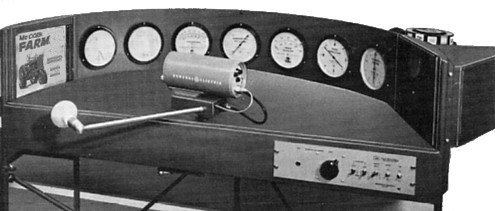
Avenue's was a later model that looked more like this:

And this was the Jerrold Electronics converter box, which had the then-revolutionary feature of scrambling on/off being controlled by the central office, rather than using channel-specific traps or channel-specific physical decoders:

This concludes my trip down memory lane. Thanks to everyone who didn't fall asleep.
John George started Avenue TV Cable in 1953 in order to bring reception to the Ventura Avenue district on the far west side of town, which was terrain shielded not only from Mount Wilson in Los Angeles but also from Broadcast Peak in Santa Barbara. He also owned Johnny's Radio Den (later, Johnny's Sight & Sound) and was the authorized Packard Bell dealer for the area ... only he could get no sales in the Ventura Avenue district because of the inability to receive television signals.
So he put up a head end at Grant Park, which was on a bluff overlooking the district and with a perfect line-of-sight to both Wilson and Broadcast Peak, and wired the entire district himself. He then offered free cable service to those who bought their sets from him; the more expensive the set, the longer the free service term, and then charged some nominal amount (probably a couple of bucks; basic service was still less than $10/month in the 80's) to continue using the service.
After my involvement in 1968-69 with the ill-fated KKOG-TV/16, John hired me (while still in high school!) to help him launch local origination programming on channel 6 Saturday mornings and afternoons; we used to carry the Friday night football games of both Ventura and Buena High by dragging the cameras, etc. over to Larrabee Stadium, recording the game and then playing it back around noon the next day. (This was quite popular with the parents of students who attended both schools.) We also got our hands on a bunch of movies that were in the public domain and would run them free of commercial interruption, and I both hosted a Dick Clark-like Saturday morning show playing records for an in-studio audience who danced to them, and "anchored" a weekly summary of local news.
It was my experience with Cable Channel 6 (which was a TeleMation "weather channel" the rest of the time and then switched to KBSC/52 late afternoons and evenings) that got me my first radio job; because the Ventura County Fair parade passed right in front of the Avenue TV Cable building, we carried it live with several tape replays with a three-camera (!) setup ... one on both sides of the street (taking advantage of the existing interconnect cable to Sight & Sound that John had put in many years previous) and one on the roof to get a view of parade entries as they approached up the street. Our emcee for the 1972 parade was local broadcaster Fred Hall, who had just put KOVA/105.5 on the air in Ojai earlier that year and simulcast (! .. again) the audio on his fledgling station. Fred heard one of my carted station breaks, asked who the voice was, and was told it was the teenager up on the roof with camera #3. When the parade was over, Fred urged me to get my Third Phone and promised to hire me once I had it. I passed the FCC exam in April 1973 and Fred, true to his word, hired me for weekends in July. I went full time with him after graduation and ended up staying there for four years, all told.
Back to John George: He was a perfectionist in terms of the technical aspects of his product, and saw for himself that the "early adopters" of satellite networks were having extreme difficulties with providing uninterrupted service. He therefore decided all of the reception and signal processing was going to be not at the head end but at the system offices, and fed to the head end by the same trunk cable we used to send Cable Channel 6 up there. And the dishes ended up on the same roof that camera #3 occupied for Fair parades.
I had remained friends with John after going into radio, as as luck would have it, I lived just about one mile from the tail end of his service area, in a tract which had originally been called "Five Points Park" south of that intersection where Main St., Thompson Blvd. and Telegraph Rd. converged. So John installed not only one of the first converter boxes (not yet available to "ordinary" subscribers) at my house, but also a signal strength meter so I could give him reports on specific channels' reception as he tweaked everything pre-launch. In fact, I first saw the movie "The Boys From Brazil" on Cinemax during one such test.
So the thread with the 1988 channel lineup sparked my memory, and I am reposting it with notes of what had originally been the lineup when it formally was offered to subscribers in 1982. (And yes, John let me keep the converter box with free premium channels for several years afterwards as thanks for my assistance.)
(italics are my notes on the original 1982 lineup)
2 KCBS (CBS 2 Los Angeles)
[calls were KNXT until April 2, 1984]
3 KEYT (ABC 3 Santa Barbara)4 KNBC (NBC 4 Los Angeles)
5 KTLA (IND 5 Los Angeles)
6 PTL Network
[in 1982, local origination, MSN in the morning followed by Daytime and PTL Club (only) with a digital information/classified ads service the rest of the time]
7 KABC (ABC 7 Los Angeles)8 Financial News Network
[was KWHY/22 weekdays until 3:00pm, then KMEX/34 evenings and weekends; they switched to the satellite SIN feed later]
9 KHJ (IND 9 Los Angeles)10 KCET (PBS 28 Los Angeles)
11 KTTV (FOX 11 Los Angeles)
12 KCOY (CBS 12 Santa Maria)
[this was brought in by microwave relay and John made a few extra bucks "sharing" it with Cablecom General and Oxnard Cablevision]
13 KCOP (IND 13 Los Angeles)14 WTBS (IND 17 Atlanta)
15 Nickelodeon
[prior to 1984, Nickelodeon and ARTS were on the same satellite transponder and Avenue carried both on this channel]
16 Pay Per View[this was unusable for technical reasons in 1982 and was blank until "offset" technology became available to eliminate interference]
17 KTBN (TBN 40 Los Angeles)[actually, by 1988 Avenue was carrying the TBN satellite feed]
18 Showtime19 KLCS (PBS 58 Los Angeles)
20 Lifetime
[was Cable Health Network before merging with the aforementioned Lifetime in 1984]
21 KADY (IND 63 Oxnard)[original call letters were KTIE, originally carried on channel 8 when it signed on in 1985; originally channels 21 and 22 had been used for a more primitive premium offering, using a dedicated two-channel descrambler, of ON TV and The Movie Channel]
22 A&E Network23 The Movie Channel
24 Select TV
[actually, the correct name was always "SelecTV" and Avenue carried this because ON TV merged with it in 1985]
25 HBO26 Disney Channel
27 Cinemax
28 MTV
29 The Nashville Network
30 CNN
31 CBN Family Channel
32 USA Network
33 ESPN
34 VH-1
35 C-SPAN
37 Weather Channel
[originally on 34 until VH-1 launched in 1985, then moved to 36; I think the channel number was a typo at the newspaper]
39 Tempo[was Satellite Program Network in 1982, and on a satellite John didn't have a dish pointed at]
61 Z Channel[my recollection was that this was Avenue's first "hyperband" channel, and subscribers had to have their old Jerrold midband/superband converter replaced to subscribe]
And now, a few "blast from the past" images of that era:
TeleMation "weather scan" system:
Avenue's was a later model that looked more like this:
And this was the Jerrold Electronics converter box, which had the then-revolutionary feature of scrambling on/off being controlled by the central office, rather than using channel-specific traps or channel-specific physical decoders:
This concludes my trip down memory lane. Thanks to everyone who didn't fall asleep.
Last edited:

