• Get involved.
    We want your input!
    Apply for Membership and join the conversations about everything related to broadcasting.

    After we receive your registration, a moderator will review it. After your registration is approved, you will be permitted to post.
    If you use a disposable or false email address, your registration will be rejected.

    After your membership is approved, please take a minute to tell us a little bit about yourself.
    https://www.radiodiscussions.com/forums/introduce-yourself.1088/

    Thanks in advance and have fun!
    RadioDiscussions Administrators

LPFM Spacing in the NCE Reserved Band

Why does the Media Bureau insist on imposing very conservative channel/distance separation rules for LPFMs operating in the 88-92 MHz Reserved Band?

For example, thanks to directional antennas, two co-channel Oregon NCEs are just 25 miles apart: KSLC, KSAI. But try that strategy with an LPFM and a Class A using the LPFM ChannelFinder - Forget it! Even in an area with lots of mountains to block interference, a non-directional LPFM, non-overlappimg F(50,50)/F(50,10) contours, etc., that a completely "technically valid" shortspacing strategy.will not accepted.

Any comment? Am I missing something here?

It seems the separation rules between LPFMs and higher class stations are too rigid.
 
They were designed that way, in part at the behest of the full-power NCE community, to keep LPFMs from encroaching. But there was also pressure in some parts of the LPFM community to design rules that didn't require small would-be broadcasters to have to engage the $ervice$ of engineering consultants to prepare their applications. That helped some applicants in less congested areas, I'm sure, but it hindered others in more congested areas who would have used people like me to find niches they could squeeze into.
 
You listed 2 Class A stations, not LPFM...
Though Low(er)power, those aren't as much as limited the same way as LPFM...

I've never heard of a directional antenna being used for LPFM, good luck trying to go more than 5 miles with reliable signal on an LPFM...Well, I wish they would expand that LP classification / specification / qualifications somewhat, maybe up to 250 watts, and no HAAT~ERP height restrictions (same as translator rules), and allowing for DA antennas, which can give some unique coverage patterns, such as W248DD (for WAHT-AM, protects WCOS to the SE, but with a VERY high HAAT antenna causes LOTS of interference to poplated areas of Union SC, and makes that channel unlistenable there.

Other Great LP stations around here, such as WRTH-LP, WGYT-LP, WXRY-LP do quite well for what they can and their dedicated local operation.

I've also heard of some LP stations successfully obtaining full power station status, such as:
 
@KyleSmith1988 - You can use DAs in the LPFM service in certain limited circumstances. @Michi was heavily involved in crafting those rules.

While there has been discussion and even some formal proposals for a 250-watt LPFM service, there doesn't seem to be much, if any, appetite at the FCC to make it a reality.
 
While there has been discussion and even some formal proposals for a 250-watt LPFM service, there doesn't seem to be much, if any, appetite at the FCC to make it a reality.
In that case, maybe it would be a great idea to remove the HAAT-Power/Height restriction, right now its 100 watts at 100 feet, and that level only decreases if placed any higher, always keeping the coverage area contour radius the same.

Maybe its a smaller hurdle for LPFM expansion, a nice benefit just using a higher HAAT potential, which is currently irrelevant with that restriction.

WRTH is only using 25 watts, and WXRY is only using 15 watts, which can barely got beyond shouting distance, performance sometimes disappointing. Now bump those numbers up to the full 100w - it would be decent signal strength increase in the already coverage areas, and maybe not as much extra distance. Contour maybe increase to around 10 miles average.

Hey remember the old Class D stations, with a only a 10 watt limit, not even listed as an option anymore or kinda rare, I'm surprised these are still operational in some places. Maybe LPFM could just replace that classification. Big example, I remember the old 89.3 (now 103.9) WCNM in the Matawan NJ area, easily had static only 1 mlile away from their tower. There was also a 91.9 in Brick NJ HS (WBGD) many years ago.
 
Last edited:
In that case, maybe it would be a great idea to remove the HAAT-Power/Height restriction, right new its 100 watts at 100 feet, and that level only decreases if placed any higher, always keeping the coverage area contour radius the same.

Maybe its a smaller hurdle for LPFM expansion, maybe it could allow some stations full height-coverage potential, which is currently irrelevant with that restriction
Still a complicated move to make. The whole point of using mileage spacing instead of contour spacing in the LPFM rules is to make the allocation engineering simple to do without hiring a consulting engineer.

If you remove the power/height restriction, you're back to needing the skills of a consulting engineer to do the mapping and calculations to show whether or not there's contour overlap (just as we have to do right now for translators.)

That's a big change in the way the service has operated for over 20 years now, and I don't think there's any political appetite to make that change. Remember, it's MEANT to be a small-coverage service. These stations aren't designed to cover an entire metro area.
 
Section 3(b)(1) requires the FCC to not reduce the minimum distance separations for LPFM already on the books in 73.807. REC interprets this to only apply to domestic full-service stations. In RM-11810, REC proposed a hybrid protection method that would use the LP-10 distances (which were still on the books when the LCRA was enacted) as a a minimum threshold for spacing and then using contours to extend out up to a 7.1 km service contour (LP-250). We cannot just put 100 watts at any height. If we did, our existing distance tables would not work for that. This is why LP250 is being supported by REC and many in the community radio movement. Low power FM stations must remain low power. I do feel though that LPFM should have additional service classes including up 250w@32m (7.3 km service contour) for LPFM stations nationwide and up to 250w@107m (13.3 km) service contour for areas west of the Mississippi except California south of 40 degrees latitude.

These values (7.3 and 13.3 km service contours), are similar to what is allowed for an FM station not providing fill-in service.

The FCC does not want to make contours the norm in LPFM because it is "too complex" for new LPFM broadcasters.
 
What the FCC needs to do is open the low end of the FM band from 79.1 to 87.3 for 250w and 185ft antenna unlicensed broadcasting with a lot of rules and regulations. With 250w and 185ft tip of antenna you could get 22 to 25 miles with a good car radio junk so so radio 12 to 16 miles.
 
What the FCC needs to do is open the low end of the FM band from 79.1 to 87.3 for 250w and 185ft antenna unlicensed broadcasting with a lot of rules and regulations. With 250w and 185ft tip of antenna you could get 22 to 25 miles with a good car radio junk so so radio 12 to 16 miles.
How many radios anywhere in the country can tune it? Outside of a few hams per station with SDR dongles, my guess is none.
 
How many radios anywhere in the country can tune it? Outside of a few hams per station with SDR dongles, my guess is none.
How many AM radios in the country could tune 1610~1700 before the AM band was expanded?
 
Why does the Media Bureau insist on imposing very conservative channel/distance separation rules for LPFMs operating in the 88-92 MHz Reserved Band?

For example, thanks to directional antennas, two co-channel Oregon NCEs are just 25 miles apart: KSLC, KSAI. But try that strategy with an LPFM and a Class A using the LPFM ChannelFinder - Forget it! Even in an area with lots of mountains to block interference, a non-directional LPFM, non-overlappimg F(50,50)/F(50,10) contours, etc., that a completely "technically valid" shortspacing strategy.will not accepted.

Any comment? Am I missing something here?

It seems the separation rules between LPFMs and higher class stations are too rigid.
The rules were designed to keep LPFM "simple". Class A stations are defined as any facility that has a 60 dBu service contour between 6 and 27 kilometers. In the commercial world, Class A stations are afforded the same protections regardless of whether they are the minimum 100 watts at 30 meter HAAT or the full 6 kW at 100 meter HAAT. Commercial uses the distance separation like LPFM does. Full-service stations are also afforded some flexibility under §73.215 to use contours to "short space" those distance requirements but even with that, they are still required to maintain a certain shorter level of distance separation.

Noncommercial stations in the reserved band (88~92) do not use distance separation, but instead use contours. This is why two full-service stations in the reserved band can be closer than the normal distance separation requirements of their non-reserved band (92~108) counterparts. However, noncommercial stations on the high end of the reserved band must protect stations in the non-reserved band using distance separation with the §73.215 option also being available to them. Going the other way, commercial stations at the low end of the non-reserved band must protect noncommercial stations in the reserved band using distance separation and can only short space to them using the guidelines in §73.215.

The LPFM rules also treat reserved band Class B and B1 stations as having a 54 or 57 dBu service contour despite only using a 60 dBu service contour. For second-adjacent waivers, the FCC will allow for a reserved-band Class B/B1 station to be protected at the 60 dBu service contour. This is how I was able to get 89.1 here in Riverton. Ironically, in the original Notice of Proposed Rulemaking, there was a proposal to have different distance separation tables for reserved band Class B/B1 stations vs. those in the non-reserved band. That distinction never panned out in the final rules.

As @fybush alluded to, the distance separation requirements for LPFM are intentionally written with overprotection. For co-channel and first-adjacent channel separations, the FCC added a 20 kilometer "buffer zone" to the distances. This buffer zone was originally touted by the FCC as a way that would protect LPFM stations from encroaching interference in the event that a full-service station was to make a short modification. The buffer zone does not apply to: (1) second adjacent channel protections, (2) FM translator protection and (3) protections to foreign FM allotments.

The Local Community Radio Act of 2010 in Section 3(b) made it a statutory requirement that LPFM stations must use the (§73.807) distance separation tables that were in effect on the date of the enactment of the LCRA in respect to protections between LPFM and full-service FM facilities. After the LCRA, I attempted to implement a hole in that statute through RM-11810. I had proposed two different rule changes:
(1) Stated that the 3(b) language only applied to relationships between LPFM stations and "full-service" FM stations and not the relationships between LPFM and FM translators and other LPFM stations. I had proposed an option where LPFM stations, in modifications only, to be able to use contour protection instead of distance separation to FM translators and other LPFM stations. Translators are protected by LPFM stations at a level based on the translator's service contour size (as calculated using the translator's ERP and HAAT over 8 radials) and placed into three "sub classes" of service contour sizes of 7.3, 13.3 and 20 kilometers.
(2) Stated that at the time that the LCRA was signed into law, there were LP-100 and LP-10 distance separations on the books. I had proposed a "§73.215-like" method of protecting full-service stations where LPFM stations could, on modifications only, use contours to protect full-service facilities (similar to how translators can) but they would still have to meet a reduced distance separation using the LP-10 distance tables.

The FCC rejected these concepts due to their complexity. They also continued to misinterpret the statute. If anything, a significant part of the RM-11810 petition was intended to call out the many ways that the agency misinterpreted the LCRA. The FCC also rejected the concept of using contours because of a lack of an interference remediation rule similar to what translators have. The FCC did not want to see such a rule because they felt that it would bankrupt LPFM stations from the get go. This is why I specifically proposed these options only for modifications of existing stations and only as an option. I supported an interference remediation rule only if the LPFM station elected to use one of these contour methods. The nice feature of distance separation is that the Commission has long held that two stations that meet minimum distance separation meet the interference guidelines, even if there is contour overlap. There is language in §73.209 which states that existing full-service stations are not protected by LPFM stations that are subsequently authorized as long as the LPFM station proposed facilities met the distance separation requirements at the time of filing.

While the concept of doing option (2) above is very controversial from a statutory perspective, I do still feel that there are inroads for option (1) and we need a Commission and Bureau staff who have the fortitude to stand up to the NAB and their members. LPFM stations do deserve more flexibility and should not be treated like the bastard children of broadcasting.

 
What the FCC needs to do is open the low end of the FM band from 79.1 to 87.3 for 250w and 185ft antenna unlicensed broadcasting with a lot of rules and regulations. With 250w and 185ft tip of antenna you could get 22 to 25 miles with a good car radio junk so so radio 12 to 16 miles.
This concept could not work for many reasons. From a spectrum priority perspective, it would have to protect full-service and LPTV stations on Channels 5 and 6. This is because unlicensed services are sub-secondary to secondary services. We would create a massive amount of mayhem if unlicensed devices were to come into that spectrum without controls, such as the database technology that is required in white space devices. REC's WIDE-FM approach would have made 20 channels in Channels 5 and 6 spectrum as primary and could displace LPTV stations. We designed the concept to grandfather and protect the remaining Channel 5 and 6 full-service stations, even if this meant that no WIDE-FM full-service stations would be available at a particular location. Riverton, MD would be in one of those areas.

You also have a huge issue with RF exposure. 250 watts ERP using a single-bay circularly polarized antenna requires a minimum of 30 feet separation between the antenna and the nearest occupied area in order to meet the NEPA guidelines. You can't control the siting of antennas in an unlicensed service like you can with a licensed service.

Also, as an unlicensed service, it would not be possible to enforce certain rules that protect existing commercial broadcasters and public safety such as the ability for these unlicensed facilities to get a "free ride" to directly compete with commercial broadcasters for advertising revenue as well as the need to meet the nation's objectives regarding emergency alerting. I do support amending Part 15 to increase the standards for unlicensed intentional radiators in the AM and FM broadcast bands to at the minimum, meet the Canada BETS-1 standards for unlicensed devices, which are slightly more liberal than ours.
 
For those who say that LPFM rules should be "totally like translators", you should read up on what the translator rules really are instead of just relying on the listings of a few translators. All radio services have an "outer limit" to what they can provide from a service contour perspective. Those big beefy translators you all talk about have an outer limit of the full-service station that they are filling in.

For FM translators that do NOT provide a fill-in service, the guidelines are much more strict. Stations that are east of the Mississippi or in California south of 40 degrees use a "tiered" chart based on maximum height above average terrain that comes out to a 7.3 km service contour or 250 watts at 32 meters HAAT. All other areas come out to 13.3 km or 250 watts at 107 meters HAAT.

You must also take into mind that maximum height above average terrain (MHAAT) used by non-fill in translators is a totally different animal than HAAT used by full-service and LPFM stations. MHAAT uses the HAAT along 12 radials (instead of 8) and treats each of those radials individually (where traditional HAAT averages in the 8 radials). Non-directional translator ERP will be based on the MHAAT that is the highest of the 12 calculated radials. Directional antennas will be limited in power based on the MHAAT in each of the 12 different directions.

If we were to move to the non-fill in MHAAT-based rules, a considerable number of LPFM stations would experience an ERP reduction even if we were to implement a 250 watt LPFM service.

This is why we must have an "outer limit" the way that we do today. The current LPFM outer limit is 5.6 kilometers. Our LP-250 petition (RM-11909) would create a second service class with an outer limit of 7.1 kilometers and does not use the MHAAT method.
 
How many AM radios in the country could tune 1610~1700 before the AM band was expanded?
But that happened when people still were buying stand alone radios. Today, we are dependent on approximately 5% annual replacement of car radios and very few others.
 
How many AM radios in the country could tune 1610~1700 before the AM band was expanded?
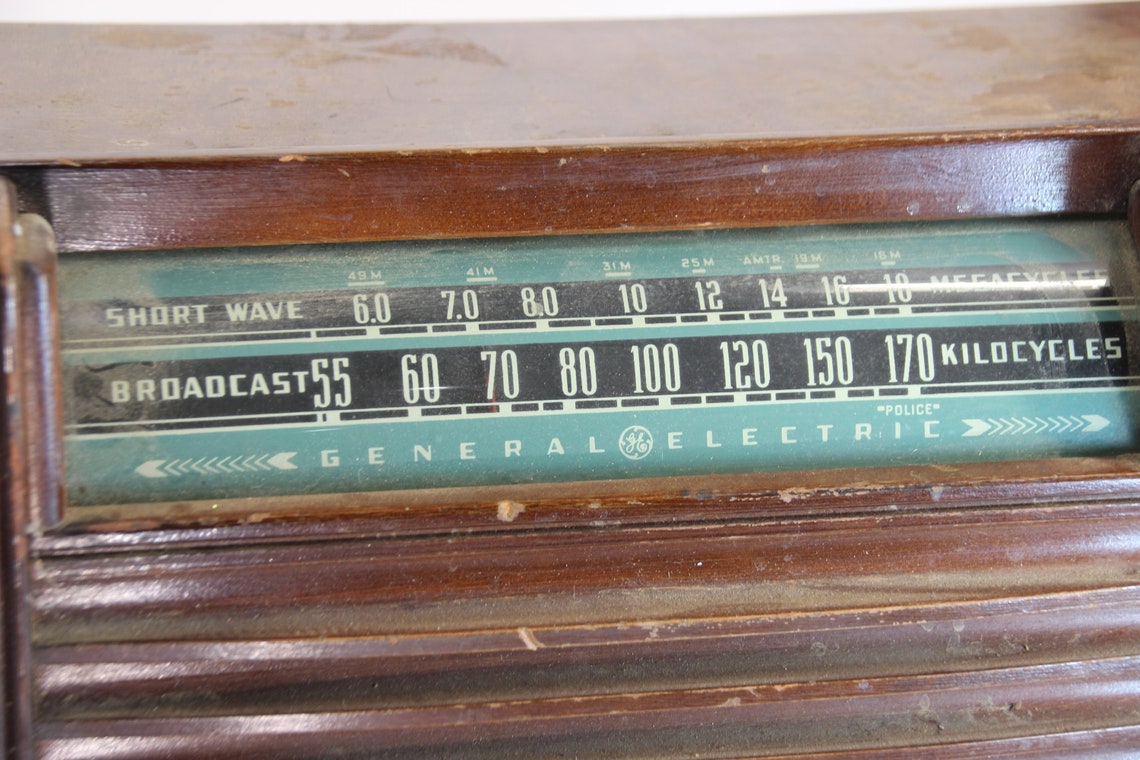
Quite a few, actually:

il_1140xN.3650663757_4eaa.jpg
 
How many AM radios in the country could tune 1610~1700 before the AM band was expanded?
That was then, this is now, when there are few home radios and it takes years to turn over a substantial number of vehicles on the road. Outside of KCJJ, have there been any true Xband success stories?
 
In that case, maybe it would be a great idea to remove the HAAT-Power/Height restriction, right now its 100 watts at 100 feet, and that level only decreases if placed any higher, always keeping the coverage area contour radius the same.

Maybe its a smaller hurdle for LPFM expansion, a nice benefit just using a higher HAAT potential, which is currently irrelevant with that restriction.

WRTH is only using 25 watts, and WXRY is only using 15 watts, which can barely got beyond shouting distance, performance sometimes disappointing. Now bump those numbers up to the full 100w - it would be decent signal strength increase in the already coverage areas, and maybe not as much extra distance. Contour maybe increase to around 10 miles average.

Hey remember the old Class D stations, with a only a 10 watt limit, not even listed as an option anymore or kinda rare, I'm surprised these are still operational in some places. Maybe LPFM could just replace that classification. Big example, I remember the old 89.3 (now 103.9) WCNM in the Matawan NJ area, easily had static only 1 mlile away from their tower. There was also a 91.9 in Brick NJ HS (WBGD) many years ago.
WRTH (Greer SC) has since changed its call letters to WLTS.

By the time I get out to Chapin, I start losing WXRY in favor of WBT-FM 99.3, licensed to Chester.

As an added note, WROP-LP 92.7 here in Columbia (St Peter's Catholic Church downtown) goes away by the time you get to the intersection of US 1 (Two Notch Road) and I-20. I go to St Peter's sometimes and if I had to guess, I'd say that the antenna is located on their steeple. There's some kind of antenna up there.
 
Status
This thread has been closed due to inactivity. You can create a new thread to discuss this topic.


Back
Top Bottom