
It seems like several cable stations are still investing in licensed series that might be expensive for them. For example, both Comedy Central and Adult Swim have gotten non-exclusive rights to Family Guy and Nick at Nite got The Big Bang Theory. Are companies still shelling out a lot of money to acquire shows for their cable nets?

-
Get involved.
We want your input!
Apply for Membership and join the conversations about everything related to broadcasting.
After we receive your registration, a moderator will review it. After your registration is approved, you will be permitted to post.
If you use a disposable or false email address, your registration will be rejected.
After your membership is approved, please take a minute to tell us a little bit about yourself.
https://www.radiodiscussions.com/forums/introduce-yourself.1088/
Thanks in advance and have fun!
RadioDiscussions Administrators
You are using an out of date browser. It may not display this or other websites correctly.
You should upgrade or use an alternative browser.
You should upgrade or use an alternative browser.
Investing in cable networks
- Thread starter tall_guy1
- Start date
Still, some of the bigger name shows probably cost quite a bit. A lot of studios are licensing their content again...for example Big Bang used to just exclusively be on TBS and Family Guy FXX, now they are being licensed for use elsewhere, too. But if I remember those shows cost a lot, so surprised networks are still paying for them. I remember HBO Max (now Max) paying half a billion for Big Bang in 2019.I think there's a big difference between licensing a successful off-net series and investing in first run scripted shows. They have to run something, and off-net syndication is cheaper than creating new programming.
"A lot" is relative. I don't think it was announced how much TBS is paying for those rights, so "a lot" could be any number. It's surely less than the eyewatering numbers Friends or Seinfeld got 20 years ago.But if I remember those shows cost a lot, so surprised networks are still paying for them.

You do know the prices go down as a show ages?Still, some of the bigger name shows probably cost quite a bit. A lot of studios are licensing their content again...for example Big Bang used to just exclusively be on TBS and Family Guy FXX, now they are being licensed for use elsewhere, too. But if I remember those shows cost a lot, so surprised networks are still paying for them. I remember HBO Max (now Max) paying half a billion for Big Bang in 2019.
Still seems like cable viewership is fairly low for them to be shelling out any sum of cash to bulk them up."A lot" is relative. I don't think it was announced how much TBS is paying for those rights, so "a lot" could be any number. It's surely less than the eyewatering numbers Friends or Seinfeld got 20 years ago.
Based on ... what?Still seems like cable viewership is fairly low for them to be shelling out any sum of cash to bulk them up.
TBS is in the top tier of cable networks. If TBS can't "shell out any sum of cash", how are networks like CMT or Lifetime, which have much smaller audiences, still able to exist?
If TBS can't "shell out any sum of cash", how are networks like CMT or Lifetime, which have much smaller audiences, still able to exist?
They get paid a fee from the cable companies and they sell advertising. So there's some income. And, like radio, they've cut their staff to the bone.
No, Nick at Nite bought Big Bang too...that's who I'm talking about. TBS has it until 2028. Comedy Central also bought Family Guy and Adult Swim did too. All of those aren't top 10 cable channels.Based on ... what?
TBS is in the top tier of cable networks. If TBS can't "shell out any sum of cash", how are networks like CMT or Lifetime, which have much smaller audiences, still able to exist?
Maybe the fact that three different sets of cable executives agreeing to buy the same show is a sign that your perception of the death of cable TV is exaggerated.

How much of the op is really about production wanting their content via Pluto, tubi and Samsung TV based their data of their target demos.

 pluto.tv
 www.techradar.com

 www.samsung.com
Pluto TV: Watch Free Movies, TV Shows & Live TV Online
Pluto TV - Drop in. Watch Free. Watch 250+ channels of free TV and 1000's of On-Demand movies and TV shows.
pluto.tv
5 of the best free movies to stream on Tubi, Pluto TV, Hoopla, and more this week (December 16)
Catch Casino Royale, Indiana Jones, When Harry Met Sally, and more
Samsung TV Plus – Stream Live TV for Free | Samsung US
Everything you love about TV at zero cost. Stream 400+ live TV channels, 1000s of movies, and shows on demand. No credit cards, contracts, or cables.
www.samsung.com
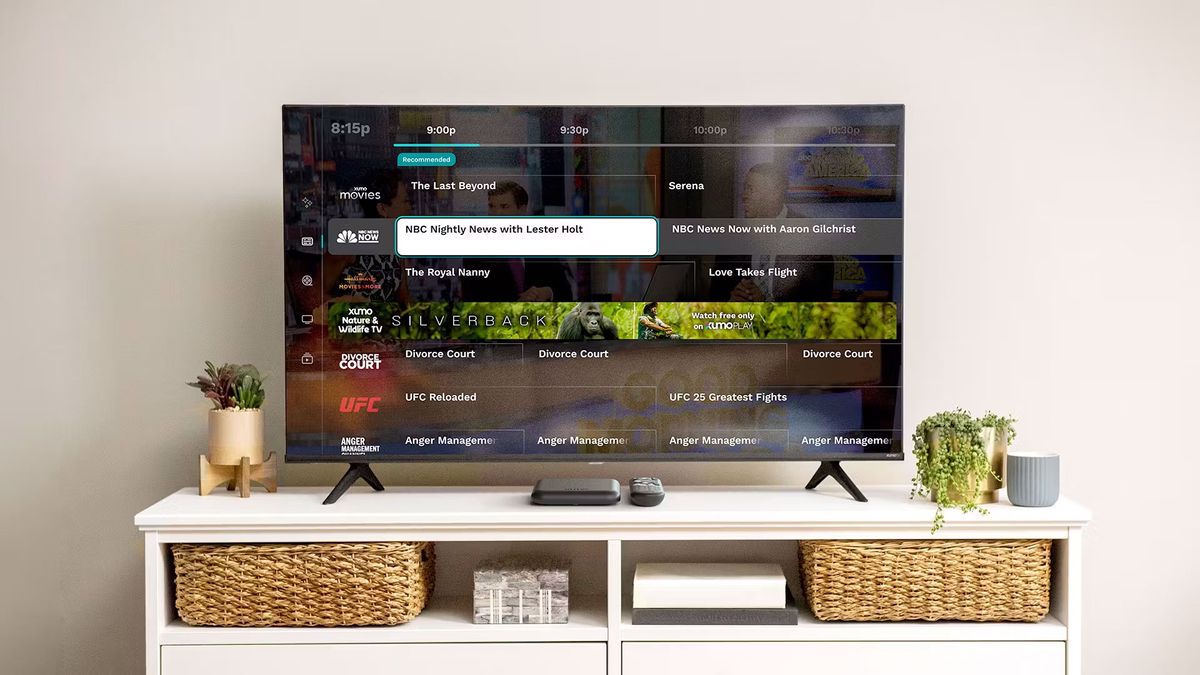
GCI Launches Xumo Stream Box
The Alaskan telco is the fifth operator to deploy the streaming device from the Comcast, Charter joint venture
 www.tvtechnology.com
Xumo To Make Ad Inventory Available Programmatically With PubMatic
Integration will expand reach and targeting capabilities across Xumo’s content
www.tvtechnology.com

Yospace CEO: "Streamers will eke max value of ad inventory"
Tim Sewell, CEO at Yospace, a specialist in server-side ad insertion, has shared his predictions on OTT monetisation for 2025. "With ad-based streaming an i
 advanced-television.com
Thus could be a factor here but it's not about traditional cable directly but a focus on streaming TV apps like Xumo, Tubi, PlutoTV and Samsung TV Plus. Ad inventory is also a factor here.

How To Hit The Target With Streaming & FAST News - TV News Check
With streaming TV still in its infancy, there’s plenty of room for innovation on news publishers’ digital platforms. TVNewsCheck’s NewsTECHForum attendees in New York on Tuesday were privy to a number of examples from industry insiders.
 tvnewscheck.com
If there are production companies really “investing in cable” the reality is the deal is being tied to FAST Free and Streaming Television apps. Case and point how Fox Television stations are putting efforts in streaming such as Live Now and Local Fox Owned stations over on Tubi.
Last year, the Fox streaming news channel LiveNow leveraged user data to add a viewer tally to its broadcast. The rolling figure was a small but critical update, part of LiveNow’s endless efforts to improve its relatively new product, first iterated 10 years ago.
“It obviously is valuable for us to know how many people are watching at any given time,” said Emily Stone, Fox VP of digital content and LiveNow. “For our team, it allows us to make better content decisions. When you see that number go up, you know that people are really interested, and we’re not going to take that content away from them.”
Conversely, if the number goes down, producers will take that as a signal to change things up on the air and find some more compelling content.
Stone also observed that the ticker has an impact on viewers, too.
“When you’re in that live viewing experience … you’re really interested in how many people you’re watching with, and it creates a sense of community,” she said. “That’s a really big deal for LiveNow.”
- Status
- This thread has been closed due to inactivity. You can create a new thread to discuss this topic.