• Get involved.
    We want your input!
    Apply for Membership and join the conversations about everything related to broadcasting.

    After we receive your registration, a moderator will review it. After your registration is approved, you will be permitted to post.
    If you use a disposable or false email address, your registration will be rejected.

    After your membership is approved, please take a minute to tell us a little bit about yourself.
    https://www.radiodiscussions.com/forums/introduce-yourself.1088/

    Thanks in advance and have fun!
    RadioDiscussions Administrators

Saving AM Radio

One thing I noticed on these boards and elsewhere, some/many of the Top 40 stations in the big markets in the 1960s, like KRLA or in places like Tampa and Tulsa, were on smaller stations, or at the end of the dial.

KUDL 1380 was a pathetic signal in Kansas City, but then WHB entered.

The big "full service" stations, the ones that later went to talk, played music, but not "teen music," or didn't focus on that.

This wasn't everywhere, but I see a trend.
You are generalizing again. There was no "trend".

The first Top 40 stations in New York City were WMCA on the marvelous 570, along with 1010 and 1050, both 50 kw. Then, WABC with its non-directional 50 kw came into the race nearly a decade after Top 40 was created.

Cleveland had Top 40 on what was a very decent signal at the time, 1300. Then we got WHK on 1420, another decent signal back then. 1100 with 50 kw tried Top 40 but could not compete. Then we got WIXY 1260, another high band 5 kw station but it did just fine.

Look at Dallas with 1190 competing with 1480 in Dallas and 1360 in Ft Worth. McLendon's 610 in Houston, 920 in El Paso and 550 in San Antonio were excellent signals. So was his 790 in Louisville.

KUDL was adequate to cover the local survey area, but Todd came in with much better formatics and execution. KUDL was just not as good.

KRLA in that era was a great signal. As good or better than KFWB and then KHJ.

Tampa had WLCY on 1380 which was an adequate signal for the size of the market back then. Remember, markets were not expanded by Hooper and Pulse, and Arbitron with its wider methodology did not become prevalent until well into the 70's. In the early 60's, it did not even exist!

WEAM-1390 in DC was also adequate until Arbitron expanded the market and WPGC-FM took over. KOBY-1550 and KEWB-910 and KYA-1260 did just fine in San Francisco until a better signal at 610 came on with Tom Rounds and Bill Drake.

Philly had 560 and 990. Heck, one was so big I even had a dog named "wibbage" back then.

Miami always had the beautiful 560 signal of WQAM. Jacksonville got two good ones at 600 and 690. Denver had Cecil's good signal at 950, and Salt Lake had a nice signal at 1320.

Scooter Seagraves programmed a powerhouse in Tulsa at KAKC-970, so I do not know why you think it had a bad station.

I could go on, but there are plenty of good signal AMs that did Top 40 in the 50's and 60's at a time when the geography of markets was very tight... often less than even the home county.
 
WHB was doing top 40 in the 1950s. KUDL was doing a talk format until 1968 or later. Then it went Top 40....actually Boss 30 with 20/20 news. My Dad advertised on KUDL when it was talk and was shocked it switched to Top 40 since his rep didn't tell him. KUDL may have had an earlier life as a top 40.
KUDL was not an exceptional signal compared to WHB but it did well in the market. It certainly put a dent in WHB's stranglehold on the market.
 
WHB was doing top 40 in the 1950s. KUDL was doing a talk format until 1968 or later. Then it went Top 40....actually Boss 30 with 20/20 news. My Dad advertised on KUDL when it was talk and was shocked it switched to Top 40 since his rep didn't tell him.
Yes, and Storz built his group in the 60's... he died in early 1964. Except for the original in Omaha, a daytimer, he bought fairly good facilities such as 560 in Miami and 690 in New Orleans and programmed them very well.
 
You are generalizing again. There was no "trend".

The first Top 40 stations in New York City were WMCA on the marvelous 570, along with 1010 and 1050, both 50 kw. Then, WABC with its non-directional 50 kw came into the race nearly a decade after Top 40 was created.

Cleveland had Top 40 on what was a very decent signal at the time, 1300. Then we got WHK on 1420, another decent signal back then. 1100 with 50 kw tried Top 40 but could not compete. Then we got WIXY 1260, another high band 5 kw station but it did just fine.

Look at Dallas with 1190 competing with 1480 in Dallas and 1360 in Ft Worth. McLendon's 610 in Houston, 920 in El Paso and 550 in San Antonio were excellent signals. So was his 790 in Louisville.

KUDL was adequate to cover the local survey area, but Todd came in with much better formatics and execution. KUDL was just not as good.

KRLA in that era was a great signal. As good or better than KFWB and then KHJ.

Tampa had WLCY on 1380 which was an adequate signal for the size of the market back then. Remember, markets were not expanded by Hooper and Pulse, and Arbitron with its wider methodology did not become prevalent until well into the 70's. In the early 60's, it did not even exist!

WEAM-1390 in DC was also adequate until Arbitron expanded the market and WPGC-FM took over. KOBY-1550 and KEWB-910 and KYA-1260 did just fine in San Francisco until a better signal at 610 came on with Tom Rounds and Bill Drake.

Philly had 560 and 990. Heck, one was so big I even had a dog named "wibbage" back then.

Miami always had the beautiful 560 signal of WQAM. Jacksonville got two good ones at 600 and 690. Denver had Cecil's good signal at 950, and Salt Lake had a nice signal at 1320.

Scooter Seagraves programmed a powerhouse in Tulsa at KAKC-970, so I do not know why you think it had a bad station.

I could go on, but there are plenty of good signal AMs that did Top 40 in the 50's and 60's at a time when the geography of markets was very tight... often less than even the home county.
Wasn't WABC stuck with running Don McNeil's Breakfast Club?
 
Let the translators on FM stay on the air as long as the licensee holds a valid AM license. The FM translator is where the listeners are. The FM must now sign off within 24 hours after technical trouble silences the AM. Change this.
 
I prefer allowing AMers, daytimers first, to maximize their translator height and power as a primary to go 24/7 without the AM so long as the annual spectrum use of the AM and translator become the annual spectrum usage fee (the FCC does not lose income). Then we move to other AMs from high on the dial and lowest in power to those that just choose to go FM only under the same conditions.

Opponents say 'but the FM covers only a tiny part of a big metro'. I agree but they can assemble more FM listeners in a tiny coverage than they can hitting 80% of a huge metro on the AM band. Selling local accounts and super serving a sector of the metro might not make them rich but can easily make them profitable.
 
“Wasn't WABC stuck with running Don McNeil's Breakfast Club?”

Only until 12/31/1967, when the old ABC Radio Network was blown up and replaced with the four-network network. All the long-form programming disappeared, except for the 15-minute Paul Harvey news.
 
“Wasn't WABC stuck with running Don McNeil's Breakfast Club?”

Only until 12/31/1967, when the old ABC Radio Network was blown up and replaced with the four-network network. All the long-form programming disappeared, except for the 15-minute Paul Harvey news.
McNeill's and Harvey's programs went to the ABC Entertainment Network.
 
Now that a new session of Congress has begun, a new version of the AM In Every Car act has been introduced:

Well Sen. Markey is no right wing conservative, so the idea held by many on this thread that this bill is all about conservative talk radio just doesn't fly.
 
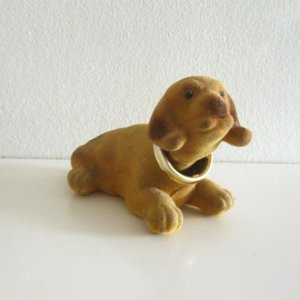
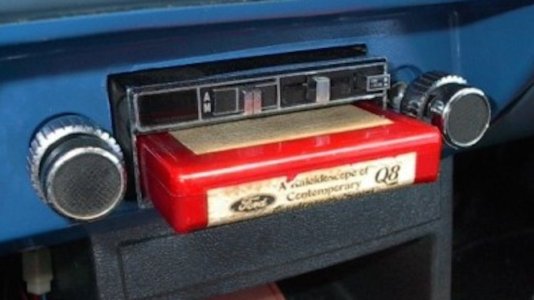
While we're bringing back things for cars from the 60s...
2b239199ccee4f3f81308dd56c2785f5.jpg
Bobble head dog for the rear package tray...
8-Track-tape-Player-FB.jpg
8-tracks...

Now if we could just bring back my youth...
 
Well Sen. Markey is no right wing conservative, so the idea held by many on this thread that this bill is all about conservative talk radio just doesn't fly.
He's not the most conservative Senator, but he is 80 years old and remembers when AM ruled the media market.

The bill last year (H.R. 3413) had significant bipartisan sponsorship, btw. There were 142 Republicans and 128 Democrats who sponsored it in the house (more than enough to pass it, had the Speaker brought it to the floor). The Senate companion last year was introduced by Sen. Markey and cosponsored by 33 Republicans and 29 Democrats, also plenty to pass it if the leader had called it up.
 
Nobody has explained why a <$20.00 battery/hand crank AM radio in the glove box isn't just as good an emergency solution ... maybe better.

If your car is being flooded, for example, you could grab it and head for higher ground.

Sure, it would make Mark Levin sound even worse, but so be it.
 
Nobody has explained why a <$20.00 battery/hand crank AM radio in the glove box isn't just as good an emergency solution ... maybe better.

I've responded to this several times. You just refuse to accept the answer. Car companies don't make or sell crank radios.

Here's what I said in post #1557:

Only problem is they don't have a reason to appropriate this money. There needs to be a bill started, and that takes members of congress to get together and decide this is a good idea. Someone has to talk to them. How about you? Otherwise, nothing will get done.

If people want to buy crank radios, they are available and for sale. They don't need a big government program to buy them for them.


Back
Top Bottom