• Get involved.
    We want your input!
    Apply for Membership and join the conversations about everything related to broadcasting.

    After we receive your registration, a moderator will review it. After your registration is approved, you will be permitted to post.
    If you use a disposable or false email address, your registration will be rejected.

    After your membership is approved, please take a minute to tell us a little bit about yourself.
    https://www.radiodiscussions.com/forums/introduce-yourself.1088/

    Thanks in advance and have fun!
    RadioDiscussions Administrators

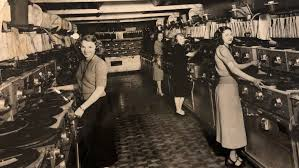
Union Turntable Broadcast Operators

MadMan

Banned
How many radio stations were mandated to use a separate engineer to run the record players. How long did this career last, and was it high paying.possibly one of the best jobs in town?

Also the gals that ran and played the 'streaming' music at your local restaurant, bar, or wherever Jukeboxes were placed. Was this job on par with turntable operators. I just watched a Charlie Chan movie and they used this forgotten profession in the plot of the movie.
1741222618210.png
 
How many radio stations were mandated to use a separate engineer to run the record players. How long did this career last, and was it high paying.possibly one of the best jobs in town?

FWIU: The union run radio stations owned by the major networks in NY and Chicago. I'm told it was a NABET position. Working at an O&O was a plum gig, and was preferable to working at the radio network.
 
I remember hearing that WCFL ("The Voice of Labor") had the jock, board op, producer and union musician to start the turntable. I can't imagine how they ran such a tight show with all those people involved, but they did.
 
13-Q in Pittsburgh, 1975... we had an engineer who handled anything involving recording... like the phone bits with listeners, the engineer had to record and play-back... they also recorded any news bits from a network, and played 'em back live. The engineer also had the master audio control, but that was faked and didn't really change the master audio... same when you recorded an artist interview in a studio, you the DJ could not touch the recorder... if I did touch the recorder, the engineer would tell me "You're a communist." Fun times!
 
the engineer would tell me "You're a communist." Fun times!

It sounds like a union shop. The funny part is that some associate unions with communism. There was a time when jobs and roles were strictly defined. I've read stories about the rise of combo studio operations in the 60s, and there was a lot of resistance to it from unions and engineers. Meanwhile the equipment was getting easier to operate, and didn't require engineering knowledge. The FCC eliminated the 3rd phone license, and the damns exploded. Ultimately we're at a point now where anyone can run a radio station out of a spare bedroom.
 
At KQED, there was once a memo sent out by one of the engineers complaining because an intern had damaged a mic while setting it up for a guest. I don't know if any of the engineers there were NABET members or not.
 
It sounds like a union shop. The funny part is that some associate unions with communism. There was a time when jobs and roles were strictly defined.
Some of that was featherbedding, but most was due to the complexity of the pre-Ampex, pre-cart machine era. Yet the huge number of new stations that came on right after WW II mostly ran with a combo operator who did local shows, backtimed into network features and programs and even watched the transmitter in the next room.

Even those directional stations that needed an FCC First Class Radiotelephone License found plenty of jocks who went to those 6-week courses that got you a "ticket" with little or no technical knowledge. With that, you could run a directional station with a single person on duty.
I've read stories about the rise of combo studio operations in the 60s, and there was a lot of resistance to it from unions and engineers.
Not so much from engineers, as studio gear was relatively simple due to two rapidly adopted technologies. The reel to reel tape recorder allowed for recorded programs to be easily run (and pretty much eliminated the need for disk recorders). The cartridge tape machine, which caught on rapidly in the 1959-1961 period allowed ads, jingles, promos, sounders and the like to be easily played with automatic cueing and simple storage in racks.
Meanwhile the equipment was getting easier to operate, and didn't require engineering knowledge. The FCC eliminated the 3rd phone license, and the damns exploded.
The elimination of the 3rd Phone only affected the ability / authorization to fill in the transmitter log; this was needed if the transmitter was at the studio location or remote controlled and logged from there. The 3rd Phone did not have anything to do with the operation of the "board" or playing records or anything else.
Ultimately we're at a point now where anyone can run a radio station out of a spare bedroom.
And you could have done that 60 years ago. In fact, some of the first independent FMs were basically a studio with record racks, a room with the transmitter in it and a tower outside or one the roof. Heck, my current living room is much larger than the whole facility at the station I started at, WCUY in Cleveland, OH, where me and my 3rd Class license for a while did the whole 16 hour Sunday show all alone by myself.

 
13-Q in Pittsburgh, 1975... we had an engineer who handled anything involving recording... like the phone bits with listeners, the engineer had to record and play-back... they also recorded any news bits from a network, and played 'em back live. The engineer also had the master audio control, but that was faked and didn't really change the master audio... same when you recorded an artist interview in a studio, you the DJ could not touch the recorder... if I did touch the recorder, the engineer would tell me "You're a communist." Fun times!
I heard some of those stories from Bill Tanner later in Miami at Y-100 and Metroplex. He went from a very simple operation in Jackson, MS, to the highly unionized station in Pittsburgh and was glad to get to Miami where the jock could do everything.
 
By the way---I think what we're talking about here is not a board engineer---but a third person (jock/engineer/turntable operator).

That was (as far as I know) purely a New York/Chicago thing. Here on the West Coast, the board engineers ran the turntables rather than a third person.
 
By the way---I think what we're talking about here is not a board engineer---but a third person (jock/engineer/turntable operator).

That was (as far as I know) purely a New York/Chicago thing. Here on the West Coast, the board engineers ran the turntables rather than a third person.
I think it may have affected network O&O stations in Detroit, Philly and Pittsburgh, too. But you are right that it was concentrated in rust-belt union towns.
 
At KQED, there was once a memo sent out by one of the engineers complaining because an intern had damaged a mic while setting it up for a guest. I don't know if any of the engineers there were NABET members or not.
My understanding is that all the "announcers" (Freeman, Hennigan, Althaus, etc.) and engineers are NABET, and have been for many years. The other on-air folks, like Forum talent and news staff, are AFTRA.

BTW, intern or not, how bad do you have to be to damage a mic while adjusting it for a guest? That sounds like a union guy kvetching about nothing just to protect his turf.
 
My understanding is that all the "announcers" (Freeman, Hennigan, Althaus, etc.) and engineers are NABET, and have been for many years. The other on-air folks, like Forum talent and news staff, are AFTRA.

BTW, intern or not, how bad do you have to be to damage a mic while adjusting it for a guest? That sounds like a union guy kvetching about nothing just to protect his turf.
I don't think it had to be replaced or anything, I think something was just knocked loose. Just imagine if they had let the guests adjust the mics....
 
Years ago I hired a just-retired-and-moved-to-Florida, former NBC TV staff announcer for a beautiful music station. He had been the announcer for the Jack Parr Show. On his first day on the job he sat down in front of the mic and waited for the engineer to come adjust it for him. He asked if he could meet his engineer. I said "You are the engineer." His jaw dropped.
 
I heard some of those stories from Bill Tanner later in Miami at Y-100 and Metroplex. He went from a very simple operation in Jackson, MS, to the highly unionized station in Pittsburgh and was glad to get to Miami where the jock could do everything.
That’s a name I haven’t heard in a while! I worked at WJDX a few years after Bill Tanner had departed but heard the stories.
 
I remember hearing that WCFL ("The Voice of Labor") had the jock, board op, producer and union musician to start the turntable. I can't imagine how they ran such a tight show with all those people involved, but they did.
In 1969 when I was going to school in Chicago I visited WCFL at the same time Howard Miller moved into the morning show. I remember the engineer pointing out the turntables and saying a special engineer would be running them during Howard's show because Howard would be playing records he and his wife picked out.
 
I remember hearing that WCFL ("The Voice of Labor") had the jock, board op, producer and union musician to start the turntable. I can't imagine how they ran such a tight show with all those people involved, but they did.
WCFL, WLS and others were cart-based with only an occasional record on a turntable played live. The tight show was one engineer with a group of cart machines (too large to be called a “stack” back then) “Record-turners” were members of the AFM, which was/is affiliated with the AFL-CIO. WCFL was owned by the Chicago Federation of Labor, even tagged ID’s with “The Voice of Labor”.

WCFL, picture was dated 1972, but is probably earlier. I believe they were using ITC SPs by the 70s.

329245040_2408826965937358_542533756043409541_n.jpg
 
WCFL, WLS and others were cart-based with only an occasional record on a turntable played live.
Remember, when WLS became full Top 40 we were in the earliest days of cart machines. Few stations used them at the beginning for music; carts were used for commercials, jingles and promos.
 
Status
This thread has been closed due to inactivity. You can create a new thread to discuss this topic.


Back
Top Bottom