• Get involved.
    We want your input!
    Apply for Membership and join the conversations about everything related to broadcasting.

    After we receive your registration, a moderator will review it. After your registration is approved, you will be permitted to post.
    If you use a disposable or false email address, your registration will be rejected.

    After your membership is approved, please take a minute to tell us a little bit about yourself.
    https://www.radiodiscussions.com/forums/introduce-yourself.1088/

    Thanks in advance and have fun!
    RadioDiscussions Administrators

Do kids really like oldies?

Sure they can. Young people have always taken an interest in their parent's music, though it may not very common. I'm 29, and I grew up listening to true oldies (mainly 1960's hits) all of the time.

My favorite decade of music is the 1980's. Fortunately, 1980's music is still extremely popular and is well represented on a highly rated FM station in my market (95.7 The Jet in Seattle or 103.7 when i'm in San Francisco). I absolutely like to dive back into 60's and 70's rock on my local classic rock radio station (KISM 92.9) too. Music by The Doors, The Beatles, Hendrix, Cream, and others don't go out of style.

Admittedly, I don't find myself listening to true oldies that often anymore. There's no longer a radio station located in my market that focuses on that type of music anymore. If it was still easily accessible, I'd still listen. But it's niche programming at this point, and most remaining "oldies" radio stations are airing songs primarily from the 1970's.
 
I think mid 60s is probably the cutoff. Not many are listening to anything before that.
Probably true -- count me as a 63-year-old that likes Adult Standards, but with that demo quickly dying off, I'll just have to stream KDES-FM's HD2 ("107.3 Mod FM") out of Palm Springs. Up until four years ago, KEZW-AM 1430 Denver played a mixture of adult standards and "bearable" soft oldies, but it flipped to sports in January 2021. (Just what the Denver market needs -- yet another sports station.....)
 
This thread is all about "formats."

Do young people care about that when they can "mine" songs individually from any number of sources?

A good song is a good song, and it's possible that many songs from a few decades ago are simply more creative and more compelling than what's being produced today.

Stations might do better to focus on good songs with a history of popularity over the years.
 
Sure they can. Young people have always taken an interest in their parent's music, though it may not very common. I'm 29, and I grew up listening to true oldies (mainly 1960's hits) all of the time.

My favorite decade of music is the 1980's. Fortunately, 1980's music is still extremely popular and is well represented on a highly rated FM station in my market (95.7 The Jet in Seattle or 103.7 when i'm in San Francisco). I absolutely like to dive back into 60's and 70's rock on my local classic rock radio station (KISM 92.9) too. Music by The Doors, The Beatles, Hendrix, Cream, and others don't go out of style.

Admittedly, I don't find myself listening to true oldies that often anymore. There's no longer a radio station located in my market that focuses on that type of music anymore. If it was still easily accessible, I'd still listen. But it's niche programming at this point, and most remaining "oldies" radio stations are airing songs primarily from the 1970's.
“Oldies” has to advance with the generations, hence, why “oldies” is always evolving through the decades. To me, “oldies” is the 50s and 60s. To others younger than me, “oldies” is the 70s and 80s.
 
I've known of no kid who had interest in their parent's music. I recall high school the first 4 years of the 1970s. One assembly was a 1950s group, a Sha Na Na styled 50s group. The music was of interest for about two weeks but this was not my parent's music (MOR and Beautiful Music). I preferred rock and top 40.

I recall in 6th grade finding a classical FM station that had been announcing they were going 24 hours from new studios. I was amazed they had very, very few commercials. My Mom even said she was happy I was discovering Classical Music and they buy whatever Classical I wanted when we went to the mall (or at least what passed for a mall then). My interest wasn't c;lassical music but a new to me radio station.
 
“Oldies” has to advance with the generations, hence, why “oldies” is always evolving through the decades. To me, “oldies” is the 50s and 60s. To others younger than me, “oldies” is the 70s and 80s.
To *this* 60 yo, there's "50s oldies", "60s oldies", and "70s oldies".
 
To *this* 60 yo, there's "50s oldies", "60s oldies", and "70s oldies".

And this is why the term isn't used in mainstream radio anymore. It's gotten tied to decades.

As I've written about here a few times over the last 20-ish years, "oldie" has been in use for more than 100 years, and is meant, in music, to describe any song not currently on the pop charts.

In the early days of Top 40 radio, stations played "oldies" that were one year old. Very few Top 40 stations of the 60s and 70s went further back than 10 years.

If you're 45 years old, you were born in 1980, graduated high school in 1998 and graduated college in 2002. If we were still using the term, "oldies" for today's 45-year-old would mostly be music from 1990-2010.
 
I first remember the term "oldies" used in the early 70's referring to pop music from the 50's with a smattering of late 40's (what we would call standards today). "Oldies seems to be a term used primarily by Boomers to describe the music they grew up with (50's, 60's and 70's primarily). I don't recall hearing the term used by post-Boomers.
 
I first remember the term "oldies" used in the early 70's referring to pop music from the 50's with a smattering of late 40's (what we would call standards today). "Oldies seems to be a term used primarily by Boomers to describe the music they grew up with (50's, 60's and 70's primarily). I don't recall hearing the term used by post-Boomers.
When anything other than currents began to be played on Top 40 stations... somewhere in the mid-60's, the "gold" or "flashbacks" were all from the Rock 'n' Roll era, generally going back to the later 50's. Few played early 1955-1958 Top 40 hits as even then they sounded "dated" to PDs.

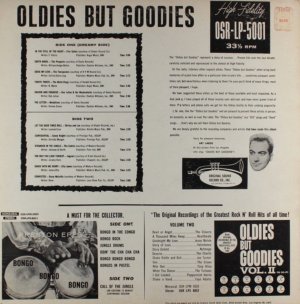
The term "oldies" was popularized by Art Laboe, whose "Oldies but Goodies" albums in the 60's. In fact, he trademarked that term, and it took a while for stations to use just "oldies" for fear of a TM violation.

Art Laboe - Wikipedia (Very incomplete, particularly on the Oldies but Goodies albums which were his biggest project for many years).
 
When anything other than currents began to be played on Top 40 stations... somewhere in the mid-60's, the "gold" or "flashbacks" were all from the Rock 'n' Roll era, generally going back to the later 50's. Few played early 1955-1958 Top 40 hits as even then they sounded "dated" to PDs.

As for the age of what got played on Top 40 radio, that varied by station, market and PD.

KHJ went all the way back, not just on weekends, but in "adult" dayparts (middays, overnights). There's an aircheck of Charlie Tuna in 1970 playing Perez Prado's 1958 hit "Patricia" (for the uninitiated):


Picture that alongside Creedence's "Travelin' Band", Norman Greenbaum's "Sprit in the Sky" and John Lennon's "Instant Karma".

It took Ted Atkins' arrival as PD later that year to put a stop to that, tightening up KHJ's Gold library in 1971, which gave KRTH most pre-Beatles oldies to itself when it changed from KHJ-FM in October of 1972.


The term "oldies" was popularized by Art Laboe, whose "Oldies but Goodies" albums in the 60's. In fact, he trademarked that term, and it took a while for stations to use just "oldies" for fear of a TM violation.

Art Laboe - Wikipedia (Very incomplete, particularly on the Oldies but Goodies albums which were his biggest project for many years).

Laboe's "Oldies But Goodies" Vol. 1 came out in 1959.

Screenshot 2025-03-16 at 2.50.42 AM.jpeg

The oldest song on the album was six years old (The Medallions' "The Letter"), but the vast majority were three years old.

Listening to airchecks over the years, "Oldie"was actually in pretty common use for non-current music before 1959 in most popular music formats, and Art, in his own liner notes, doesn't make any attempt to define it further.

As David says, Art did copyright the phrase "Oldies but Goodies", but not the term "oldie" itself.

While some programmers may have avoided the term "Oldies" to stay out of trouble with Art, by the late 50s, most stations had hit on the idea of branding their oldies in some unique-to-their-market way.

Chuck Blore's statons (KFWB, KEWB, KDWB) used "Flashback". KYA in San Francisco called them "Golden Gate Greats", some stations called them "Memory Tunes", and of course the Drake/Chenault and RKO stations had "Goldens" and "Million Dollar Weekends" to go with them. Even stations outside the Top 40 format got in on the act, with KMPC in Los Angeles calling non-current songs "Recall Records" as early as 1961.

Regardless of when each of us heard "oldie" for the first time, it's been in use describing a song not currently popular since at least 1875, according to Webster's dictionary.

The Oxford English Dictionary actually cites a use as early as 1799 in a translation by C. Ludger, apparently (though details are hard to come by) of a German text about a music composition that was some years old at that time.

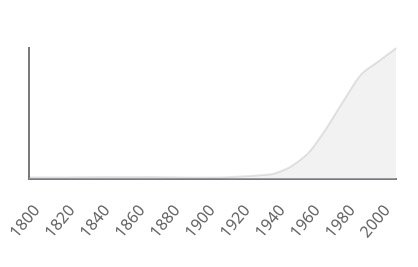
The OED also has a chart showing the frequency of use of the term:

Screenshot 2025-03-16 at 3.29.22 AM.jpeg
As you can see, it began to take off around 1900, accelerated after World War Two and shot up rapidly after 1960. Again, Laboe's series of albums, fifteen volumes in all, were popular--in fact, Volume 1 stayed on the Billboard Album chart for more than three years.

Also interesting, you can see that the term is still in use by people today---just not by most radio programmers.
 
As a "boomer," I grew up with the music played on Oldies stations today. Of course, then it was being played on top 40 stations. But my parents listened to middle of the road or full service stations and I grew to like "the great American song book" and show tunes (but I wouldn't let my parents know that). I never did take to big band music and I couldn't stand Lawrence Welk (still can't). I used to like Adult Standards radio but now it's morphed into AC oldies and there aren't many left.
 
In Ecuador in the mid to late 60's, I used the term "viejitas" for "oldies". The term is also a word for "old ladies", which allowed the jocks to have a bit of fun. When I got to Puerto Rico in 1970, we used that term and added "Viejitas buena gente" which meant "good guys oldies" as the station used the rhyming "13-20" and "buena gente" in jingles.

So the term was somewhat international. I heard the Spanish word for "golden" or "gold" used often, despite the fact that "gold records" were not a thing in most of Latin America where record sales were limited. So those stations were just copying whatever they heard on a trip to the U.S.
 
That was KFWB's from 1958-1963, under Chuck Blore, as well.
Ah, that explains where that came from. I'm guessing he did not want to use the word "old" or any derivative so he created his own name.


Back
Top Bottom