
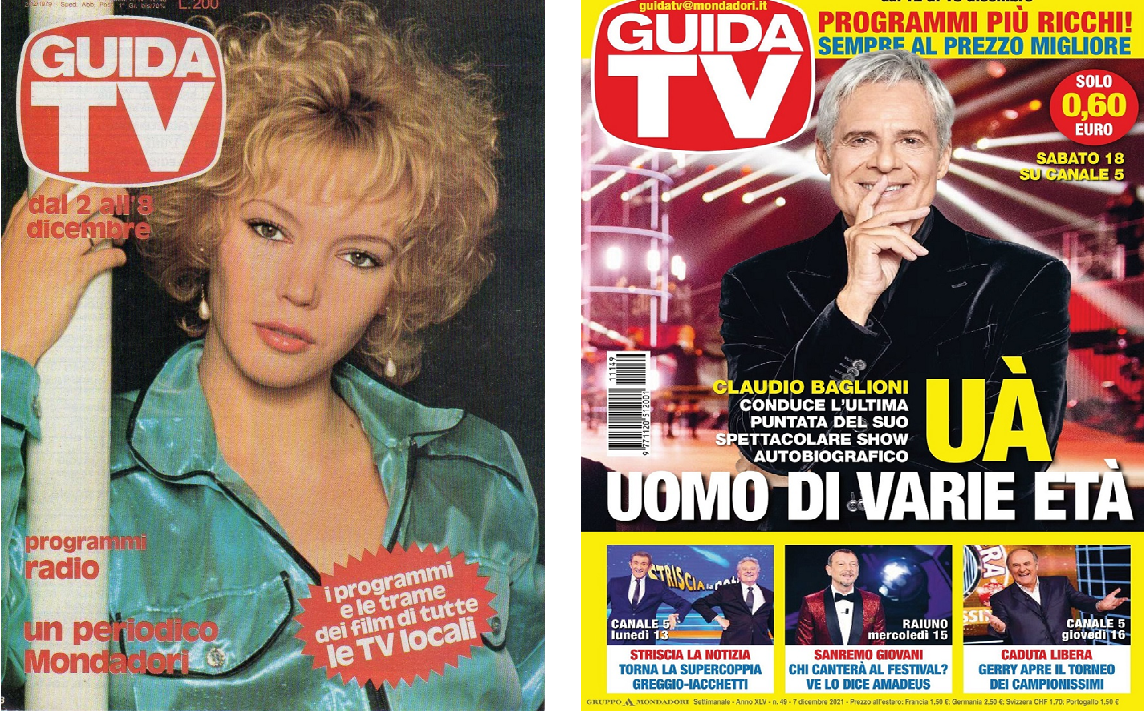
That logo is a dead-ringer for the TV Guide logo, though the font in "Guía" is slightly different from the original, but it's close enough for most people.

-
Get involved.
We want your input!
Apply for Membership and join the conversations about everything related to broadcasting.
After we receive your registration, a moderator will review it. After your registration is approved, you will be permitted to post.
If you use a disposable or false email address, your registration will be rejected.
After your membership is approved, please take a minute to tell us a little bit about yourself.
https://www.radiodiscussions.com/forums/introduce-yourself.1088/
Thanks in advance and have fun!
RadioDiscussions Administrators
You are using an out of date browser. It may not display this or other websites correctly.
You should upgrade or use an alternative browser.
You should upgrade or use an alternative browser.
TV Guide editions and online resources
- Thread starter IM42A
- Start date

Italy has long had a Guida TV among a myriad of other listings magazines:
But beside the name, the logo, and the format, the magazine doesn't bear much resemblance to its U.S. counterpart. As these sample listings from 1996 (Sicily/Sardinia edition) indicate, it has a typically European layout:
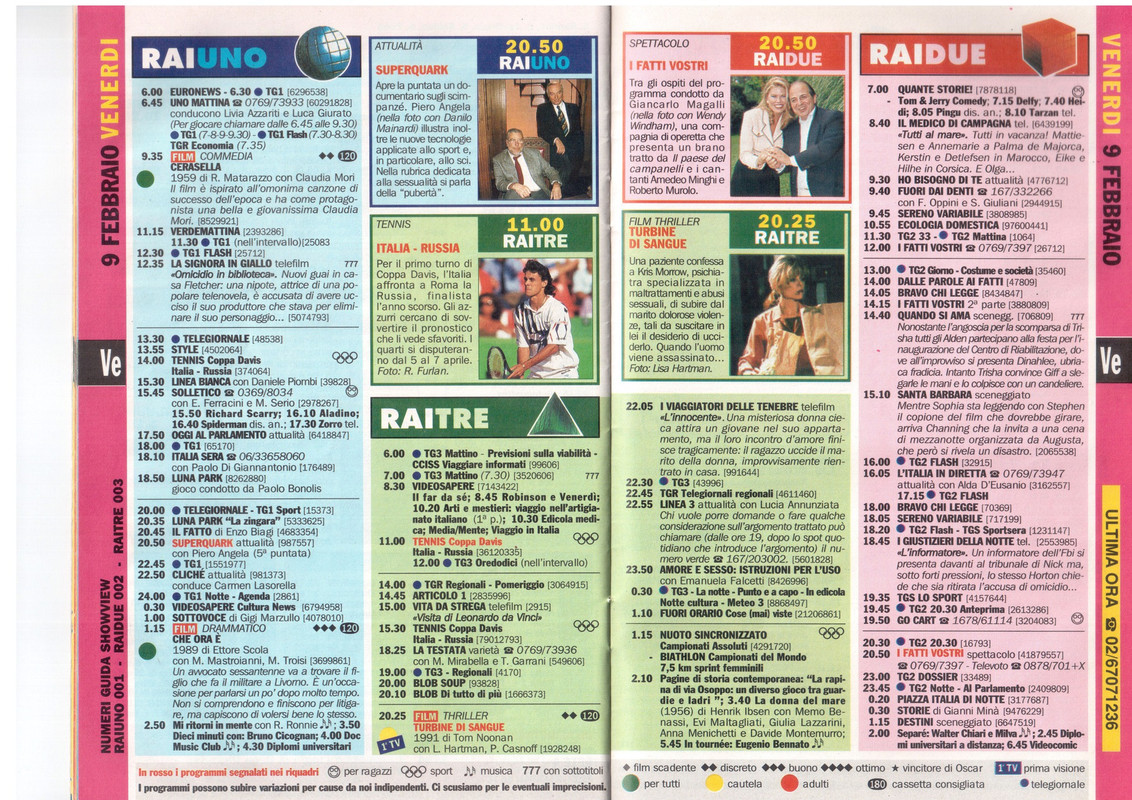
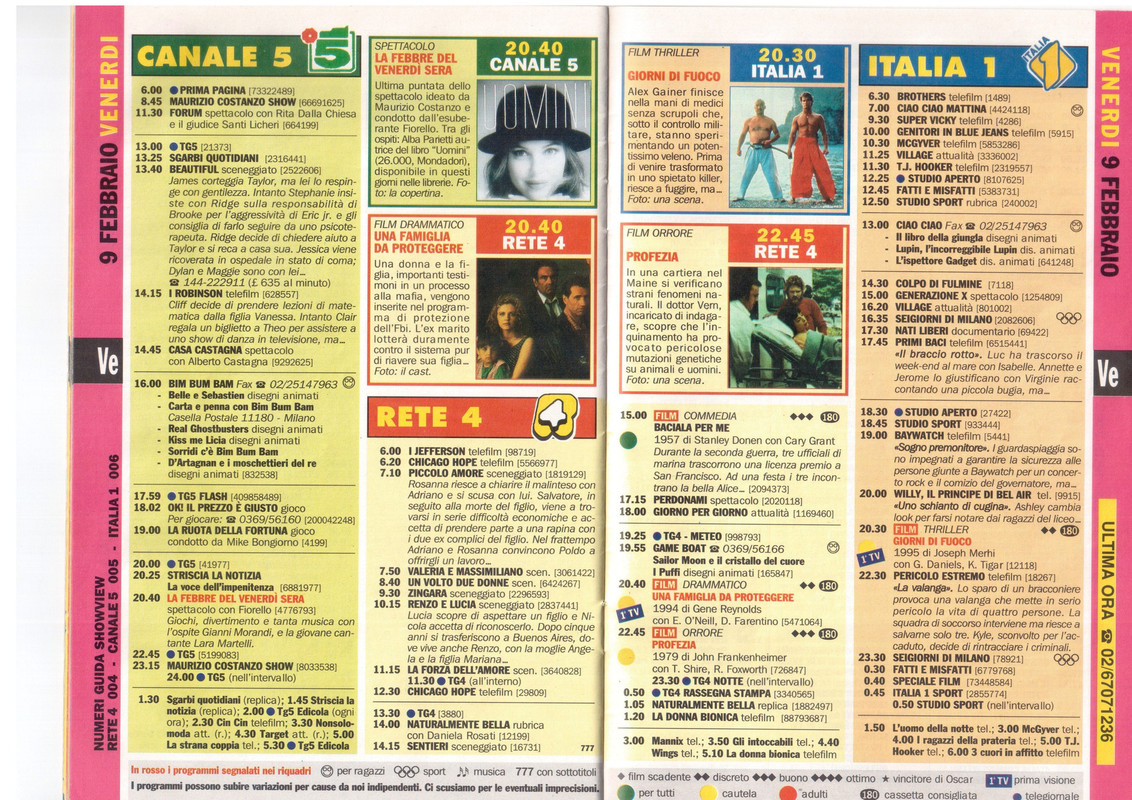
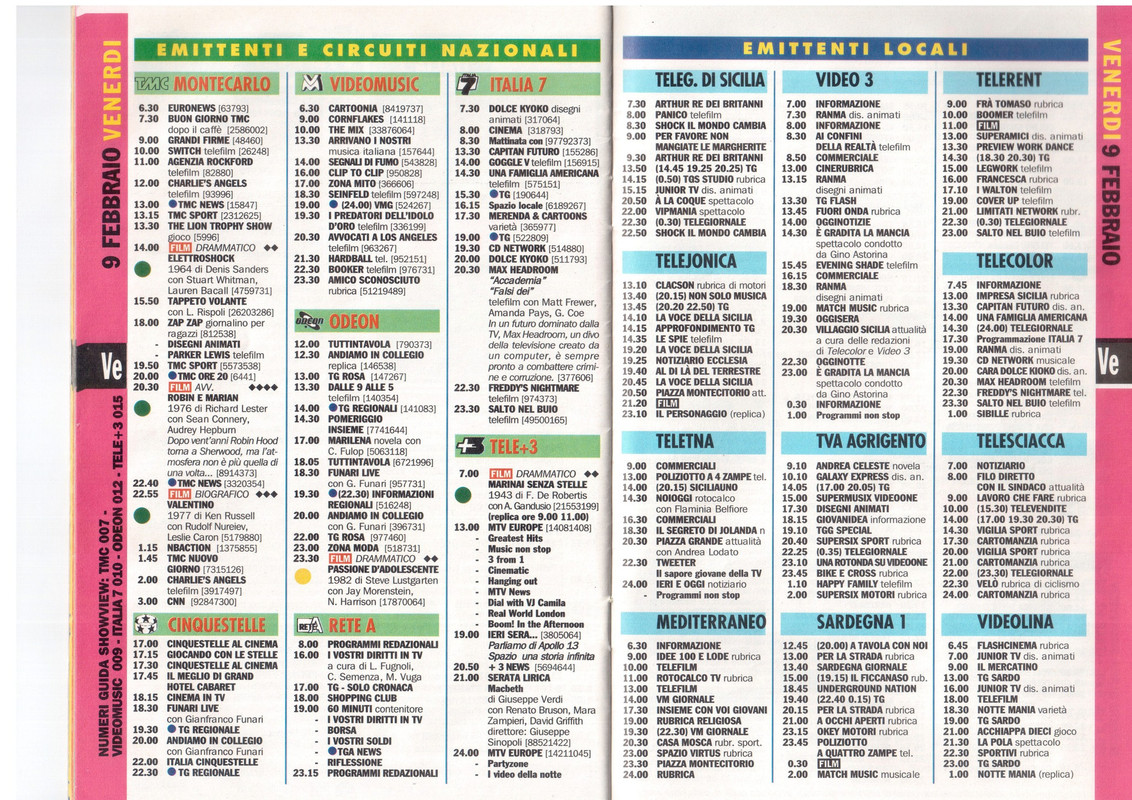
Source: SceltaTV
But beside the name, the logo, and the format, the magazine doesn't bear much resemblance to its U.S. counterpart. As these sample listings from 1996 (Sicily/Sardinia edition) indicate, it has a typically European layout:
Source: SceltaTV
Last edited:
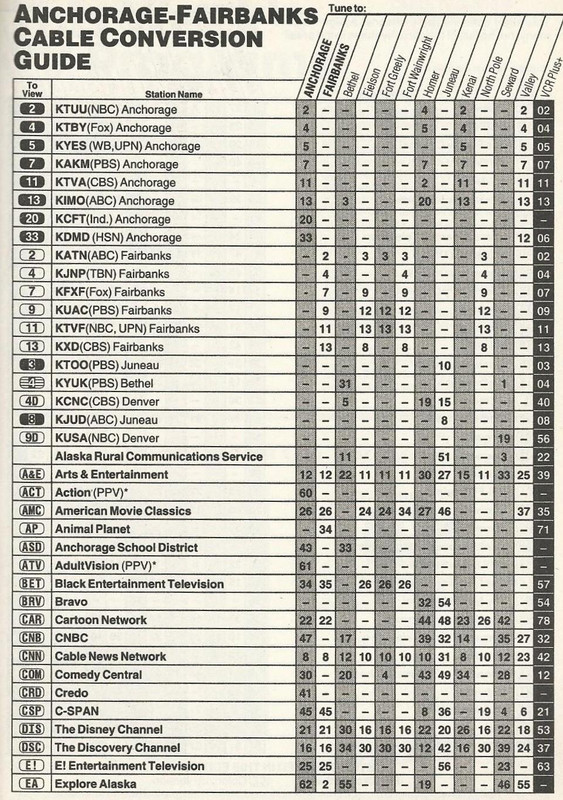
From Matt Sittel's site, a cable conversion chart from the very short-lived Alaska (Anchorage-Fairbanks) edition of TV Guide; apparently, it was only around from July 1997 to December 1998:
On a related note, here's a 1983 recording of the Alaska Satellite Television Project. I'm sketchy on the details, but the service apparently provided large swathes of rural Alaska with a single service that cherrypicked programming mostly from Anchorage TV stations, both commercial and public. After the lineup slide in this clip, you can see a newscast from KTUU in Anchorage, followed by another slide at the end (the 28:35 mark):
Yes, this edition existed for a short time. There is no intrinsic reason that Alaska shouldn't have had a TV Guide edition all along, just like anyplace else. As for Alaska having had multiple time zones until 2007 (and the far, far western islands still do have their own time zone), this could have been resolved by using the main time zone (the one shared by Anchorage and Fairbanks), and running an explainer at the top of every other page, similar to what the North Dakota and Northern Wisconsin editions had.From Matt Sittel's site, a cable conversion chart from the very short-lived Alaska (Anchorage-Fairbanks) edition of TV Guide; apparently, it was only around from July 1997 to December 1998:
I would think that with the advent of ATSC, they could have just retrofitted ARCS stations to provide full-service subchannels, relaying at least an SD feed of each major Anchorage station, but apparently they haven't done that, the x.1 channel is still a mix of various stations. Kind of reminds me of what the AFTRS system provides for the military, but with commercials intact instead of being overlaid by PSAs.On a related note, here's a 1983 recording of the Alaska Satellite Television Project. I'm sketchy on the details, but the service apparently provided large swathes of rural Alaska with a single service that cherrypicked programming mostly from Anchorage TV stations, both commercial and public. After the lineup slide in this clip, you can see a newscast from KTUU in Anchorage, followed by another slide at the end (the 28:35 mark):
I wonder why some Alaska cable systems carried network affiliates from Denver. By 1997, there were plenty of stations to choose from on satellite, so wouldn't something from the Pacific time zone made far more sense?
I wonder why some Alaska cable systems carried network affiliates from Denver. By 1997, there were plenty of stations to choose from on satellite, so wouldn't something from the Pacific time zone made far more sense?
Don't know. Very possibly it was because the Denver stations had been on satellite for a long time (the "Denver 5") and people were used to them. Or maybe there was a demand for the kind of time-shifting afforded by stations from the Mountain Time Zone. Or possibly the Denver stations cut them a better deal. Hard to say.
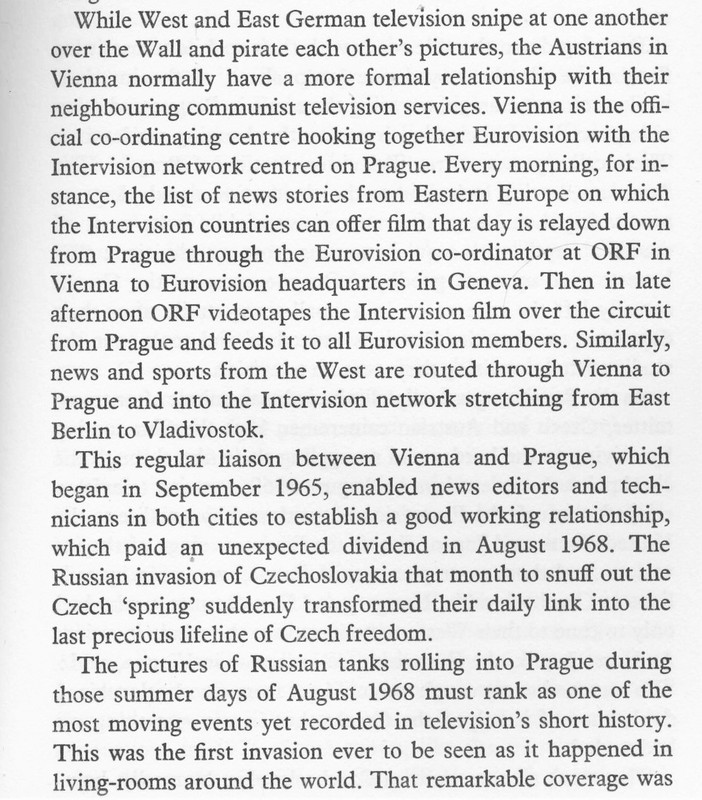
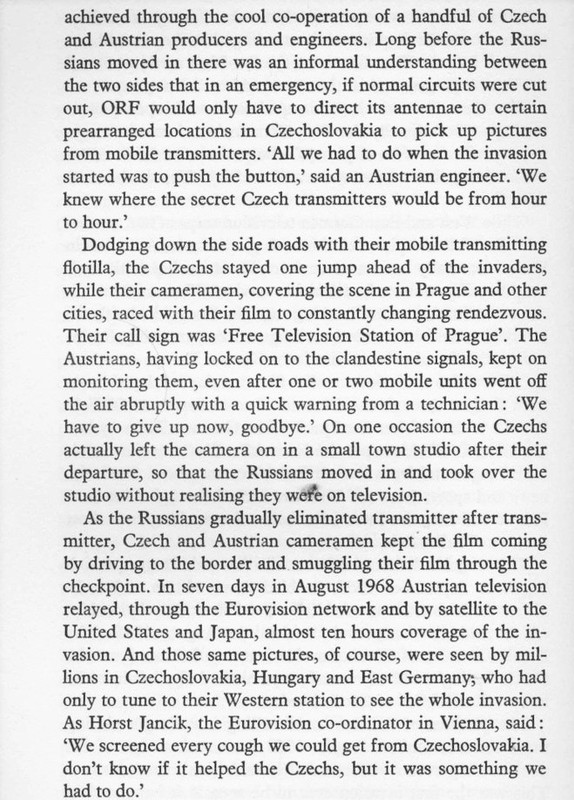
On our recent topic of TV viewing across the Iron Curtain, here's another account from Timothy Green's book, this time about how the 1968 crushing of the Prague Spring became one of the first global television events, thanks in part to improvised broadcasts by members of the Czech resistance and Austrian television:
You can see a fragment of one such broadcast (from Brno) at the 28:25 mark of this documentary about Austrian TV's role during the Prague Spring:
You can see a fragment of one such broadcast (from Brno) at the 28:25 mark of this documentary about Austrian TV's role during the Prague Spring:
In addition to the 1965-1970 Northern CA TVG issues, archive.org also has a bunch of NY Metros from the '90s, and assorted issues from LA and Chicago from the 90s up to and including 2005. They are in black and white and require a login, but they're there.
Very interesting, thanks for posting this. It's not readily apparent whether WBNB and WSVI are running network programming in tandem with the East Coast feed, which would be the same time part of the year (the USVI are on Atlantic Standard Time and do not observe DST, which would put them in sync with Eastern Daylight Time), and an hour ahead the rest of the year (when the East Coast is on standard time). It would either be that, or time-shifted in some fashion. The USVI now get their CBS and ABC via WCVI-23, and NBC on WVGN-LD-19. WSVI is now Ion and WBNB doesn't exist anymore.
WBNB went dark after Hurricane Hugo destroyed its facilities in 1989. Here's an early-'80s sales video profiling the station; for a look at its news operation, go to the 3:50 mark:
Last edited:
WBNB went dark after Hurricane Hugo destroyed its facilities in 1989. Here's an early-'80s sales video profiling the station; for a look at its news operation, go to the 3:50 mark:
She kind of reminds me of Marcia Wallace from The Bob Newhart Show.
And the anchor sort of has that Ron Burgundy thing going on, minus the pomposity. That look was very common back then in TV news.
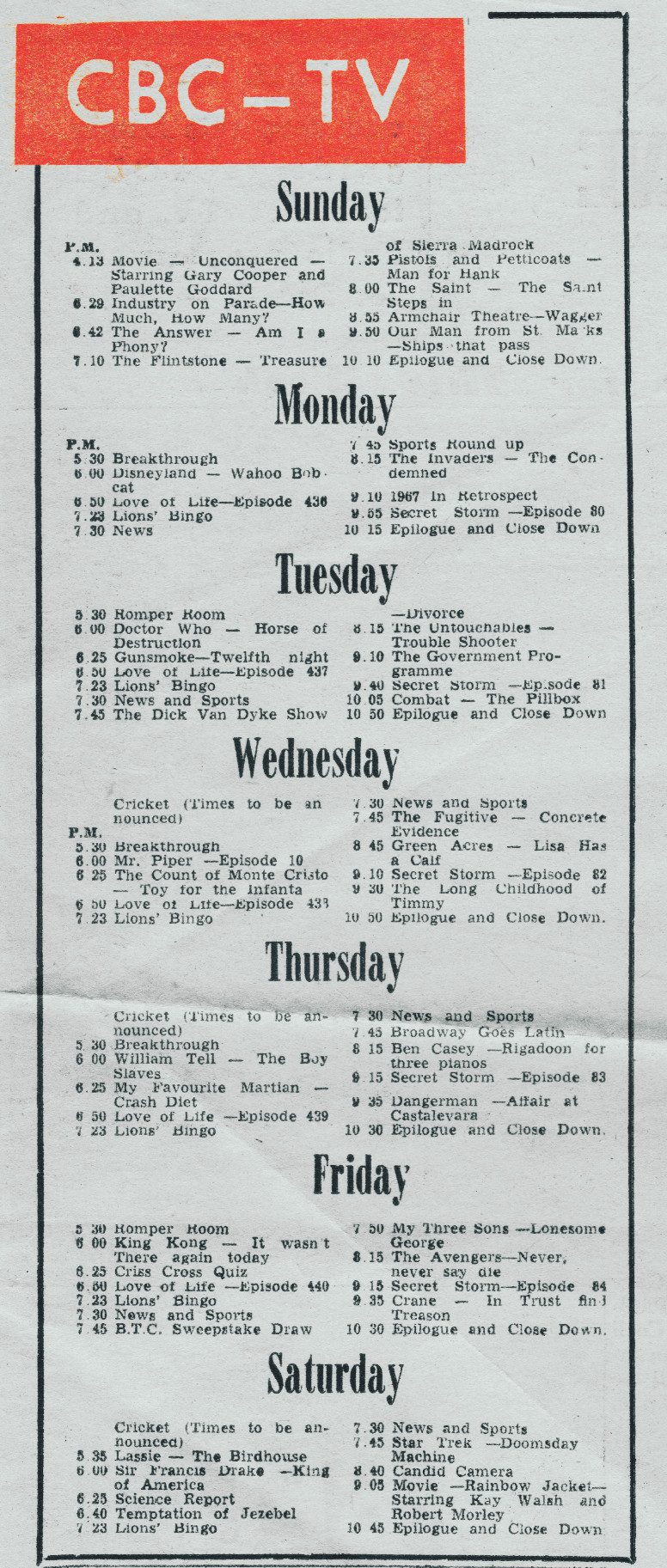
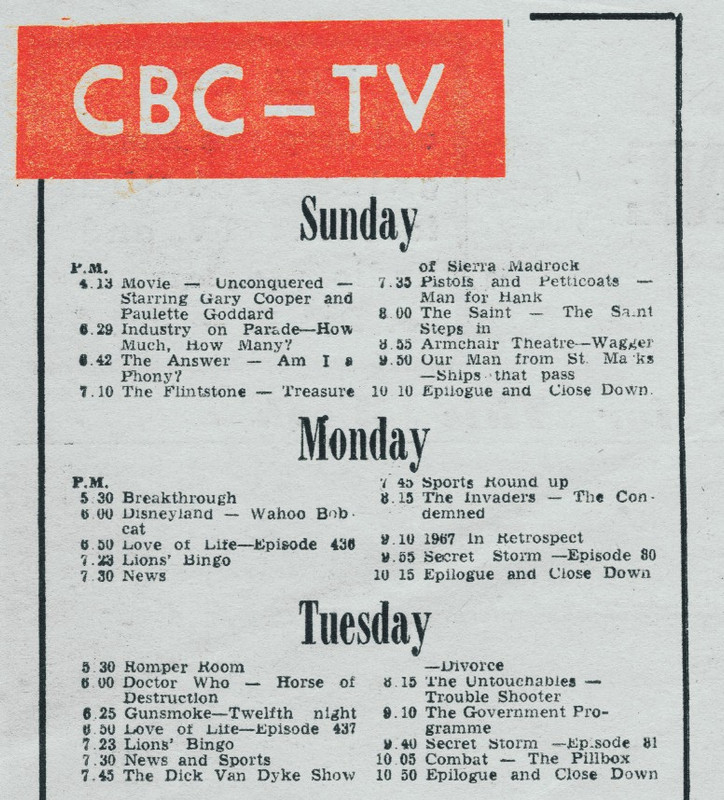
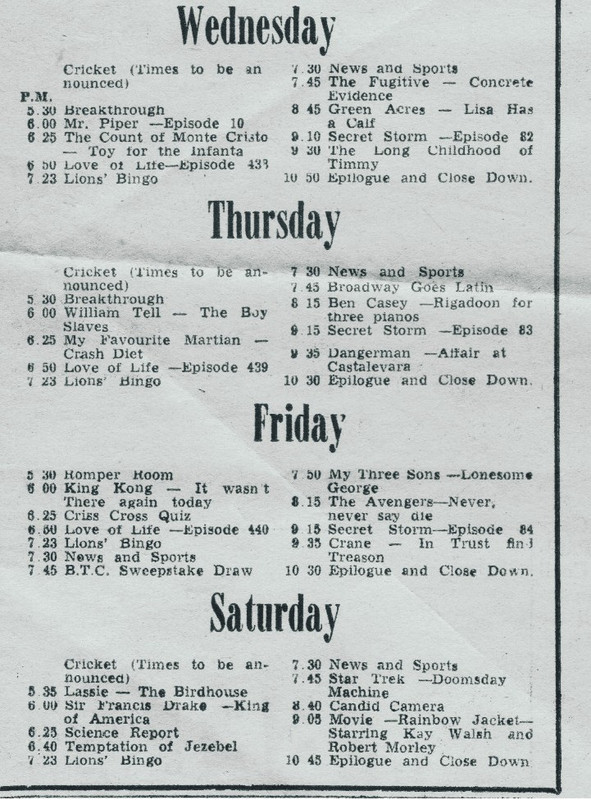
A 1967 lineup for CBC-TV in Barbados:
 tbs.retropia.co.uk
Transdiffusion Action Central
Gotta admit, we would pay good money to watch December 1967's schedule from Barbados's CBC-TV now!
A 1967 lineup for CBC-TV in Barbados:
Transdiffusion Action Central
Gotta admit, we would pay good money to watch December 1967's schedule from Barbados's CBC-TV now!
Looks like they may have had some kind of CBS affiliation. I'm assuming they would have received programming via tape back in those days.

The Long Childhood of Timmy sounds interesting.
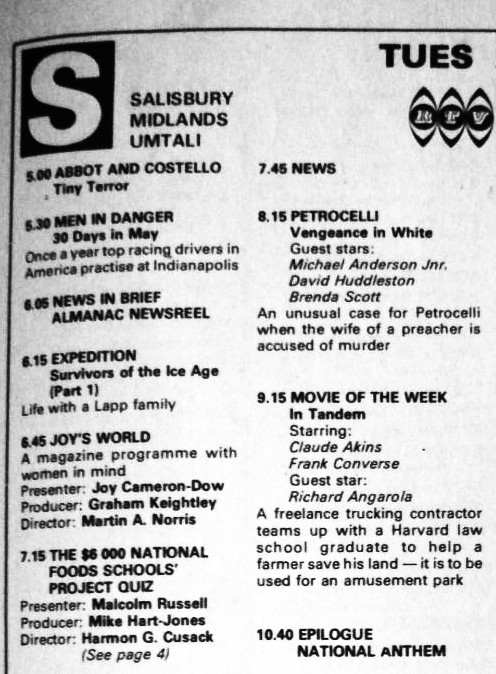
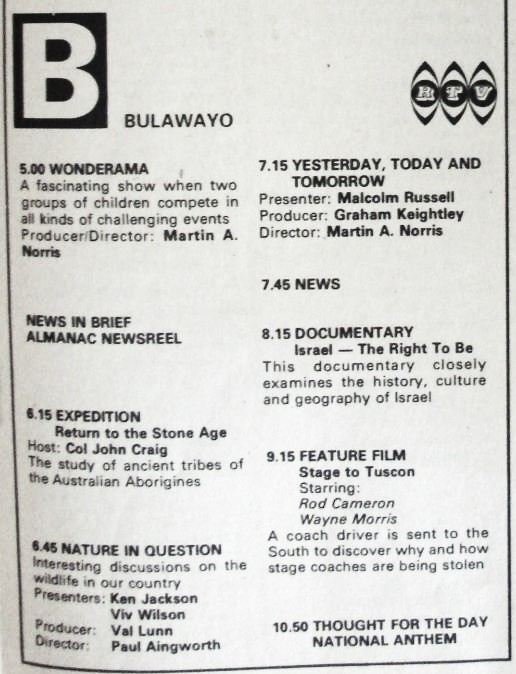
From 1976, here's a typical lineup for Rhodesian television as seen in the Look and Listen listings magazine. At the time, Rhodesia had an internationally unrecognized, white-ruled government that would crumble in just a few years. This is how Timothy Green described Rhodesia's television in his 1972 book about TV around the world: "[In] Rhodesia which has had television since 1960, there are fifty thousand sets, ten times more per head of the population than in Africa as a whole. Rhodesian television, however, is very much the odd man out; it is aimed at the white population. Moreover, since that country’s unilateral declaration of independence from Britain in 1965 resulted in United Nations sanctions, it has not been able to buy programs openly from Britain or America, although this has not prevented it from getting prints of the latest shows by various roundabout methods."
Listings for the RTV (Rhodesian Television) station in Salisbury (now Harare):
Listings for the RTV station in Bulawayo--the two stations were not interconnected:
How did television come to the rest of Africa? We go back to Green's 1972 book:


Listings for the RTV (Rhodesian Television) station in Salisbury (now Harare):
Listings for the RTV station in Bulawayo--the two stations were not interconnected:
How did television come to the rest of Africa? We go back to Green's 1972 book:
Australia was an all-VHF country until the early 1980s, when the multiethnic SBS and several country translators began to operate on the UHF band. This film from SBS explained how viewers could tune into the new signals:


K.M. Richards
Program Director, The Eighties Channel™
Looks like they may have had some kind of CBS affiliation. I'm assuming they would have received programming via tape back in those days.
Actually, before 1998, CBC had arrangements with the U.S. television networks to carry some of the shows that weren't already on the CTV and Global schedules.
Not surprisingly, when they discontinued the practice to concentrate 100% on Canadian-produced programming, their ratings went down.