• Get involved.
    We want your input!
    Apply for Membership and join the conversations about everything related to broadcasting.

    After we receive your registration, a moderator will review it. After your registration is approved, you will be permitted to post.
    If you use a disposable or false email address, your registration will be rejected.

    After your membership is approved, please take a minute to tell us a little bit about yourself.
    https://www.radiodiscussions.com/forums/introduce-yourself.1088/

    Thanks in advance and have fun!
    RadioDiscussions Administrators

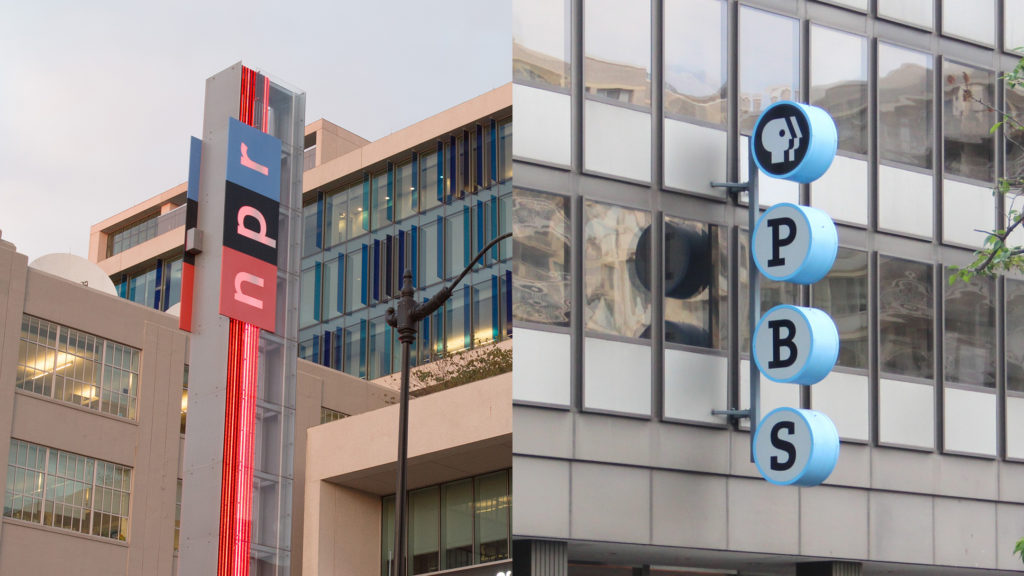
FCC Opens Investigation into NPR and PBS

Correct, and they asked the station about that article, and they didn't dispute anything in it. So to me, that's an endorsement of it.

Unless you have another source with facts from the station itself, I go by what the station is accepting.
A station refusing to comment is hardly an endorsement of an article. In my experience, when someone refuses to comment, it's because they have something to hide. I have to wonder why a public radio station would refuse comment to a public radio organ.
I understand all of that. The point is the station BUYS them from NPR, not WBUR or WAMU. So they are covered by the membership in NPR. That's what this is about. I'm not disputing who owns or produces the shows.
NPR acts as a dealer, not as a source. Right now, folks in my town are picketing the local Tesla dealer. They aren't mad at the dealer. I doubt they even know who the dealer is. The source is Musk. I'm saying what matters in all this are the two newsmagazine shows. All the criticism from the right is aimed at them. If a local station drops a show, they are making a programming decision - replacing one show with another. They are not rejecting NPR (unless they decide to drop ME and ATC, then you might have a case). Some local rag made this about NPR just to stir sh**.
 
1A and Here and Now are unusual situations, and in this case "Jean Luc" has their facts wrong.

The shows are co-productions of NPR and WAMU and WBUR, respectively. There is extensive editorial involvement from NPR News in their content. At least on H&N, the national news updates heard at the bottom of the hour are NPR News content read by an anchor at WBUR (often my old colleague Steve Brown). The flagship newsmagazine shows, ME and ATC, are fed to NPR stations with embedded national promos for 1A and H&N that can be covered by stations that don't choose to take those shows.

If you visit their sections of the NPR website, you'll see them branded with the NPR logo and also with the local co-producing station. It's a small group of shows that fit into this unusual niche. The only other daily one is Fresh Air (WHYY), plus Mountain Stage (West Virginia) on the weekends.

But it's absolutely accurate to identify 1A and H&N as "NPR shows." They have the full imprimatur of the network and have to follow all of its editorial standards, which is not the case for anything else distributed through the system by non-NPR producers.

As for Current: they take their independence very seriously. I have been a freelance writer for trade publications for over 25 years and nobody has ever edited my copy more thoroughly or with deeper questions about sourcing and factual accuracy than my editors did when I wrote for Current. Current has no editorial connection to NPR and maintains a very high firewall from American University, which owns it.
 
OK, I checked. Yes, NPR is involved in the production of the current version of Here & Now (it was not involved originally). It is not involved in the production of 1A (regardless of use of the NPR logo). Likewise, it is not involved in the production of Fresh Air. These shows are all interview shows, not news shows. NPR News standards and practices would mostly not apply.
 
Although the hearing was about NPR and PBS, any federal funding cut will primarily affect local radio stations. So with that in mind, the LA Times interviewed the GMs of the two NPR stations in LA: KCRW and KPCC (aka LAist):


There are also quotes from stations in Charlotte and Denver.


Here is PBS Newshour responding to their own CEO sent to congress to testify on Public Media.
 

Here is the President's response to the NPR and PBS on the floor of Congress. However this in turn is about CPB and the local affiliates of NPR and PBS. The President and congress does not get to defund Public Media given that the local affiliates in some cases needs in state approval like state Legislature and Governors endorsement. Also the only entity that is defunded is CPB on the federal level.

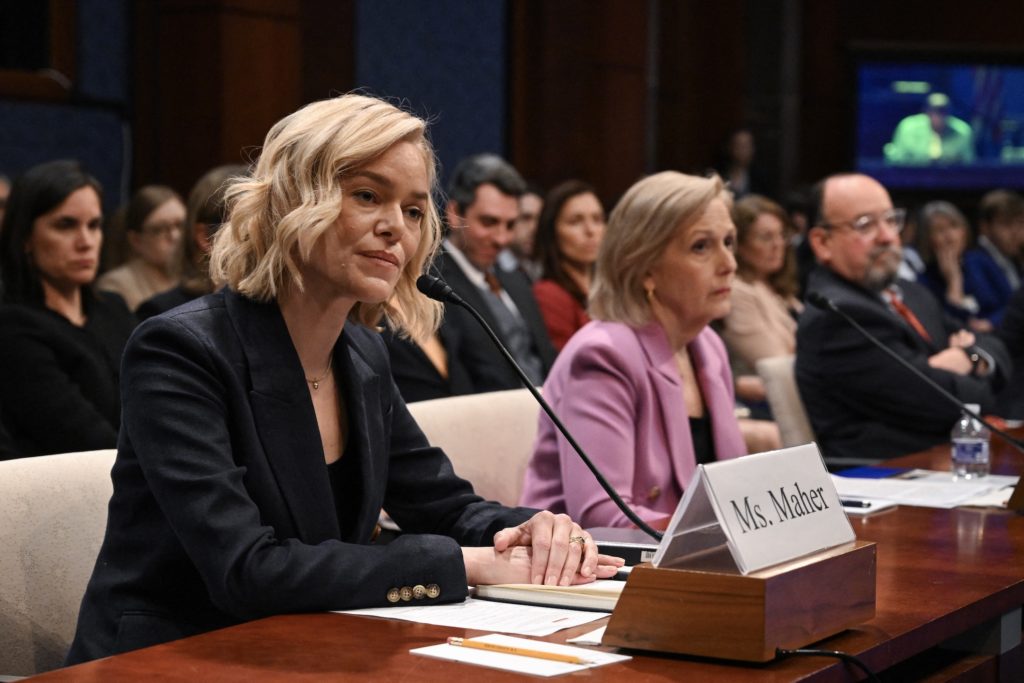
President Trump on Thursday renewed a call to defund NPR and PBS a day after top executives from the public broadcasters faced an intense grilling from GOP lawmakers on Capitol Hill.

“NPR and PBS, two horrible and completely biased platforms (Networks!), should be DEFUNDED by Congress, IMMEDIATELY,” Trump wrote late Wednesday on Truth Social. “Republicans, don’t miss this opportunity to rid our Country of this giant SCAM, both being arms of the Radical Left Democrat Party. JUST SAY NO AND, MAKE AMERICA GREAT AGAIN!!!”
 
Yet another misguided bill from the house about defunding NPR:


This would leave stations with 16 hours of time to fill on their stations. It's also the big national government telling the local states what to do. I can't imagine many states want to be told how to spend their own tax money.

But the biggest problem with this bill would be getting passed in the Senate, where the repubs simply don't have enough votes. This bill is DOA.
 
Just play classical music.

Or in markets like Charlotte, jazz.

Worst idea possible for my market. We play no classical and i dropped a syndicated jazz show. I only run jazz from 4 to 5am because i dont have a ton better to put there and we run music overnight.. and i dont wanna have something too loud/raucous playing at 415
 
The easy solution for these stations is simply use membership money to buy NPR programming. The fake bill simply says stations can't use federal money. But most stations have other revenue streams. So use the federal money to pay local staff, and use membership money to buy programming. Most stations are likely doing that now anyway.

Still, as I said, this fake bill is DOA. The politicians are going to use it to fundraise and earn points with the president. But it's not going anywhere.
 
Last edited:
Yet another misguided bill from the house about defunding NPR:


This would leave stations with 16 hours of time to fill on their stations. It's also the big national government telling the local states what to do. I can't imagine many states want to be told how to spend their own tax money.

But the biggest problem with this bill would be getting passed in the Senate, where the repubs simply don't have enough votes. This bill is DOA.
How is CPB going to enforce something like that. Also everytime that happens the local affiliates of NPR and PBS can sue CPB for breach of funds promised to them. This is bound to be like the VOA lawsuits over funding cuts by Doge and violation of funds promised to them.

 
New York Times has a column on a funding cut to NPR & PBS. It says most stations operate at a break-even level. Of course that's because they are all non-profits. But cutting that much money from their budgets will have repercussions for the stations. Not no much NPR.


The State of New York is proposing to issue tax credits to Public Media. This affects Public Radio and TV outlets that operate in the state like WNYC, WNET, WPBS-TV, WNED, WBFO. Yes this is in response to last week's hearing in Congress where the CEO's of NPR and PBS appeared on the house floor.

Sen. Brad Hoylman-Sigal, D-New York City, recently introduced legislation (S.6756) that would expand on legislation he sponsored in 2024 that creates a $30 million per year program for three years allowing eligible newspaper and broadcast businesses to receive a 50% refundable tax credit against the first $50,000 of an employee’s salary, up to a total of $300,000 per business. The Local Journalism Act included $4 million to incentivize print and broadcast businesses to hire new journalists. The remaining $26 million will be split evenly between businesses with fewer than 100 employees and those with more than 100 employees, ensuring that hyperlocal, independent news organizations have a fair shot at access to the state money.


After stalling for years, the Local Journalism Sustainability Act moved in the legislature in 2024 after the early-2024 founding of the Empire State Local News Coalition and the coalition’s mobilization of support from hundreds of New York hometown papers as well as a broad range stakeholders from around the country, including the Rebuild Local News Coalition, Microsoft, and El Diario. Organized labor including NYS AFL-CIO, CWA District 1, and national and local news guilds also played a role in mobilizing support for the bill. New York is the first state in the country to pass such a journalism jobs tax credit program.

State Sen. George Borrello, R-Sunset Bay, signed on as a co-sponsor of the 2024 legislation in the state Senate.

Hoylman-Sigal’s update to the legislation would expand the tax credit to non-profit news outlets, with the bill’s text specifically including public television and public radio.

 

The State of New York is proposing to issue tax credits to Public Media. This affects Public Radio and TV outlets that operate in the state like WNYC, WNET, WPBS-TV, WNED, WBFO. Yes this is in response to last week's hearing in Congress where the CEO's of NPR and PBS appeared on the house floor.
And then we wonder why states like NY and CA have such high tax rates.

Many of the people who object to national funding of radio and TV content or stations simply believe that this is an extension of government that is one step too far.
 
And then we wonder why states like NY and CA have such high tax rates.

Many of the people who object to national funding of radio and TV content or stations simply believe that this is an extension of government that is one step too far.
So these people object to public broadcasting receiving a partial tax credit, but have no problem with religious broadcasters paying zero in taxes?
 
And then we wonder why states like NY and CA have such high tax rates.

Many of the people who object to national funding of radio and TV content or stations simply believe that this is an extension of government that is one step too far.

However, if you read the specifics of this particular legislation, it's available to any news organization, not just NPR. And it's a tax credit, not direct funding. Lastly it's merely proposed legislation, it hasn't been voted on or approved.

So it has a long way to go.

Sen. Brad Hoylman-Sigal, D-New York City, recently introduced legislation (S.6756) that would expand on legislation he sponsored in 2024 that creates a $30 million per year program for three years allowing eligible newspaper and broadcast businesses to receive a 50% refundable tax credit against the first $50,000 of an employee’s salary, up to a total of $300,000 per business.
 
So these people object to public broadcasting receiving a partial tax credit, but have no problem with religious broadcasters paying zero in taxes?
Charitable organizations, which include religious ones, have always been excepted from such taxes. Any organization that has no shareholders and which distributes no money to individuals won't pay taxes, anyway. In fact, a for profit company that has a nonprofitable year will not pay, either.

Legally, a religious radio station or one owned by Pacifica have the same federal income tax exemption status, just as non-profit educational institutions that have classrooms or even radio stations or TV stations do.
 
House democrats are investigating the politization of the FCC. Carr responds by saying he is doing the opposite.


Part of his defense is saying these congressmen objected to the Univision sale to Latino Media because they felt the sale would lead to more conservative talk. He ignores the fact that there was another group that objected to the sale because it would lead to LESS conservative talk.

The fact of the matter is Carr is only investigating administration critics, and in doing so, has given biased reasons for his investigations. In doing so, he's made it clear that he's already arrived at his conclusions without doing investigations.
 
Status
This thread has been closed due to inactivity. You can create a new thread to discuss this topic.


Back
Top Bottom