• Get involved.
    We want your input!
    Apply for Membership and join the conversations about everything related to broadcasting.

    After we receive your registration, a moderator will review it. After your registration is approved, you will be permitted to post.
    If you use a disposable or false email address, your registration will be rejected.

    After your membership is approved, please take a minute to tell us a little bit about yourself.
    https://www.radiodiscussions.com/forums/introduce-yourself.1088/

    Thanks in advance and have fun!
    RadioDiscussions Administrators

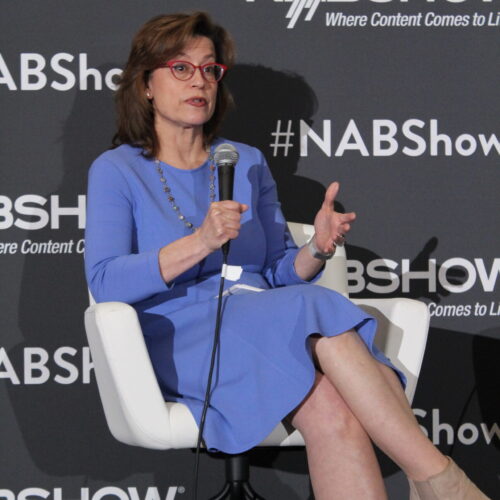
FCC's Gomez Promotes Radio

It seems like every day we read of another "investigation" by FCC chairman Carr. But he's not the only commissioner at the FCC. Right now, there are two dems and two repubs. It will remain deadlocked until the senate confirms the president's pick. So democrat Anna Gomez is attempting to show that not all the news from the FCC is negative:


It seems like every day we read of another "investigation" by FCC chairman Carr. But he's not the only commissioner at the FCC. Right now, there are two dems and two repubs. It will remain deadlocked until the senate confirms the president's pick. So democrat Anna Gomez is attempting to show that not all the news from the FCC is negative:


And, in some other good news, the updates page at the LPFM database site (I'm not sure if I can list the link here) is reporting that the commission is continuing to approve both new LPFM licenses and issue callsigns to those stations that were already approved.
 
More from Anna Gomez at the NAB Convention:

Four points:

1) Ms. Gomez is *absolutely* right about this administration's attempts to stifle criticism of it.

2) A significant number of Americans, particularly Caucasian U.S. males, want this to occur.

3) Should the President (as been reported elsewhere) decide to shrink the FCC down to three from five commissioners, Ms. Gomez will most likely be one who will be removed for speaking out against the President and his policies publicly.

4) Being removed will not be the least of her worries as some of the President's supporters wil literally attempt to use her for target practice once she is removed from her position.
 
3) Should the President (as been reported elsewhere) decide to shrink the FCC down to three from five commissioners, Ms. Gomez will most likely be one who will be removed for speaking out against the President and his policies publicly.

There's been discussion about him not replacing Starks when he leaves, so it's 4. Here's an article on that subject:


However, Simington is also thinking about leaving.
 
Four points:

1) Ms. Gomez is *absolutely* right about this administration's attempts to stifle criticism of it.
Having been involved in politics in more than a dozen countries and on U.S. Territory, I'd say that every administration in some way wants and tries to stifle criticism. I believe it is the "6th Commandment" in politics: "Thou shalt silence thy opponent".
2) A significant number of Americans, particularly Caucasian U.S. males, want this to occur.
And in my experience, lots of Hispanics, too. Further, the term "Caucasian" is widely misused as it does not include those who the U.S. Census and others call "white" who are not of purely Caucasian heritage. For example, my heritage is Celtic via NW Iberia and the Mediterranean. I am not Caucasian, am considered white.

We worry too much about this.
3) Should the President (as been reported elsewhere) decide to shrink the FCC down to three from five commissioners, Ms. Gomez will most likely be one who will be removed for speaking out against the President and his policies publicly.
And what would be the difference in a smaller number of commissioners? I don't think a reduction is such a major saving and a wider variety of voices are actually needed. But if there are only three, I do not see a huge difference.
4) Being removed will not be the least of her worries as some of the President's supporters wil literally attempt to use her for target practice once she is removed from her position.
That is speculation. Most people who leave an outgoing government position just fade into think tanks, law firms and activist groups and, unless they are highly outspoken, are not noticed for the most part.
 
And what would be the difference in a smaller number of commissioners? I don't think a reduction is such a major saving and a wider variety of voices are actually needed. But if there are only three, I do not see a huge difference.

If they are all in the same party (which they would be in this case) there's no variety of voices. Just one.

The funny part is that when you discuss NPR, you believe they need more variety of voices. In the FCC, you prefer fewer.
 
If they are all in the same party (which they would be in this case) there's no variety of voices. Just one.
That depends on the tradition of the incumbent party having a majority of one. In a changed situation, it would be 2 of the incumbents to 1 of the other party.
The funny part is that when you discuss NPR, you believe they need more variety of voices. In the FCC, you prefer fewer.
You did not read my post. I said that a broader variety of voices is better: " I don't think a reduction is such a major saving and a wider variety of voices are actually needed. "
 
That depends on the tradition of the incumbent party having a majority of one. In a changed situation, it would be 2 of the incumbents to 1 of the other party.

Geoffrey Starks has already said he's leaving. If the president fires Gomez, there would be no dems. He has already fired commissioners in other agencies. I haven't observed a lot of concern over tradition.
 
Having been involved in politics in more than a dozen countries and on U.S. Territory, I'd say that every administration in some way wants and tries to stifle criticism. I believe it is the "6th Commandment" in politics: "Thou shalt silence thy opponent".
While there have been some notable examples of this in the past, I'd say that the current administration is taking that further than any previous administration in my lifetime with the possible exception of Richard Nixon. Richard Nixon famously tried to weaponize the FCC against the Washington Post's TV licenses in response to the Washington Post's Watergate reporting.

An interesting side note to that is that broadcast-newspaper cross ownership prohibition that was staunchly defended by progressives for many decades appears to have come about as a result of Nixon's attempts to go after the Washington Post. Ironically, it didn't impact the Washington Post, since their combo was grandfathered in -- but I remember that it did force the local newspaper where I grew up (Tacoma News Tribune) to sell their TV station (KTNT-TV in Tacoma, WA, which became KSTW after the sale). Ultimately, the rule did more damage than it ever did good.

Even worse was the prohibition on owning TV and radio stations in the same market that went on the books around the same time. Existing combos were mostly grandfathered in, negating any ownership diversity. Notably, in Spokane, WA in the eighties, the big three network TV affiliates were all part of AM-FM-TV combos (CBS: KREM-AM/FM/TV, ABC: KXLY-AM/FM/TV, NBC: KHQ-AM/FM/TV, which was also co-owned with both local daily newspapers) that had been grandfathered in. But when a new UHF independent station (KAYU, channel 28) came on the air, the rule did apply to them. That never did make any sense that the cross ownership restrictions only applied to the newest and weakest station in the market.
 
Ms. Gomez may have some valid concerns, but the present administration destroying journalism is not one of them.

Present day 'journalism' is online, and increasingly based on social media and online news sites, not OTA TV stations, or OTA radio. And, of course, what's left of the print media (including its online versions) and other journalistic media are beyond the reach of the administration, or the FCC. Even if the administration wanted to remove Section 230, it would actually take an act of Congress to do it. And that would hobble thousands of conservative content channels as well as liberal ones -- and it would also hobble commerce, because suddenly any website that had product reviews would eliminate the review process out of fear of lawsuits. So I don't see anything happening to Section 230

Like many I thought Carr's attack on KCBS was unwarranted, especially after reading up on the story behind it. Obviously, that was an attack on journalism. But the administration can't kill journalism in general, because today 'journalism' is merely another form of internet content, and good luck for any administration of any party trying to control all internet content.

And, either way, there is no need for the administration to try to kill journalism. Technology is already in the process of doing that. In 2022 at least 2000 local papers in the US -- most of which had online operations as well as print -- folded. The business model for news consumption has changed.
 
Even if the administration wanted to remove Section 230, it would actually take an act of Congress to do it.

Not necessarily. What Brendan Carr has said is that he wants to "weaken" Section 230 by reinterpreting it. From the NY Post:

It has the legal authority to interpret Section 230, and change the prior guidance that has given those expansive protections to Big Tech.
He can weaken or eliminate the shield by issuing a so-called advisory opinion.
Then it’s up to the courts to decide if they should use his guidance when they weigh Section 230 cases.
There’s a good chance many will, particularly in litigation before conservative judges.

This administration doesn't wait for congress. It instead issues "executive orders." They give the various departments in the executive branch permission and authority to talk actions they might not normally do. That's what we expect to happen with Section 230. The FCC will use it in ways to hobble its perceived enemies, without applying it to its supporters. He's done this already by starting unbased investigations on NPR and PBS. So no, this FCC will not be waiting for congress to remove section 230. It's waiting to get a 3-2 majority so it can legislate through regulations. In this way, it's selectively hurting SOME journalism, while empowering other forms.
 
Not necessarily. What Brendan Carr has said is that he wants to "weaken" Section 230 by reinterpreting it. From the NY Post:

This administration doesn't wait for congress. It instead issues "executive orders." They give the various departments in the executive branch permission and authority to talk actions they might not normally do. That's what we expect to happen with Section 230. The FCC will use it in ways to hobble its perceived enemies, without applying it to its supporters. He's done this already by starting unbased investigations on NPR and PBS. So no, this FCC will not be waiting for congress to remove section 230. It's waiting to get a 3-2 majority so it can legislate through regulations. In this way, it's selectively hurting SOME journalism, while empowering other forms.
Carr doesn't have that power. Only Congress does. He may try to influence courts with a memorandum, but courts look at the actual law.

And, of course, the FCC doesn't regulate websites or the internet, and NPR and PBS aren't covered by Section 230, just their websites are. If Carr attempts to hobble their websites, It will go to the courts, which will see the plain language of Section 230, and toss out any such regulations. The language in Section 230 is clear. Websites can't be sued for speech they didn't directly create -- and libel and slander suits are as old as the news media is.

So nothing's really going to change, except that no station or network likes the FCC breathing down their neck. But NPR, PBS, they have a floor full of attorneys just like Fox News did when they were sued, and lost the libel / slander suit brought against them by the voting machine company.
 
So nothing's really going to change, except that no station or network likes the FCC breathing down their neck. But NPR, PBS, they have a floor full of attorneys just like Fox News did when they were sued, and lost the libel / slander suit brought against them by the voting machine company.
I thought that Fox settled out of court to avoid setting precedent for future cases like that. Fox paid nearly $800 million to Dominion, one of the voting machine makers, to avoid going to court.
 
Last edited:
Carr doesn't have that power. Only Congress does. He may try to influence courts with a memorandum, but courts look at the actual law.

Depends on the court. There is nothing in the law that gave the president immunity for official acts. They made that up. What Carr is doing is using the power and infinite resources of the federal government to go after the media. He initiates investigations, requires private companies to provide lots of documentation, and then pay to defend themselves in court. In some cases that may end in a settlement, which means the company pays to cut its losses. Either way, it's a win for the government.
Websites can't be sued for speech they didn't directly create -- and libel and slander suits are as old as the news media is.

Right now there are cases in the courts that seek to limit the NY Times ruling about libel laws. They keep trying to ship away. They're not playing for the short term win. This is about the long haul. It took 50 years to overturn Rowe vs Wade. They've got lots of time.

So nothing's really going to change, except that no station or network likes the FCC breathing down their neck. But NPR, PBS, they have a floor full of attorneys just like Fox News did when they were sued, and lost the libel / slander suit brought against them by the voting machine company.

NPR is a non-profit and doesn't have the resources of Fox News. At the same time, the same government is seeking to eliminate NPR's funding sources.
 
Depends on the court. There is nothing in the law that gave the president immunity for official acts. They made that up. What Carr is doing is using the power and infinite resources of the federal government to go after the media. He initiates investigations, requires private companies to provide lots of documentation, and then pay to defend themselves in court. In some cases that may end in a settlement, which means the company pays to cut its losses. Either way, it's a win for the government.
Still, Carr doesn't regulate the internet. The FCC doesn't have that power or authority, regardless of what Carr might think.
Right now there are cases in the courts that seek to limit the NY Times ruling about libel laws. They keep trying to ship away. They're not playing for the short term win. This is about the long haul. It took 50 years to overturn Rowe vs Wade. They've got lots of time.
That's the nature of law, though. It's always changing. And when it comes to libel, politics really is secondary. Libel is not the property of any political party. If a court makes it easier to libel people, that goes both directions, and the courts know it. The Federal courts generally rule in favor of free speech over chilling it. Although the SCOTUS is tilted right, they understand that if the D's get control of both houses and the WH, as happened in 2021, it could go against conservative media in the future as much as it can go against liberal media today.

I wouldn't count on the NYT ruling being overturned. But, then again, I'm not a prophet.....
NPR is a non-profit and doesn't have the resources of Fox News. At the same time, the same government is seeking to eliminate NPR's funding sources.
NPR has a lot of allies, especially in the Democratic sector of society -- you know, the people who funded the D presidential campaign and outspent the GQP by almost 2 to 1? They could find the lawyers they need easily. NPR's supporters have the money.
 
I thought that Fox settled out of court to avoid setting precedent for future cases like that. Fox paid nearly $800 million to Dominion, one of the voting machine makers, to avoid going to court.
You're right. But they still technically lost. You don't settle if you know you know that you will probably win. You settle if your floor full of attorneys tell you that you have a higher chance of losing, and the litigation will cost you more than settling ahead of time. Usually this happens during the discovery process of the litigation, when your attorneys see the facts they have to deal with / argue in court.
 
Still, Carr doesn't regulate the internet. The FCC doesn't have that power or authority, regardless of what Carr might think.

Actually, the FCC may have some limited jurisdiction here. See its efforts during recent Democratic administrations
to impose net neutrality.

That's the nature of law, though. It's always changing. And when it comes to libel, politics really is secondary. Libel is not the property of any political party. If a court makes it easier to libel people, that goes both directions, and the courts know it. The Federal courts generally rule in favor of free speech over chilling it. Although the SCOTUS is tilted right, they understand that if the D's get control of both houses and the WH, as happened in 2021, it could go against conservative media in the future as much as it can go against liberal media today.

I wouldn't count on the NYT ruling being overturned. But, then again, I'm not a prophet.....

According to NPR, not only have conservative Justices Thomas, Alito, and Gorsuch raised questions about the NY Times ruling but so also has liberal Justice Kagan.

NPR has a lot of allies, especially in the Democratic sector of society -- you know, the people who funded the D presidential campaign and outspent the GQP by almost 2 to 1? They could find the lawyers they need easily. NPR's supporters have the money.

While NPR stations may have a lot of support from their listeners, that support may not be enough to counter a quick-moving administration determined to kill it. See what happened to VOA.
 
Status
This thread has been closed due to inactivity. You can create a new thread to discuss this topic.


Back
Top Bottom