• Get involved.
    We want your input!
    Apply for Membership and join the conversations about everything related to broadcasting.

    After we receive your registration, a moderator will review it. After your registration is approved, you will be permitted to post.
    If you use a disposable or false email address, your registration will be rejected.

    After your membership is approved, please take a minute to tell us a little bit about yourself.
    https://www.radiodiscussions.com/forums/introduce-yourself.1088/

    Thanks in advance and have fun!
    RadioDiscussions Administrators

New TV station logo thread...

I lived near there at the time and the front door of the station's building has handles that looked like that 8 divided into two parts.

Does the station building still have that style of door handle?
Great thread! We need more threads such as this on RD, to discuss things that don't neatly fit into one market or topic.

Appreciate that! There are plenty of videos on YouTube with just such things.
 

Here's the first half hour of KCPQ-TV Channel 13 in Tacoma/Seattle's return to commercial broadcasting on November 4, 1980. For decades, this was Q-13, the Fox affiliate for the Puget Sound region (now just Fox 13), but this station has a long and convoluted history.

It started as KMO-TV in 1953 and as best I can tell it was instantly a loser in the television business. It eventually ended up in the hands of the notoriously cheap McCaw family (later of McCaw Cellular fame) -- ownership so cheap that the station lacked the ability to originate color programs into the early seventies. (As an aside, in his autobiography, WABC's long-time program director Rick Sklar talked about how cheap McCaw was from when he worked at McCaw's WINS in NYC.) McCaw sold the station in 1972, but the new owners immediately fell into a financial hole and the station was ordered off the air by a bankruptcy judge on December 12, 1974.

It was bought out of bankruptcy for $378,000 (about 2/3 of that money came from Gaylord Broadcasting, the owner of competing independent TV station KSTW channel 11) by the Clover Park School District, which operated it as a public TV station from 1976 until early in 1980, when the district sold the station to Kelly Broadcasting for $6.25 million (a nice return on the school district's investment), which resumed commercial operation of the station with the above broadcast.

The station eventually became one of the flagship affiliates of the Fox broadcast network, and was subsequently sold to Tribune Broadcasting, and eventually to Fox.

 

Here's the first half hour of KCPQ-TV Channel 13 in Tacoma/Seattle's return to commercial broadcasting on November 4, 1980. For decades, this was Q-13, the Fox affiliate for the Puget Sound region (now just Fox 13), but this station has a long and convoluted history.

It started as KMO-TV in 1953 and as best I can tell it was instantly a loser in the television business. It eventually ended up in the hands of the notoriously cheap McCaw family (later of McCaw Cellular fame) -- ownership so cheap that the station lacked the ability to originate color programs into the early seventies. (As an aside, in his autobiography, WABC's long-time program director Rick Sklar talked about how cheap McCaw was from when he worked at McCaw's WINS in NYC.) McCaw sold the station in 1972, but the new owners immediately fell into a financial hole and the station was ordered off the air by a bankruptcy judge on December 12, 1974.

It was bought out of bankruptcy for $378,000 (about 2/3 of that money came from Gaylord Broadcasting, the owner of competing independent TV station KSTW channel 11) by the Clover Park School District, which operated it as a public TV station from 1976 until early in 1980, when the district sold the station to Kelly Broadcasting for $6.25 million (a nice return on the school district's investment), which resumed commercial operation of the station with the above broadcast.

The station eventually became one of the flagship affiliates of the Fox broadcast network, and was subsequently sold to Tribune Broadcasting, and eventually to Fox.

That theme music ("Take Another Look") that begins at 1:49 just screams 1970s and early-1980s!


Georgia Public Broadcasting releases a new logo for their statewide Public Media outlet to start the new year.


Georgia Public Broadcasting releases a new logo for their statewide Public Media outlet to start the new year.
Kind of reminds me either of the Google logo, the Gray Media logo, or a mash-up of the two.


Georgia Public Broadcasting releases a new logo for their statewide Public Media outlet to start the new year.

I especially like the one that was from 1970-84, w/the GPB name in Serif Gothic (started that one about nine years before NBC started using it with the Proud N in 1979).

Also, here's an older version of WPLG Channel 10 Miami/Ft. Lauderdale (same as the current one, except the current iteration seems to be flatter):

wplg1987.png

And an older version of WTVQ Channel 36 in Lexington, KY from an ABC Saturday Night Movie broadcast around 1991, I would guess:

abcmoviewtvqid.jpg
 
The latter reminds me a bit of KNTV San Jose, minus the iconic theme music (this particular open starts at 1:00):


Why they would ever have used any other theme music is beyond me.

But it doesn't get any better than this, from Poland:


I have flown over much of the area depicted in the CGI video, and have been to the top of the clock tower (Palace of Culture in Warsaw) at the end. I can picture the route they are taking exactly. "Wiadomości" (vee-odd-oh-mosh-chee) simply means "News" in Polish, and is cognate to the Russian word vedomosti, means the same thing. And you've never lived until you've turned on Russian TV in the morning and seen the towers of the Kremlin at dawn in their sign-on, with the ex-Soviet anthem, same music, playing. This isn't exactly what I saw, but it's the closest thing (I wasn't in Russia but they carried it on the hotel cable in Warsaw at the time, early 1990s):

 
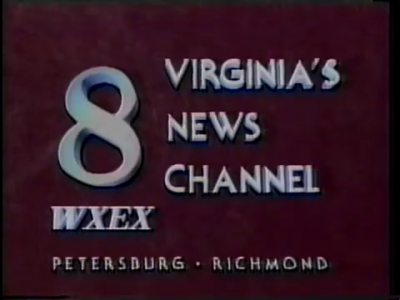
Bumping this up: WXEX Channel 8 (now WRIC), ABC in Richmond, VA (licensed to Petersburg and Richmond), from a 1987 Eyewitness News Nightcast late edition

View attachment 9032
I have to think the Petersburg thing is an anachronism, from back when the FCC sought to make allocations in as many cities as possible, as a matter of equity in sharing a scarce resource (spectrum) in hopes of promoting localism in broadcasting. I tend to doubt that the original plan was to have stations to coalesce into markets anchored by the largest or more important city in the region, with the smaller cities and towns more or less ceding their allocations to that city (for all practical purposes).
 
I tend to doubt that the original plan was to have stations to coalesce into markets anchored by the largest or more important city in the region, with the smaller cities and towns more or less ceding their allocations to that city (for all practical purposes).
That started happening almost immediately, beginning in the mid 1950s. One glaring example is Indianapolis, where Indy had three commercial allocations (6, 8, 13), and Bloomington had one (10, later 4). WTTV Bloomington's coverage was only in the immediate Bloomington area, which had a metro population of around 50K (1950 census) and was definitely not wealthy in that era. They had to move their operations to Indy to keep network service (and that didn't even work out), and change the COL to Bloomington/Indianapolis in order to survive. Even then, they had to buy another unviable small-city station to cover the north end of the market (WWKI --> WTTK Kokomo). WTTV has not had a presence in Bloomington since they shut down their small studio there in the 1970s.

There were other small-town stations that had to move to the Big City or combine into one big market, to keep going. Enid OK --> OKC, Mesa AZ --> Phoenix, Henderson KY --> Evansville, Neenah WI --> Green Bay (UHF to VHF for that one), Harrisburg/Lancaster/York PA from three markets to one, others that I can't think of right now.


Back
Top Bottom