• Get involved.
    We want your input!
    Apply for Membership and join the conversations about everything related to broadcasting.

    After we receive your registration, a moderator will review it. After your registration is approved, you will be permitted to post.
    If you use a disposable or false email address, your registration will be rejected.

    After your membership is approved, please take a minute to tell us a little bit about yourself.
    https://www.radiodiscussions.com/forums/introduce-yourself.1088/

    Thanks in advance and have fun!
    RadioDiscussions Administrators

Early Radio Automation: IGM System from 1968

davideduardo

Moderator/Administrator
Staff member
I just added to WorldRadioHistory a brochure for the IGM System 300 radio automation system from 1968. It used "punch cards" to schedule and was a "roomfull" of gear.

Many think that it was not until microcomputers were fully developed that radio was commonly automated. In fact, by the 70's there were thousands of automated or live-assist installations in the U.S.
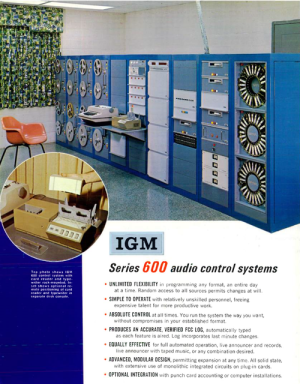

1744935837080.png
 
At a station I worked for in the mid-80s we had an IGM Basic-A system.....Bonneville Beautiful Music format.....
4 Otari 1000 reel-to-reels, 2 IGM InstaCart units (32 carts each) and 2 SMC Carousels..
Control was, IIRC, run with an ASR-33 TeleType machine, using 1 inch paper tape (loved those chad bins!!)
Yes --- the Carousels were stereo....Fortunately, at the time, I was NOT the engineer in charge of keeping them aligned....!!!;)
BTW.....Studio mics were AKG C414-P48 condenser units....NICE!!
 
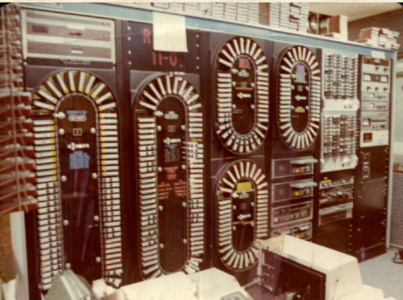
I worked a station with an automation system: 3 reels, 2 carousels and that circular clock face with three sets of holes where you dropped a pin to trigger the automation at times during the hour you selected. Simple to use and program back in 1978.
 
I'll have to ask my dad what kind of live-assist system there was at KDSU, he worked there in 1968. There were some student shows, but at night it was mostly jazz music off reels.
 
My very first system was an Automated Broadcast Controls 16 source system, several Revox A-77s, something called a Cartell----NOT at Carousel. Programmed with Diode Pins. Next was a Harris System 90, using all 16 sources, ITC 750/770 reels, IGM 48 Tray Go Carts (with the world famous "timing wheel") and numerous Harris Criterion Single play decks. That system ran great, as long as there was no lightning any where along the eastern-seaboard. The SC90 supported main/sub file and allowed random access to any of the 48 Tray IGM machines. EOC Skip Skip Zero Zero.
 
Those were the stereo version, left & right Audimax in one rack panel. Saw an ad for them in a 1960s broadcasting magazine.
Yes, the pairs were sold together and had a sort of "synchronization" circuit to avoid one channel severely limiting while the other pushed audio up. That sort of issue was common with some of the earlier 60's stereo LPs that did mixes that really emphasized the separation... such as all the horns on the left and all the strings on the right.

I remember one of the Ferranti & Teischer (Sp?) albums where each pianist was predominantly in one of the two channels.

I had a stereo pair of those on HCTM 95.1 in Quito, Ecuador's first FM and first Stereo FM, too. By the time I got them to Quito, with shipping, insurance and tariffs, they cost more than twice what the U.S. domestic price was.
 
My very first system was an Automated Broadcast Controls 16 source system, several Revox A-77s, something called a Cartell----NOT at Carousel. Programmed with Diode Pins. Next was a Harris System 90, using all 16 sources, ITC 750/770 reels, IGM 48 Tray Go Carts (with the world famous "timing wheel") and numerous Harris Criterion Single play decks. That system ran great, as long as there was no lightning any where along the eastern-seaboard. The SC90 supported main/sub file and allowed random access to any of the 48 Tray IGM machines. EOC Skip Skip Zero Zero.
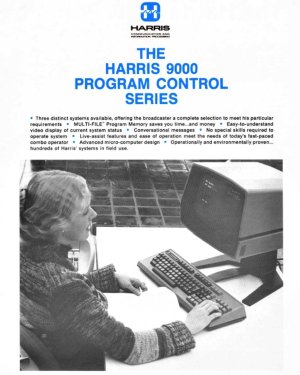
I had the first System 90 ever at WSRA in San Juan. Full of cold solder connections on the motherboard. They replaced it. Several years later, built a System 9000 which had programmable subroutines that could be use for music rotations.

Hits were on a pair of linked "regular" GoCarts. Recurrents were on another GoCart, and there were on two more GoCarts with 72 cart capacity for most of the gold, which rotated every day. Commercials were on two of the 48-deck singe-play machines, and there was a pair of cart decks for the time and one for weather (we had carts for each DJ with every possible kind of weather in San Juan except hurricanes... which was not many carts, really).

1745027722697.png

WQII San Juan, PR, 1140 AM 10,000 watts 24/7 with Hot AC format. Station was #2 in a 31 station market. David Gleason San Juan Puerto Rico WJIT WQII WSRA WZNT Pueblo International

We called the system "Arturito" (Litle Arthur) which is a play on "R2D2" which sounds about like "Arturito" in Spanish. That was good for a grin or two as our CA was Art Silver,

IGM literature: https://www.worldradiohistory.com/Archive-Catalogs/Miscellaneous-Manufacturers/IGM-Automation.pdf
 
We had a Harris System 90. Was a turkey, lemon, etc.. Harris tech spent a lot of time in Boise fixing it. Actually stepping through the programming looking for errors/missing or extra bits. Replaced with a 9001. Much more stable but still could go off the rails.

1745040162899.jpeg
 
We had a Harris System 90. Was a turkey, lemon, etc.. Harris tech spent a lot of time in Boise fixing it. Actually stepping through the programming looking for errors/missing or extra bits. Replaced with a 9001. Much more stable but still could go off the rails.
Our Serial Number 1 System 90 kept freezing and losing all of the hundreds of bits of data for spots and music.

Anecdote here. Gates had been bought by Harris, a printing gear company. The HQ was in Cleveland, and the CEO of Harris was on the board of directors of the city hospitals where my mother was also a member and working administrator. I told her about my issues with her friend's equipment just to amuse her.

Mothers are not amused by their children's suffering. To her, the System 90 was suffering. So she called the head of Harris on a Saturday and told him about the problem. On monday, Eastern Airlines spilled out 3 Harris techs in San Juan and a whole new System 90 controller was in checked luggage.

They replaced the unit, and upon opening the defective one saw the plethora of cold solder connections on the mother board. We ended up becoming very good friends and my AM became the prototype for System 9000 and some of the software was written and flashed right on site in San Juan.

A year later, I was in Quincy for some training on a new AM transmitter and one of my friends took me to the parts department. They had cards for every station that showed credit limits, who was cash in advance, and so on. On the WQII / WSRA card in big colored letters it said, "Don't F--k with these people".

And that's my Harris story.
 
Last edited:
My first exposure to automation in the late 60's was a Gates system with two Gates 55 racks, a single carousel and four single play cart decks. The 55's held 55 carts and had a cart player on jack screws than started at the top and would sequentially play carts as the jack screws lowered the player. When it go to the last slot on the bottom, it would travel to the top and start over. One play deck was for weather, one for news, one for the ID and one for voice tracking. (Yes, we were voice tracking back then.)

Then a IGM 500 (We used to say the IGM stood for "I Got Modifications." Played IGM's music service "Consie's Carousel" and the "Del O'Ray Show."

Then there was the Schaffer 800 which was built with more relays than you could shake a stick at and (rumor had it) came with a lifetime supply of relay burnishing tools.

Next an SMC machine that used magnetic core memory and would hold a grand total of 1024 events. The trick with that was being able to load three days worth of programming on Friday to last through Monday midnight.

After that a couple of Harris System 90's. Not great but OK.

The last "hardware" automation system I worked with was the Master Control automation at MBS/NBC. A custom built kludge that was a seriously unhappy marriage of computer and mechanics.

Now you have a whole radio station in a box. No clicking of relays, winding of reel-to-reels, ka-chunk of carousels or scream of the silence alarm. Where's the fun?
 
The best automation system I ever worked with was the Schafer 903. No relays, a control unit with replaceable interface cards for every audio input source. Could handle live network joins on its own and could also handle delays flawlessly if given something like the ITC RP series cart delay machine as a source.

And -- wonder of wonders -- you could actually edit the format "hot clocks" and the traffic log independently of each other.

I was my market's "expert" on the 903, so much so that the other two stations in the market would pay me twice a year just to come in and reset the clock to and from Daylight Saving Time. (It involved pushing a hidden unlabeled button inside the control unit ... if you didn't know where it was, trying to explain its location was useless.)

Everyone I ever talked to in the past 50 years who had a 903 said they loved that machine and still miss it. (I actually have the automation software at KRKE using a log format that resembles the 903's "program file" and "time file".)
 
Biggest issue with the Harris 90 & 9000 systems was that power supply. Used a deep cycle car battery that might last an hour. Some kind of solid state & relay switching between AC & battery with DC/DC converters for the 5 & 15(?) volt supplies. Power bumps would occasionally make it loose its mind.
Of course all the tape machines would shut off or everything would fire at once.
 
I'll have to ask my dad what kind of live-assist system there was at KDSU, he worked there in 1968. There were some student shows, but at night it was mostly jazz music off reels.
If I remember correctly the student shows were called "Music for the Late Ones". Didn't even know about KDSU until I had a sleepover at a friends house and then I listened often, even though the reception south of Fargo was kind of rough.
 
My very first system was an Automated Broadcast Controls 16 source system, several Revox A-77s, something called a Cartell----NOT at Carousel. Programmed with Diode Pins. Next was a Harris System 90, using all 16 sources, ITC 750/770 reels, IGM 48 Tray Go Carts (with the world famous "timing wheel") and numerous Harris Criterion Single play decks. That system ran great, as long as there was no lightning any where along the eastern-seaboard. The SC90 supported main/sub file and allowed random access to any of the 48 Tray IGM machines. EOC Skip Skip Zero Zero.
I remember the programing by diode pins. There may have been more than one system made like that. Speaking of those Carousel units, some times they would cut a cart in half!
 
Our Serial Number 1 System 90 kept freezing and losing all of the hundreds of bits of data for spots and music.

Anecdote here. Gates had been bought by Harris, a printing gear company. The HQ was in Cleveland, and the CEO of Harris was on the board of directors of the city hospitals where my mother was also a member and working administrator. I told her about my issues with her friend's equipment just to amuse her.

Mothers are not amused by their children's suffering. To her, the System 90 was suffering. So she called the head of Harris on a Saturday and told him about the problem. On monday, Eastern Airlines spilled out 3 Harris techs in San Juan and a whole new System 90 controller was in checked luggage.

They replaced the unit, and upon opening the defective one saw the plethora of cold solder connections on the mother board. We ended up becoming very good friends and my AM became the prototype for System 9000 and some of the software was written and flashed right on site in San Juan.

A year later, I was in Quincy for some training on a new AM transmitter and one of my friends took me to the parts department. They had cards for every station that showed credit limits, who was cash in advance, and so on. On the WQII / WSRA card in big colored letters it said, "Don't F--k with these people".

And that's my Harris story.
And it is classic!


Back
Top Bottom