A pal of mine since the 4th grade -- we differ when we met -- bought an SDR unit.
Now, this was after *I'd* turned him on to the SDR site for DXing purposes! The nerve!
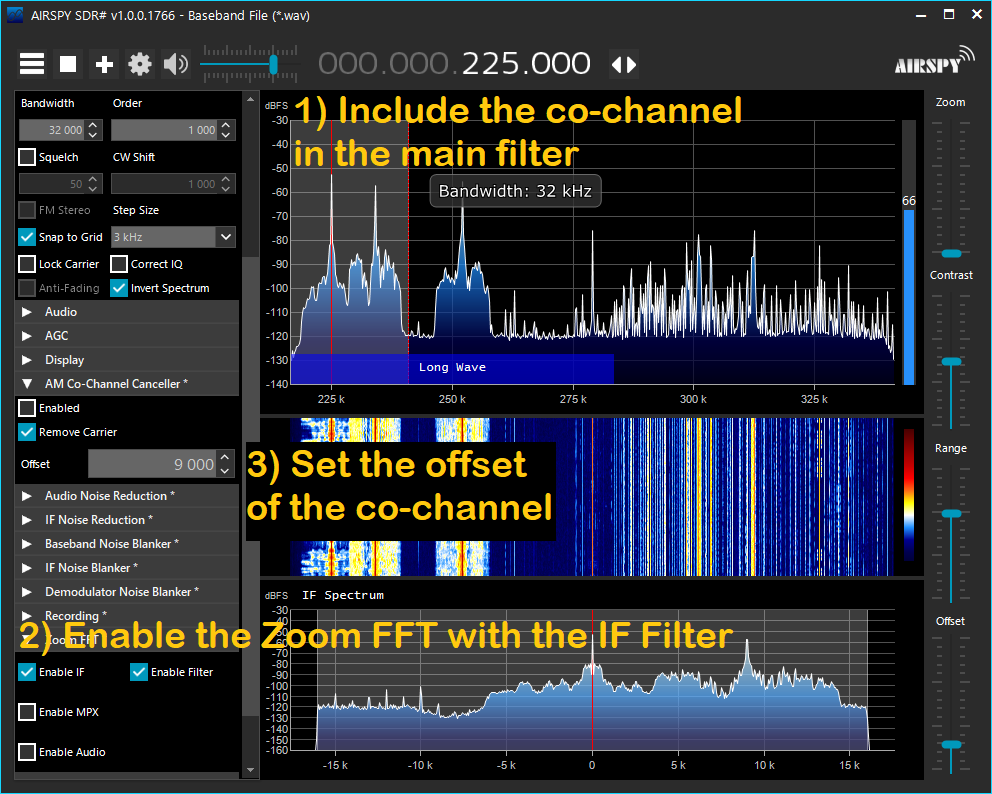
He says there were a few different ones available. With the unit he acquired, he now claims that by using a certain manner of external antennae and a few flips and tweaks of the site's workings, he can 'null' a closer AM station and hear a co-linear station PAST it. He has sent audio clips of this window of largesse.
PA big mouth me -- a few times an 'odd-person-out' in random think sessions of little distinction -- asked if, well, if you can vaporize ONE station like that, chuckle, would it be possible to cancel out the SECOND station as well?
Sample: Cancel out WBBR 1130 NYC and get 1130 Detroit. Being that those two stations are sort of co-linear, how about the possibilty of setting the steering wheel steady and muting Detroit and leaving an aqueduct for Madison to come in?
So, he's working on that now (probably as we speak here).
I haven't seen his setup on Cape Cod, and know little about it. But the premise seems to be (to my non-tech comprehension, anyway) a digital version of the setup used by the National Radio Club member Ron Schiller of Miami. He called it the LSCA -- Loop-Sense Cardioid Array.
I have just the basic 4-foot NRC loop and a vacant backyard where I recently moved in. A longwire is a piece of cake if needed.
Has anyone aboard here tinkered with these SDR units that way?
Are SDRs simply radios on a computer chip? Are there various prices of them for various explorers?
All I know is I see a screen of a dial and a stream of colored rows, on each of the 15 or so sites I have in favourites. It'd be real neat to discover other uses and warpings available on, say, the basic Milford PA site on the Delaware, or the CT-MA site near their border.
Any input welcome -- in as plain Primer English as possible, lol. EMail me or feel free to list some stuff here.
Now, this was after *I'd* turned him on to the SDR site for DXing purposes! The nerve!
He says there were a few different ones available. With the unit he acquired, he now claims that by using a certain manner of external antennae and a few flips and tweaks of the site's workings, he can 'null' a closer AM station and hear a co-linear station PAST it. He has sent audio clips of this window of largesse.
PA big mouth me -- a few times an 'odd-person-out' in random think sessions of little distinction -- asked if, well, if you can vaporize ONE station like that, chuckle, would it be possible to cancel out the SECOND station as well?
Sample: Cancel out WBBR 1130 NYC and get 1130 Detroit. Being that those two stations are sort of co-linear, how about the possibilty of setting the steering wheel steady and muting Detroit and leaving an aqueduct for Madison to come in?
So, he's working on that now (probably as we speak here).
I haven't seen his setup on Cape Cod, and know little about it. But the premise seems to be (to my non-tech comprehension, anyway) a digital version of the setup used by the National Radio Club member Ron Schiller of Miami. He called it the LSCA -- Loop-Sense Cardioid Array.
I have just the basic 4-foot NRC loop and a vacant backyard where I recently moved in. A longwire is a piece of cake if needed.
Has anyone aboard here tinkered with these SDR units that way?
Are SDRs simply radios on a computer chip? Are there various prices of them for various explorers?
All I know is I see a screen of a dial and a stream of colored rows, on each of the 15 or so sites I have in favourites. It'd be real neat to discover other uses and warpings available on, say, the basic Milford PA site on the Delaware, or the CT-MA site near their border.
Any input welcome -- in as plain Primer English as possible, lol. EMail me or feel free to list some stuff here.