
• Get involved.
    We want your input!
    Apply for Membership and join the conversations about everything related to broadcasting.

    After we receive your registration, a moderator will review it. After your registration is approved, you will be permitted to post.
    If you use a disposable or false email address, your registration will be rejected.

    After your membership is approved, please take a minute to tell us a little bit about yourself.
    https://www.radiodiscussions.com/forums/introduce-yourself.1088/

    Thanks in advance and have fun!
    RadioDiscussions Administrators

FCC To Eliminate TV Caps

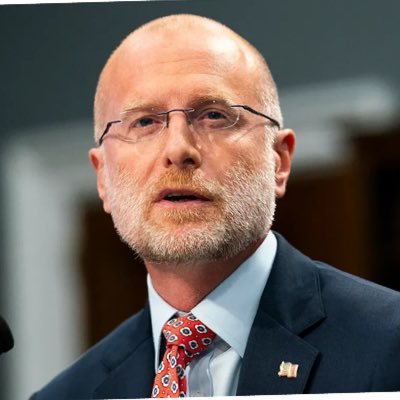
On Wednesday, the FCC announced it was looking into the ownership caps on TV stations:

The current cap says no single company can reach more than 39% of all TV households.

It's the first in Carr's plan of "Delete, Delete, Delete." The proposal has a 25 day comment period.
 
Congress and the states need to put a stop to this.

Not likely, since the congress is in the same party as the FCC. The states have no say in FCC rules.

The last time congress opposed a change in TV ownership rules was in 2003. North Dakota democrat Byron Dorgan opposed the actions of FCC chairman Michael Powell:


Republicans generally vote for loosening of ownership rules. We saw it under Powell, Martin, and Pai. Democrats oppose. There are not enough democrats now to reign in the FCC.
 
The industry has changed. Those ownership caps were to prevent companies making editorial policy for too many stations and thus regions of the country. That solution has been usurped by the multitude of editorial policies available now online. It's past time to modernize. And for the record, I work in public media so it won't change my life any. If Nexstar has the assets to purchase the Allen Media stations, those stations will likely be better for it.
 
The industry has changed. Those ownership caps were to prevent companies making editorial policy for too many stations and thus regions of the country. That solution has been usurped by the multitude of editorial policies available now online. It's past time to modernize. And for the record, I work in public media so it won't change my life any. If Nexstar has the assets to purchase the Allen Media stations, those stations will likely be better for it.
Sinclair will eventually buy everything
 
Sinclair will eventually buy everything
I thought Sinclair was in a selling mode, after having gutted some of their smaller newsrooms in favor of The National Desk.
The industry has changed. Those ownership caps were to prevent companies making editorial policy for too many stations and thus regions of the country. That solution has been usurped by the multitude of editorial policies available now online. It's past time to modernize. And for the record, I work in public media so it won't change my life any. If Nexstar has the assets to purchase the Allen Media stations, those stations will likely be better for it.
Nexstar will find a way to buy the Allen Media stations, but I think the FCC will keep restrictions so that they can’t own four stations in a place like Honolulu, so there will be trading involved.
 
The industry has changed. Those ownership caps were to prevent companies making editorial policy for too many stations and thus regions of the country. That solution has been usurped by the multitude of editorial policies available now online.
That's correct, but it doesn't factor that half the country now hates traditional media ("modern shows = woke, modern news = biased"), and that the other half sees the linear medium itself merely as someone else's streaming player that doesn't let them pick their shows. Allowing further consolidation of OTA TV will only cause more centralization, content homogenization, and cost-cutting. That, in turn, will cement people's growing hatred and apathy toward it, accelerating its death.

I think we need more local and regional owners, not less. And we need them emphasizing live and local content: events, sports, news. Everything else, OTT can do so much better that only small minorities will stay with linear for them.
 
I think we need more local and regional owners, not less. And we need them emphasizing live and local content: events, sports, news. Everything else, OTT can do so much better that only small minorities will stay with linear for them.

That's not something that can be regulated. Owning TV stations is expensive. It takes deep pockets to staff all that local coverage.

Based on what you're saying, if I was a local billionaire, the LAST thing I'd spend my money on would be broadcast TV. I'd rather buy a boat.
 
It's way past time to restore the old ownership caps from before 1996.

Not going to happen. The ownership caps were obsolete in 1985. That's when the FCC first moved from 7-7-7 to 12-12-12.

Then in 1992, the limits moved to 18-18-12. Here's what they said then:

The FCC was acknowledging increased competition in the electronic media and that the radio industry was struggling financially. The commission felt that relaxing ownership limits would allow bigger companies to buy smaller, struggling radio operations and keep those stations on the air. The FCC also said that the limits needed to be increased as the number of radio stations continued to increase.

Things haven't improved. There are no ownership limits for streaming companies. Spotify can have an unlimited number of stations.

What Carr is looking to do is "modify" the cap. Not eliminate it. That shouldn't be controversial.
 
It will also be good news for Apollo, who's trying to offload the former Cox stations.
Apollo Global Management is the big winner, they could sell Cox to Nexstar who can then buy Tegna and Gray. Have Action News simulcast on 2, 11, 17 and 46 on a 24/7 basis.

Think about all the cost savings when whole news departments merge into each other! Who needs 11 Alive or Atlanta News First or all that staff? Then multiply that across the country!
 
Here's what I'm curious about as more large market TV stations are brought under one owner: When existing multiple program sources on three, four, or five stations are eventually consolidated onto one or two ATSC 3.0 signals, will the payday be when those extra signals are sold in the next spectrum auction for the cellular industry, as we saw in 2017-19?

You could have, say, five co-owned TV stations in a market and wind up selling the spectrum for three of them at auction.


Back
Top Bottom