• Get involved.
    We want your input!
    Apply for Membership and join the conversations about everything related to broadcasting.

    After we receive your registration, a moderator will review it. After your registration is approved, you will be permitted to post.
    If you use a disposable or false email address, your registration will be rejected.

    After your membership is approved, please take a minute to tell us a little bit about yourself.
    https://www.radiodiscussions.com/forums/introduce-yourself.1088/

    Thanks in advance and have fun!
    RadioDiscussions Administrators

KQED was on "autopilot" Friday morning

I have listened to Morning Edition daily on KQED since circa 2008/09, and I set my alarm for the 5:51 California Report segment. So I found it odd when I heard Marketplace Morning Report instead on Friday morning at 5:51.

It turns out for nearly two hours, KQED ran Morning Edition with no announcer or local inserts! Just the show segments, national promos, and music beds. So no announcer (either the booth was empty or the mic wasn't working) meant no station IDs for a couple hours either.

I did eventually hear KQED's announcer back on during the 8am hour.

 
Maybe someone did not make it to work on time or if they are broadcasting from home, they had a technical issue. I am sure they are on automation overnight.
 
I have listened to Morning Edition daily on KQED since circa 2008/09, and I set my alarm for the 5:51 California Report segment. So I found it odd when I heard Marketplace Morning Report instead on Friday morning at 5:51.

It turns out for nearly two hours, KQED ran Morning Edition with no announcer or local inserts! Just the show segments, national promos, and music beds. So no announcer (either the booth was empty or the mic wasn't working) meant no station IDs for a couple hours either.

I did eventually hear KQED's announcer back on during the 8am hour.

if you wanna hear just NPR programming, catch us ..lol. we run the BBC WS 5 to 6am AK and ME 6 to 7am AK (6 to 8am pacific" and while there arent a ton of cutaways during BBC WS programming, there are during NPR and we dont take them. We have the top of hour id during network programming and thats it. no cutaways for news, weather, sponsor liners or anything else. But we only run live network programming 5 to 7am weekdays, 530 to 6pm (All things considered) and 7 to 8pm weekdays along with 7 to 9 and 4 to 5pm saturday and 8 to 9am sundays
 
if you wanna hear just NPR programming, catch us ..lol. we run the BBC WS 5 to 6am AK and ME 6 to 7am AK (6 to 8am pacific" and while there arent a ton of cutaways during BBC WS programming, there are during NPR and we dont take them. We have the top of hour id during network programming and thats it. no cutaways for news, weather, sponsor liners or anything else. But we only run live network programming 5 to 7am weekdays, 530 to 6pm (All things considered) and 7 to 8pm weekdays along with 7 to 9 and 4 to 5pm saturday and 8 to 9am sundays
More relevant to the geography of this forum, I'm assuming KQED still runs the BBC World Service on its HD-2 channel.
 
Maybe someone did not make it to work on time or if they are broadcasting from home, they had a technical issue. I am sure they are on automation overnight.
If it's the same guy doing the cut ins that was there when I was, I doubt he didn't make it in by 4:30 to prepare. I don't remember his name but he was always there and ready to go on air at 5. It sounds like more of a technical problem to me.
 
while there arent a ton of cutaways during BBC WS programming
The BBC’s Newshour program is carried on many U.S. stations and has the most local avails. One minute is available at :19-:20, with two minutes available from :49-:51. You can also opt out from :29 to :36 in various ways. :59-:00 is always local, as is :29-:30.

Any BBC newscast at :01-:06 has an optional getaway at :04 if you want to insert two minutes of local material.
 
Here's the tell that it was a tech issue:

Even if the morning guy didn't show up----legal IDs and funding credits are built into the automation system. They would have run.
From experience listening to KQED, their "KQED San Francisco/KQEI North Highlands" IDs and "support for KQED comes from XYZ Foundation" are read live in-person during the daytime. A value-add is the use of local news updates and features during Morning Edition.

As far back as 2013, KQED has automated its local inserts during overnight hours.
 
From experience listening to KQED, their "KQED San Francisco/KQEI North Highlands" IDs and "support for KQED comes from XYZ Foundation" are read live in-person during the daytime. A value-add is the use of local news updates and features during Morning Edition.

As far back as 2013, KQED has automated its local inserts during overnight hours.

Okay. And---sorry, but I haven't listened to KQED in a while---does the 'QED Morning Edition host also read the news, the way CapRadio does it, or do they have separate host/anchor roles?
 
This reminds me of something that happened at KCBS some time late last year.

They were running some sort of long form program, but there was something wrong. The volume was about half of normal, and there was something that sounded a bit like control room chatter with the ID stomping on the whole mess, then after the ID, it dropped to dead air for a minute or two before they cut to the network.

For about 15 minutes thereafter, they were pure network. And then they finally regained local control, but without any jingles or imaging.

My best guess is that their automation system malfunctioned, and they cut to the network while they rebooted it.

c
 
About 15-20 years ago, KRTH in Los Angeles was silent for most of an hour in morning drive on a weekday. Big news on this forum at the time and there may still be a thread or it may be among the ones lost during one thing or another.

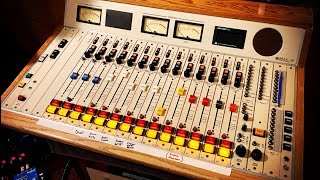
Anyway, I hadn't gone back to radio from TV yet, and hadn't kept up with the technology used in radio. My last gig was in '98, and we were still using Pacific Recorders slide-pot boards.

mqdefault.jpg

It was when I learned that the then-state-of-the-art audio consoles were no longer mechanical/electrical but were what KRTH Chief Engineer Lynn Duke called "control surfaces' when explaining the outage.

The analogy---the board is a really fancy mouse that controls the big computer with all the elements. If the mouse dies, you've got trouble.


Back
Top Bottom