• Get involved.
    We want your input!
    Apply for Membership and join the conversations about everything related to broadcasting.

    After we receive your registration, a moderator will review it. After your registration is approved, you will be permitted to post.
    If you use a disposable or false email address, your registration will be rejected.

    After your membership is approved, please take a minute to tell us a little bit about yourself.
    https://www.radiodiscussions.com/forums/introduce-yourself.1088/

    Thanks in advance and have fun!
    RadioDiscussions Administrators

FCC & Radio Ownership Limits

The FCC voted today to do a review of local radio ownership limits:


If that sounds familiar, they've been talking about it for years. Radio ownership limits haven't changed since 1996.

People like to say "Look what's happened to radio lately." But that ignores the fact that radio has been restricted by law while other media has had no legal restrictions at all. Other media has flourished while radio has stagnated.

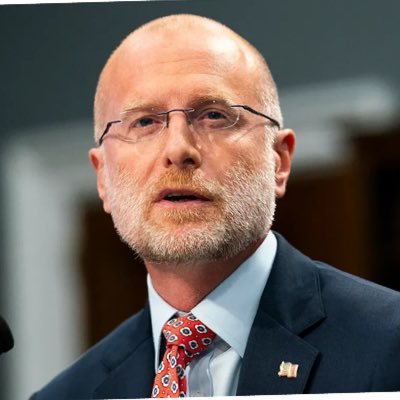
Apparently there was an anti-Carr demonstration at Tuesday's FCC public meeting:


Concerns over Carr’s involvement in media drama surrounding late-night host Jimmy Kimmel were pressed home earlier in the Open Meeting, which was briefly and loudly disrupted by protesters chanting, “Fire Carr, The Censorship Czar.”
 
Last edited:
The FCC voted today to do a review of local radio ownership limits:


If that sounds familiar, they've been talking about it for years. Radio ownership limits haven't changed since 1996.

People like to say "Look what's happened to radio lately." But that ignores the fact that radio has been restricted by law while other media has had no legal restrictions at all. Other media has flourished while radio has stagnated.
I'm sorry but I've never bought the idea that relaxing or removing radio and TV ownership rules will save the broadcasting industry. All it will do is keep new entrants from entering those media and encourage those new entrants to go to streaming instead, which, though I personally love it, I in no way consider to be the new Holy Grail for media. And that Appeals court decision is a continuing reminder that we are moving away from both the Sherman and Clayton Antitrust Acts and there will be a high price to pay for that departure.
 
I'm sorry but I've never bought the idea that relaxing or removing radio and TV ownership rules will save the broadcasting industry. All it will do is keep new entrants from entering those media and encourage those new entrants to go to streaming instead,

If that was true, we'd see a lot of new entrants jumping on broadcast licenses now, especially with prices so low. The fact is the ONLY buyer now is EMF. The main reason for the FCC to at least relax these laws would be to give EMF some competition. Otherwise, broadcast radio becomes mostly religious.
 
I do think there's some irony in a company petitioning to relax ownership requirements (going so far as to insinuate to listeners that if they can't, they may lose access to local personalities and/or sports broadcasts) when at the same time, this company (Beasley) had to cut local talent who were performing in the ratings (Boston) and turn off facilities and not even attempt to sell them (to my knowledge) in Augusta. There is a degree of hypocrisy to that.

There's also a degree of hypocrisy for people who lobbied for more deregulation and kept making the wrong decisions telling us now, if you simply trust them with more properties, they'll do better.

Maybe they will. Doubtful. I don't think it will make the stations better, or mean much more is invested in their programming, marketing or local engagement. I'd love to be wrong on that point. But also, a lot of these people are avidly in favor of the current administration and the more libertarian side of the economic spectrum. So by that reasoning, if they failed to adapt, why should they be entrusted with more public spectrum?

I'm concerned this would result in more acquisition of permits or facilities that could be viable small, mom and pop styled businesses simply to be warehoused and run as simulcasts. Many say that new entrants aren't getting involved. I can point to exceptions but by and large, let's accept that as true.

I would rather there be fewer stations, or opportunities for the prices to come down further. I think many who would be interested know that those with the most will always protect their interests first and foremost, and we've seen that with licenses that could have gone to other operators go to EMF, in effect, shrinking the market. iHeart had multiple rounds of consolidation, huge digital reach, etc. Their situation is as much failure to adapt or make the right bets as anything else, the FCC doesn't owe them anything. If the free market is what you believe in, then let the marginal stations go off and let others take risks with those permits or acquisitions, or not.

I'm certain that nothing in any revision of the rules will increase localism, diversity of operators or do anything but cause another minor spectrum grab so those at the top can carve out a few more bonuses and salary bumps before their retirement. At which point, barring some serious investment in new mindsets and modes of operation, their signals will be in the same basic place. The FCC's not going to make radio great again. And the current commission obviously doesn't even respect private companies when their programming decisions go against their worldview, so what's this going to do for local news, community service or any of those alleged goals? Not a thing.
 
There's also a degree of hypocrisy for people who lobbied for more deregulation and kept making the wrong decisions telling us now, if you simply trust them with more properties, they'll do better.

Nobody has said that.

I would rather there be fewer stations, or opportunities for the prices to come down further.

How many quality signals have to go religious before you realize there are no other potential owners?? Nobody has any money. Except EMF

I'm certain that nothing in any revision of the rules will increase localism, diversity of operators or do anything but cause another minor spectrum grab so those at the top can carve out a few more bonuses and salary bumps before their retirement.

What difference does it make? How have Spotify or Apple Music helped localism, diversity of ownership, or anything else but make trillion dollar companies even richer? Radio isn't going back to the past. You can't regulate popular taste.
 
The FCC's not going to make radio great again.

Ha! I agree with that. They're also not going to allow a company that has George Soros as an investor buy any more stations. If anything, they will find a way to disqualify him as an investor in broadcasting. So there's one company that won't benefit from changes in ownership rules.

Neither will Cumulus. They're trying to shrink their portfolio. If anything, they'll try to make some trades to strengthen certain clusters.

This FCC will operate the way the FDA works. They want to promote an agenda, and they will reward the companies that will promote the president's agenda. Look for the story today about Pfizer. Then consider how a radio company might do something like that.
 
Nobody has said that.
How are the antics of Beasley not saying that? Or iHeart? Basically every time they've had a chance, they've lobbied for consolidation. They got it, they continued to fall behind and not adapt, and therefore, by their own generally libertarian free market principles they failed.
How many quality signals have to go religious before you realize there are no other potential owners?? Nobody has any money. Except EMF.
You believe those stations were shopped around in good faith? You take them at their word that the only buyers were EMF? OK. I don't. I've known people who had the capital to make offers, and didn't even know the stations were on the market. And in part, I believe they often weren't. Because they weren't going to sell to a commercial competitor anyways. They wanted to shrink the market, so that their remaining facilities wouldn't compete with an upstart who could undercut them.

Nobody has any money? Nobody? Alrighty then. Let's let those that have money - yet supposedly are so strained they have to basically lie to their listeners to get them to sign petitions that don't benefit the listeners, just the corporations, let's let them get more spectrum to manage into decline.
What difference does it make? How have Spotify or Apple Music helped localism, diversity of ownership, or anything else but make trillion dollar companies even richer? Radio isn't going back to the past. You can't regulate popular taste.
I didn't say it made a difference, my last paragraph was basically admitting that. I just don't see any reason to make it any easier on the elite who haven't made good decisions. Let em' take more stations off, but don't do them any favors for their bonus structure or retirement plans. They didn't adapt, they didn't invest at the right times, they got the business they wanted. No reason for the pretense anymore. Shut down the excess stations, let the values go lower, let the handful of Civic Medias and others have a go at it. Smaller, more nimble, less in debt, more local operations, people who do other businesses like the new owners of WKIT in Bangor. Fewer stations, fine. More localism? Maybe.

None of it will come about because the FCC let iHeart and the like plea poverty and duress. They had their chance, and they got what they got.
 
How are the antics of Beasley not saying that? Or iHeart? Basically every time they've had a chance, they've lobbied for consolidation. They got it, they continued to fall behind and not adapt, and therefore, by their own generally libertarian free market principles they failed.

Beasley has no money. The only radio company that HAS adapted to the current marketplace is iHeart. And they're the only company likely to buy more major market stations. BTW iHeart is AGAINST more consolidation. They say they're against raising limits on FM:

iHeartMedia has said in the past that abolishing limits on AM caps entirely and raising FM limits, as NAB would like, “could exacerbate the competitive disadvantage experienced by AM radio stations relative to FM radio stations.” In response to an email today, a spokesperson for iHeartMedia declined comment.

Let em' take more stations off, but don't do them any favors for their bonus structure or retirement plans. They didn't adapt, they didn't invest at the right times, they got the business they wanted.

Once again: The future is not FM. Companies that are only focused on broadcast are missing out on the real opportunities. iHeart invested in the future, and it's paying off. Cumulus is becoming a podcast company. They adapted. The way for radio to adapt is to invest in growth technologies. Not broadcasting.
 
Thank you for the correction re: iHeart. I was not aware that was their current position.

I do, however, think the Beasley tactic with the "save local radio" petition spots after they just canned successful local shows in Boston, especially, was deceptive. If they don't have money, why are they lobbying for removal of ownership caps? So someone else can buy them?

So if the future isn't FM, why are they wanting to be allowed to buy more FM stations? If anything, wouldn't they benefit by their being fewer? By they, the broadcasters filing in favor of lessening ownership caps.

I agree, FM radio isn't some huge growth market. So I don't see the value in changing the caps. The issues facing radio won't be solved by it. And I don't think the improvement will be significant at all. So the only idea I can come up with here is that somehow, it's a short term benefit to the people at the top of the pyramid.
 
If they don't have money, why are they lobbying for removal of ownership caps? So someone else can buy them?

Bingo.

So the only idea I can come up with here is that somehow, it's a short term benefit to the people at the top of the pyramid.

There's only one person at the top of the pyramid that matters, and he never spends any of his own money. Especially on radio.
 
I'm sorry but I've never bought the idea that relaxing or removing radio and TV ownership rules will save the broadcasting industry. All it will do is keep new entrants from entering those media and encourage those new entrants to go to streaming instead, which, though I personally love it, I in no way consider to be the new Holy Grail for media. And that Appeals court decision is a continuing reminder that we are moving away from both the Sherman and Clayton Antitrust Acts and there will be a high price to pay for that departure.
Radio and TV are not the only electronic media varieties any more. Look at the figures for usage of over the air television and broadcast radio and you’ll see at about 3/4 of it all goes to “new media“ forms of delivery.

If all over the air broadcasters together, only get a quarter of the viewing and listening, there cannot be a monopoly because 25% is just not one of those.
 
To answer the question on whether the limits should be raised, ask yourself this: Was radio better before consolidation, or after?

Any more questions?

Sure: What else happened after consolidation? When was the iPhone released? When did Spotify start?

Any more questions?

What device do you always take with you when you leave the house? Your phone or your radio?

Is there anything radio could do that would cause you to use it and throw away your phone or laptop?

Any more questions?

What company is worth over a $trillion? Apple or iHeart?

I can go on.

The internet was a game changing technology that completely changed everything.

It doesn't matter what radio was like before 2000. Because after that, nobody cared. And broadcast TV is in the same boat.
 
I would venture broadcast TV is worse off.

I don't think radio's problem is no one listening. It's split attention combined with split revenues. The problem is, a lot of the platforms taking our ad dollars are also unaccountable and filtered through algorithms. We're accountable to our local audience, ideally.

Even online, on that phone, or smart speaker, I still prefer to listen to stations that are local to somewhere and curated with an actual human presence. I recently saw a study that said the majority of college educated adults do not consider "AI" to be an advantage when being marketed to. They don't trust it. The younger, and less educated a person is, they still don't trust it in the majority but tend to trust it more.

With increased subscription fees, the cost of living being what it is, and many areas still not receiving reliable mobile broadband, until we fix all of those problems, radio will still have a place, particularly stations that can provide interesting and relevant content on a local level.

As someone who's looking at certain opportunities, I firmly believe radio, while a lot of work, still has a place, particularly with educated, informed people of healthy incomes and matured demographics. No, it's not at all as simple as it was. But being a free to air service with local content has value. The challenge is, they spend less time with my FM signal than before, so now it's a tripled workload - because now it has to be everywhere, but no single point of contact is yet more profitable and less of a headache than the terrestrial signal. Streaming? Have to be there but hard to be profitable for independents. Digital, podcasts, all of it. And all of this is a sliver of the pie.

I think the attacks on public media, the actions of the major companies, the cultural climate and the distrust of AI, algorithms controlled by big tech, all of it, may at least boost some local radio operations for now. A lot has to go right. But there's some calm spaces in the midst of the storm and some of them are centered around great, truly local radio stations. I listen to them every day - even if it's through an app. Some people still want the core of what radio at its best always has offered.
 
Radio and TV are not the only electronic media varieties any more. Look at the figures for usage of over the air television and broadcast radio and you’ll see at about 3/4 of it all goes to “new media“ forms of delivery.

If all over the air broadcasters together, only get a quarter of the viewing and listening, there cannot be a monopoly because 25% is just not one of those.

This is where you and I would differ. For you, radio, TV, and the new media (streaming, podcasts, etc.) can be lumped together as one "the media," and therefore there would be no monopolies created should the FCC remove all AM and FM ownership limits. Also, your viewpoint (as I understand it) is that since there is less audience for over-the-air broadcasting, then broadcasters should be allowed to grow and become monopolies to serve that smaller audience.

But I disagree with your starting point. AM and FM radio are separate from the so-called new media and should be treated separately. Why? Because of the limitations on available frequency space on AM and FM, something that does not apply to the Internet. The number of frequencies on both the AM and FM bands are limited not only by law but also by practicality. There isn't space enough, even if you allow the much narrower separations between local outlets like Mexico does, to have unlimited broadcaster ownership on these bands and still allow new entrants. And when you fill up all of the available frequencies in a given market with stations all owned by the same owner, then you have created a monopoly for that market, even if that monopoly isn't national. When Sherman and Clayton were passed, the concern was not about how big the audience was (commercial radio hadn't entered the picture yet) but the power over pricing and the behavior of others that monopolies could allow for their owners.

Compare that with the Internet which houses the new media. While there are a few limitations, there are virtually no limitations on new entrants since no over-the-air frequencies are used. The major limitations have to do with the cost of using copyrighted material over the Internet (high and probably will go higher) and the cost paid to streaming providers (relatively low as I understand it). In the Internet world, you don't have to worry about monopolies and monopolistic competition because the price and availability for new entrants is (relatively) low.

No, the rules (not many) used for broadcasting over the Internet *should not* be used for over-the-air broadcasting again because of the limited number of frequencies available for the latter. And the current size of the over-the-air audience shouldn't be a part of that discussion.
 
In the FCC meeting yesterday, the chairman suggested some kind of system whereby licensees could buy their way our of public interest obligations:


In my opinion, it sounds like a similar system to what telecom has, where it is buying spectrum rather than licensing it.
 
With the government shutdown including 90% of the FCC workforce, it will be nice break from the craziness of it all. Business as usual is at a standstill at the FCC...and I think that's a good thing,!
 
In the FCC meeting yesterday, the chairman suggested some kind of system whereby licensees could buy their way our of public interest obligations:


In my opinion, it sounds like a similar system to what telecom has, where it is buying spectrum rather than licensing it.

The 'scarcity' referred to in the article is the scarcity of available frequencies in the radio bands, especially the FM band. If Mr. Carr's proposition were to go into effect, I certainly hope someone challenges it in our court system.
 
If that was true, we'd see a lot of new entrants jumping on broadcast licenses now, especially with prices so low. The fact is the ONLY buyer now is EMF. The main reason for the FCC to at least relax these laws would be to give EMF some competition. Otherwise, broadcast radio becomes mostly religious.

Well, the genie is out of the bottle now, and it's not going back. The U.S. radio industry is what it is because decades of bad policy have led it to be where it is today. Of course there are no new commercial operators stepping up to buy stations in a dying sector, especially when they face competition from monopolistic operators who own too many stations in any market where there might be one station for sale. Who can compete in an environment like that? Almost no one but religious operators who can extract money from indoctrinated listeners as opposed to advertisers.

The top four radio companies in the U.S. control over 50% of advertising revenue and nearly half of all listeners. Not only has this thwarted competition, but station programming has become safer, more calculated and more homogenized with just a handful of unadventurous formats making up more than three-quarters of commercial content nationwide. What we have in America is a culture of creating lazy, lousy content as cheaply as possible while prioritizing corporate growth through mergers and acquisitions above all else, as CEOs seek ways to increase their wealth. They do this knowing it will inevitably lead to their companies becoming over-leveraged to the point of eventual bankruptcy, but it doesn't matter if they can make their bonuses anyway.

While some here try to blame radio's problems on digital disruption, the fact is radio continues to thrive in many other countries. Those with strong public broadcasters like Finland, France, Sweden and South Africa have especially vibrant radio cultures, but commercial radio still does well too in well-regulated markets where it hasn't become excessively concentrated. Germany and France maintain stricter ownership caps and licensing rules, preserving regional diversity and local content. Brazil and South Africa have vibrant commercial sectors with many independent operators. UK commercial radio is consolidated, but regulators enforce local content quotas and public service obligations. Those countries still have healthy radio advertising markets and high audience reach while the programming remains vibrant and diversified as a result of good policy.


Back
Top Bottom