How are they surviving? They also understandably have very poor ratings, which I'd assume directly impacts advertising revenue
Well, let's take a look at any possible contributing factors, shall we?
Aside from 8:00am to 9:00am and noon to 3:00pm, when the local Tom Letizia and Kevin Wall shows air, they are 24/7 syndicated talk from Premiere, Salem, Westwood One, and whoever Bill O'Reilly's syndicator is these days. I would guess (but it's only that) their highest revenue periods are during the local shows, and they are probably selling the rest of the schedule as a package deal. The 8:00am hour may also be a brokered show, given that it's only an hour, the host has his own political consulting firm to hawk, and the fact that there is a separate ad for it on their programming page.
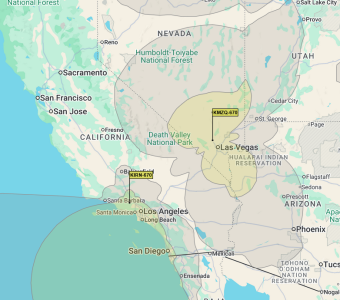
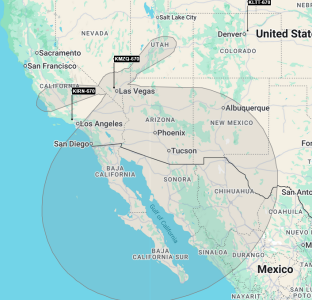
They drop from 25,000 watts to 600 watts at night, and I imagine that's their lowest revenue time of day ... if they're able to sell time at all. (That night signal is oriented much more to the south than the day signal, probably because they have to protect the Boise station on 670 ... it actually maps as going as far as Lake Havasu City and almost as far as Yuma. The good thing is that their transmitter site is at the northern boundary of Las Vegas, which does mitigate that somewhat.)
Wikipedia says their weekend schedule consists mostly of repeats from the weekday schedule but also shows on "money, health, and real estate" which might also be brokered time. (They don't list the weekend schedule on that barely adequate website of theirs.)
They are co-owned with KVGQ/106.9, which has a classic hip-hop format (and also simulcasts on KEMP/99.3 in Payson AZ), so there has to be some revenue there that can at least pay the electric bill for the AM. But it's still probably a lean operation; I have been told by people knowledgeable about the market that hip-hop isn't a very saleable format in Vegas.
So here comes the educated guess: Letizia and some of the weekend shows are probably brokered and constitute a big chunk of the revenue. Wall also has a podcast, so maybe he is selling his own spots in the afternoon show (or that could also be brokered, or some combination). With the rest of the day coming from network feeds, it's obviously a "computer in the back room" operation a lot of the time and so the overhead is pretty low.
The owner, Kemp Broadcasting & Digital Media, also has an outdoor advertising business so maybe billboard lease revenue is propping up the radio stations.