97.1 (my first preset) had a station promo where various music artists say "this is So and so in so' usually 3 or 4 names. IIRC last week I heard "this is Tom Petty" and last summer I believe I heard George Harrison. Has anyone heard other "dead people" in these promos. I am not meaning this as a Halloween post but IMHO is seems just a little weird.

-
Get involved.
We want your input!
Apply for Membership and join the conversations about everything related to broadcasting.
After we receive your registration, a moderator will review it. After your registration is approved, you will be permitted to post.
If you use a disposable or false email address, your registration will be rejected.
After your membership is approved, please take a minute to tell us a little bit about yourself.
https://www.radiodiscussions.com/forums/introduce-yourself.1088/
Thanks in advance and have fun!
RadioDiscussions Administrators
You are using an out of date browser. It may not display this or other websites correctly.
You should upgrade or use an alternative browser.
You should upgrade or use an alternative browser.
I hear dead people.
- Thread starter secondchoice
- Start date
97.1 (my first preset) had a station promo where various music artists say "this is So and so in so' usually 3 or 4 names. IIRC last week I heard "this is Tom Petty" and last summer I believe I heard George Harrison. Has anyone heard other "dead people" in these promos. I am not meaning this as a Halloween post but IMHO is seems just a little weird.
Yes and not only on promotions. If you've listened to some of the syndicated oldies shows ("Goddard's gold immediately comes to mine), you will hear portions of interviews with artists (such as Mary Wilson of The Supremes) who have passed away. I don't mind the interviews (usually the content is relevant), but, if it's a new edition of a syndicated show, I wish the host would add "the late (whoever the artist is) told us a while back..." and go on from there.
It's just an artist identification. Who cares?

Stations across the country are running classic Casey Kasem countdowns, and he has been dead for over a decade. Some stations have him voicing IDs! It is a little jarring at first, but then you get used to it.
What's the difference between dead artists singing and dead artists speaking? That might be the question. There's a religious sect that objects to the use of photography because they say photographs retain the soul of the person after death. The same could be said of recording. On the other hand, when a musician dies, one of the things said is that their music will live forever. Same with their recorded voice.

As well as Wolfman Jack, Real Don Steele, and Charlie Tuna. I don't have a problem with it. Listening to the greats from the past is sometimes better than what we hear from the living.Stations across the country are running classic Casey Kasem countdowns, and he has been dead for over a decade. Some stations have him voicing IDs! It is a little jarring at first, but then you get used to it.
The images and voices of pretty much everyone in the broader media industry have become commoditized in the same way as the product they produce. Corporate executives don’t care whether a person is dead or alive as long as they are able to monetize anything those people ever did.
It brings up a question: Is there a point at which a dead person’s image and voice essentially become public domain in the same way books, plays, audio recordings and movies eventually do? There are many historical figures whose names and likenesses are attached to various businesses they had nothing to do with. How long does a person have to be dead before you can freely use their personas?
It brings up a question: Is there a point at which a dead person’s image and voice essentially become public domain in the same way books, plays, audio recordings and movies eventually do? There are many historical figures whose names and likenesses are attached to various businesses they had nothing to do with. How long does a person have to be dead before you can freely use their personas?
It brings up a question: Is there a point at which a dead person’s image and voice essentially become public domain in the same way books, plays, audio recordings and movies eventually do?
Yes. Elvis and Sinatra are copyrighted figures. You can't use their image or likeness without permission. Quite a few others, including Marilyn Monroe. The voice of course is covered by musical copyrights.
But those copyrights will eventually expire, won’t they? Does the Marilyn Monroe persona become public domain after 95 years? Will we see Marilyn freely used on all sorts of things in 2058? Elvis in 2073? Sinatra in 2094?Yes. Elvis and Sinatra are copyrighted figures. You can't use their image or likeness without permission. Quite a few others, including Marilyn Monroe. The voice of course is covered by musical copyrights.
Yes. Elvis and Sinatra are copyrighted figures. You can't use their image or likeness without permission. Quite a few others, including Marilyn Monroe. The voice of course is covered by musical copyrights.
And, if I remember correctly, those copyrights expire either 75 years after the person's death or 75 years after the death of the heir the person assigns his copyright to.
But those copyrights will eventually expire, won’t they? Does the Marilyn Monroe persona become public domain after 95 years? Will we see Marilyn freely used on all sorts of things in 2058? Elvis in 2073? Sinatra in 2094?
It depends. Trademarks are renewable in definitely as long as the owner renews. Copyrights have a time limit. Elvis is both. Consult a lawyer first.
Trademarks can potentially last indefinitely, provided that the owner continues to use the mark in commerce and meets specific maintenance requirements set by the USPTO.
Marilyn Monroe's trademark and copyright rights are complex and involve several legal aspects:
- Trademark Rights: The Estate of Marilyn Monroe holds numerous federal trademark registrations related to her name, identity, persona, and likeness. These trademarks can be used for various goods and services, but they are subject to the right of publicity and may be challenged as generic.
2- Right of Publicity: Monroe's right of publicity allows her estate to control the commercial use of her image and name. This right can be invoked to prevent unauthorized use of her image for profit.
1- Generic Marks: In some cases, trademarks related to Monroe's image have been deemed generic, meaning they no longer hold trademark protection. This can occur if the mark becomes associated with a general class of products rather than a specific service or good.
2- Intellectual Property: Monroe's intellectual property rights were initially owned by her acting coach, Lee Strasberg, and later transferred to CMG Worldwide. The estate continues to assert exclusive rights to her image and name.
1- Public Domain: While Monroe's name and likeness are in the public domain under certain state laws, this does not mean that her image can be freely used without permission. Copyright laws still apply to her images, and unauthorized use may violate copyright and trademark rights.
2
In summary, while Monroe's trademarks and rights are protected, they are subject to legal challenges and can be contested, particularly regarding their generic status and the rights of her estate.

Realistically, most of these people become historical anachronisms after enough time passes. We remember entertainers like Marilyn, Elvis, Sinatra, John Lennon, etc. because there's still a cohort of people who directly remember them. As we die off, fewer people will pay attention to those currently-iconic entertainers, and the following generations won't give a rat's ass about them. How many people can remember Enrico Caruso or Rudy Vallée (or a thousand others from a century ago)? You remember a particularly iconic musical or on-screen performance, but the individual performers mostly fade into historical obscurity.But those copyrights will eventually expire, won’t they? Does the Marilyn Monroe persona become public domain after 95 years? Will we see Marilyn freely used on all sorts of things in 2058? Elvis in 2073? Sinatra in 2094?
Realistically, most of these people become historical anachronisms after enough time passes.
Not only that, but trademarks require action by the estate to renew and pursue violators. As you go down a few generations, the family becomes less interested in preserving those trademarks as the money gets diluted by the number of beneficiaries.

I'd like to see the estates of people like Elvis, Sinatra, Tony Bennett, etc, hire a new person to be the personality. Not impersonate. BE. As in, assign the likeness to that person and have them go out on the road. Then you could send 30-year-old Frank Sinatra out on a tour, and when his voice hits the wall, hire a new one. Who here wouldn't want to see 1968 Elvis on tour? Find the right guy, dub him the new Elvis, and hit the road!
I'd like to see the estates of people like Elvis, Sinatra, Tony Bennett, etc, hire a new person to be the personality.
That's what the estate of Roy Orbison did a few years ago using a hologram:

Roy Orbison's Been Dead For 30 Years, But He's Heading Out On Tour As A Hologram
An estate-approved Roy Orbison hologram will mount a full-blown North American tour this fall, followed by the first-ever hologram residency in 2019.
 liveforlivemusic.com
It's not an actor. It's him. Another example is Randy Travis, who's singing career was ended by stroke. He hired a singer to perform his hits, and Randy sits on stage and reacts to the applause.
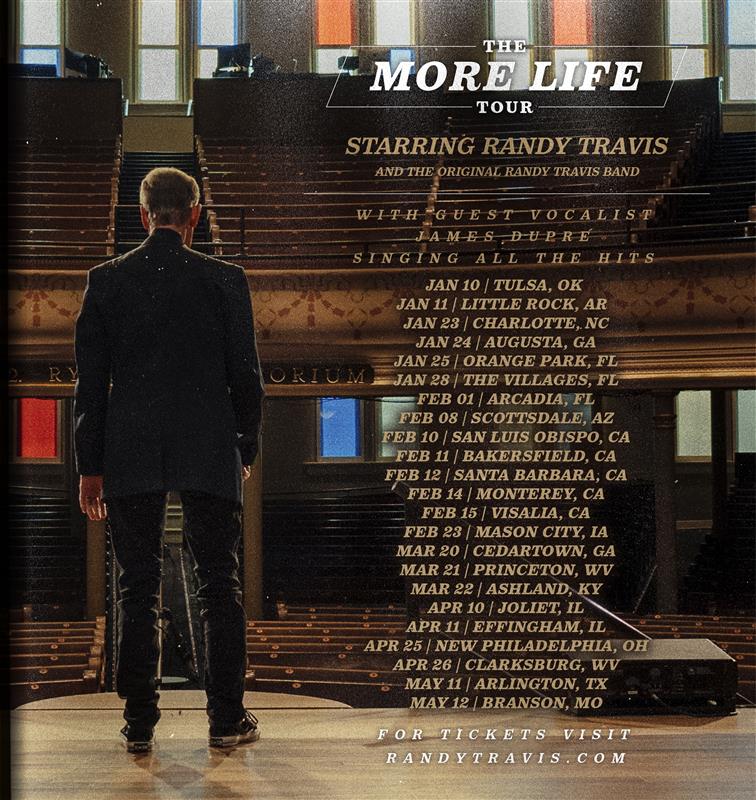
Randy Travis | RANDY TRAVIS’ MORE LIFE TOUR ANNOUNCES 2025 DATES
Official Website for Randy Travis music, videos, news, and more!
 www.randytravis.com
The main thing about it is the original artist controls how his likeness appears, and profits from the exposure.
Elvis's body was barely even cold when Jimmy "Orion" Ellis began pretending to be him, an act he carried on until 1983:Who here wouldn't want to see 1968 Elvis on tour? Find the right guy, dub him the new Elvis, and hit the road!

Orion (singer) - Wikipedia
Along the way he racked up ten Country hits, although none of them even came close to the Top 40.
The Oddity Archive's documentary about "Elvisploitation":
Already done! (The article calls it an "internet station", but it was on the air in Manchester.)"Music of the dead" - might make a terrific format, huh?

Dead Air: Station Only Plays Songs By Deceased
DJ Steve Penk tells Sky News he saw a gap in the market and decided to launch Radio Dead to honour artists we've lost.
The station itself went to its grave in 2019.
That raises another question, and we’ll again use Marilyn Monroe as an example.It depends. Trademarks are renewable in definitely as long as the owner renews. Copyrights have a time limit. Elvis is both. Consult a lawyer first.
Assuming current copyright law remains unchanged, on January 1, 2058 ALL of the movies Marilyn Monroe ever made will have fallen into the public domain. How would a holder of her trademark exert any control over artistic works that are no longer covered by copyright? Presumably anyone would be able to extract her performances in those films and do what they want with them.
You are exactly right, and that will act as a limiting mechanism. In the case of Elvis, he died young, but still has a cohort of the late Silent Generation and Baby Boomers who have firsthand memories of him. Once those people are gone Elvis will likely fade away. And Frank Sinatra will probably be on par with the current perception of Enrico Caruso once we hit the 22nd Century 75 years from now.Realistically, most of these people become historical anachronisms after enough time passes. We remember entertainers like Marilyn, Elvis, Sinatra, John Lennon, etc. because there's still a cohort of people who directly remember them. As we die off, fewer people will pay attention to those currently-iconic entertainers, and the following generations won't give a rat's ass about them.
Caruso has been dead for 104 years and only aficionados of opera history are familiar with him. There were dozens of other once famous opera stars that were his contemporaries. Virtually no one remembers them.How many people can remember Enrico Caruso or Rudy Vallée (or a thousand others from a century ago)? You remember a particularly iconic musical or on-screen performance, but the individual performers mostly fade into historical obscurity.
Rudy Vallée, who died in 1986, was still making film and TV appearances in the 1970s. But mention his name today and you will likely receive a blank stare.
ABBA are very much still alive, but their holograms have been playing nightly in a purpose built ABBA building in London for years:That's what the estate of Roy Orbison did a few years ago using a hologram:
Roy Orbison's Been Dead For 30 Years, But He's Heading Out On Tour As A Hologram
An estate-approved Roy Orbison hologram will mount a full-blown North American tour this fall, followed by the first-ever hologram residency in 2019.
It's not an actor. It's him. Another example is Randy Travis, who's singing career was ended by stroke. He hired a singer to perform his hits, and Randy sits on stage and reacts to the applause.
Randy Travis | RANDY TRAVIS’ MORE LIFE TOUR ANNOUNCES 2025 DATES
Official Website for Randy Travis music, videos, news, and more!
The main thing about it is the original artist controls how his likeness appears, and profits from the exposure.
ABBA Voyage - Wikipedia
I'm surprised they haven't tried it with other currently-popular artists. Taylor Swift can only be in one place at once, but she could be playing in every town on the planet in digital form.