I bet most fans of 1980s music have no clue who Johnnie Ray was, but know that he moved a million hearts in mono, and came between Red China and South Pacific.Rudy Vallée, who died in 1986, was still making film and TV appearances in the 1970s. But mention his name today and you will likely receive a blank stare.

-
Get involved.
We want your input!
Apply for Membership and join the conversations about everything related to broadcasting.
After we receive your registration, a moderator will review it. After your registration is approved, you will be permitted to post.
If you use a disposable or false email address, your registration will be rejected.
After your membership is approved, please take a minute to tell us a little bit about yourself.
https://www.radiodiscussions.com/forums/introduce-yourself.1088/
Thanks in advance and have fun!
RadioDiscussions Administrators
You are using an out of date browser. It may not display this or other websites correctly.
You should upgrade or use an alternative browser.
You should upgrade or use an alternative browser.
I hear dead people.
- Thread starter secondchoice
- Start date

Poor old Johnny Ray? Sounded sad upon the radio, as I recall.I bet most fans of 1980s music have no clue who Johnnie Ray was, but know that he moved a million hearts in mono, and came between Red China and South Pacific.

I saw an article where fans of Robin Williams made and posted AI videos and Voice over content of the late star but one of his family members was against the use of AI because it desensitized the reality that he died a decade ago. However we need to see whatever movie and TV contracts Robin Williams signed prior to his death over who gets the rights to his likeness.
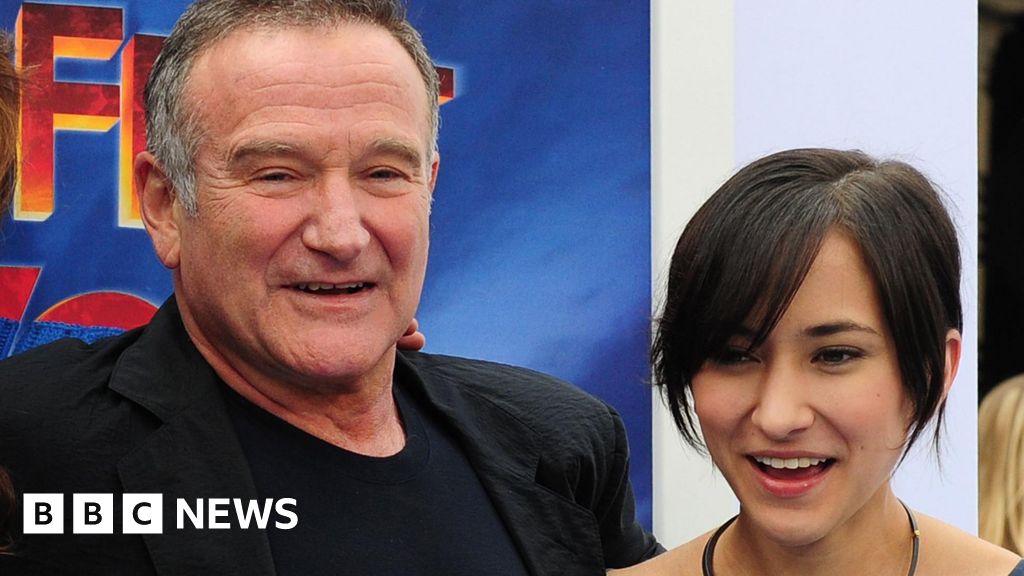
 www.bbc.com
Robin Williams' daughter pleads for people to stop sending AI videos of her dad
The filmmaker said it is not what her dad, who died in 2014, would have wanted.
www.bbc.com

I understand that the Randy Travis voice singing is AI generated. Which is why it sounds just like him. This is a great and clever use of AI. I suspect more singers whose voice has degraded over the years to use this for both performance and recording. Extending a music career that should have ended long ago.That's what the estate of Roy Orbison did a few years ago using a hologram:

Roy Orbison's Been Dead For 30 Years, But He's Heading Out On Tour As A Hologram
An estate-approved Roy Orbison hologram will mount a full-blown North American tour this fall, followed by the first-ever hologram residency in 2019.liveforlivemusic.com
It's not an actor. It's him. Another example is Randy Travis, who's singing career was ended by stroke. He hired a singer to perform his hits, and Randy sits on stage and reacts to the applause.
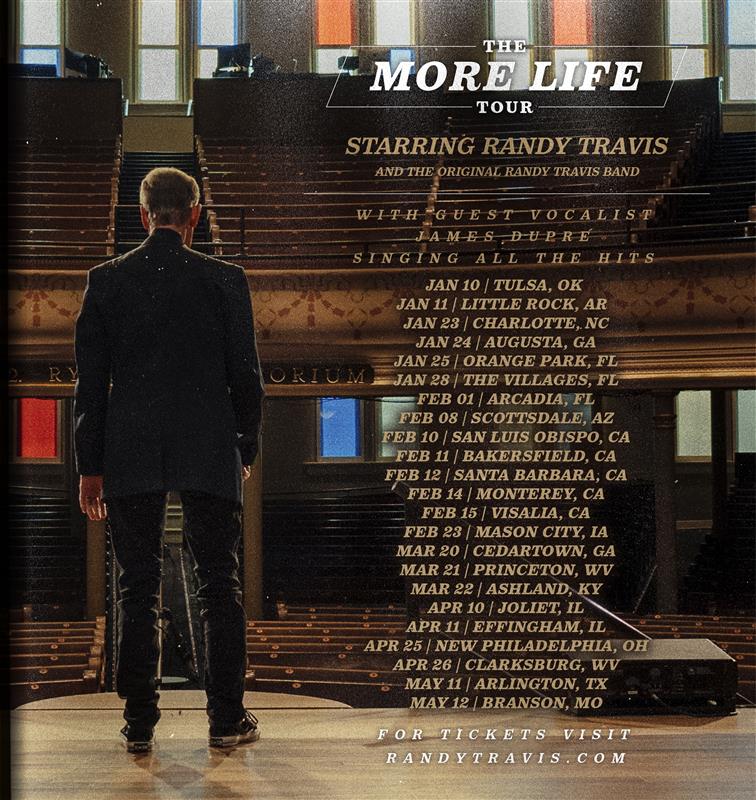
Randy Travis | RANDY TRAVIS’ MORE LIFE TOUR ANNOUNCES 2025 DATES
Official Website for Randy Travis music, videos, news, and more!www.randytravis.com
The main thing about it is the original artist controls how his likeness appears, and profits from the exposure.
One song:

 www.cbsnews.com
As far as I know the tour is sung live by the stand-in.
More than a decade after a stroke, Randy Travis sings again, courtesy of AI
"Sunday Morning" has an exclusive behind-the-scenes look at the creation of the country singer's first post-stroke song, "Where That Came From," which blends art with artificial intelligence in a recording that captures Travis' country heart.
www.cbsnews.com
As far as I know the tour is sung live by the stand-in.
Many of them have been doing it for decades. It's called "lip-synching".I suspect more singers whose voice has degraded over the years to use this for both performance and recording. Extending a music career that should have ended long ago.
Frankie admitted to using it, but prefers to call it "vocal layering".
And you can hear a form of vocal layering, otherwise known as double tracking, in the enhanced vocals of Phil Collins and John Lennon, both of whom had thin, reedy voices, on many of their recordings. Studio and stage fakery is nothing new, and had involved revered and reviled artists alike. It's gotten to the point to which I just decide whether I like the tune, the words and the arrangement and let others worry about whether the vocalist on the recording was recorded "honestly." I do draw the line at the AI fakes that are taking over YouTube, many of them attractive-sounding, but 100 percent fake, duets by singers who've never recorded together.Many of them have been doing it for decades. It's called "lip-synching".
Frankie admitted to using it, but prefers to call it "vocal layering".

She kind of does, when her concert tour movies come out in theaters and online. I’d rather watch her actually singing on film than as a hologram.Taylor Swift can only be in one place at once, but she could be playing in every town on the planet in digital form.

The Steamboat Willie version of Mickey Mouse is in the public domain, and you can create and sell your own works using this version of Mickey Mouse. But you'll get lawyers on your tail if you try and use ANY version of Mickey Mouse as a trademark to sell a product. As long as Disney follows the law in keeping the name and image of Mickey Mouse alive as a trademark, nobody else can use it as a trademark, in perpetuity. But as time goes on, various other renditions of Mickey Mouse will continue to enter the public domain and be available for use in creative works. You can't stop someone from using a trademark in a creative work, unless it's to explicitly sell the product as a brand. Coca-Cola couldn't stop the Kinks from using the Coca-Cola name in the song "Lola" (they did change it to "cherry cola" so that the BBC would play it and not call it a commercial), and Eastman Kodak couldn't stop Paul Simon from creating the song "Kodachrome", although they did get Simon to add a trademark notice.That raises another question, and we’ll again use Marilyn Monroe as an example.
Assuming current copyright law remains unchanged, on January 1, 2058 ALL of the movies Marilyn Monroe ever made will have fallen into the public domain. How would a holder of her trademark exert any control over artistic works that are no longer covered by copyright? Presumably anyone would be able to extract her performances in those films and do what they want with them.
You are exactly right, and that will act as a limiting mechanism. In the case of Elvis, he died young, but still has a cohort of the late Silent Generation and Baby Boomers who have firsthand memories of him. Once those people are gone Elvis will likely fade away. And Frank Sinatra will probably be on par with the current perception of Enrico Caruso once we hit the 22nd Century 75 years from now.
Caruso has been dead for 104 years and only aficionados of opera history are familiar with him. There were dozens of other once famous opera stars that were his contemporaries. Virtually no one remembers them.
Rudy Vallée, who died in 1986, was still making film and TV appearances in the 1970s. But mention his name today and you will likely receive a blank stare.
The personal rights of people vary by state. In California, they are retained by the deceased person's estate or heirs for 70 years. California Celebrities Rights Act - Wikipedia
Now, if a celebrity (notable examples include Elvis, Billy Idol, and Billy Joel) trademarked their name, those IP rights can theoretically be maintained in perpetuity. Elvis Presley Enterprises (EPE) can keep the Elvis name protected as a trademark in perpetuity.
Which explains how this movie was able to be made.The Steamboat Willie version of Mickey Mouse is in the public domain, and you can create and sell your own works using this version of Mickey Mouse. But you'll get lawyers on your tail if you try and use ANY version of Mickey Mouse as a trademark to sell a product. As long as Disney follows the law in keeping the name and image of Mickey Mouse alive as a trademark, nobody else can use it as a trademark, in perpetuity. But as time goes on, various other renditions of Mickey Mouse will continue to enter the public domain and be available for use in creative works. You can't stop someone from using a trademark in a creative work, unless it's to explicitly sell the product as a brand.
The personal rights of people vary by state. In California, they are retained by the deceased person's estate or heirs for 70 years. California Celebrities Rights Act - Wikipedia
Now, if a celebrity (notable examples include Elvis, Billy Idol, and Billy Joel) trademarked their name, those IP rights can theoretically be maintained in perpetuity. Elvis Presley Enterprises (EPE) can keep the Elvis name protected as a trademark in perpetuity, along with the TCB lightning bolt, etc.

Screamboat Review: The Steamboat Willie Horror Movie Isn't Great, But It's So Much Better Than I Thought It Would Be
Screamboat joins the public domain horror trend.
 screenrant.com
Actually as of 2025 the first 15 Mickey Mouse cartoons are now in the public domain, having been released in 1928 and 1929.The Steamboat Willie version of Mickey Mouse is in the public domain, and you can create and sell your own works using this version of Mickey Mouse.
On January 1, 2026 another nine Mickey Mouse cartoons will enter the public domain, having been released in 1930.
This Wikipedia article lists all the Mickey Mouse cartoons, and has links to the individual films, including full clips of those in the public domain:

Mickey Mouse (film series) - Wikipedia
And you can hear a form of vocal layering, otherwise known as double tracking, in the enhanced vocals of Phil Collins and John Lennon, both of whom had thin, reedy voices, on many of their recordings. Studio and stage fakery is nothing new, and had involved revered and reviled artists alike. It's gotten to the point to which I just decide whether I like the tune, the words and the arrangement and let others worry about whether the vocalist on the recording was recorded "honestly." I do draw the line at the AI fakes that are taking over YouTube, many of them attractive-sounding, but 100 percent fake, duets by singers who've never recorded together.
Then you must have been horrified by the "duets" between Jim Reeves and Deborah Allen which became country hits around 1979. While Deborah Allen (as far as I know) is still very much alive, Jim Reeves died in a plane crash in 1963. He still continued to have solo, and sometimes duet hits, on the C&W charts up until the early 1980s, if memory serves.
Winnie-the-Pooh (including hyphens, but not including the red shirt) and other characters from A.A. Milne's books are also now in the public domain:

 ipwatchdog.com
How ‘Public’ is the Public Domain? Winnie-the-Pooh Illustrates Copyright Limitations of Public Domain Works
You may have heard that on January 1, 2022, Winnie-the-Pooh and the other characters from the Hundred Acre Wood are now in the public domain. But did you know that not all of Christopher Robin’s friends are treated the same in the eyes of copyright law?

I see what you did there, Dexy! Ha!Poor old Johnny Ray? Sounded sad upon the radio, as I recall.
I don't mind those, because there are actual performances by both singers involved, just recorded years apart. Hank Williams Sr. and Jr, had a big hit with such a recording, as did Lorrie Morgan and her then-recently-departed husband Keith Whitley. What I'm referring to are monstrosities like this, Morgan Wallen and Luke Combs' (poorly) synthesized voices in a duet neither has ever performed, The song doesn't even exist outside of this video.Then you must have been horrified by the "duets" between Jim Reeves and Deborah Allen which became country hits around 1979. While Deborah Allen (as far as I know) is still very much alive, Jim Reeves died in a plane crash in 1963. He still continued to have solo, and sometimes duet hits, on the C&W charts up until the early 1980s, if memory serves.
That explains how this movie and it's sequel was ALSO able to be made.Winnie-the-Pooh (including hyphens, but not including the red shirt) and other characters from A.A. Milne's books are also now in the public domain:
How ‘Public’ is the Public Domain? Winnie-the-Pooh Illustrates Copyright Limitations of Public Domain Works
You may have heard that on January 1, 2022, Winnie-the-Pooh and the other characters from the Hundred Acre Wood are now in the public domain. But did you know that not all of Christopher Robin’s friends are treated the same in the eyes of copyright law?


NBC to Use AI to Recreate Voice of Famed NBA Narrator Jim Fagan For Upcoming Season
Fagan passed away in 2017, but when the 'NBA on NBC' returns this fall, his voice will appear in promos, title sequences and other segments.
 www.hollywoodreporter.com
Jim Fagan the announcer from NBC Sports from the 1990’s has his AI voice used for NBA promos and openings. Yes he died in the past decade but his voice lives on this time on NBA promos on Peacock.

Is a man's voice considered his intellectual property, and do his survivors have any legal standing to protect it from AI duplication or re-creation?Okay.
Just what kind of payment to the survivors would NBC be making to use the recreation?
In this case the estate of Jim Fagan agreed to use the AI voice of him for NBC Sports promos specific to NBA games as long as NBC is airing NBA games on the national level for Peacock app.Okay.
Just what kind of payment to the survivors would NBC be making to use the recreation?