• Get involved.
    We want your input!
    Apply for Membership and join the conversations about everything related to broadcasting.

    After we receive your registration, a moderator will review it. After your registration is approved, you will be permitted to post.
    If you use a disposable or false email address, your registration will be rejected.

    After your membership is approved, please take a minute to tell us a little bit about yourself.
    https://www.radiodiscussions.com/forums/introduce-yourself.1088/

    Thanks in advance and have fun!
    RadioDiscussions Administrators

Books About Classic TV

Here's a thread devoted to books about classic TV, either published decades ago or recently but dealing with various historical topics.

I'll start the thread with The Universal Eye by Timothy Green. Published in 1972 (but still widely available used and in libraries), it's a lively journalistic account of the television landscapes of various countries and continents by a British author and provides a wonderful time capsule of that era more than four decades ago.

The book has chapters on: the United States, Canada, Latin America, Eurovision (the pan-European TV exchange run by the EBU, not just the song contest), the United Kingdom, West Germany, France, Italy, Spain, Scandinavia, the Netherlands, the Soviet Union, Eastern Europe, East-West television propaganda, the Arab world and Israel, Asia (including detailed looks at Thailand, India, Hong Kong, and the Philippines), Japan, Australia, Africa, and the future of television (which discusses the advent of cable, satellite, and videotape).


Jeff Kisseloff's The Box: an Oral History of Television, 1920-1961 provides fascinating insight into the early television. The anecdotes recounted by both on-air personalities and behind-the-scenes pioneers don't just serve as an invaluable account of the birth of a new medium; they're also hugely entertaining in their own right.

 
Last edited:
The Box has chapters on sports, kids' programming, news, WBKB in Chicago, the Chicago School (of TV, not economics!), the DuMont network, KTLA in Los Angeles, 30 Rock, sitcoms, TV set retailers, and more.
 
For a book focused on a specific TV station, there is a book dedicated to WKBD-TV Ch 50 in Detroit.

It covers the station's history in detail from their initial sign on in the 60s through to it become a Fox affiliate in the late 80s. I remembered watching this station when visiting family in the Detroit area at various times in the 70s, but it is also interesting just as a look at a specific type of TV station -- the UHF independent. In its heyday, WKBD-TV was one of the more successful of this kind of station, but in many ways its evolution was also typical for such stations. So those who are interested in UHF television back in the day and/or the era of independent television stations may find this book of interest.

It is very detailed, and includes not only discussions of local personalities and the mix of programming on the station, but also includes schedules for the station from its initial sign on through to 1987.
 
The complete directory to network prime-time and cable TV shows by Tim Brooks and Earle Marsh

The Encyclopedia of TV Game Shows by David Schwartz Steve Ryan and Fred Wostbrock this and the previous book mentioned are both self-explanatory

Johnny Olson a voice in time by Randy West-this book is more than about the price is right announcer it is basically a history of TV.

TV Inside-Out also by Randy West-what goes on behind the scenes of your favorite TV shows

Bill Cullen Quizmaster by Adam Nedeff-a biography of arguably the greatest game show host of all-time

This day in game show history-Adam Nedeff

Celebrities on game shows-David Schwartz and Brendan McLaughlin
 
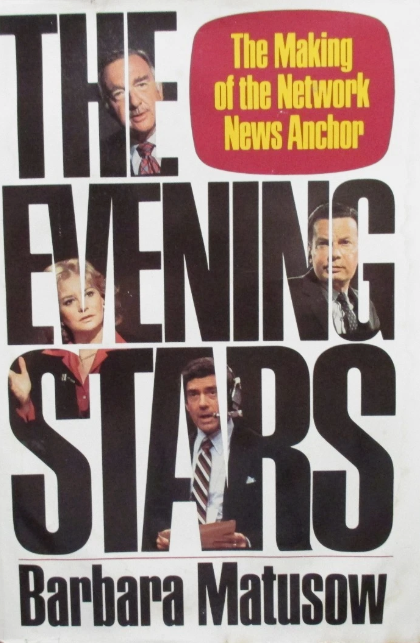
The Evening Stars: The Making of the Network News Anchor by Barbara Matusow (1983) focuses on, you guessed it, news anchors and how they became such influential media personalities. It is essentially a serious history of television news in the United States, from the fledgling first broadcasts to the 1980s, with some revealing behind-the-scenes gossip thrown in.


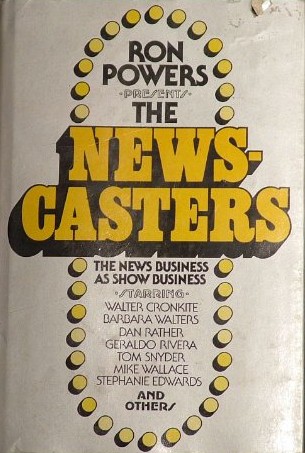
Don't say we we weren't warned. The Newscasters: The News Business as Show Business by Ron Powers also deals with broadcast journalism, but it's a very different kind of book. Written by a Pulitzer-winning TV critic in 1977, the book warned his readers that TV news, traditionally seen as a public service, would soon transform into a sellable product strongly influenced by consultants and market research. Powers presciently claims that this would damage the civic sphere. At the time, this trend was seen mostly in local TV news, and local newscasts get most of Powers' attention, but even in 1977, Powers cautioned that national news would eventually succumb to the trend as well.

 
Here are two current ones

1. You are looking live!: How the NFL today shaped sports broadcasting

2. Madden and Summerall-how they revolutionized NFL broadcasting.

Both by Rich Podolsky
 
You probably will only find it at college libraries but "Same Time Same Channel" by James Baughman is a great read. Its main question is " why didn't the early days of live drama and specials last?". I don't agree with all his conclusions but its a fascinating look at the early days of TV
Also check out David Fisher's "Tube: The invention of Television", a very layman friendly treatment of a topic thats usually overly simplified, Wesley Hyatt's "Encyclopedia of Daytime TV", and Hal Erickson's "Syndicated TV 1947-1987"
 
You probably will only find it at college libraries but "Same Time Same Channel" by James Baughman is a great read. Its main question is " why didn't the early days of live drama and specials last?". I don't agree with all his conclusions but its a fascinating look at the early days of TV

A minor correction for those looking up the very interesting book: it's Same Time, Same Station. I certainly second the recommendation.

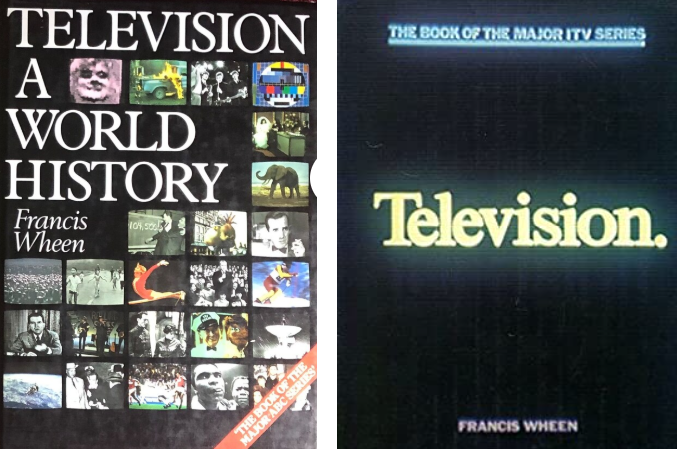
Francis Wheen's Television: A History (also known as Television: A World History, depending on the edition) was published in 1985 to accompany the Granada Television (UK) documentary series Television. The book is a global history of the medium with an emphasis on the United States and the United Kingdom, covering everything from early TV experiments in the 1920s to the emergence of the "global village" of the 1980. There are chapters on news and current affairs, sports, educational television, soap operas, television technology, etc.

 
You probably will only find it at college libraries but "Same Time Same Channel" by James Baughman is a great read. Its main question is " why didn't the early days of live drama and specials last?". I don't agree with all his conclusions but its a fascinating look at the early days of TV
Also check out David Fisher's "Tube: The invention of Television", a very layman friendly treatment of a topic thats usually overly simplified, Wesley Hyatt's "Encyclopedia of Daytime TV", and Hal Erickson's "Syndicated TV 1947-1987"
The latter two are great books!
 
Also check out David Fisher's "Tube: The invention of Television", a very layman friendly treatment of a topic thats usually overly simplified,

Another book on TV technology, with coverage up 1990, is Andrew Inglis' Behind the Tube: A History of Broadcast Technology and Business. Naturally, there's some overlap with Fisher's volume, but Inglis also discusses later developments such as videotape recorders (and the RCA/Ampex rivalry), the development of satellite technology, electronic newsgathering, the decline of American manufacturers and the advent of Japanese-made broadcast electronics, etc.
 
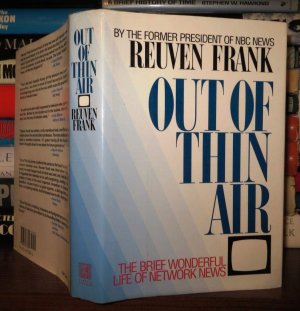
My number one recommendation:

Screenshot 2025-11-07 at 8.01.05 AM.jpeg

Reuven is the guy who put Huntley and Brinkley together for the 1956 conventions and was the producer of the Huntley-Brinkley Report (now NBC Nightly News) until 1964. He was also (as the dust jacket says) President of NBC News---twice. From 1968 to 1974 and again from 1982 to 1984.

He wrote this in 1991, and it was---35 years ago---an obit of sorts. You can find a good copy online for less than ten bucks.
 
My number one recommendation:

View attachment 10800

Reuven is the guy who put Huntley and Brinkley together for the 1956 conventions and was the producer of the Huntley-Brinkley Report (now NBC Nightly News) until 1964. He was also (as the dust jacket says) President of NBC News---twice. From 1968 to 1974 and again from 1982 to 1984.

He wrote this in 1991, and it was---35 years ago---an obit of sorts. You can find a good copy online for less than ten bucks.

This is a great read and a wonderful history of NBC News as told by a man who wasn't only there through much of its glory years, but, as you mention, also helped to make the organization such a force in broadcast journalism.

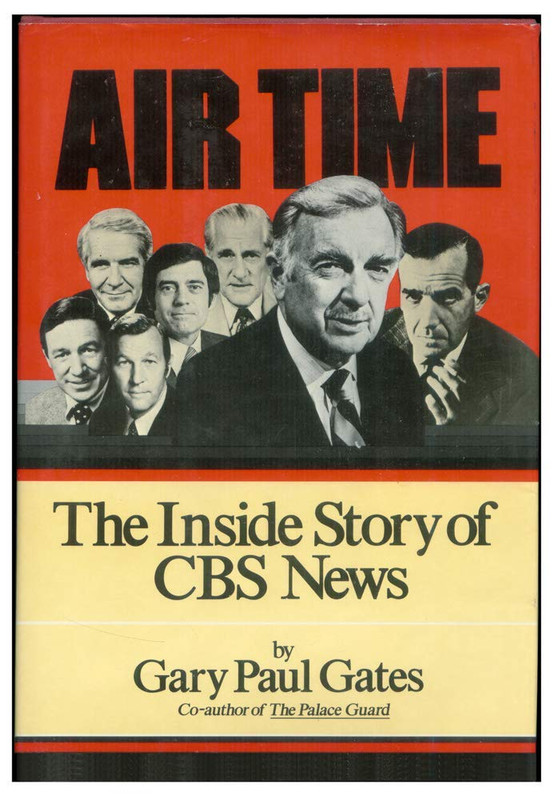
For an interesting read about the golden age of CBS News, and what was happening behind the scenes during the Cronkite era, I recommend Gary Paul Gates' Air Time: The Inside Story of CBS News, published in 1978.


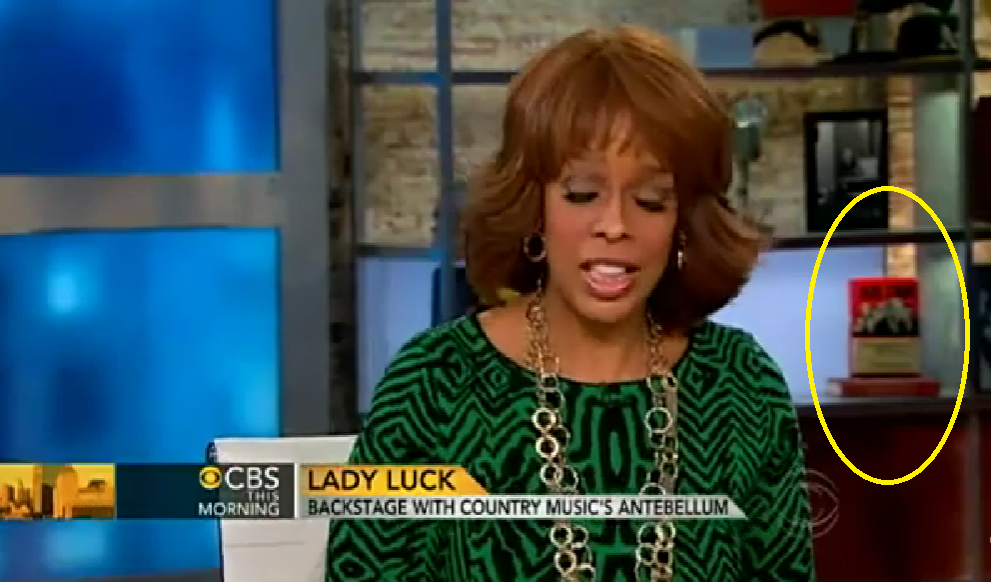
If the cover seems vaguely familiar, it may be because the book was featured rather prominently in the background of the old CBS This Morning set:


CBS News from this period was also one of the news organizations profiled in David Halberstam's classic The Powers That Be (along with Time, The Washington Post, and The Los Angeles Times).

Peter J. Boyer profiled the decline of CBS Evening News from the broadcast or record to just another ratings-driven newscast in Who Killed CBS? The Undoing of America's Number One News Network. Boyer later cozied up to Roger Ailes, but was still a serious, respected journalist when he wrote this book.

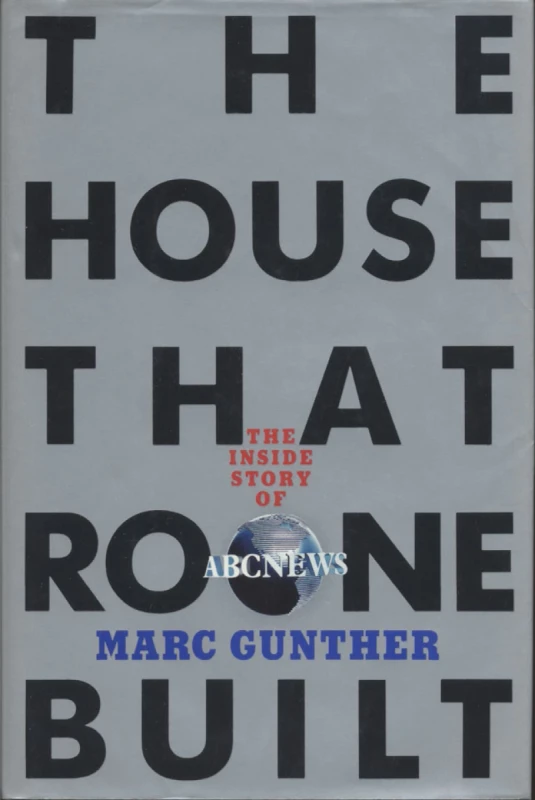
There aren't as many book about ABC News, but John Gunther's The House That Roone Built: The Inside Story of ABC News recounts how Roone Arledge helped to turn the news organization from an also-ran of the '50s. '60s, and '70s into a ratings powerhouse of the 1980s and early 1990s--despite setbacks such as the disastrous launches of 20/20 and PrimeTime Live.


Arledge's own biography, Roone: A Memoir, covers much of the same ground.
 
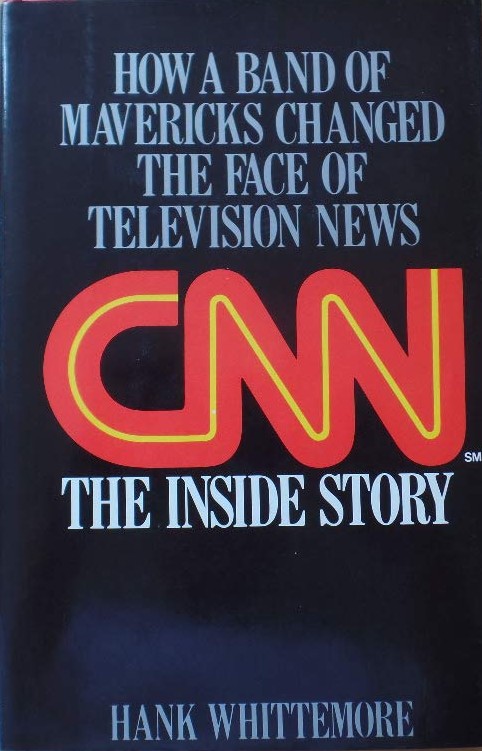
As for CNN, Hank Whittemore's CNN: How a Band of Mavericks Changed the Face of Television News, based on insider accounts, is the definite account of how Ted Turner used revenue from his fledgling WTCG to build the world's first news channel, whose beginnings were so modest that its offices were initially housed in a Victorian-era brothel. The book was published in 1990 to mark the channel's 10th anniversary.


For a feel of that era, here's a behind-the-scenes tour of CNN from the channel's second hour on the air on June 1, 1980:


Reese Schoenfeld, the first president of CNN and the creator of its format, wrote Me and Ted Against the World: The Unauthorized Story of the Founding of CNN in 2001. It's immediately apparent from his account, full of interesting anecdotes and behind-the-scenes gossip, that Schoenfeld didn't leave CNN on good terms and that had plenty of scores to settle.

The most recent book about CNN is Lisa Napoli's Up All Night: Ted Turner, CNN, and the Birth of 24-Hour News, published in 2020. This one focuses on everything that happened before CNN's launch, from the shoestring operation that was WTCG in its early years (before it became profitable enough to support CNN) to in-depth profiles of the people behind the scenes who made the news channel possible.
 
Last edited:
This is a great read and a wonderful history of NBC News as told by a man who wasn't only there through much of its glory years, but, as you mention, also helped to make the organization such a force in broadcast journalism.

For an interesting read about the golden age of CBS News, and what was happening behind the scenes during the Cronkite era, I recommend Gary Paul Gates' Air Time: The Inside Story of CBS News, published in 1978.


If the cover seems vaguely familiar, it may be because the book was featured rather prominently in the background of the old CBS This Morning set:


CBS News from this period was also one of the news organizations profiled in David Halberstam's classic The Powers That Be (along with Time, The Washington Post, and The Los Angeles Times).

Peter J. Boyer profiled the decline of CBS Evening News from the broadcast or record to just another ratings-driven newscast in Who Killed CBS? The Undoing of America's Number One News Network. Boyer later cozied up to Roger Ailes, but was still a serious, respected journalist when he wrote this book.

There aren't as many book about ABC News, but John Gunther's The House That Roone Built: The Inside Story of ABC News recounts how Roone Arledge helped to turn the news organization from an also-ran of the '50s. '60s, and '70s into a ratings powerhouse of the 1980s and early 1990s--despite setbacks such as the disastrous launches of 20/20 and PrimeTime Live.


Arledge's own biography, Roone: A Memoir, covers much of the same ground.

Both Air Time and The House That Roone Built are great books!
 
I'll start the thread with The Universal Eye by Timothy Green. Published in 1972 (but still widely available used and in libraries), it's a lively journalistic account of the television landscapes of various countries and continents by a British author and provides a wonderful time capsule of that era more than four decades ago.
Available at BOOKSHELF: Radio and TV Broadcast management and station operations
Jeff Kisseloff's The Box: an Oral History of Television, 1920-1961 provides fascinating insight into the early television. The anecdotes recounted by both on-air personalities and behind-the-scenes pioneers don't just serve as an invaluable account of the birth of a new medium; they're also hugely entertaining in their own right.
Soon on WorldRadioHistory.
 
This is a great read and a wonderful history of NBC News as told by a man who wasn't only there through much of its glory years, but, as you mention, also helped to make the organization such a force in broadcast journalism.

For an interesting read about the golden age of CBS News, and what was happening behind the scenes during the Cronkite era, I recommend Gary Paul Gates' Air Time: The Inside Story of CBS News, published in 1978.

Available at BOOKSHELF NEWS: Radio & TV news techniques and stories
 
As someone who loves learning about television at the dawn of cable TV

The Sweeps: Behind the Scenes in Network TV, which recounts NBC's poor 1983-84 ratings performance despite big spending to get out of 3rd place. The book focused on a lot of individuals, some of which in retrospect don't matter to the bigger picture of '80s television, but the book followed the season as it happened and was published in late 1984.

Cultivating the Wasteland: Can Cable Put the Vision Back in TV?, which is a deeply fascinating look at putting high-brow arts and culture programming on TV at the early rise of cable TV. The book is a great examination of CBS Cable's rise and fall and the reverberation it had on programming with PBS and young nets like ARTS and Bravo all eyeing the same type of programming. It also offers great insights into the TV production of a theater show and documentaries.

Television's Second Golden Age: From Hill Street Blues to ER, which is a solid 101 on groundbreaking '80s and early '90s shows and how they came to be.

Cable Vision: Television Beyond Broadcasting is a book of essays about cable's formative years through the '00s with portraits/biographies of the big cable networks and niches and some obscurities that still made a mark.
 
As for CNN, Hank Whittemore's CNN: How a Band of Mavericks Changed the Face of Television News, based on insider accounts, is the definite account of how Ted Turner used revenue from his fledgling WTCG to build the world's first news channel, whose beginnings were so modest that its offices were initially housed in a Victorian-era brothel. The book was published in 1990 to mark the channel's 10th anniversary.
It wasn't just revenue from WTCG/WTBS that was used to build CNN. Ted Turner had a second TV station, WRET in Charlotte, NC, that he sold to help fund the launch of CNN. This is a station that had actually had to borrow money from viewers to stay on the air at one point, but was apparently fairly profitable by the time Turner sold it.
 
It wasn't just revenue from WTCG/WTBS that was used to build CNN. Ted Turner had a second TV station, WRET in Charlotte, NC, that he sold to help fund the launch of CNN. This is a station that had actually had to borrow money from viewers to stay on the air at one point, but was apparently fairly profitable by the time Turner sold it.

If Turner hadn't sold WRET to Group W (Westinghouse), it's doubtful whether he could have launched CNN. Ironically, Group W (and ABC) launched the Satellite News Channel as a major competitor to CNN in 1982, but the channel bled so much money that Turner ended up buying it and shutting it down. Essentially, Group W had funded the channel that later drove them out of the cable news business.

WRET was an independent station at first, just like WTCG, but in 1978, Turner convinced NBC to affiliate with his station. That's when WRET got a news department.

Here's a rare news open from WRET when it was still owned by Turner:


*****

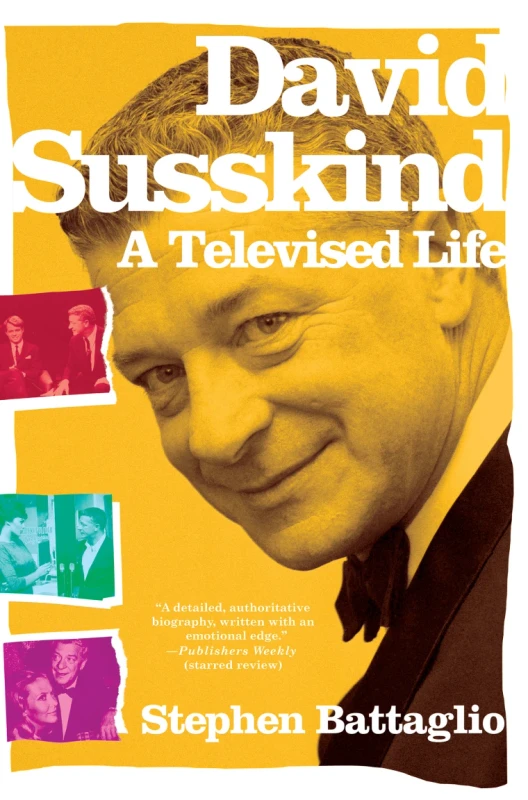
David Susskind was not just a long-running talk show host, whose program brought intellectual discussions to television, but also an influential producer. Here's an excerpt from The New York Times about David Suskind: a Televised Life by Stephen Battalgio:

David Susskind was an egotist, a womanizer, an intellectual, a charmer, a producer of high-minded television dramas and a talk-show pioneer. Now he is a giant roar from the past.

If anyone remembers his name, it is because of “The David Susskind Show” — originally called “Open End” because it had no definite time to stop — which ran from the late 1950s through the mid-’80s. A gadfly host, he would bring together personalities like Truman Capote, Norman Mailer and Anthony Quinn and let the mismatched guests rattle on for an hour or more. Susskind’s sprawling program would be unimaginable in today’s world of ever narrowing niches; his “Mad Men”-era habit of hitting on women in the office would have him drowning in sexual harassment lawsuits. He is an artifact, and, appropriately, the strength of “David Susskind: A Televised Life,” Stephen Battaglio’s thoroughly researched book, is its sense of history.

 
I read Leonard Goldenson's autobiography in the 90s. Goldenson bought the struggling ABC and turned it into a powerhouse, and this is the story. Of note is Goldenson partnering with Hollywood to get it to produce filmed TV shows. It's available as a PDF on David's site: https://www.worldradiohistory.com/BOOKSHELF-ARH/History/Beating-the-Odds-Goldenson-Wolf-1991.pdf

The Late Shift covers the battle over late night between Jay Leno and David Letterman, as the two competed to succeed Johnny Carson. Amazon.com


Back
Top Bottom