
-
Get involved.
We want your input!
Apply for Membership and join the conversations about everything related to broadcasting.
After we receive your registration, a moderator will review it. After your registration is approved, you will be permitted to post.
If you use a disposable or false email address, your registration will be rejected.
After your membership is approved, please take a minute to tell us a little bit about yourself.
https://www.radiodiscussions.com/forums/introduce-yourself.1088/
Thanks in advance and have fun!
RadioDiscussions Administrators
You are using an out of date browser. It may not display this or other websites correctly.
You should upgrade or use an alternative browser.
You should upgrade or use an alternative browser.
Any Alternatives to Live365?
- Thread starter cc333
- Start date
Agreed. There used to be several, but the overall decline of internet radio, along with several of the former providers being sued for underpaying royalties, really trimmed the down.Not to my knowledge
Streemlion | Internet Radio Hosting with Licence | Start to use it I think you have make it so the stream is only listenable to people in Canada
You can compare it to paying the PROs directly.
And discover it's much cheaper.
And discover it's much cheaper.
Another option for no licensing Is download all no copyright or royalty free music that can be played on a small no money making internet radio station with a link back on your site to the artist webpage. Going this route is very hard to find 3000 to 5000 good playable tracks to even have a chance to do this you will have to open to more than 2 to 3 genres of music you will need like 6 to 8 to do it.
Yeah, I tried doing that about 10 years ago, and I wasn't especially impressed with the selection then. I'm not sure it would have meaningfully improved much by now.
I guess I could stick to music from before 1928, since it's mostly public domain now (and thus exempted from PRO licensing), but I think the easier solution is to simply bite the bullet and sign up for Live365. $70/month for 1500 TLH per month isn't that bad (I'd be lucky to get 1/10th of that with my current audience of 3 or 4 (me, a couple friends, my mother, and a horse).
I still want to keep my playout setup as it is though, because it is also being broadcast over my Part 15 AM transmitter (for which PRO licensing is, to my knowledge, not required as it is elsewise). That said, can I self host the music and still be covered by their licensing by going through them for the stream (and serving them the proper metadata)? My research has suggested yes, but I thought I'd ask here, in case I'm mistaken.
c
I guess I could stick to music from before 1928, since it's mostly public domain now (and thus exempted from PRO licensing), but I think the easier solution is to simply bite the bullet and sign up for Live365. $70/month for 1500 TLH per month isn't that bad (I'd be lucky to get 1/10th of that with my current audience of 3 or 4 (me, a couple friends, my mother, and a horse).
I still want to keep my playout setup as it is though, because it is also being broadcast over my Part 15 AM transmitter (for which PRO licensing is, to my knowledge, not required as it is elsewise). That said, can I self host the music and still be covered by their licensing by going through them for the stream (and serving them the proper metadata)? My research has suggested yes, but I thought I'd ask here, in case I'm mistaken.
c
Unless, and until, there is a single rate that applies worldwide for streaming music online, you will see nobody trying to compete with Live365. The fact that there is no worldwide rate for streaming music over the Internet is why many U.S.-based commercial broadcasters geofence their streams to just inside the U.S. It is also why many private Canadian broadcasters geofence their streams to just inside Canada. It is also why U.S. listeners cannot hear commercial (and some non-commercial) Australian stations through iheart.com (though most of those broadcasts are available through the stations' direct streaming links.)
And possibly why there are so many pirate (non-fee paying) internet radio stations out there - they don't want to be geofenced.Unless, and until, there is a single rate that applies worldwide for streaming music online, you will see nobody trying to compete with Live365. The fact that there is no worldwide rate for streaming music over the Internet is why many U.S.-based commercial broadcasters geofence their streams to just inside the U.S. It is also why many private Canadian broadcasters geofence their streams to just inside Canada. It is also why U.S. listeners cannot hear commercial (and some non-commercial) Australian stations through iheart.com (though most of those broadcasts are available through the stations' direct streaming links.)
My theory is, if you're a small internet radio station, with an audience size that barely cracks double-digits at any time, they won't come after you because it's not worth their trouble - all the legal expense to shut down someone they'd get no money out of (excluding the rare one or two for the PR exercise only).
However, if you have a few thousand and are making dollars, then they'll come knocking to get their slice of the pie.
Yeah, like I mentioned earlier, my "audience" is (as far as I know) literally no more than a handful of people and a horse, and I'm making no money whatsoever on any of my efforts, so if anyone wants to come after me, they're wasting their time, and likely the only thing they would accomplish is putting me in a bad mood and wasting a few tens of thousands of their dollars.
c
c
Unless, and until, there is a single rate that applies worldwide for streaming music online, you will see nobody trying to compete with Live365. The fact that there is no worldwide rate for streaming music over the Internet is why many U.S.-based commercial broadcasters geofence their streams to just inside the U.S. It is also why many private Canadian broadcasters geofence their streams to just inside Canada. It is also why U.S. listeners cannot hear commercial (and some non-commercial) Australian stations through iheart.com (though most of those broadcasts are available through the stations' direct streaming links.)
That's not going to happen unless we get a one-world government. Another country has no jurisdiction over another. Soundexchange publishes a list of paying customers. Go look at the list, it's all American companies. That's all they could go after. Go look at radio stations on the Mexico/US or US/Canadian border. They aren't paying the other county's PROs. They aren't playing by the rules of the other country, they don't have to.
That's not going to happen unless we get a one-world government. Another country has no jurisdiction over another. Soundexchange publishes a list of paying customers. Go look at the list, it's all American companies. That's all they could go after. Go look at radio stations on the Mexico/US or US/Canadian border. They aren't paying the other county's PROs. They aren't playing by the rules of the other country, they don't have to.
Not quite. You may wish to read the following articles:
American Radio Stations Would Rather Block Their Streams Than Pay Foreign Royalties... - Digital Music News
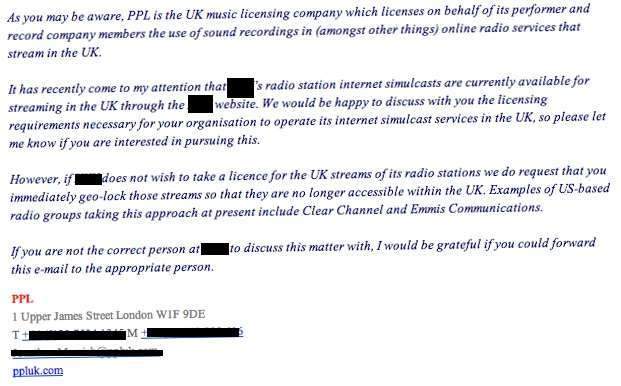
British performing right society PPL is now contacting big US radio stations demanding that they either start paying royalties or block webcasts from being accessed in the UK. So far, stations are choosing to block rather than pay. In its email to US broadcasters, PPL points out that major radio...
 www.digitalmusicnews.com
International
SoundExchange has collection agreements with counterpart organizations in countries around the world.
 www.soundexchange.com

Korean performers reap surge in overseas royalties
South Korea’s Federation of Music Performers has reported a dramatic leap in international royalty income, underscoring the accelerating global popularity of K-
The article from 2013 is just the tip of the iceberg. The fact is that in most countries, whatever organization is responsible for the payment of artist royalties is claiming authority over webcasters based in other countries. No, this is not settled law yet but a lot of broadcasters in the U.S. are taking no chances.