• Get involved.
    We want your input!
    Apply for Membership and join the conversations about everything related to broadcasting.

    After we receive your registration, a moderator will review it. After your registration is approved, you will be permitted to post.
    If you use a disposable or false email address, your registration will be rejected.

    After your membership is approved, please take a minute to tell us a little bit about yourself.
    https://www.radiodiscussions.com/forums/introduce-yourself.1088/

    Thanks in advance and have fun!
    RadioDiscussions Administrators

Talent or Fame?

I just saw this article and it got me thinking. What's more important for hiring on-air people: Their talent or their fame. The history of radio is filled with famous names. One of the first radio hosts back in 1921 was the bandleader Vincent Lopez. He began his radio show by saying "Lopez speaking." Then of course there was Bing Crosby. Paul Whiteman. On and on. If you were a musician, it made sense to have a radio show. The two biggest record labels, RCA and Columbia, owned radio networks: NBC and CBS.

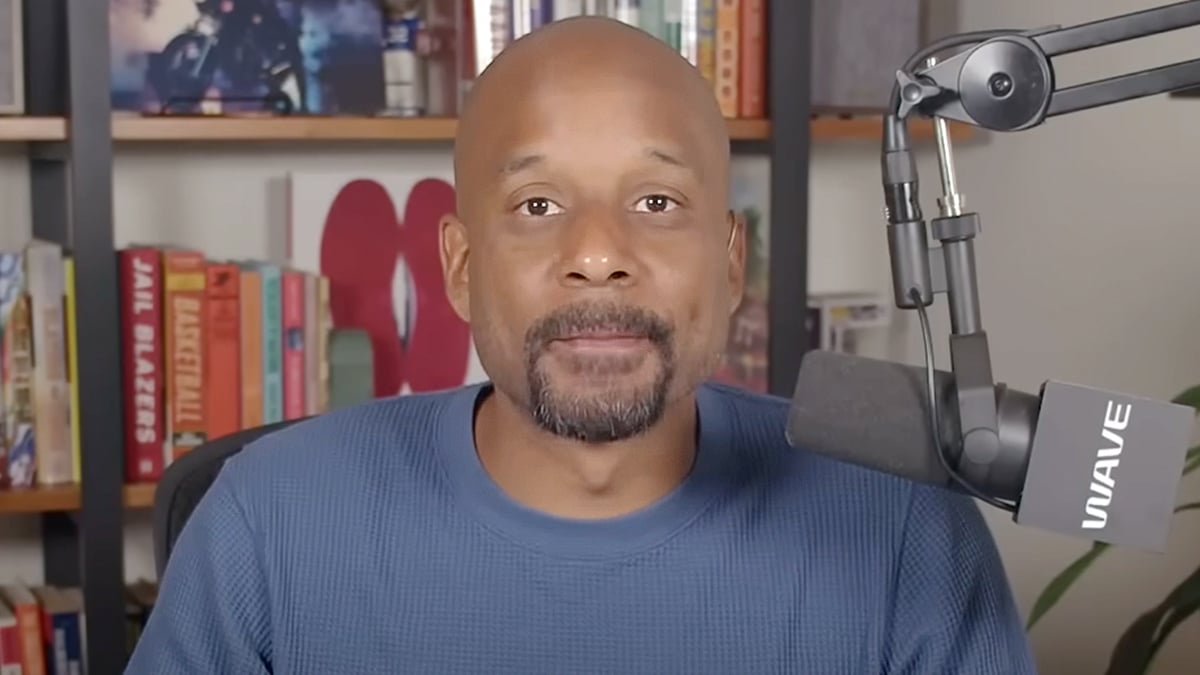
The writer of this article, Bomani Jones, was mainly concerned about famous athletes in sports radio. That was also a concern of Howard Cosell, who famously wrote the book "I Never Played The Game." He also worked with two former athletes Frank Gifford and Don Meredith. So what's more important? Talent or fame?

I think both. Fame can help get you in the door, but it's the talent that will keep you there.
 
I think both. Fame can help get you in the door, but it's the talent that will keep you there.

I agree. Two examples come to my mind. First, I was fortunate enough to spend a few hours over the years recording voice overs from Bob "Mr. Baseball" Uecker. He was famous by the time I met him due to his roles in movies, a sitcom, TV commercials, and over 100 appearances on The Tonight Show with Johnny Carson, but the last time I saw him, he explained how he got past that first Tonight Show appearance (something that didn't always happen). He made Johnny laugh, which was why he kept being invited back even when he wasn't promoting anything. Bob was funny as hell. He was also a walking encyclopedia of baseball knowledge, but he had the effortless talent of a seasoned stand-up comic from the get-go.

I won't name the second, but this person was hired as a morning host mostly because of the fact that she had way more social media followers than the entire station and all the on air talent put together. I think maybe the PD also had a bit of a crush on her because she was very, very good looking. Very nice person, too, and far more in tune with what moved the needle on the socials, but she couldn't pull off a live break if her life depended on it. The mic skimmer got a 4 hour respite during the morning show. Eventually she was replaced with a host who had more talent and experience.
 
Last edited:
I just saw this article and it got me thinking. What's more important for hiring on-air people: Their talent or their fame. The history of radio is filled with famous names. One of the first radio hosts back in 1921 was the bandleader Vincent Lopez. He began his radio show by saying "Lopez speaking." Then of course there was Bing Crosby. Paul Whiteman. On and on. If you were a musician, it made sense to have a radio show. The two biggest record labels, RCA and Columbia, owned radio networks: NBC and CBS.

The writer of this article, Bomani Jones, was mainly concerned about famous athletes in sports radio. That was also a concern of Howard Cosell, who famously wrote the book "I Never Played The Game." He also worked with two former athletes Frank Gifford and Don Meredith. So what's more important? Talent or fame?


I think both. Fame can help get you in the door, but it's the talent that will keep you there.

Well...if the theory is correct, I wonder how one explains the role that Kate Scott played as play-by-play announcer of last night's pro football gane between the Los Angeles Rams and the Seattle Seahawks on Westwood One. I mean, she never played on a professional football team and I didn't hear of her until I turned on Westwood One for the highlights. (For the record, I did start a new thread on her on this forum but I wanted to use her as an example to counter the theory put forward by the writer of the Barrett media article.)
 
The issue of women's voices doing play-by-play, especially on men's sports, is a touchy one, and you're likely to face accusations of sexism if you press it. Like all male sports fans of my generation, I grew up with the sound of men calling all sports. The only time I'd hear a female voice would be during the Olympics, for sports such as gymnastics and figure skating, and even then, the women usually provided analysis, not play-by-play.

So, when women started to break the barrier on male team sports broadcasts, I found it hard to adjust to their voices, or more precisely, their vocal inflections and cadences. I admit, I still do. But do I ever think "Well, she never played professional baseball, so she's unqualified to announce it."? No, mainly because I am a hopelessly klutzy, non-athletic male who spent the first three years of his newspaper career writing about male team sports, and got the same sort of skepticism from certain coaches and players. Had I at least played a high school, or even been athletic in appearance, I'd have gotten none of that, and I could write my stories the same way and not get any "you never played the game" feedback.
 
This is often discussed on AT40 fan pages and social media groups. Casey Kasem (and Shadoe Stevens) always had radio pros as guest hosts during the weeks they would take off. Looking at especially the 70s roster of sub hosts for Casey and it's a who's who of major and large market radio talent.

Meanwhile the sub hosts they have when Ryan Seacrest is out on the current edition of the show are always big (or medium) name artists on the format or a big name actor/actress.
 
Very few play-by-play announcers ever partook in the sport(s) they broadcast at a professional level. Jim Nantz never played in the NFL, Kevin Harlan never played in the NBA, and Joe Davis never played in MLB.
A notable exception being the outstanding CBS team of Tom Brookshier and Pat Summerall, both ex-NFL players with the knowledge, pipes and professional style to handle either role.
 
Very few play-by-play announcers ever partook in the sport(s) they broadcast at a professional level. Jim Nantz never played in the NFL, Kevin Harlan never played in the NBA, and Joe Davis never played in MLB.
Bob Uecker played for several years in MLB. 😁
 
This is often discussed on AT40 fan pages and social media groups. Casey Kasem (and Shadoe Stevens) always had radio pros as guest hosts during the weeks they would take off. Looking at especially the 70s roster of sub hosts for Casey and it's a who's who of major and large market radio talent.

Meanwhile the sub hosts they have when Ryan Seacrest is out on the current edition of the show are always big (or medium) name artists on the format or a big name actor/actress.

The very last co-hosts that appeared on "American top 40," before Ryan Seacrest took over in 1988 were the singing duo Daryl Hall and John Oates. After Shadoe Stevens took over hosting duties in 1988, he allowed Debbie Gibson to do the same.
 
for me and the places i work, its ability.. often to do multiple things/wear multiple hats and be a "jack of all trades master of none" type and that often involves doing thigns a PD/air talent wouldn't normally do. when you're the only staffer at a rural NPR station in the middle of alaska, well you dont have a choice. I have one other staff, whos part time and only works 2 hours a day as an announcer, thats it.

You have to have a modicum of talent in places like this and in places slightly bigger than this.. like Laramie, WY.... Scottsbluff, NE...... ottumwa, IA.. id wager you have to have a little more then a modicum of talent.

I've heard some ghastly sounding announcers over the years, not saying im great sounding..... but i have been told i have a very clear, loud speaking voice. I think these days have a good voice is a big help. the big booming voice requirement went out the window decades ago


Back
Top Bottom