The issue here is that those posters are saying "why?" about a micropower AM station when it is easier and gives much better audio to stream.
And my answer is, "Why not!" I enjoy it, and it's fun. Maybe pros who do radio day after day as a job wouldn't so much, as they understand all the practicalities and technicalities involved. In other words, sometimes knowing too much about something can hinder one's enjoyment of it. And given how the industry is nowadays, it's not hard to feel pessimistic and jaded about the whole concept, I'd imagine.
A 3 meter antenna is too inefficient to be able to broadcast more than a 3 kHz bandwidth on the AM band. If that. We're talking about a 1/4 wave vertical at about 23 MHz, not 1.6. Short antenna bandwidths get narrower the shorter they are.
It may be inefficient, and it may seem like the sound quality would be hopelessly bad on paper, it's not so bad in practice with decent equipment, I've found. Nothing like even a modest licensed station, of course, but decent for what it is.
As for cost, I figure I'm in about $1,500 or so over 4 years. It started with a DIY transmitter kit with 40mW (at best), then I moved up to a better one for about $190 (although it unfortunately is 800mW, so not legal) and then an even nicer one for $300 that can broadcast in stereo (C-QuAM). Of course, I accidentally ordered the EU version, so it's 600mW (600 is legal there, but not here, of course).
So I saved up $600 and bought myself a ChezRadio Procaster last year. it's what I'm using now, and not only is it legal (it has the FCC ID printed right on the enclosure), but its range, even under less than ideal conditions (no ground, not fully tuned), is phenomenal compared to anything I was able to get before.
Streaming is better technically, but the Music Mafia will have something to say about that.
When I get my official stream going, I'll be using a service like Live365, so the Music Mafia will be satisfied hopefully.
Sure, why not? Although my sense of most part 15ers is they're basically individualists who do their own thing their own way.
I guess as long as it's informal with no requirements, they won't object.
Yeah, the problem is
finding them. I know one out on the coast, and somebody, presumably a ham, who goes by the call sign N6VUD, runs a KiwiSDR over in Ukiah, but if there are others, I have yet to discover them.
Since the 1980s, there have been various political networks distributing themselves on C- and Ku-band satellite for supporters to relay to broader audiences via their privately operated part 15 transmitters. So your idea isn't new.
Interesting.
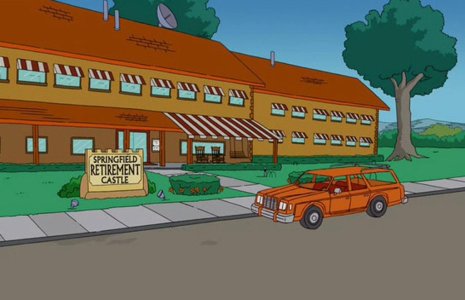
The only practical applications I can imagine for part 15 stations today (and therefore for any networks servicing them) would be places like campgrounds, where AM/FM radio-equipped campervans and RVs set up for the night, and apartment building-style retirement homes where lots of internet-agnostic folks from the era of at-home radio listening can live within the boundaries of a part 15 signal -- and where their only mobility is by walkers and wheelchairs down to the dining hall each night.
Maybe so.
The problem is, it worked primarily during the era of significant in-home radio listening. A part 15 network probably wouldn't be viable today simply because most radio listening is now in the car, and legal part 15 FM signal footprints are the arch nemesis of mobile listeners. AM part 15 signals can cover a mile or so with the right antenna and grounding system, but modern AM reception challenges would probably cancel out a big chunk of that gain.
Radio Sausalito uses a network of transmitters to mostly overcome that problem, at least within city limits. Such is permissible under Part 15 rules, so long as each site sticks to 15.219, but it is costlier (you need to buy each transmitter and get them properly installed, then you need to synchronize their carriers to minimize beating and phase problems, then you need to feed them all from the same source somehow. The power required to run a 100mW transmitter, at least, is negligible, so once the upfront cost of installation and configuration is done, running it costs very little).
c