• Get involved.
    We want your input!
    Apply for Membership and join the conversations about everything related to broadcasting.

    After we receive your registration, a moderator will review it. After your registration is approved, you will be permitted to post.
    If you use a disposable or false email address, your registration will be rejected.

    After your membership is approved, please take a minute to tell us a little bit about yourself.
    https://www.radiodiscussions.com/forums/introduce-yourself.1088/

    Thanks in advance and have fun!
    RadioDiscussions Administrators

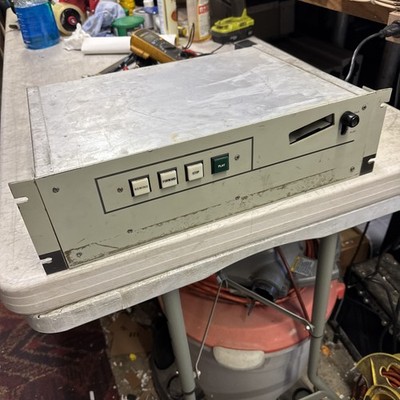
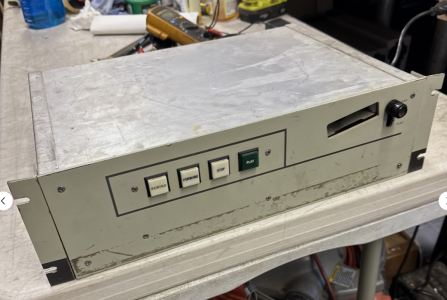
A "broadcast quality" cassette machine from Harris

davideduardo

Moderator/Administrator
Staff member
Early 1970's. I had several in Ecuador, and used them for our current format "Top 40" songs. We redubbed once a week, as songs moved up, down or out. This way, the jocks could not "mess with" the rotation order. For AM, the fidelity was very acceptable. The big advantage was that we only had one copy of each song, and if it got cure burn or scratched, it could take 3 weeks to get a replacement... not acceptable for hit songs. And using all carts was too expensive as a 3 minute cart cost around $12 with shipping and import duties (S/. 250.00 where our janitor made less than that per week!).
1766888905973.png
 
Interesting transport. Looks like you would load the cassette end-wise. Many don't realize just how good the fidelity could be on a well-recorded cassette using FeCr or Metal tape. The big problem with playing them on the radio was mono compatibility. Cassettes recorded on one machine were often times just slightly out of phase when played back on another machine. You could fix it by adjusting the azimuth of the head, but that's not practical for daily operation. Anyone remember the phase chaser?


Fortunately, if one of those one-of-a-kind tapes exist today (and I probably come across at least a dozen per year) all it takes is one high-quality dub to digital and it's preserved.

Dave B.
 
Fortunately, if one of those one-of-a-kind tapes exist today (and I probably come across at least a dozen per year) all it takes is one high-quality dub to digital and it's preserved.
Agreed. Any azimuth or phase problems can be easily corrected in software as needed.

c
 
Interesting transport. Looks like you would load the cassette end-wise. Many don't realize just how good the fidelity could be on a well-recorded cassette using FeCr or Metal tape. The big problem with playing them on the radio was mono compatibility. Cassettes recorded on one machine were often times just slightly out of phase when played back on another machine. You could fix it by adjusting the azimuth of the head, but that's not practical for daily operation. Anyone remember the phase chaser?
In the earl y 80's I did a syndicated Beautiful Music format for Latin America on cassettes. The cost of tapes and the shipping as well as customs duties and delays made tape impossible given the economies of early FM in Latin America.

We used metal tape, and asked all stations to use the same widely available Tascam (122 was the model IIRC) for playback and had a custom tone sensor done by Mark Persons in MN.
 
Appears to be only half of the system.
 
Seems to be the ancestor of this dual cassette tape "toaster", designed for commercial use. It even let you daisy-chain multiple units for extended playing time without repeating a tape.

 
Seems to be the ancestor of this dual cassette tape "toaster", designed for commercial use. It even let you daisy-chain multiple units for extended playing time without repeating a tape.

Not exactly. The Harris unit had cue tones, just like carts. The unit you show looks like it was designed to do storecasting and the like.
 
Cassettes were always tricky mediums for radio. You could get good sound. Sometimes. But most of the time, the quality of tape was ghastly. Here's an example
 
Cassettes were always tricky mediums for radio. You could get good sound. Sometimes. But most of the time, the quality of tape was ghastly. Here's an example
Given this was "The Country Oldies Show," I'd imagine much of their affiliate base were small town AM stations, where that would have been adequate enough quality for the medium. A lot of dollar-a-holler preachers used cassette tapes to distribute their shows to the mostly AM stations that would air them.
 
Given this was "The Country Oldies Show," I'd imagine much of their affiliate base were small town AM stations.
The quality of the tape and very first song on it kinda pointed that way.

You'd be surprised what you can find casually pawing through the cassette racks in thrift stores. I also found a bunch of preacher tapes. Many radio cassettes used cue tones instead of countdowns

There were only a handful of music programs (Barry Scott's Lost 45s), in the radio cassettes I've encountered over the years. Most were speech of some kind. Public service/weekly gardening programs, etc.
 
I programmed one of two San Diego FM stations in the early '70s that were operated by Paul Schafer. Not the bandleader but the automation pioneer. All 3 stations were automated using Schafer cassette machines (At the time, Paul had sold his US sales rights and retained Schafer International, the company that leased and programmed XHIS, XHERS and XEPRS).


The decks utilized cue tones to start the next event and would rewind automatically at the end of the last cut. We recorded to BASF cassettes with metal housing which eliminated phase problems.

The system sounded remarkably good. Enough so that we had decent numbers.
Fun times...

Bob Gowa
.


Back
Top Bottom