• Get involved.
    We want your input!
    Apply for Membership and join the conversations about everything related to broadcasting.

    After we receive your registration, a moderator will review it. After your registration is approved, you will be permitted to post.
    If you use a disposable or false email address, your registration will be rejected.

    After your membership is approved, please take a minute to tell us a little bit about yourself.
    https://www.radiodiscussions.com/forums/introduce-yourself.1088/

    Thanks in advance and have fun!
    RadioDiscussions Administrators

Two Channel 10s?

I think they mean Bristol County, Massachusetts. That county hugs the border of Rhode Island and includes the city of New Bedford. Note that Providence's CBS affiliate is Channel 6 WLNE, licensed to New Bedford but sharing studios with WJAR in Rehoboth RI.
I thought that at first, but then I read the FCC decision, and it is clearly Bristol County, Rhode Island. It is the smallest county in Rhode Island, it contains the towns noted in the decision (Barrington et al), and it directly borders its namesake in Massachusetts.

Very confusing, and strange that they would carve out an enclave within the Providence DMA and make it part of the Boston DMA. As a practical matter, as long as their cable also carries a complement of Providence-market stations, cable viewers there surely don't know and don't care. I'd be interested to know if satellite subscribers there get Boston stations as well as Providence. Providence-market 6/10/12/64 appear in the 2018 significantly viewed list for Bristol County RI. Searching Dish Network for Barrington (I used the town hall address of 283 County Road) shows only Providence stations.
 
I think they mean Bristol County, Massachusetts. That county hugs the border of Rhode Island and includes the city of New Bedford. Note that Providence's CBS affiliate is Channel 6 WLNE, licensed to New Bedford but sharing studios with WJAR in Rehoboth RI.

Yes, its Bristol County, Mass. I know because I have family there and visit very often.

Providence's CBS affiliate is WPRI Channel 12. ABC is what was on WLNE Channel 6 but is now on WJAR 10.2.
 
I think they mean Bristol County, Massachusetts. That county hugs the border of Rhode Island and includes the city of New Bedford. Note that Providence's CBS affiliate is Channel 6 WLNE, licensed to New Bedford but sharing studios with WJAR in Rehoboth RI.

Here is the first paragraph from the FCC decision:

1. Norwell Television, LLC, licensee of television broadcast station WWDP (Ch. 46), Norwell, Massachusetts (“WWDP”), filed the above-captioned petition for special relief seeking to modify the Boston, Massachusetts designated market area (“DMA”) to include the Full Channel TV, Inc. (“Full Channel”) cable system communities of Barrington, Bristol Township, Warren and unincorporated areas of Bristol County, Rhode Island.1 No opposition to this petition has been received. For the reasons discussed below, we grant the petition.

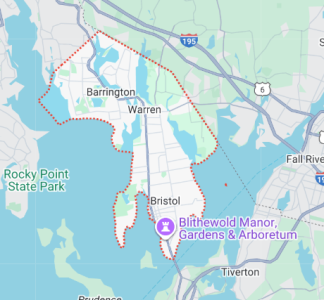
And the map of that area:

1769000807661.png

The area within the red dashed line is Bristol County, Rhode Island. It neighbors the county of the same name in Massachusetts, moreover, there is no place called "Barrington", "Warren Township", or "Bristol" in Massachusetts.

It is not unknown for DMAs to have detached enclaves surrounded by other DMAs (e.g., Leslie County KY and Prowers County CO), but this one is especially strange, as it is entirely within a smaller DMA, in the shadow of a much larger one, that I can't imagine wishes to lose any TV households.
 
After reading the FCC document from 2002, I think WWDP was specifically requesting cable carriage on the MVPD named "Full Channel", not requesting to change the DMA boundaries. But it opened the floodgates - it was in 2007 when Comcast started blacking out Fox network programming on WFXT (throughout all of Bristol County MA). In 2010 WLVI became subject to CW network blackouts specifically in Fall River. Then in 2014 WBZ became subject to CBS network blackouts, also specific to Fall River. And of course 2020 when WCVB was planned to be dropped entirely across the entirety of Bristol County MA.

This map from 2018-19 shows all of Rhode Island in the Providence-New Bedford DMA:
 
After reading the FCC document from 2002, I think WWDP was specifically requesting cable carriage on the MVPD named "Full Channel", not requesting to change the DMA boundaries. But it opened the floodgates - it was in 2007 when Comcast started blacking out Fox network programming on WFXT (throughout all of Bristol County MA). In 2010 WLVI became subject to CW network blackouts specifically in Fall River. Then in 2014 WBZ became subject to CBS network blackouts, also specific to Fall River. And of course 2020 when WCVB was planned to be dropped entirely across the entirety of Bristol County MA.

This map from 2018-19 shows all of Rhode Island in the Providence-New Bedford DMA:

I know, that is why I, too, question whether this sliver of Bristol County RI actually became part of the Boston DMA. Nonetheless, the FCC decision seems to say precisely that. Seems to me that it would have been easier for the FCC to say, yes, all of Bristol County RI remains in the Providence DMA, but in this particular instance, we are going to allow WWDP to invoke must-carry even though it is technically OOM.

My question, then, would be whether FCC-delineated DMAs can vary from those drawn by Nielsen.
 
Decisions like the WWDP one cited above don't actually modify entire DMA lines. They are specific to the station requesting them and the cable system or systems specifically indicated.

It's important to know here that WWDP was, is and has always been located significantly south of Boston and so its signal coverage doesn't match that of the actual Boston stations.

What WWDP requested and was granted was must-carry placement specifically on those systems in Bristol and Barrington RI, which otherwise do remain very much in the Providence DMA and otherwise carry Providence and not Boston stations.
 
Decisions like the WWDP one cited above don't actually modify entire DMA lines. They are specific to the station requesting them and the cable system or systems specifically indicated.

It's important to know here that WWDP was, is and has always been located significantly south of Boston and so its signal coverage doesn't match that of the actual Boston stations.

What WWDP requested and was granted was must-carry placement specifically on those systems in Bristol and Barrington RI, which otherwise do remain very much in the Providence DMA and otherwise carry Providence and not Boston stations.

This being the case, the first paragraph, which I cited above, is very ambiguous, in that it seems to raise the question of whether that enclave served by Full Channel actually becomes part of the Boston DMA.

I do note, though, that the gist of everything that comes after that first paragraph concludes in granting the relief that WWDP seeks, without going all the way and creating a small piece of the Boston DMA at the expense of Providence. It would have been nice if the FCC had said something to the effect of "while the request to move this area from the Providence to the Boston DMA is declined, the relief that WWDP seeks for itself is nonetheless granted", or something like that.
 
This being the case, the first paragraph, which I cited above, is very ambiguous, in that it seems to raise the question of whether that enclave served by Full Channel actually becomes part of the Boston DMA.

I do note, though, that the gist of everything that comes after that first paragraph concludes in granting the relief that WWDP seeks, without going all the way and creating a small piece of the Boston DMA at the expense of Providence. It would have been nice if the FCC had said something to the effect of "while the request to move this area from the Providence to the Boston DMA is declined, the relief that WWDP seeks for itself is nonetheless granted", or something like that.

You need to read the entire document, in particular paragraph 3 ("with respect to a particular television broadcast station") and ("In adopting rules to implement this provision, the Commission indicated that requested changes should be considered on a community-by-community basis rather than on a county-by-county basis, and that they should be treated as specific to particular stations rather than applicable in common to all stations in the market."), as well as paragraph 14 ("A previous market modification request filed by WWDP, which sought to add communities located near the core of the Providence DMA was denied because a grant of that request would have upset the balance between the Providence and Boston television markets by granting WWDP widespread carriage throughout the Providence market. Our action today, however, does not have a similar result.")

It's very, very clear from a reading of the entire document that this is a specific modification of WWDP's DMA to include Bristol and Barrington RI, nothing more and nothing less. It doesn't take those communities out of the Providence DMA and it doesn't affect any station other than WWDP.

(It was also premised on WWDP having been a Telemundo affiliate, which of course has long since ceased to be the case )
 
Thank you for seeing the point I was trying to make. While, as @fybush correctly points out, this was one station and one MVPD, it did start other stations thinking about their own situations.

There were no floodgates. Nothing of any consequence came from this particular rulemaking. They were not uncommon then, and still get filed from time to time as stations that straddle DMA lines try to get little bits of extra carriage.

What has changed since 2002 is the importance of retrans consent money to the bottom lines of local TV licensees, which is why they're increasingly aggressive about enforcing DMA exclusivity for syndicated and network programming in areas like Bristol County, Massachusetts where there's historical carriage of out-of-market stations.

But that didn't stem from this one obscure situation in Bristol, RI. It's an industry-wide thing wherever there are nearby DMAs with overlapping viewership, and it only matters to Big Four affiliates that can make an economic case for retrans consent money. No cable system would ever pay to carry WWDP.

(And if WWDP is still on the Bristol and Barrington cable systems 24 years later, it probably won't be for long. Since WWDP appears to now be a full time Roar affiliate, its programming is completely duplicated within the DMA by WLNE 6.1, which could, if it wanted to, assert its market exclusivity. Not that anyone in Bristol or Barrington would even notice.)
 
Sidebar.

(And if WWDP is still on the Bristol and Barrington cable systems 24 years later, it probably won't be for long. Since WWDP appears to now be a full time Roar affiliate, its programming is completely duplicated within the DMA by WLNE 6.1, which could, if it wanted to, assert its market exclusivity. Not that anyone in Bristol or Barrington would even notice.)

Roar itself is hardly worth noticing. Their entire schedule consists of block programming a total of shows: Weakest Link (only the Jane Lynch-hosted NBC version), Whose Line Is It Anyway? (only the Aisha Tyler-hosted seasons), Saturday Night Live (as near as I can make out, only shows from seasons 17 through 49, meaning nothing older than 1991), Hollywood Game Night, Key & Peele (something of a holdover from the previous schedule, and only late at night ahead of the infomercial block), the old CourtTV/Smoking Gun series World's Dumbest (only on Saturdays), Punk'd (only on Sundays), and the recent addition of America's Funniest Home Videos (only the Tom Bergeron-hosted seasons).

It isn't going to take the average viewer long to become bored with that, especially if they have already seen most of those shows already via streaming.
 
You need to read the entire document, in particular paragraph 3 ("with respect to a particular television broadcast station") and ("In adopting rules to implement this provision, the Commission indicated that requested changes should be considered on a community-by-community basis rather than on a county-by-county basis, and that they should be treated as specific to particular stations rather than applicable in common to all stations in the market."), as well as paragraph 14 ("A previous market modification request filed by WWDP, which sought to add communities located near the core of the Providence DMA was denied because a grant of that request would have upset the balance between the Providence and Boston television markets by granting WWDP widespread carriage throughout the Providence market. Our action today, however, does not have a similar result.")

It's very, very clear from a reading of the entire document that this is a specific modification of WWDP's DMA to include Bristol and Barrington RI, nothing more and nothing less. It doesn't take those communities out of the Providence DMA and it doesn't affect any station other than WWDP.

(It was also premised on WWDP having been a Telemundo affiliate, which of course has long since ceased to be the case )
Okay, I see now. The FCC verbiage was very dense and I didn't catch that part, I read it, but it didn't soak in. I suppose I was kind of dense as well.
 
Okay, I see now. The FCC verbiage was very dense and I didn't catch that part, I read it, but it didn't soak in. I suppose I was kind of dense as well.

FCC verbiage has that effect on the best of us.
 
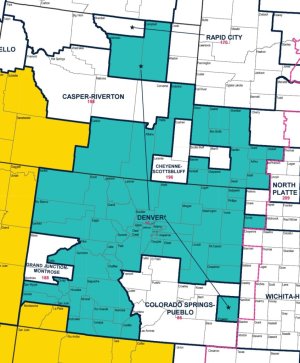
True I never thought of this one where one county in Rhode Island is in the Boston TV Market. I was thinking Denver TV Market where it has some isolated spots in Wyoming and those isolated spots are surrounded by the Casper TV market. Or Cheyenne TV market is surrounded by Denver in that case. Then again its tied to how Translators were allocated in the past.


All this time we were thinking of Bristol County, Massachusetts because its the location of some of Providence TV Transmitters are located and the COL of the Providence TV stations is in places like New Bedford and Rehoboth.
 

Attachments

  • Screenshot_20260123_075334_Files by Google~2.jpg
    Screenshot_20260123_075334_Files by Google~2.jpg
    139.4 KB · Views: 4
True I never thought of this one where one county in Rhode Island is in the Boston TV Market. I was thinking Denver TV Market where it has some isolated spots in Wyoming and those isolated spots are surrounded by the Casper TV market. Or Cheyenne TV market is surrounded by Denver in that case. Then again its tied to how Translators were allocated in the past.


All this time we were thinking of Bristol County, Massachusetts because its the location of some of Providence TV Transmitters are located and the COL of the Providence TV stations is in places like New Bedford and Rehoboth.
Bristol County, Rhode Island remains in the Providence market. Please see the posts immediately upthread.

The Denver market, as well as some adjacent ones, are indeed a hodgepodge. At one time, there was even a county in Nevada that was part of the Denver market, owing obviously to satellite delivery.
 
Bristol County, Rhode Island remains in the Providence market. Please see the posts immediately upthread.

The Denver market, as well as some adjacent ones, are indeed a hodgepodge. At one time, there was even a county in Nevada that was part of the Denver market, owing obviously to satellite delivery.
I saw the DMA map again and yes Bristol, Rhode Island is in the Providence TV Market.


Back
Top Bottom