• Get involved.
    We want your input!
    Apply for Membership and join the conversations about everything related to broadcasting.

    After we receive your registration, a moderator will review it. After your registration is approved, you will be permitted to post.
    If you use a disposable or false email address, your registration will be rejected.

    After your membership is approved, please take a minute to tell us a little bit about yourself.
    https://www.radiodiscussions.com/forums/introduce-yourself.1088/

    Thanks in advance and have fun!
    RadioDiscussions Administrators

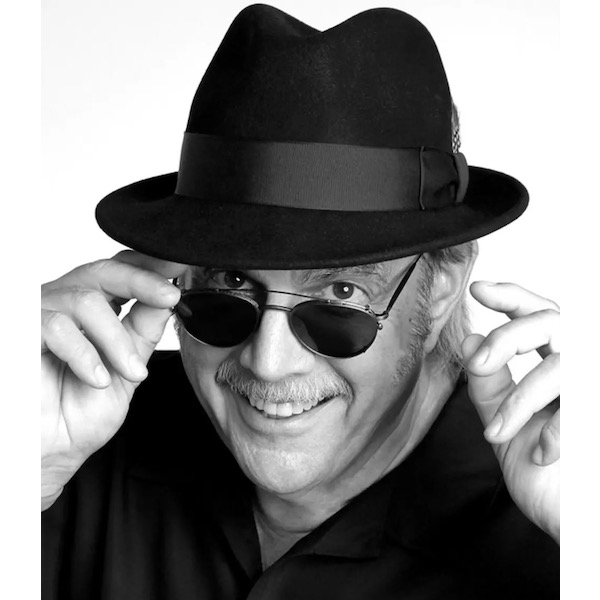
Joe Benson

The Rock DJs I grew up with have been dropping off way too fast lately, especially the KLOS ones. Just within the last few years, Jim Ladd, Geno Michelini, and Shana have all passed. Now add "Uncle" Joe Benson to the list.

Uncle Joe was in many ways the intellectual rock n roll encyclopedia that formed the backbone of KLOS for the decades he was there, particularly in the 80s, when the AOR rock wars with KMET and KLSX were at their height.

His Seventh Day program on Sunday afternoons at 5:00 pm was definitely a big part of my own rock n roll education. That's seven albums, in their entirety, all in a row kids (commercials only between album sides). Joe didn't just spin the LPs, he provided a wealth of information about each album - who played on it, where it stood in the artist's career, etc. Essentially a full Wikipedia entry's worth of information for the listener, well before anything like that existed online. He turned all of his research into several best selling books, called "Uncle Joes Guide to... (artist's name)". I bought several.

Joe was also a great ambassador for the local racing community, all kinds - stock cars, funny cars, all of it, and would pitch all of the local racing events and provide recent race results during the show. He attended many of them himself.

Joe had a very easy going personality which made him very likable. I never thought of him as a morning guy as he had a pretty straight-forward, no gimicks style, but he made a very seamless transition to mornings after his long KLOS stint was over, first at KCBS-FM ("Arrow 93"), then with KSWD ("The Sound", not to be confused with any current stations that have blatatantly copied the moniker). The audience for those stations really liked hearing that familiar voice from the past in the mornings to go along with a music-based approach for which he was most suited. He had consistent help for many of those years from Scott St. James doing sports (a real characher himself!) and Sioux-z Jessup doing traffic and weather.

Joe was a great DJ and a great guy. RIP Joe.
 
Don't forget to ad JED THE FISH
Absolutely not forgetting Jed, who just passed this past year and was an amazing talent and a key component of the "World Famous" KROQ, but my post focused on the KLOS jocks that were all colleagues of Joe.

It seems like the vast majority of posters on this board didn't listen to the AOR stations as there have been relatively few posts about the main jocks there when they have passed. Nothing wrong with that, we all listen to what we listen to and those stations were a long time ago, but some very big names have passed with sometimes very little notice. In my small way, I have tried to rectify that a bit.
 
I caught on to Uncle Joe Benson later in his career when he was on 100.3 The Sound. I'd try to always catch his "10 at 10" (on at 1:00 where I am in the Boston area), and he just exuded that classic AOR vibe. Great wealth of knowledge too, and he really enjoyed what he played. Great talent!
 
The Rock DJs I grew up with have been dropping off way too fast lately,

Who was it who said "Life sucks, and then you die?" You're right, an entire generation of artists and the radio people who made them famous have been dying. Jed The Fish is another. These DJs played an important role in the lives and culture of young people at the time. Radio was really their only connection to the artists and the music. There were not many other places to see or hear AOR music. Pop music was occasionally featured on TV.

The thing about it is that very few of these rock jocks gained any fame outside of their home markets, and there were copy cat rock stations with knowledgeable DJs in practically every city. Boston had its share of rock stations. Peter Wolf, who later fronted the J. Geils Band, was originally a top rock DJ. WMMS Cleveland had Kid Leo, who now works with Little Steven Van Zant at Sirius. WMMR's Pierre Robert just passed away in October. I saw him included in the memorial segment at the Grammy Awards.

There was a direct connection between radio & records. I was just having a conversation with a record company friend who told me he began his career working at Licorice Pizza in LA. Talk about an entire industry that has disappeared. For a lot of people, their first job was working in a record store. That got them hooked on music, and for some of them, they either went into the record business or radio. Some did both. Some did neither.

But my point was there was this entire circular culture, with music, lifestyle, politics, and the radio. Yes, the radio. Hard to believe radio was part of the equation.
 
When he was alive, the late Richard Irwin would add airchecks from recently passed top 40 talents (and a few AOR talents) to his site as news of their passings came in and as he had airchecks of those people. Retro Radio Joe (Joe Fazio) is trying to do the same with his Youtube channel, and I hope there are some who are willing to place airchecks of those some of these people on archive.org. These people were cultural icons for a certain generation and, especially now given the current political landscape, I think it is fitting for airchecks of these people (when they're available to the public) to show up on youtube.com, archive.org and any other site that hosts old radio airchecks.
 
Who was it who said "Life sucks, and then you die?" You're right, an entire generation of artists and the radio people who made them famous have been dying. Jed The Fish is another. These DJs played an important role in the lives and culture of young people at the time. Radio was really their only connection to the artists and the music. There were not many other places to see or hear AOR music. Pop music was occasionally featured on TV.

The thing about it is that very few of these rock jocks gained any fame outside of their home markets, and there were copy cat rock stations with knowledgeable DJs in practically every city. Boston had its share of rock stations. Peter Wolf, who later fronted the J. Geils Band, was originally a top rock DJ. WMMS Cleveland had Kid Leo, who now works with Little Steven Van Zant at Sirius. WMMR's Pierre Robert just passed away in October. I saw him included in the memorial segment at the Grammy Awards.

There was a direct connection between radio & records. I was just having a conversation with a record company friend who told me he began his career working at Licorice Pizza in LA. Talk about an entire industry that has disappeared. For a lot of people, their first job was working in a record store. That got them hooked on music, and for some of them, they either went into the record business or radio. Some did both. Some did neither.

But my point was there was this entire circular culture, with music, lifestyle, politics, and the radio. Yes, the radio. Hard to believe radio was part of the equation.
Good points.

Since we are expanding the conversation just a bit, I wanted to also note that KLOS' Bob Coburn passed in 2016. I originally did not include him in my list at the top of the post as I was just thinking of jocks that passed more recently. I think I posted on his passing at the time.

Bob was also a student of his rock n roll history and similar to Joe, brought a lot of that to his shows, especially the "Oldies" program "Noontime Nuggets" in the late 80s. He was also the host of the nationally syndicated interview show "Rockline" for many years.
 
He was also the host of the nationally syndicated interview show "Rockline" for many years.

Speaking of that, Joe Benson was the host of the nationally syndicated interview show Off The Record. That show was originated by the late KMET DJ Mary Turner, and Joe took over when she retired. Current KLOS DJ Nik Carter took over the show when Joe became ill.
 
Joe Benson had an iconic voice and flow, "The Seventh Day" presentations were iconic... I just didn't know it at the time.

I was coming over the Grapevine after visiting family when KLOS came booming in and Uncle Joe was spinning Hotel California by The Eagles.

No disrespect to Side One but when the KLOS signal locked in on the car radio he was on to Side Two... where the real magic of that album shined.

Walsh's haunting "Pretty Maids All In a Row" and ending with "The Last Resort" painted a prefect picture tapestry of a slice in time and a place against a setting sun across the Tejon Pass that really can never be replicated.

That series of songs and where I was at that moment has been forever tattooed into my sub cortex.

Joe Benson helped put that moment there.
 
Joe Benson had an iconic voice and flow, "The Seventh Day" presentations were iconic... I just didn't know it at the time.

It's useful to point out that the recording industry included in the DMCA in 1998 rules that made it illegal for radio to play entire albums. They were angry that radio stations made it possible for people to avoid buying music by recording the albums off the radio. Previously they had lobbied the congress to pass a blank tape tax designed to compensate the industry for its losses. There were several provisions in the digital law that aimed to prevent satellite radio specifically from playing entire albums.

So while many view what Joe Benson and other DJs did as being wonderful for music, the industry itself didn't share that view, and sought to prevent them from doing it.
 
It's useful to point out that the recording industry included in the DMCA in 1998 rules that made it illegal for radio to play entire albums. They were angry that radio stations made it possible for people to avoid buying music by recording the albums off the radio. Previously they had lobbied the congress to pass a blank tape tax designed to compensate the industry for its losses. There were several provisions in the digital law that aimed to prevent satellite radio specifically from playing entire albums.

So while many view what Joe Benson and other DJs did as being wonderful for music, the industry itself didn't share that view, and sought to prevent them from doing it.
And that was always garbage. Did a few people tape the shows? Of course they did - on crummy cassette tapes with horrible sound that didn't have any artist packaging, artwork, liner notes, lyrics, etc. I guarantee that Uncle Joe sold way more legitimate albums than anyone taped.

I taped a few because I was a broke teenager, but as soon as I was able, I got down to the record store and bought legitimate. The thought of using the taped versions of albums such as Steely Dan's "Aja" or Dire Straits "Brothers in Arms" was absurd then, even more so now.

The RIAA probably does more to prevent music sales than promote them.
 
Did a few people tape the shows? Of course they did - on crummy cassette tapes with horrible sound

The specific thing that triggered the rule was an ad campaign from one of the satellite companies that promised "CD quality audio." In their testimony before congress, the RIAA pointed to that specific ad. The DMCA was a copyright law, and satellite radio was making it possible for people to make CD quality copies of music. They wanted it banned. So it was written in the law and is still there today, even though nobody tapes music off the radio anymore. But when people talk about the things they liked about rock radio, this always comes up. People talk about hearing Abbey Road or Led Zepplin I for the first time on the radio. It made them buy those records. But the law prevents radio stations today from doing that.
 
The specific thing that triggered the rule was an ad campaign from one of the satellite companies that promised "CD quality audio." In their testimony before congress, the RIAA pointed to that specific ad. The DMCA was a copyright law, and satellite radio was making it possible for people to make CD quality copies of music. They wanted it banned. So it was written in the law and is still there today, even though nobody tapes music off the radio anymore. But when people talk about the things they liked about rock radio, this always comes up. People talk about hearing Abbey Road or Led Zepplin I for the first time on the radio. It made them buy those records. But the law prevents radio stations today from doing that.
That "CD quality audio" on satellite radio is long gone, if it ever existed. So, the DMCA provision was a solution to a problem that wasn't there to begin with.
 
That "CD quality audio" on satellite radio is long gone, if it ever existed. So, the DMCA provision was a solution to a problem that wasn't there to begin with.

They had a chance to remove or amend the rules a few years ago in the Music Modernization Act, and no one from the music industry was interested in doing that. They still view "free music" as a problem, and they are standing their ground.


Back
Top Bottom
