• Get involved.
    We want your input!
    Apply for Membership and join the conversations about everything related to broadcasting.

    After we receive your registration, a moderator will review it. After your registration is approved, you will be permitted to post.
    If you use a disposable or false email address, your registration will be rejected.

    After your membership is approved, please take a minute to tell us a little bit about yourself.
    https://www.radiodiscussions.com/forums/introduce-yourself.1088/

    Thanks in advance and have fun!
    RadioDiscussions Administrators

1989 vs. Today: Station Prices

davideduardo

Moderator/Administrator
Staff member
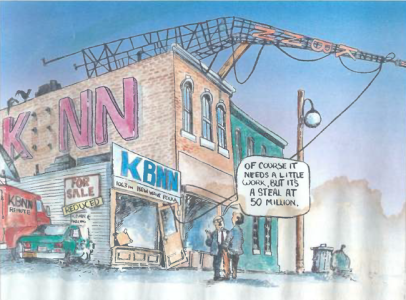
In 1989, the dawn of Docket 80-90 and 6 years before "consolidation" here is how the industry looked at station values:

1773575932695.png

From The Pulse of Radio, November 1989.
 
In 1989, the dawn of Docket 80-90 and 6 years before "consolidation" here is how the industry looked at station values:

1989 was the year Robert F.X. Sillerman & Carl Hirsch sold Legacy Broadcasting to Westinghouse for $727 million.

He took that money and started SFX Broadcasting, which became Capstar and was later sold to Clear Channel.

That's why I often say the foundations for the Telecom act were laid in 1988 and 89.
 
1989 was the year Robert F.X. Sillerman & Carl Hirsch sold Legacy Broadcasting to Westinghouse for $727 million.

He took that money and started SFX Broadcasting, which became Capstar and was later sold to Clear Channel.

That's why I often say the foundations for the Telecom act were laid in 1988 and 89.
But what kicked the Telecom Act movement into gear was the effect of Docket 80-90 which severely affected local radio in so many markets and resulting in over half of all U.S. radio stations not being profitable.


Back
Top Bottom