• Get involved.
    We want your input!
    Apply for Membership and join the conversations about everything related to broadcasting.

    After we receive your registration, a moderator will review it. After your registration is approved, you will be permitted to post.
    If you use a disposable or false email address, your registration will be rejected.

    After your membership is approved, please take a minute to tell us a little bit about yourself.
    https://www.radiodiscussions.com/forums/introduce-yourself.1088/

    Thanks in advance and have fun!
    RadioDiscussions Administrators

BBC 198 kHz longwave closure date?

I'll definitely check that out. I just have to remember the time difference. Lol.

Considering they are the only public broadcaster on the isle, don't why they are being so strict. Manx Gold, which is all music, is completely separate from the main station. I also don't understand the commercials (definitely don't come across as underwriters), unless that's somehow allowed.
Manx Radio has always been a commercial station under government ownership, with some government subsidy so that they can afford to provide all the speech and news and cultural programming that they do. It's a fairly normal model in some smaller countries. The UK equivalent of LPFM is allowed to carry full advertising as well.

The Isle of Man also has two purely commercial stations which are run very cheaply with a lot of voicetracking and automation - Energy FM (CHR) and 3FM (AC). You can hear Manx (89.0) and 3FM (105.0) on a lot of the coast in North West England, Energy is tougher because it's on a more crowded bit of FM. The Manx government is separate to the UK government (they have their own .im web domain, and your phone roams if you go there!), and so the broadcast rules are different - the thing that always jars with me is sponsored news. "Energy FM news, brought to you by...". That's a huge no-no in the UK.

Even public broadcasters that charge a license fee often have commercials - RTÉ TV and radio in Ireland have some advertising on them, even though you pay €160 a year to them. The BBC is pretty unusual in having no commercials.
 
More info on the 198 kHz closure; appears final signoff will be at 1am British Summer Time on Saturday June 27, which would be 0000 UT the same day. Those convert to 8pm U.S. Eastern Daylight Time Friday June 26.

1am is the usual end of broadcast day for Radio 4 programming; BBC World Service has been used as overnight fill until 5:30am.


H/T Mike Terry on Glenn Hauser’s World of Radio site.
 
More info on the 198 kHz closure; appears final signoff will be at 1am British Summer Time on Saturday June 27, which would be 0000 UT the same day. Those convert to 8pm U.S. Eastern Daylight Time Friday June 26.
Reminder that we are now just a couple of days away from the Radio 4 closure on 198 kHz. I have not heard of any extension or change to the already announced shutdown time.

Curious if 198 might transmit a redirect announcement for a few days? That’s what happened when the remaining Radio 4 mediumwave transmitters were closed a couple of years ago, IIRC.
 
Indeed, yes. From Arctic Radio:

I was aware Radio 4 has been running redirect announcements on 198 for the past few weeks, but I was thinking they might also air a redirect loop for a few days following the end of Radio 4 programming on longwave, as was done on the R4 mediumwave outlets that were closed a couple of years ago.

Haven’t heard any redirect announcements during the BBC World Service overnight fill on 198.
 
Listened to the final hour of BBC Radio 4 on 198 kHz via the UTwente SDR. The half-hour newscast at midnight (British time) included a package about the longwave shutdown "in a little over half an hour'. Said the BBC has been broadcasting on longwave since 1925, originally from Daventry, then from the Droitwich transmitter since 1934. They also mentioned the two syncro transmitters in Scotland.

Of course the final program was the venerable Shipping Forecast, followed by goodnight announcements, a final goodbye to the longwave service, followed by God Save the King.

At 1am (British time) a redirect loop started, explaining where to find Radio 4. I suspect this will go on for several days.

Farewell to a piece of radio history. This leaves Poland on 225 kHz and Romania on 153 kHz as the only remaining longwave stations in Europe. The longwave stations in Morocco, Algeria and Mongolia continue on air.

I did notice a big spike in user numbers on the UTwente SDR around the Radio 4 closedown time, so it might be that many others accessed it to hear the final moments of 198.
 
Listened to the final hour of BBC Radio 4 on 198 kHz via the UTwente SDR. The half-hour newscast at midnight (British time) included a package about the longwave shutdown "in a little over half an hour'. Said the BBC has been broadcasting on longwave since 1925, originally from Daventry, then from the Droitwich transmitter since 1934. They also mentioned the two syncro transmitters in Scotland.

Of course the final program was the venerable Shipping Forecast, followed by goodnight announcements, a final goodbye to the longwave service, followed by God Save the King.

At 1am (British time) a redirect loop started, explaining where to find Radio 4. I suspect this will go on for several days.

Farewell to a piece of radio history. This leaves Poland on 225 kHz and Romania on 153 kHz as the only remaining longwave stations in Europe. The longwave stations in Morocco, Algeria and Mongolia continue on air.

I did notice a big spike in user numbers on the UTwente SDR around the Radio 4 closedown time, so it might be that many others accessed it to hear the final moments of 198.
I didn't listen live because it was at 1am British time, and I have things to do today, but I heard a recording made overnight. There was the theme music Sailing By, the shipping forecast, and then a nice little message from BBC announcer Al Ryan. I understand that June 30 is the date when the transmitters themselves will be turned off, but from previous AM switch offs, this tends to happen at some undetermined point in the day when the engineer shows up.

Once 198 goes off the air, in daylight there won't be anything audible on long wave here in the northern part of England. At night, you can normally just pick out 225 from Poland and 252 from Algeria. Morocco and Romania don't make it.

I did dig out an AM radio yesterday to listen to a bit of long wave while I still could, listening to PM and the Six O'Clock News while cooking dinner, because it's something we'll never be able to do again!

Droitwich remains, broadcasting two medium wave stations (BBC Radio 5 Live on 693 and TalkSport on 1053) for the next couple of years, and then it'll be off.

There's a short 7-minute tribute to BBC long wave:

 
I understand that June 30 is the date when the transmitters themselves will be turned off, but from previous AM switch offs, this tends to happen at some undetermined point in the day when the engineer shows up.
During the final hour they did mention that while the Radio 4 programming was about to end on 198, the transmitters would go silent “next week.” That confirmed for me there would be a redirect loop for a few days.
Once 198 goes off the air, in daylight there won't be anything audible on long wave here in the northern part of England. At night, you can normally just pick out 225 from Poland and 252 from Algeria. Morocco and Romania don't make it.
I recall reading four or five years ago that Polish Radio on 225 kHz still had a significant audience in the rural areas of the country. It might stick around for a while.

Antena Satelor Romania on 153 kHz reportedly reduced its power over the last year or so, and had its schedule cut from 24 to 16 hours a day. It is probably the next longwave station to disappear, given the financial situation of Romanian public radio.

Medi 1 Morocco on 171 kHz is reportedly operating with greatly reduced power. IIRC it has a directional antenna that doesn’t favor Europe, though I can hear it on the UTwente SDR. Medi has an extensive FM network, and is also available as a webstream and via satellite.

Algeria on 252 kHz will probably stay on for the foreseeable future. It is a relatively new facility; apparently one of the last installations of the now defunct TransRadio before its demise and breakup.

Anyone’s guess as to the future of Mongolian Radio on 164, 209 and 227 kHz, the only remaining longwave in Asia.
Droitwich remains, broadcasting two medium wave stations (BBC Radio 5 Live on 693 and TalkSport on 1053) for the next couple of years, and then it'll be off.
I saw a recent post on another forum that Radio 5 is already in the process of turning off its remaining mediumwave transmitters.
The final shipping forecast and closedown. Choose your receiver:


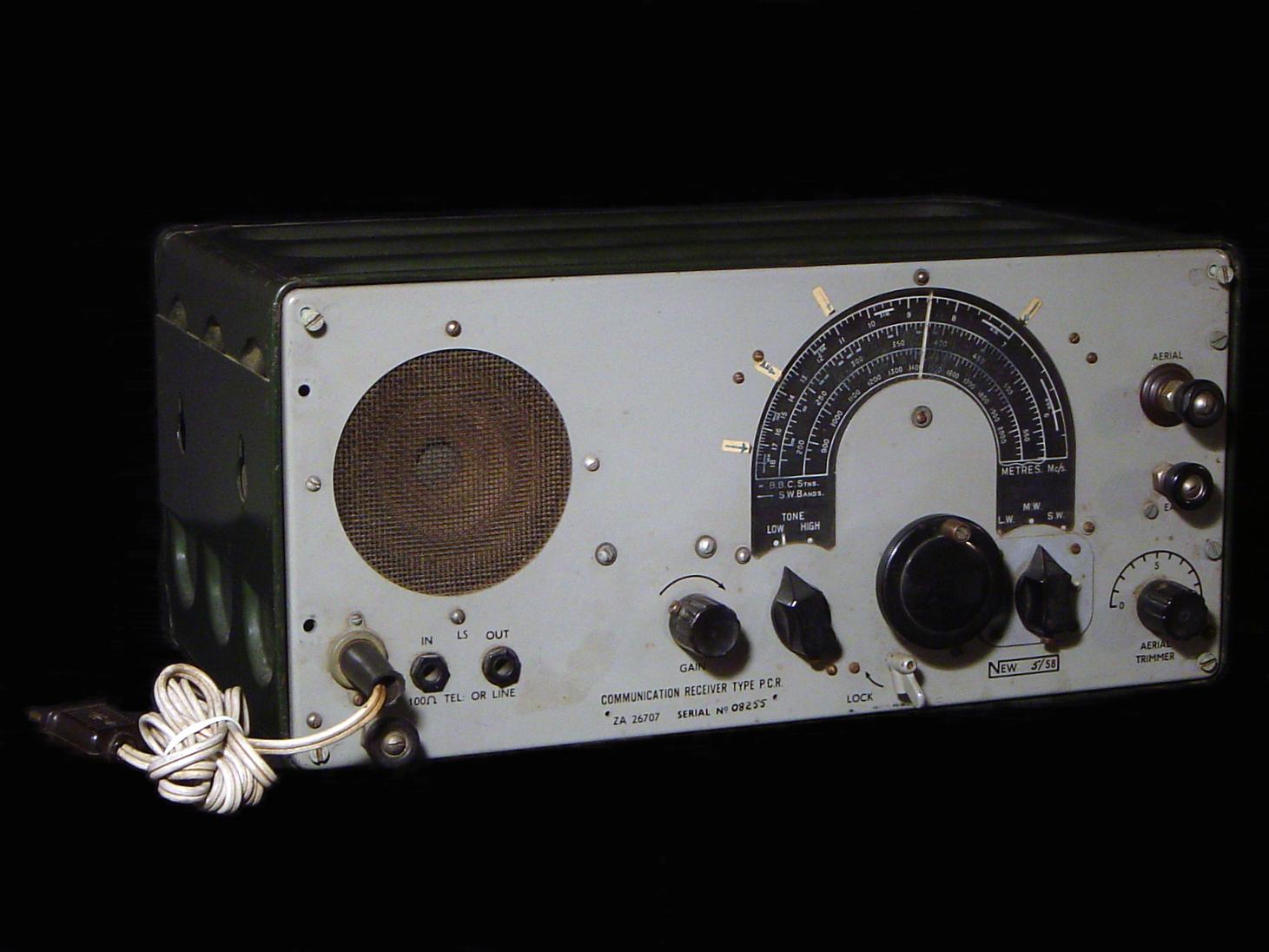
I was curious about the receiver in the second video, and here it is:


Back
Top Bottom