• Get involved.
    We want your input!
    Apply for Membership and join the conversations about everything related to broadcasting.

    After we receive your registration, a moderator will review it. After your registration is approved, you will be permitted to post.
    If you use a disposable or false email address, your registration will be rejected.

    After your membership is approved, please take a minute to tell us a little bit about yourself.
    https://www.radiodiscussions.com/forums/introduce-yourself.1088/

    Thanks in advance and have fun!
    RadioDiscussions Administrators

KOGO 600 No Longer Just 5,000 Watts

Did anyone discuss this? There's another thread talking about layoffs at KOGO. I checked the Wikipedia page and see KOGO has upgraded daytime power to 9,000 watts and nighttime power to 10,000 watts. It uses a 3-tower directional antenna day and night.

Did this power increase happen recently? KOGO actually goes up in power at night but only by 1,000 watts. Compare that to co-owned 760 KGB. Talk about going up, not down, in nighttime power. That station is 5,000 watts by day but 50,000 watts at night!
 
Did anyone discuss this? There's another thread talking about layoffs at KOGO. I checked the Wikipedia page and see KOGO has upgraded daytime power to 9,000 watts and nighttime power to 10,000 watts. It uses a 3-tower directional antenna day and night.

Did this power increase happen recently? KOGO actually goes up in power at night but only by 1,000 watts. Compare that to co-owned 760 KGB. Talk about going up, not down, in nighttime power. That station is 5,000 watts by day but 50,000 watts at night!


For the record, here is the information for both stations on @Michi's site:

KOGO


KGB


If I remember correctly, KGB's 50kW is pointed directly in to the Pacific Ocean. I can tell you that it is very difficult to hear this one at night in Phoenix.

As for KOGO, I have no idea when the upgrade took place. I wonder if the upward power shift occurred after the closing of the 600 kHz stations in Independence and Redding, CA; and the nighttime power limitations placed on KVNA, the 600 kHz station licensed to Flagstaff, AZ.
 
If I remember correctly, KGB's 50kW is pointed directly in to the Pacific Ocean. I can tell you that it is very difficult to hear this one at night in Phoenix.

Nope. 760 has to protect KGU, Honolulu to the west and WJR, Detroit to the east. Those are the only three stations with any meaningful nighttime power on 760 in the U.S.

As a result, KFMB's night pattern is pointed directly north. They come in up here in the Sacramento area fairly strong and the signal goes much further than that. Fifty years ago, when the noise floor was much lower, I'd listen to them in Ukiah---560 air miles away. They came in like a local at night.

As for KOGO, I have no idea when the upgrade took place. I wonder if the upward power shift occurred after the closing of the 600 kHz stations in Independence and Redding, CA; and the nighttime power limitations placed on KVNA, the 600 kHz station licensed to Flagstaff, AZ.

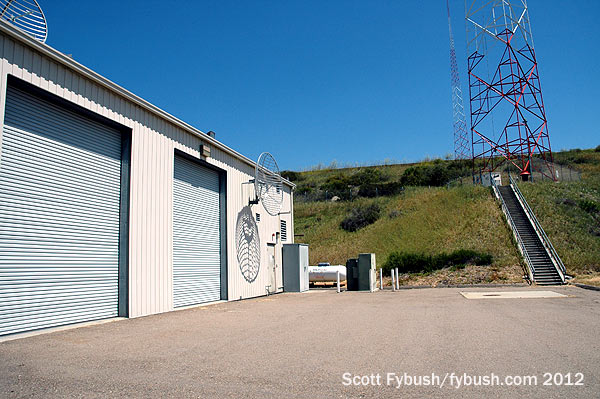
KOGO's power increase came with a move to the 760 site four years ago:

 
Nope. 760 has to protect KGU, Honolulu to the west and WJR, Detroit to the east. Those are the only three stations with any meaningful nighttime power on 760 in the U.S.

As a result, KFMB's night pattern is pointed directly north. They come in up here in the Sacramento area fairly strong and the signal goes much further than that. Fifty years ago, when the noise floor was much lower, I'd listen to them in Ukiah---560 air miles away. They came in like a local at night.


KOGO's power increase came with a move to the 760 site four years ago:


While I like your response, it does leave a question due to the recent changing of frequency of a license.


KEJY used to be on 790 kHz; now it's on 760 kHz and, if the link above is correct, is operating nondirectionally at night with almost 350 watts. Given the statements about KGB's signal, does KEJY's frequency switch put a curve in the San Diego station's night time coverage.
 
While I like your response, it does leave a question due to the recent changing of frequency of a license.


KEJY used to be on 790 kHz; now it's on 760 kHz and, if the link above is correct, is operating nondirectionally at night with almost 350 watts. Given the statements about KGB's signal, does KEJY's frequency switch put a curve in the San Diego station's night time coverage.

KEJY filed for the frequency move nine years ago, and the FCC granted the license to cover two years ago. If 760 in San Diego needed to make accommodations for that, it would have been done already.

If so, it still can't point west, because it has to protect KGU, Honolulu. My guess would be either no change or (and I'm not an engineer), more of a null to the northwest to avoid interference with KEJY.

@fybush would be the guy to speak knowledgably about this type of thing.
 
Nope. 760 has to protect KGU, Honolulu to the west and WJR, Detroit to the east. Those are the only three stations with any meaningful nighttime power on 760 in the U.S.

As a result, KFMB's night pattern is pointed directly north. They come in up here in the Sacramento area fairly strong and the signal goes much further than that. Fifty years ago, when the noise floor was much lower, I'd listen to them in Ukiah---560 air miles away. They came in like a local at night.


KOGO's power increase came with a move to the 760 site four years ago:


I heard KGB 760 4 times in alaska with a good enough signal to log it. I probably heard it a few times out side of that, knowing what I consider loggable.

I never hard KOGO good enough to log it, but im pretty sure i heard them a time or two well enough "to know it was them"

Here's some audio
 
I heard KGB 760 4 times in alaska with a good enough signal to log it. I probably heard it a few times out side of that, knowing what I consider loggable.

I never hard KOGO good enough to log it, but im pretty sure i heard them a time or two well enough "to know it was them"

Here's some audio

That is an impressive piece of audio. Back when KFMB was a fairly groundbreaking AC (1973-1978), I would have put up with that signal in the car between Bishop and Reno.
 
That is an impressive piece of audio. Back when KFMB was a fairly groundbreaking AC (1973-1978), I would have put up with that signal in the car between Bishop and Reno.

The Best "San Diego area " signal was XEPRS.. before they lost a tower.
I can't find the audio I sent it for a reception report but heres another
And what I sent in for my report was even way better than that one.
It would pound in like this, nghtly.. all alone.. 2800 miles away or so.
Until it lost a tower then Seattle and it would mix.

Standing in the middle of the main road in McGrath, AK with my Mightier 1090 mouse pad
487440660_10231530656346991_7854748558075323373_n.jpg
 
Just to restate why 760 KGB (originally KFMB) is 5,000 watts by day and 50,000 watts at night. In the daytime, it once had to protect 740 KBRT, now licensed to Costa Mesa near LA but originally on Catalina Island off the California Coast. The FCC thought a 5,000 watt non-directional station in San Diego was far enough away from Catalina Island to exist 20 kHz away on the dial.

The good news for KFMB is that KBRT was originally a daytimer, since it had to protect 740 KCBS San Francisco, one of the oldest stations in broadcasting. So when KBRT went off the air at sunset, KFMB could let loose with 50,000 watts. But it has to protect the Class I-A station on 760 kHz, WJR Detroit, and Hawaii's oldest radio station, 760 KGU, which signed on in 1922. San Diego and Detroit are 2300 miles apart, so KFMB had to null its signal away from the Northeast. San Diego and Honolulu are 2600 miles apart, so again, KFMB's signal has to avoid going too far West.
 
Just to restate why 760 KGB (originally KFMB) is 5,000 watts by day and 50,000 watts at night. In the daytime, it once had to protect 740 KBRT, now licensed to Costa Mesa near LA but originally on Catalina Island off the California Coast. The FCC thought a 5,000 watt non-directional station in San Diego was far enough away from Catalina Island to exist 20 kHz away on the dial.
KFMB was originally on 540. But in NARBA negotiations back in the 60's or early 70's (I could look it up, but it is really not relevant to my point) the status of the Mexican clear channel on 540 was clarified, requiring KFMB to be moved.

The FCC had to find a frequency for KFMB, even if it did not meet all the separation requirements. 760 was the answer. Still, the night directional pattern of KFMB on 760 was not as good as what it had on 540.

I did log and verify KFMB 540 in Quito, Ecuador around 1966. It had a good signal, often heard there.
The good news for KFMB is that KBRT was originally a daytimer, since it had to protect 740 KCBS San Francisco, one of the oldest stations in broadcasting. So when KBRT went off the air at sunset, KFMB could let loose with 50,000 watts. But it has to protect the Class I-A station on 760 kHz, WJR Detroit, and Hawaii's oldest radio station, 760 KGU, which signed on in 1922. San Diego and Detroit are 2300 miles apart, so KFMB had to null its signal away from the Northeast. San Diego and Honolulu are 2600 miles apart, so again, KFMB's signal has to avoid going too far West.
Again, the move to 760 was a compromise by the FCC. There was no way a new station would have been licensed in the 70's on 760 in San Diego, as it would have violated a bunch of rules. But the 760 move was the best the FCC could do to compensate KFMB for the change and the co-channel and adjacent channel stations had to accept it.
 
KFMB was originally on 540. But in NARBA negotiations back in the 60's or early 70's (I could look it up, but it is really not relevant to my point) the status of the Mexican clear channel on 540 was clarified, requiring KFMB to be moved.

The FCC had to find a frequency for KFMB, even if it did not meet all the separation requirements. 760 was the answer. Still, the night directional pattern of KFMB on 760 was not as good as what it had on 540.

I did log and verify KFMB 540 in Quito, Ecuador around 1966. It had a good signal, often heard there.

Again, the move to 760 was a compromise by the FCC. There was no way a new station would have been licensed in the 70's on 760 in San Diego, as it would have violated a bunch of rules. But the 760 move was the best the FCC could do to compensate KFMB for the change and the co-channel and adjacent channel stations had to accept it.

This is quite the write up of the station.

 
Just to correct several statements above:

KGB-AM 760 has NOT been running 50kw at night for at least a year now. I live in San Diego, and my handy-dandy signal meter now shows the same signal strength day and night. In other words, it appears they're transmitting at 5kw at all hours.

I've asked the reason for this in previous posts (doesn't a 50kw night license mean you have to actually run 50kw at night, or else you're in violation of your license?) But I don't remember getting a solid answer. Can any of the radio pros on this board advise?
 
Just to correct several statements above:

KGB-AM 760 has NOT been running 50kw at night for at least a year now. I live in San Diego, and my handy-dandy signal meter now shows the same signal strength day and night. In other words, it appears they're transmitting at 5kw at all hours.

I've asked the reason for this in previous posts (doesn't a 50kw night license mean you have to actually run 50kw at night, or else you're in violation of your license?) But I don't remember getting a solid answer. Can any of the radio pros on this board advise?
Didn't the reduction in the nightime power happen around the time they completed diplexing KOGO at the Santee site? Maybe the diplexing required it.
 
I've asked the reason for this in previous posts (doesn't a 50kw night license mean you have to actually run 50kw at night, or else you're in violation of your license?) But I don't remember getting a solid answer. Can any of the radio pros on this board advise?

They have a STA, granted on May 11, to use day power non-directional 24/7 due to what they describe as "a failure in buried control wiring".

Here's the supporting document from the STA filing:
 
They have a STA, granted on May 11, to use day power non-directional 24/7 due to what they describe as "a failure in buried control wiring".

Here's the supporting document from the STA filing:
Thank you, K.M., for taking the time to dig that up. Much appreciated. However, I'm still curious why they downgraded to 5kw at night long before May 11th.

Just for fun, I also asked Gemini A.I. why KGB-AM downgraded at night. It responded that I was wrong, that KGB-AM *increased* power. It also talked about 760 needing to protect KBRT/740's signal coming from Catalina Island. As we all know, KBRT moved off Catalina Island many years ago. This is all just more proof that A.I. still makes factual mistakes.
 
Thank you, K.M., for taking the time to dig that up. Much appreciated. However, I'm still curious why they downgraded to 5kw at night long before May 11th.

Just for fun, I also asked Gemini A.I. why KGB-AM downgraded at night. It responded that I was wrong, that KGB-AM *increased* power. It also talked about 760 needing to protect KBRT/740's signal coming from Catalina Island. As we all know, KBRT moved off Catalina Island many years ago. This is all just more proof that A.I. still makes factual mistakes.

Aaaah. ChatGPT

"My guess—and it is only a guess—is that one of these applies:
*The night directional array has a major fault, and they're operating under a Special Temporary Authority (STA).
*The cost of maintaining or repairing the 50 kW nighttime directional system isn't justified by the station's revenue, so they're using a reduced-power authorization.
*There is a transmitter or phasing-network issue that hasn't been repaired."

Then it said it wanted to dig further. But my ChatGPT has had highly extensive use and is used to me nerding out so probably not a true test.
 
This is all just more proof that A.I. still makes factual mistakes.

I have AI turned off in my search engine and on my phone. When I encounter an AI chatbot pretending to be a customer service representative, I keep replying "agent" until it gives up and sends me to a live person.

The new AI customer support phone model is not as easy to get around, which is why I try to use online chat as much as possible, and if they suggest that I call, I politely insist that they should have someone from that department call me.

In addition to my personal opinion about the questionable value of AI, I have severe objections to the amount of electricity and water the data centers need to operate. I refuse to become dehydrated in a room with the lights turned out just for AI to keep throwing out nonsense as fact ... especially since we already are overrun with disinformation and misinformation being believed so readily by so many people.

As for KGB, I have to presume that they are doing what they are doing because no one is reporting it to the FCC.
 
AI hoovers up information already on the internet, puts it in a blender, hits "puree" and spits out what seems to be a consensus. So, if 20 sites show 760 with 50kw at night and there are only one or two mentions of it running at reduced power, it's most likely to tell you they're running 50kw at night. It can't "know" anything independently.

What we learned from the ChatGPT experiment above is that it's not scraping FCC filings. As K.M. noted, the FCC approved day pattern for nighttime broadcasting on May 11. KFMB filed on May 8.

The records show they were also under a temporary STA in September of 2024, but filed a "restored licensed operations" notice with the FCC in March of 2025.

At this point, we have one poster (no disrespect) who says they've been running 5kw at night for "at least a year now", and that might be true. I can't recall exactly when I caught them here in Northern California, but it would have been sometime between September of last year and early April of this year.


Back
Top Bottom