• Get involved.
    We want your input!
    Apply for Membership and join the conversations about everything related to broadcasting.

    After we receive your registration, a moderator will review it. After your registration is approved, you will be permitted to post.
    If you use a disposable or false email address, your registration will be rejected.

    After your membership is approved, please take a minute to tell us a little bit about yourself.
    https://www.radiodiscussions.com/forums/introduce-yourself.1088/

    Thanks in advance and have fun!
    RadioDiscussions Administrators

WOR off the air for the 4th

Rio (and much of Brasil, to my understanding) sometimes gets extreme heat waves. The most recent was in February 2025, when temperatures reached 112 F, or 44 C. It's the extremes that matter when designing an A/C system.y
We are kinda' away from radio, but Rio is on the ocean. The heat waves were inland. But, of course, those locations have to have adequate cooling.

I had a 10 kw AM in Guayaquil where we had extreme heat as the site was in the salt flats miles from the Pacific and the Guayas river. But we had AC for the studio, but the transmitter room was handled with fans and evaporative cooling using a high ceiling, It worked fine, and that was the standard system in that part of the world..

On the other hand, at my sites in Quito and Encase, we had to have heaters at night as even the transmitter heat would not keep the site warm.

At 100 kw Radio 10 (AM 710) in Buenos Aires, we only used fans... no AC at all for a hundred gallon transmitter.
 
Let's remember radio stations were once so concerned about being on the air for their listeners and advertisers thyat they'd sign off for a couple of hours each weekend, usually overnight Sunday, to test their equipment and make sure it is working properly.
Actually, the sign off on Monday morning was mostly to clean the transmitter, oil the fans, and to do mechanical maintenance. Except for changing or rotating tubes, there was not much else to do then.

I had 9 transmitters in Ecuador in the mid and late 60’s, a couple were co-located. So I had a 6 week rotation for cleaning and checking the sites, and would make a weekly daytime visual checkup every week just in case. That was in the 60's, and nearly everything was vacuum tube based at the transmitter except for the STL receiver and the Volumax. They did not need much more work.
There'd be a chief engineer and several assistants, all trying to keep that operation on the air.
Maybe at a bigger station, but even in the 50's and 60's few stations had more than a single engineer. Example: WEEL AM and WEZR FM in Fairfax had two separate sites, and had two separate AM directional systems. One engineer in 1970.
These days, even a 50,000 watt clear channel station likely has nobody at the transmitter most of the time. That's partially becauyse technology is better but partially to save staffing costs.
The only reason we had them in the later 50's and 60's was to comply with FCC rules. By the 70s, few stations (unstable DA systems) had engineers at the site. The rest all ran by remote control unless they had ancient union rules.
WOR uses three towers for its directional antenna system. While WBBR 1130 is a former Class I-B that is non-directional by day but directional at night, WOR is a former Class I-B that's directional at all times, maybe stemming from the days when it tried to cover both NYC and Philadelphia. And at night, it has to protect 710 KIRO Seattle.
WOR custom designed its system to serve both markets, and there are countless Broadcasting Magazines from the 30's with their two market coverage promoted on the cover!

And in the early 50's, they had 40 engineers on staff, as shown in some transmitter site reports I have at WorldRadioHistory at WOR TRANSMITTER MANUALS: Early 50's

 
Last edited:
Back in the late 60s/early 70s we had an RCA Ampliphase transmitter. We would sign off every Sunday night/Monday morning to align the transmitter. Sounded pretty good on Monday morning but by the time Thursday or Friday rolled around it was earning its nick name of Amplifuzz.
 
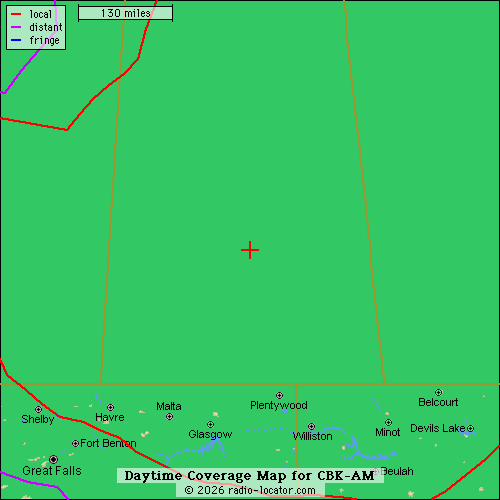
LAND coverage. CBK has a massive signal, but there's a lot of water within that.
Huh?
CBK_AM_FD.gif
 
Back in the late 60s/early 70s we had an RCA Ampliphase transmitter. We would sign off every Sunday night/Monday morning to align the transmitter. Sounded pretty good on Monday morning but by the time Thursday or Friday rolled around it was earning its nick name of Amplifuzz.
Heck, in the later 60’s I made some good extra cash from the 10kw Ampliphase at Radio Mambo 560 AM in Guayaquil. It started when one day Mambo (named after the owner’s soap brand, not the dance) was interfering with my station at 660! I offered to help, and ended up assisting them regularly. The idiots, though, later bought a 50 kw used Ampliphase!
 
LAND coverage. CBK has a massive signal, but there's a lot of water within that.
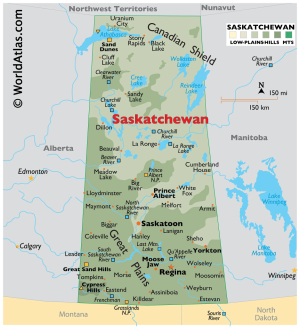
That's completely wrong, I grew up in 2 of the provinces the signal reaches, and it's 90% farmland, with 10% of the coverage area being forest. Not much in the way of lakes at all. Where the lakes are, in the north and east, the area is mostly rock. The ground conductivity becomes very poor and the signal doesn't penetrate very far into those zones. It's the same as when you hit the rockies. The moment you enter, CBK is gone.
 
Last edited:
That's completely wrong, I grew up in 2 of the provinces the signal reaches, and it's 90% farmland, with 10% of the coverage area being forest. Not much in the way of lakes at all. Where the lakes are, in the north and east, the area is mostly rock. The ground conductivity becomes very poor and the signal doesn't penetrate very far into those zones. It's the same as when you hit the rockies. The moment you enter, CBK is gone.
If the decades-old engineering I was told by engineers was wrong, so be it. Used to have the piece on our wall with the top 10 AM signals graphed, but it's long since disappeared. (Not like CBK/KFYR/WNAX,et al have changed much lately. Oh, and I'm not talking about iHeart engineers; this was l-o-n-g before them, Clear Channel, Jacor, etc.)


Back
Top Bottom