
-
Get involved.
We want your input!
Apply for Membership and join the conversations about everything related to broadcasting.
After we receive your registration, a moderator will review it. After your registration is approved, you will be permitted to post.
If you use a disposable or false email address, your registration will be rejected.
After your membership is approved, please take a minute to tell us a little bit about yourself.
https://www.radiodiscussions.com/forums/introduce-yourself.1088/
Thanks in advance and have fun!
RadioDiscussions Administrators
You are using an out of date browser. It may not display this or other websites correctly.
You should upgrade or use an alternative browser.
You should upgrade or use an alternative browser.
Best/Worst/Most Interesting TV Station Logos
- Thread starter Ed Nielson
- Start date

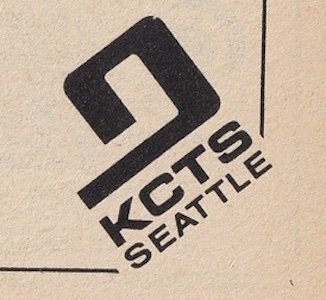
KCTS in its Univ. of Washington era. Shocked it wasn't called KUOW-TV instead.From a TV Guide page posted by the "Vintage TV Listings" page on FB. The KCTS logo as used in 1977. This is terrible, like WCVB terrible. My wife said "That doesn't even look like a '9'".
Val
View attachment 11864

Here is the former WTCG logo during the time the Late Ted Turner managed that station and he made it the launching point of SuperStation WTBS, TBS, CNN.
Note the Cable Channels are currently with WB and the former WTBS-TV went to Gray Television as current CW affiliate WPCH-TV Atlanta.

 abcnews.com
Note the Cable Channels are currently with WB and the former WTBS-TV went to Gray Television as current CW affiliate WPCH-TV Atlanta.
Ted Turner, cable television pioneer and CNN founder, dies at 87
Turner launched CNN, the first 24-hour cable news network.
Attachments
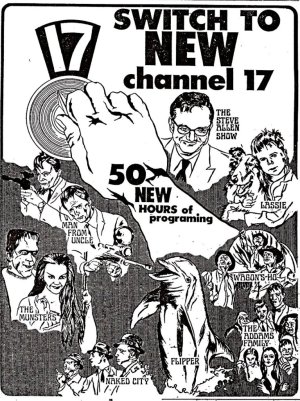

I'd say that ad predates the launch of WTCG on satellite by a few years. At a guess, this looks like it might go back to shortly after Turner first acquired the station. But do you have a date for that ad?Here is the former WTCG logo during the time the Late Ted Turner managed that station and he made it the launching point of SuperStation WTBS, TBS, CNN.
Note the Cable Channels are currently with WB and the former WTBS-TV went to Gray Television as current CW affiliate WPCH-TV Atlanta.
Ted Turner, cable television pioneer and CNN founder, dies at 87
Turner launched CNN, the first 24-hour cable news network.

Probably from its WJRJ days, as I recall seeing that ad on an online newspaper archive from around that time frame.I'd say that ad predates the launch of WTCG on satellite by a few years. At a guess, this looks like it might go back to shortly after Turner first acquired the station. But do you have a date for that ad?
History of UHF Television
1970 was the date of the ad on this page over WJRJ/WTCG/WTBS history.
Got to wonder if those calls are a highly creative way of rendering "Georgia" (JRJ).Probably from its WJRJ days, as I recall seeing that ad on an online newspaper archive from around that time frame.
History of UHF Television
KCNS San Francisco 1990's. I remember this station when they aired Chinese and Filipino programming back when they competed against KTSF for that audience in the Bay Area. However prior to the 1990's the station was known as KVOF-TV owned by Pastor Gene Scott whose program originated in Los Angeles from KHOF-TV (Now known as KPXN-TV). Currently KCNS San Francisco is owned by RNN and associates.

LA18 To Replace Local Asian TV Programs With English Infomercials
Popular programs produced by LA18 slated to be canceled on July 1 include "Tsou LA," a program aimed at introducing Chinese speakers to Los Angeles, and "Kababayan Today," a Filipino-language talk show.
 www.cbsnews.com

Eclectic TV : KSCI's Programming in 14 Languages Offers News, Entertainment, Comfort to Ethnic Communities
Standing beside banks of television monitors and control panels, Parvis Afshar waved his arms furiously, like the conductor of a recalcitrant orchestra, as he directed assistants switching between videotapes and live broadcasting for his morning Persian-language news show.
 www.latimes.com
Here is KSCI-TV Los Angeles in the 1980's to 1990's back when it was one of a few TV stations in the US to air Chinese, Korean and Japanese programming in the country. It was branded as "The International Station" around this time. Note KSCI-TV is currently owned by RNN Associates and is a Shop LC affiliate. Yes its all because of where we are now with shows and news programming in various languages moving to Youtube and various TV apps. But at the time KSCI-TV ran multiple languages its because the demos that station targeted cable was then a luxury for their audience.
KSCI has a fascinating history. The "SCI" in the call letters stands for "Science of Creative Intelligence" -- the station originally signed on under ownership linked with the Transcendental Meditation movement, and was intended to promote meditation and would be limited to "positive" and "uplifting" programming. I'm guessing that didn't really work out to well, hence that transition after a few years to "The International Station".Here is KSCI-TV Los Angeles in the 1980's to 1990's back when it was one of a few TV stations in the US to air Chinese, Korean and Japanese programming in the country. It was branded as "The International Station" around this time. Note KSCI-TV is currently owned by RNN Associates and is a Shop LC affiliate. Yes its all because of where we are now with shows and news programming in various languages moving to Youtube and various TV apps. But at the time KSCI-TV ran multiple languages its because the demos that station targeted cable was then a luxury for their audience.
I loved KSCI in its prime. All the English-subtitled Japanese soap operas and historical samurai dramas. And the original Iron Chef!
The closest it gets to that vibe today are the grand sumo highlights on NHK, and NHK's domestic evening news program when it airs with live English overdubs at 2 in the morning. (There is other worthy programming on NHK, but all of it is visibly for foreign consumption.)
The closest it gets to that vibe today are the grand sumo highlights on NHK, and NHK's domestic evening news program when it airs with live English overdubs at 2 in the morning. (There is other worthy programming on NHK, but all of it is visibly for foreign consumption.)
History of UHF Television
KSCI origins has some of it origins as KCHU-TV of San Bernardino before that station went dormant until 1977 when KSCI-TV got the Channel 18 spot.
Here is a rare one when KTSF was starting out their local San Francisco newscasts in Chinese. This is from the 1991 Oakland wildfire as a news brief from this clip.
Here are some of the notable TV channels that aired in the United States past or present that's not English or Spanish in its history.
KFTY Santa Rosa and their morning Newscast in 1999. Today its KEMO-TV San Francisco as an affiliate of QVC.
KFTY Santa Rosa and their morning Newscast in 1999. Today its KEMO-TV San Francisco as an affiliate of QVC.
Stations in smaller cities within a larger market often do a good job with newscasts more tailored to their immediate areas, without seeking to compete with newscasts from the core city. Examples of this would be WWSB Sarasota, WYMT Hazard KY, WHKY (now a subchannel of WWJS) Hickory NC, and so on. There is also considerable segmentation of news in the Greenville-Spartanburg-Asheville market (which is pretty sprawling to begin with), with the respective newscasts emphasizing their COLs and surrounding areas. In the Charleston-Huntington market, WSAZ tilts more towards Huntington and surrounding areas of Ohio and Kentucky, while WCHS and WOWK focus more on the Charleston area. (WOWK is licensed to Huntington but is based in Charleston.)
The remaining places where TV stations/TV Networks can focus on a subset within a market is News 12 in New York Area managed by Altice Inc. Otherwise its fading in most parts of the country.Stations in smaller cities within a larger market often do a good job with newscasts more tailored to their immediate areas, without seeking to compete with newscasts from the core city. Examples of this would be WWSB Sarasota, WYMT Hazard KY, WHKY (now a subchannel of WWJS) Hickory NC, and so on. There is also considerable segmentation of news in the Greenville-Spartanburg-Asheville market (which is pretty sprawling to begin with), with the respective newscasts emphasizing their COLs and surrounding areas. In the Charleston-Huntington market, WSAZ tilts more towards Huntington and surrounding areas of Ohio and Kentucky, while WCHS and WOWK focus more on the Charleston area. (WOWK is licensed to Huntington but is based in Charleston.)

Brands
 www.optimum.com
News 12 Networks is the leader in hyper-local news covering communities throughout Long Island, the Bronx, Brooklyn, Westchester, Hudson Valley, Connecticut and New Jersey.
WYMT is anything but "fading". They are in the anomalous situation of being a semi-satellite of the main CBS affiliate in the market (WKYT Lexington), serving an area with difficult terrain and challenging infrastructure, at the edge of their market that borders the Kentucky part of three other markets from out of state. It's an ongoing bone of contention that those "orphan counties" can't get WYMT on satellite like the Lexington portion of its coverage area does (and that was a long time in coming). They are far and away the primary TV news source for that area and are carried probably universally on cable there. By all rights Hazard should be its own DMA (in fact they declined this status back in the day), but that would cannibalize four markets, and leave them as a single station in a small market needing infill from Lexington for networks other than CBS. The Lexington market fought tooth and toenail for those counties and wouldn't wish to lose them. Indeed, it would be a case of an sinking tide lowering all boats.The remaining places where TV stations/TV Networks can focus on a subset within a market is News 12 in New York Area managed by Altice Inc. Otherwise its fading in most parts of the country.
Brands

I think "fading" referred to the larger set of sub-markets that existed through the 1990s but have been reduced by networks insisting on exclusivity and by the creeping uniformity of satellite and OTT lineups that don't have room for multiple affiliates in a DMA. WYMT is a happy exception to that rule because the area it serves is so isolated otherwise and because of the high quality of its local news.
But while it bucks the trend, few others do. WMUR in New Hampshire is another anomaly, and another unique case as the only NH-based TV newsroom that survives - but if it hadn't come under Hearst ownership with WCVB, would even that have lasted? Or might a WMUR without ABC have followed the independent, news-heavy model of WFMZ, which seems to do pretty well at serving the Lehigh Valley and Reading even against the big Philly stations an hour away?
So many others have gone away without much outcry - Anniston and Tuscaloosa and northeast Georgia and Anderson and Hagerstown and Atlantic City and White River Junction and Flagstaff and Roswell and Farmington and Big Springs and... is Lewiston, Idaho doing anything local anymore?
It seems as though the more successful strategy in some of the old one-station markets was to build up a full or nearly full DMA's worth of affiliations where the larger market would allow it. It's saved Lafayette, Indiana, Lima, Parkersburg and Mankato. When I travel, it's always fun to hit those little markets and see how local TV is hanging on at the very bottom of the food chain.
But while it bucks the trend, few others do. WMUR in New Hampshire is another anomaly, and another unique case as the only NH-based TV newsroom that survives - but if it hadn't come under Hearst ownership with WCVB, would even that have lasted? Or might a WMUR without ABC have followed the independent, news-heavy model of WFMZ, which seems to do pretty well at serving the Lehigh Valley and Reading even against the big Philly stations an hour away?
So many others have gone away without much outcry - Anniston and Tuscaloosa and northeast Georgia and Anderson and Hagerstown and Atlantic City and White River Junction and Flagstaff and Roswell and Farmington and Big Springs and... is Lewiston, Idaho doing anything local anymore?
It seems as though the more successful strategy in some of the old one-station markets was to build up a full or nearly full DMA's worth of affiliations where the larger market would allow it. It's saved Lafayette, Indiana, Lima, Parkersburg and Mankato. When I travel, it's always fun to hit those little markets and see how local TV is hanging on at the very bottom of the food chain.
I think "fading" referred to the larger set of sub-markets that existed through the 1990s but have been reduced by networks insisting on exclusivity and by the creeping uniformity of satellite and OTT lineups that don't have room for multiple affiliates in a DMA. WYMT is a happy exception to that rule because the area it serves is so isolated otherwise and because of the high quality of its local news.
But while it bucks the trend, few others do. WMUR in New Hampshire is another anomaly, and another unique case as the only NH-based TV newsroom that survives - but if it hadn't come under Hearst ownership with WCVB, would even that have lasted? Or might a WMUR without ABC have followed the independent, news-heavy model of WFMZ, which seems to do pretty well at serving the Lehigh Valley and Reading even against the big Philly stations an hour away?
So many others have gone away without much outcry - Anniston and Tuscaloosa and northeast Georgia and Anderson and Hagerstown and Atlantic City and White River Junction and Flagstaff and Roswell and Farmington and Big Springs and... is Lewiston, Idaho doing anything local anymore?
It seems as though the more successful strategy in some of the old one-station markets was to build up a full or nearly full DMA's worth of affiliations where the larger market would allow it. It's saved Lafayette, Indiana, Lima, Parkersburg and Mankato. When I travel, it's always fun to hit those little markets and see how local TV is hanging on at the very bottom of the food chain.
I've seen some of those submarket local newscasts to which you refer (Toccoa, Hagerstown, Atlantic City, Flagstaff, and the cut-ins that KOBF Farmington used to do into the KOB feed), and while none of them were anything fancy, they did meet a local need. WYMT has the resources of not only WKYT, but Gray sister stations WSAZ and WVLT for ancillary news coverage. It is not at all unusual to see a WSAZ story on WYMT or vice versa. WSAZ has always made an honest effort to cover eastern Kentucky, but at the end of the day, they have to split their resources between three states and the two largest cities in West Virginia. Pretty monumental task. WYMT truly stepped into the gap.
One thing I hate to see in the one-station markets you mention, aside from Lafayette (whose LPTVs carry the other Big Four networks aside from WLFI's CBS), is that there ends up being only one source of news in town, sometimes with umbrella branding of the "[City] News Now" type. The Lafayette LPTVs are owned a totally separate company from WLFI's Gray and put together something called "Star City News". It's interesting that WHSV's NBC subchannel (as well as LPTV) in Harrisonburg actually carries WVIR's (which is also Gray) news from Charlottesville. I've never understood why those two towns are separate markets. (For a short time they were indeed a single market, but that went away.)