
For which station? Three have been discussed here (yeah, you can blame me for that).Wow, only kidding,
So anyword on the Covage Map?

-
Get involved.
We want your input!
Apply for Membership and join the conversations about everything related to broadcasting.
After we receive your registration, a moderator will review it. After your registration is approved, you will be permitted to post.
If you use a disposable or false email address, your registration will be rejected.
After your membership is approved, please take a minute to tell us a little bit about yourself.
https://www.radiodiscussions.com/forums/introduce-yourself.1088/
Thanks in advance and have fun!
RadioDiscussions Administrators
You are using an out of date browser. It may not display this or other websites correctly.
You should upgrade or use an alternative browser.
You should upgrade or use an alternative browser.
104.9 LPFM granted for San Francisco
- Thread starter Mark Roberts
- Start date
I hope it wasn't a Monterey pine. Their root systems are shallow and once they reach a certain height, they topple over easily in loose soil.Definitely an upgrade considering how may trees have been falling over this winter.
At our Oakland house, we paid a lot of money to get rid of four of those things. In some ways, they're worse than eucalyptus.
The 104.9 one, that's the one were talking about, right?For which station? Three have been discussed here (yeah, you can blame me for that).
There isn't a map in the technical exhibit, so the REC map is your best bet: https://fccdata.org/?lang=en&facid=782104The 104.9 one, that's the one were talking about, right?
A couple of years ago they could have purchased the transmitter from Fry's !uhhh, 1 watt? 😂
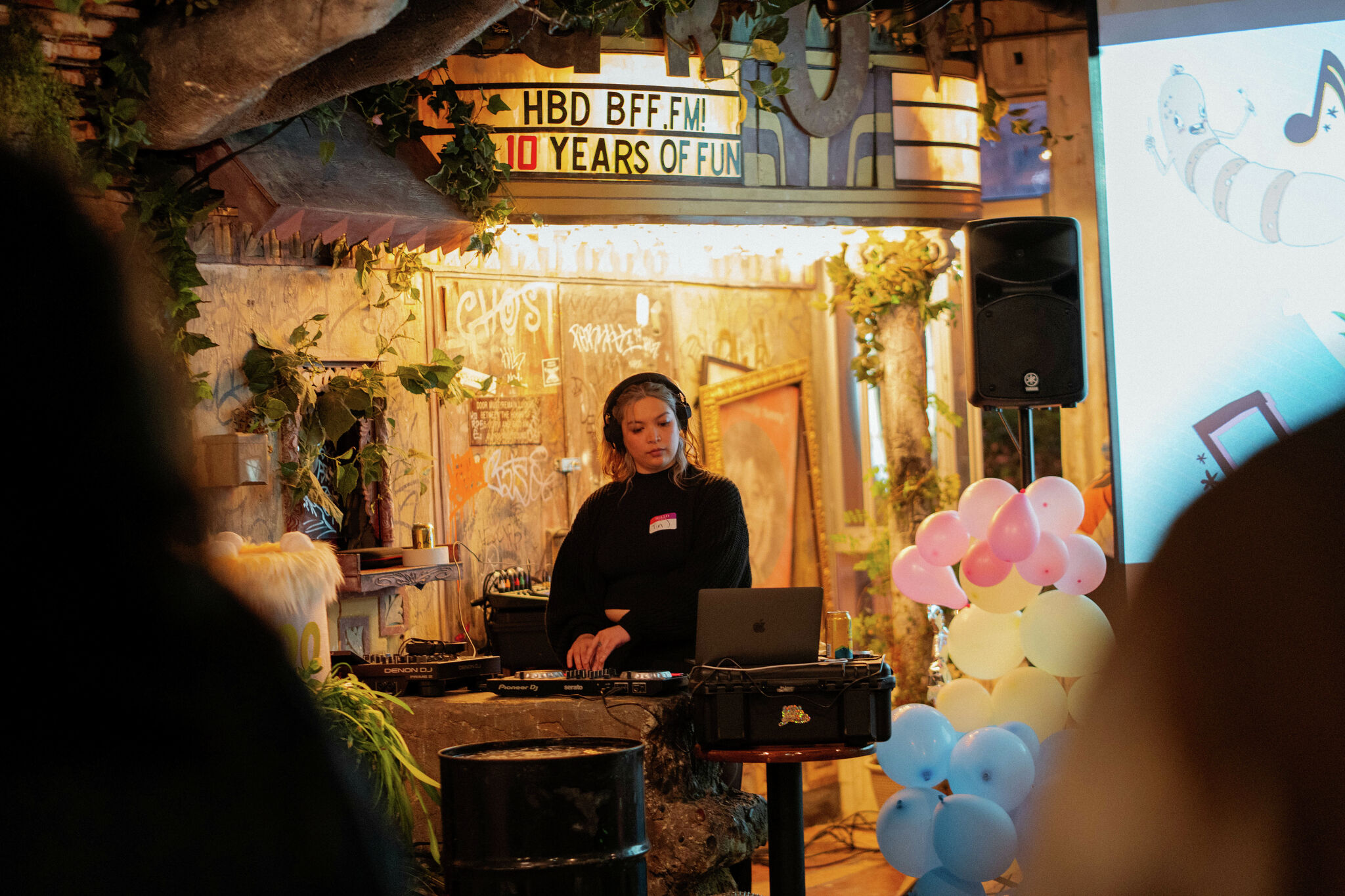
Radio station nabs San Francisco's last unclaimed FM frequency
After a decadelong freeze on low-power FM radio license applications, SF internet radio station BFF.fm has claimed the city's last remaining FM frequency.
 www.sfgate.com
For some reason, the Chronicle/SFGate are fascinated with bff.fm.Radio station nabs San Francisco's last unclaimed FM frequency
After a decadelong freeze on low-power FM radio license applications, SF internet radio station BFF.fm has claimed the city's last remaining FM frequency.

Chronicle/SFGate also never talks about the KXSF 102.5 crew and how they saved their station from KUSF's sale.

I have a question or twelve about that 102.5 LPFM grant for Redwood City from a couple of weeks back. When I pull up the page on fccdata.org, the contour plot shows the calculated 70 dbu "city grade" signal doesn't make it anywhere near the city limits of the COL, RWC. (It only gets out as far as the communities of Belmont and San Mateo, which is where the transmitter & tower were approved to be located.) Neither does the 60 dbu, which makes it as far as San Carlos and Burlingame. The COL is only within the 50 dbu contour. And the thing was approved for a maximum ERP of 8 watts.
Can someone explain how this could possibly be kosher?
Not to mention that I can get KSFM/102.5 from any number of radios in my house, and I can roll a bowling ball and it would make it across the Redwood City line. (Admittedly that's mostly downhill, but still...) I'd bet that in a real world test, most of my radios would stay locked onto Woodland, not those 8 great tomatoes from that itty bitty San Mateo peashooter.
Someone, anyone, 'splain this to me.
Can someone explain how this could possibly be kosher?
Not to mention that I can get KSFM/102.5 from any number of radios in my house, and I can roll a bowling ball and it would make it across the Redwood City line. (Admittedly that's mostly downhill, but still...) I'd bet that in a real world test, most of my radios would stay locked onto Woodland, not those 8 great tomatoes from that itty bitty San Mateo peashooter.
Someone, anyone, 'splain this to me.
So in practice, the licensee, the Redwood City Parks and Arts Foundation, can get approved for an LPFM that won't even cover the city they exist to serve? I believe you, but it seems extremely stupid.LPFM is a secondary service. There is no COL coverage requirement the way there is for primary service full-power stations. The COL can be anything - it's just a line you have to fill out on the form.

COL coverage requirements are a bad fit for the LPFM service. The rules for full-service non-commercial FM stations require that 50% of the COL be within the 60 dBu contour. Any city of any substantial geographic size is too big for an LPFM to cover even half of it, and often much less.
And those COL coverage rules exist to meet the requirements in section 307(b) of the communications act for "fair and equitable distribution of broadcast services," which again applies only to primary services.
Instead, the LPFM rules require that either the headquarters of the licensee or 75% of the board must be within 10 miles of the transmitter (20 in smaller markets and rural areas). So the Redwood City group still has to have its LPFM close to its home base - but this way the rules also allow for the reality that there might not be spacing available right in Redwood City for a new signal.
And those COL coverage rules exist to meet the requirements in section 307(b) of the communications act for "fair and equitable distribution of broadcast services," which again applies only to primary services.
Instead, the LPFM rules require that either the headquarters of the licensee or 75% of the board must be within 10 miles of the transmitter (20 in smaller markets and rural areas). So the Redwood City group still has to have its LPFM close to its home base - but this way the rules also allow for the reality that there might not be spacing available right in Redwood City for a new signal.
I hear what you're saying, and yes, the entire COL exists within that 10 mile "contour", so presumably all their board members reside inside there too. It just seems so weird. Thanks, Scott.COL coverage requirements are a bad fit for the LPFM service. The rules for full-service non-commercial FM stations require that 50% of the COL be within the 60 dBu contour. Any city of any substantial geographic size is too big for an LPFM to cover even half of it, and often much less.
And those COL coverage rules exist to meet the requirements in section 307(b) of the communications act for "fair and equitable distribution of broadcast services," which again applies only to primary services.
Instead, the LPFM rules require that either the headquarters of the licensee or 75% of the board must be within 10 miles of the transmitter (20 in smaller markets and rural areas). So the Redwood City group still has to have its LPFM close to its home base - but this way the rules also allow for the reality that there might not be spacing available right in Redwood City for a new signal.

Makes me wonder how many issues 102.5 KDON here might cause with that. KDON is one of those unusual grandfathered Class B stations.102.5 has been approved for "Redwood City" as well, really covers San Mateo
There has been several reported that it can make it up to Sacramento and cease problems with KSFM. So i figure it could make it to Redwood City as well.

It has, but you can also get KSFM here, Sacramento stations have a very weird clear signal in some areas of the city.Makes me wonder how many issues 102.5 KDON here might cause with that. KDON is one of those unusual grandfathered Class B stations.
There has been several reported that it can make it up to Sacramento and cease problems with KSFM. So i figure it could make it to Redwood City as well.
Its funny that way back in the day (1960s), KDON 1460 (Salinas) put a strong, essentially interference free night time signal down here in SoCal with a pretty good top-40 format. At that time our LA's KTYM was a only daytimer and KENO in Vegas wasn't a problem either.It has, but you can also get KSFM here, Sacramento stations have a very weird clear signal in some areas of the city.
1
- Status
- This thread has been closed due to inactivity. You can create a new thread to discuss this topic.