
If Houston is better than Indianapolis when it comes to full-market AM coverage, then Indy must be pretty bad. I can't think of a Houston AM that isn't somehow hamstrung by a directional pattern that cuts out of a decent portion of the market at night or audibly affects performance during the day, including KTRH. One AM is hampered within the local market by a co-channel only 150 miles away.

-
Get involved.
We want your input!
Apply for Membership and join the conversations about everything related to broadcasting.
After we receive your registration, a moderator will review it. After your registration is approved, you will be permitted to post.
If you use a disposable or false email address, your registration will be rejected.
After your membership is approved, please take a minute to tell us a little bit about yourself.
https://www.radiodiscussions.com/forums/introduce-yourself.1088/
Thanks in advance and have fun!
RadioDiscussions Administrators
You are using an out of date browser. It may not display this or other websites correctly.
You should upgrade or use an alternative browser.
You should upgrade or use an alternative browser.
1070 WFNI Silent for now
- Thread starter Hoosierky
- Start date

Here's a link to the article which appeared in yesterday's "Indianapolis Star". Apparently, selling the real estate which holds the 6-tower site is more profitable than operating from that location/setup. A trend which will only increase, IMHO. WIBC's 1070 AM original frequency will go off the air 'indefinitely'
Last edited:
I predict one or both will be gone in the next few years, maybe even before the end of this decade. WLS can just move their talk format to 94.7, but WGN is in a bit of trouble in that regard, since they don't have an FM station. The land their towers sit on is worth a boatload of money, especially WGN's in Elk Grove Village (see: formerly-nearby WBBM).You could say that about WLS and WGN along with a slew of others.
I wonder how many people use the Ancient Modulation signal anymore? The FMs aren't going anywhere, and as long as they cover the northern half of the Indy market, they should be good.But the apparent complete demise of the Indianapolis 1070 is a biggie. And yep....I've driven by that multi-tower site (with the sign facing I-65) dozens of times.
Yes it's the real estate value that's taking care of the AM owners who choose to go silent.Here's a link to the article which appeared in yesterday's "Indianapolis Star". Apparently, selling the real estate which holds the 6-tower site is more profitable than operating from that location/setup. A trend which will only increase, IMHO. WIBC's 1070 AM original frequency will go off the air 'indefinitely'
I believe the FM is making more money than the AM.I predict one or both will be gone in the next few years, maybe even before the end of this decade. WLS can just move their talk format to 94.7,
It seems crazy to me that they would eliminate 50 kW nondirectional Class A stations. Diplex yes. Eliminate no. Other stations could take over the facility if they really didn't want it anymore. Can you imagine if stations like 820, 950, 1110, 1240, 1300, or 1390, 1450, could take over the 720 or 890 facility? CBC stations have moved to FM, and the Class As have been taken over by private owners. And that's in a country which has mainly moved to FM.

Very much so.I believe the FM is making more money than the AM.
The problem with talk formatted AMs is that the audience is getting older and older, and few attempts to move to FM have worked.
WSB and KSL are examples of very strong stations with good integration of local and network content that added FM and did very well. But in other cases, like San Diego's Clear Channel AM, adding FM did little; the station was not a market leader, though.
Neither 890 nor 720 are market leaders, so adding FM is like putting lipstick on the pig.
890's target demographics are now 30+ miles from Mokena. The signal is certainly a problem in the North and NWC ORD Areas.
You can read about it in this prescient article. And that was the downtown/loop area.
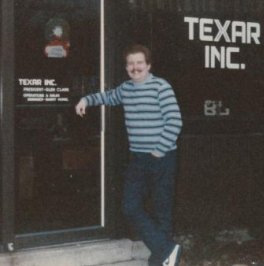
 www.thebdr.net
You can read about it in this prescient article. And that was the downtown/loop area.
The Audio Prism Story
[June 2011] In the history of audio processing, the TEXAR Audio Prism holds its own place as one of the key tools in the arsenals of stations fighting to produce their “signature” sound and stand
www.thebdr.net
Last edited:

I would say that WIBC's move from 1070 to 93.1, and the creation of 1070 The Fan was one that worked well. It may not keep going, but WIBC has done well for the last ~15 years since they moved, often being in the top 5 in both 6+ and 25-54.The problem with talk formatted AMs is that the audience is getting older and older, and few attempts to move to FM have worked.
WSB and KSL are examples of very strong stations with good integration of local and network content that added FM and did very well.
WFNI also has done well by sports station standards. They are averaging a 5 share in 6+, almost a 6 share in the latest PPMs. I think that's a real indication of just how little listening was happening on 1070 - Emmis wouldn't throw away that big of an audience by turning off the signal that feeds it, no matter how the check someone waved in front of them.
I agree with you David. AM stations in Phoenix are severely limited, especially at night. Even the big signals like KTAR and KFYI have major interference issues in the far Southeast Valley. Growing up in Gilbert, I remember listening to KTAR at night and always hearing a Spanish language station (presumably XESS from Tijuana, Mexico) in the background.But none of them cover the market today, and only two of them did it well back 30 or 40 years before the expansion to the West, North, NE and, particularly, SE.
It's even worse than ABQ which at least has one full signal station, but no others with complete MSA coverage.
Another market I would submit for your consideration is San Diego. There are no 50,000 watt clear channel stations and no AM stations completely cover the market or county. In the North County, all the AM stations from San Diego have major interference issues, even AM 600 KOGO. I was recently driving around Fallbrook, Bonsall and Northeast Oceanside during the day and I was surprised to hear some adjacent channel interference occurring with KOGO. Little did I know that there is an AM 590 station from the Inland Empire (KTIE) that was wrecking havoc with KOGO. Night-time garners some serious sky wave cancellation for KOGO in the North County area away from the coast. Same can be said for the East County where none of the stations come in well at night. Topography and San Diego’s close proximity to Los Angeles are most likely to blame for that.
I hung out on 1070 for about an hour this morning before local sunrise here in the Chicago area. No WFNI. For that matter no KNX or anything else. It sounded like a graveyard channel. Lots of signals, but nothing rising to the top. At least not for long enough to ID. The silver lining of the Indy 1070 going dark is, as others have alluded to, that it will open up the channel to some DX opportunities.
No WTSO? They're usually the biggest pest for me when I try to DX 1070.I hung out on 1070 for about an hour this morning before local sunrise here in the Chicago area. No WFNI. For that matter no KNX or anything else. It sounded like a graveyard channel. Lots of signals, but nothing rising to the top. At least not for long enough to ID. The silver lining of the Indy 1070 going dark is, as others have alluded to, that it will open up the channel to some DX opportunities.
No....But full disclosure. I had the radio oriented Southwest to Southeast trying for KNX. I did hear snippets of country music. None of which lasted more than a few seconds. That was the only signal to rise above the slop, and I assume it was CHOK. But really, the channel sounded almost like a graveyard channel.No WTSO? They're usually the biggest pest for me when I try to DX 1070.
I'm determined to break my longtime dry spell of not snagging KNX at my location. I could be in for even more of a long wait...LOL!
KHMO and KFTI used to give me fits when I'd try for KNX nulling Madison. It's hard to believe that as recently as 15 or 20 years ago I could hear KNX on my car radio around 6:45AM in late October. I will pursue KNX again this fall. Meanwhile, if you get it sooner please let me know. Good luck!No....But full disclosure. I had the radio oriented Southwest to Southeast trying for KNX. I did hear snippets of country music. None of which lasted more than a few seconds. That was the only signal to rise above the slop, and I assume it was CHOK. But really, the channel sounded almost like a graveyard channel.
I'm determined to break my longtime dry spell of not snagging KNX at my location. I could be in for even more of a long wait...LOL!
To think that you can replace a 50 kW AM with 250 watt translators in a large County sized Metropolitan City, which are secondary services, Class D, and not stations, seems like an insult. Letting rimshot First Local Service stations move in instead of pretending to serve outlying cities would be a better solution. Translators are fine for small communities.

And that’s saying something as Cleveland has only one AM that covers the entire market—WTAM. Every other station either can’t cover the market on both day and night pattern (WKNR, WHK), has a signal so tightly compressed it misses the suburbs (WJMO) or has been badly neglected by ownership to the point it is barely audible at night (WHKW).I'm trying to thing of markets that always had as bad an array of AMs as Indianapolis. As that market grew, it expanded beyond the day and night signals of every station.
Phoenix is a little better, as is Houston. It's as if Detroit, Cleveland, Lousiville, Cincy and Chicago took all the good channels first.
Translators are on the band where the listeners are. Central Indiana is fairly flat, except for the southern end of the Indy market, and the money is on the north side. Combine that with online listening and an HD signal, and that's all WFNI needs. 1070 always put a better signal into Cincinnati than most of the Indy market. It was always inaudible in Bloomington at night, for example.To think that you can replace a 50 kW AM with 250 watt translators in a large County sized Metropolitan City, which are secondary services, Class D, and not stations, seems like an insult. Letting rimshot First Local Service stations move in instead of pretending to serve outlying cities would be a better solution. Translators are fine for small communities.
Translators are like running an exciter of a transmitter into the antenna. The signal may come in, but you have to fiddle with the antenna, power cord, or placement of the receiver to receive a clear signal. If you have a Talk or Sports format, you should turn off the Stereo altogether to reduce the noise somewhat. That helps. It looks like up to struggling AMs, but it's just throwing them a bone. Small towns where you can put 70-80 dBu over the city and surrounding area, different situation than big cities.
Last edited:
But at least Cleveland has one... cities like Phoenix, Orlando, Austin, Jackson (MS), Little Rock, Knoxvile and Norfolk and quite a few others have none.And that’s saying something as Cleveland has only one AM that covers the entire market—WTAM. Every other station either can’t cover the market on both day and night pattern (WKNR, WHK), has a signal so tightly compressed it misses the suburbs (WJMO) or has been badly neglected by ownership to the point it is barely audible at night (WHKW).
Cleveland has "almost" signals on 850 and 1220, but they don't cover some parts of the metro at night.
WNML's 10kW and WRJZ's 5kW will still get you around most of Knoxville but since News/Talk and Sports/Talk have been on FM for many years, I'm not sire how much it matters.But at least Cleveland has one... cities like Phoenix, Orlando, Austin, Jackson (MS), Little Rock, Knoxvile and Norfolk and quite a few others have none.
Cleveland has "almost" signals on 850 and 1220, but they don't cover some parts of the metro at night.
- Status
- This thread has been closed due to inactivity. You can create a new thread to discuss this topic.