• Get involved.
    We want your input!
    Apply for Membership and join the conversations about everything related to broadcasting.

    After we receive your registration, a moderator will review it. After your registration is approved, you will be permitted to post.
    If you use a disposable or false email address, your registration will be rejected.

    After your membership is approved, please take a minute to tell us a little bit about yourself.
    https://www.radiodiscussions.com/forums/introduce-yourself.1088/

    Thanks in advance and have fun!
    RadioDiscussions Administrators

2023: Fewest Consensus Hits

More analysis on 2023 music, adding the role of Spanish language music in Billboard's Hot 100:


A record number of Spanish-language songs landed on the Billboard Hot 100 list this year, and a record number also made it into that list’s top 10. And the chart rankings of Spanish-language songs from stars like Bad Bunny, Karol G and Peso Pluma reveal a lot about changes in the music industry — and in the US.
 
More analysis on 2023 music, adding the role of Spanish language music in Billboard's Hot 100:

My analysis is that, first, there are far more Hispanics than ever. Second, and most important, is that Hispanics were never high buyers of physical recorded music… records, tapes, CDs. But when they can listen to their preferred songs on a per song subscription basis, they over consume vs the general market. The better and more accessible that various forms of streaming are, the more music Hispanics will consume.
 
How much of an impact did the death of MTV have on the industry. Music videos were how a lot of artists in the 80s 90s became huge. Does YouTube have that same reach being more fragmented.
 
How much of an impact did the death of MTV have on the industry. Music videos were how a lot of artists in the 80s 90s became huge. Does YouTube have that same reach being more fragmented.

It's like radio. Everything is fragmented, and there are fewer consensus hits.

Artists & labels still do videos, but it's more for content creation than music promotion.
 
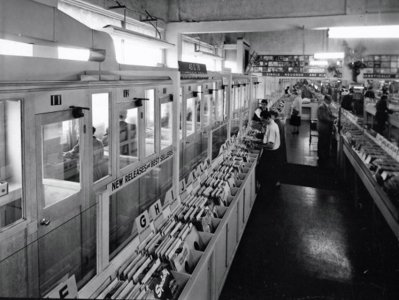
Many record stores had listening "booths" where you could sample tracks from albums.

The only store in Los Angeles with listening booths that I can think of by the time I started spending significant time in record stores (1968 onward) was Wallichs' Music City. They had 21 of them:

3..-Listening-Booths-inside-Wallichs.jpg

But Wallichs' opened in 1940---when listening booths were common.

The newer stores (Tower, The Wherehouse, Licorice Pizza, Peaches) didn't have them---but they and the smaller shops of the time (Crane's in Inglewood) would play albums in-store with a rack at the counter labelled "Now Playing" holding the album cover so if you heard something and wanted to know what it was, you could go look.

That's certainly a form of music discovery, and I did hear artists and albums that way that I wasn't previously aware of and I bought a few.

Rolling the dice on an album without any idea what it sounded like was a pretty big risk. $4.98 sounds like a minor gamble to us now, but the inflation calculator says that's equivalent to $44.84 today. Combine that with the fact that we weren't playing with full paychecks but allowances or after-school job money and choosing wisely really kinda mattered.

In recent years, I've used Apple Music to build a streaming library that has everything I owned on vinyl (that I didn't regret buying and that I still care to hear), and the albums that I wanted but couldn't afford or was curious about but never knew enough to know whether I should risk my money on the purchase. I've found a lot of gems I would have been happy with had I bought them, and an equal number of albums that I'm glad I didn't blow four days' lunch money on.
 
The only store in Los Angeles with listening booths that I can think of by the time I started spending significant time in record stores (1968 onward) was Wallichs' Music City. They had 21 of them:

View attachment 6342

But Wallichs' opened in 1940---when listening booths were common.

The newer stores (Tower, The Wherehouse, Licorice Pizza, Peaches) didn't have them---but they and the smaller shops of the time (Crane's in Inglewood) would play albums in-store with a rack at the counter labelled "Now Playing" holding the album cover so if you heard something and wanted to know what it was, you could go look.

That's certainly a form of music discovery, and I did hear artists and albums that way that I wasn't previously aware of and I bought a few.

Rolling the dice on an album without any idea what it sounded like was a pretty big risk. $4.98 sounds like a minor gamble to us now, but the inflation calculator says that's equivalent to $44.84 today. Combine that with the fact that we weren't playing with full paychecks but allowances or after-school job money and choosing wisely really kinda mattered.
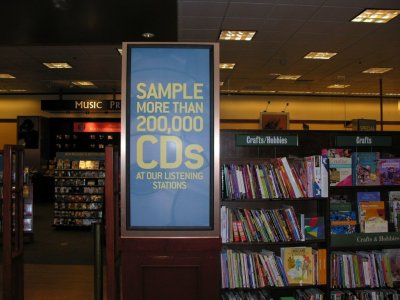
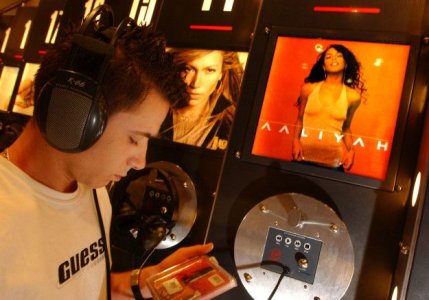
When I said "booths", I also meant just listening kiosks. Some were simply a pair of headphones on a wall. You could sample tracks from CDs.

The overall point was that Record stores were a place of lot people went to hang out and mingle with other music aficionados. In the 70s and 80s, people were still finding artists that were not on Radio playlists.
(Talking Heads, Cure, Elvis Costello, Smiths, Clash, etc...).
Music discovery was definitely happening in record stores and people were buying albums by artists they had not heard on the Radio...
 
Last edited:
When I said "booths", I also meant just listening kiosks. Some were simply a pair of headphones on a wall. You could sample tracks from CDs.

Right, and as BigA noted, that was a limited selection of available content chosen by the store (Barnes & Noble was the example used). I used those myself, and as I recall, you could only hear 30-45 second snippets of each track.

097717883a5e38b7c16b9296f1e46015.jpg

4664298dfb11c294b5b55cb75cb5c681.jpg

The overall point was that Record stores were a place of lot people went to hang out and mingle with other music aficionados. In the 70s and 80s, people were still finding artists that were not on Radio playlists (Talking Heads, Cure, Elvis Costello, Smiths, Clash, etc...). Music discovery was definitely happening in record stores...

Which I essentially said in my post. And I was one of those people. But we were vastly outnumbered by the people who came in to buy something they already knew they wanted, bought it and then left.
 
Right, and as BigA noted, that was a limited selection of available content chosen by the store (Barnes & Noble was the example used). I used those myself, and as I recall, you could only hear 30-45 second snippets of each track.

The kiosk thing came much later when mp3s were available. You have the same thing if you buy music at Amazon. You can hear a brief snippet of a song. Sometimes it's not the most recognizable part of the song. Hard to give credit for music discovery to something where the seller controls what you hear (not the artist or label). They were expensive to maintain, required the music sellers to do the work, and quite often didn't lead to actual sales. People would just listen and buy their music where it was cheaper.

Around that same time, we had the music industry complaining that those snippets should be subject to music royalties, and the retailers should pay for those clips. Ultimately that demand was shot down. But that was the thinking at that time, that music retailers should pay to give customers a free sample. Ultimately the big box retailers phased out physical sales of music because it took up too much square footage, and the margins were too low.
 
The kiosk thing came much later when mp3s were available. You have the same thing if you buy music at Amazon. You can hear a brief snippet of a song. Sometimes it's not the most recognizable part of the song. Hard to give credit for music discovery to something where the seller controls what you hear (not the artist or label). They were expensive to maintain, required the music sellers to do the work, and quite often didn't lead to actual sales. People would just listen and buy their music where it was cheaper.

Around that same time, we had the music industry complaining that those snippets should be subject to music royalties, and the retailers should pay for those clips. Ultimately that demand was shot down. But that was the thinking at that time, that music retailers should pay to give customers a free sample. Ultimately the big box retailers phased out physical sales of music because it took up too much square footage, and the margins were too low.
Millions of albums were sold in the 70s and 80s. Many of those were Rock artists who received very little Radio airplay. I mentioned a few in a previous post. MTV probably had just as much (if not more) impact on record sales than Radio. Certain artists that were featured round the clock on MTV got a huge boost.

Times are obviously much different now. Physical sales have been declining for many years (and record stores have disappeared). You can now listen to almost anything for free on You Tube. A lot of younger people do not care about audio quality and walk around with ear buds all day...
 
Millions of albums were sold in the 70s and 80s. Many of those were Rock artists who received very little Radio airplay.

You use that word "many" again, and it's really not true. There were lots of rock radio stations in the 70s & 80s, and radio promotion was an integral part of the record labels. The artists who got airplay on MTV also got airplay on the radio. More artists were heard on the radio than were seen on MTV. The artists who sold the most and filled the big arenas were the artists who received the airplay. Those artists continue to receive endless airplay today based on that airplay back then. The artists who received "very little radio airplay" also had very little record sales, and often got dropped from their label.

The difference between then and now is that the record labels worked together with radio to promote the music through airplay and live appearances. Artists did interviews with radio stations, and appeared at station events. These were all over the country, sponsored by radio stations like KROQ, KFOG, and WMMS.
 
Status
This thread has been closed due to inactivity. You can create a new thread to discuss this topic.


Back
Top Bottom