• Get involved.
    We want your input!
    Apply for Membership and join the conversations about everything related to broadcasting.

    After we receive your registration, a moderator will review it. After your registration is approved, you will be permitted to post.
    If you use a disposable or false email address, your registration will be rejected.

    After your membership is approved, please take a minute to tell us a little bit about yourself.
    https://www.radiodiscussions.com/forums/introduce-yourself.1088/

    Thanks in advance and have fun!
    RadioDiscussions Administrators

415 Bush Street - The KFRC Building

I didn't remember the street name so thanks for letting me know. Old downtown Burlingame probably doesn't look that much different than it did back then, though (for anyone who isn't familiar, Burlingame has two downtowns - the old one and the newer one).

Generally, when we stay overnight in the Bay Area, it's in Burlingame.

Breakfast at the Royal Donut Cafe' has become a habit: Royal Donut Cafe

Want great Italian food? Cafe Figaro every single time: "Café Figaro: Premier Italian Dining & Fine Wines in Burlingame" Burlingame Italian Restaurant
 
Over the past 10 or so years, San Francisco seems to have become more about Big Tech and LGBTQ+ than almost anything else (well, maybe homelessness, but does that really count? Virtually all cities across the US, big and small, have that problem in some form.)

Okay.

I get the point about the tech boom in the city. It's been a bastion of tolerance for different sexual identities since the beginning of the 1900s and it really solidified after World War II.

Those are things the city worked to become. Homelessness is a problem, and as you note, not a unique one to SF.


People seem to be largely forgetting that before the Tech Invasion of 2010 (as I tend to call the beginnings of the city's current self), SF had a very interesting history beyond the major bullet points (the hippie scene over at Haight-Ashbury, the 1967 Summer of Love, the 1906 earthquake, and the 1989 Loma Prieta earthquake, to name a few).

Setting aside quakes, which are just natural disasters, the thing that I've noticed about San Francisco (being old enough to spot the pattern) is that it's cyclical.

My first visit to SF was with my parents when I was seven.

I didn't get to go back again until I was 18. And I went with what I remembered from being there before---the stores and the theaters are on Market Street from Grant to Taylor.

Well, that was true in 1963, but less so in 1974. Within five minutes I was knocked down by a guy running across the street with a gun in his hand. And I got up just in time to see the guy who was chasing him, with a gun in his hand.

There's a reason all the Dirty Harry movies were set in San Francisco.

But today? I feel safe in San Francisco. Of course, I don't walk down Market Street or through the Tenderloin at 2:00 a.m. counting my money, but that's just common sense.

It's seen the Hippies in Haight-Ashbury and the Summer of Love, but it was also home to Jim Jones, Dan White, the SLA and the Zodiac Killer.

The only relevant question to ask in San Francisco is "What's next and when's it gonna get here?"


This KFRC story is a good example of the behind-the-scenes minutiae that time tends to forget about.

Radio stations are transient by nature...at least the big city ones that aren't in buildings at the transmitter site. I'm doing some volunteer work for the California Historical Radio Society and one of the things that keeps coming up in research and artifacts is that while some stations had long-ish stays in a given building, there's nothing about the building to hint at that today.

When you walk (stagger?) out the door of the Tonga Room into the hallway at the Fairmont, there's nothing that suggests that the door into the KSFO lobby was right in front of you for 27 years. Go around the block and there's nothing that suggests that One Nob Hill Circle was KYA for as long as that---and that before KYA moved in, KSFO was there.

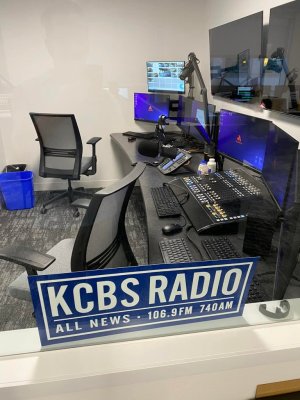
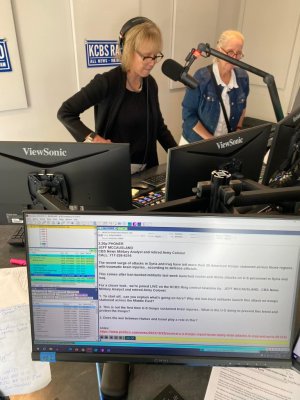
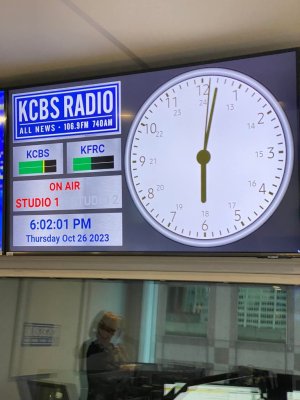
KCBS has been in four buildings in my lifetime---the Palace Hotel, Embarcadero Center, 855 Battery and now 88 Kearney.

What's remarkable is that KFRC's first home---the Don Lee Cadillac building on Van Ness---still stands:

 
Generally, when we stay overnight in the Bay Area, it's in Burlingame.

Breakfast at the Royal Donut Cafe' has become a habit: Royal Donut Cafe

Want great Italian food? Cafe Figaro every single time: "Café Figaro: Premier Italian Dining & Fine Wines in Burlingame" Burlingame Italian Restaurant
Both those places are great! I went to Royal Donut a lot and Figaro once. Also I always went to Asian Box for Vietnamese, Barracuda for Japanese and Rickshaw Corner for Thai in Foster City. There’s a really nice/fancy restaurant on the water called Kincaid’s that’s in Burlingame, too. Also the fish market/restaurant in San Mateo I can’t remember the name of is good too.

Well said about SF. I first visited in 1998 & went back in 1999 and then lived there/the Bay Area from 2014 until 2018. Haight-Ashbury near Amoeba didn’t change a bit that I could tell between 1998 and 2014.

I walked to and from KQED when I lived in the City and never got mugged and never felt unsafe in the Mission or anywhere else. I walked down Church Street at 5:30 in the morning and didn’t feel unsafe. I lived and worked in the City, East Palo Alto, South Bay and East Bay and never had a problem anywhere. I don’t dress flashy so when homeless people hit me up I just said I didn’t have cash and they left me alone.

I think people unfairly blame the tech workers for housing/cost of living problems when they should be blaming:

The industries which buy up apartments, even short term rentals, to provide housing for their workers,

The NIMBYs who stifle new apartment building heights because they think they’re owed a view of the Bay/the Pacific/the City/etc.

Proposition 13, which disincentivizes people from selling their property, because then it gets reassessed and retaxed at today’s valuation, rather than the valuation from 1979 (or whenever that Proposition was passed).
 
Last edited:
I think people unfairly blame the tech workers for housing/cost of living problems when they should be blaming:

The industries which buy up apartments, even short term rentals, to provide housing for their workers,

The NIMBYs who stifle new apartment building heights because they think they’re owed a view of the Bay/the Pacific/the City/etc.

Proposition 13, which disincentivizes people from selling their property, because then it gets reassessed and retaxed at today’s valuation, rather than the valuation from 1979 (or whenever that Proposition was passed).
You're probably right. I just don't like the tech industry very much, and the attitudes of many workers (and certainly the executives) leave me wanting to leave for a small town or some place where the people are friendlier.

Which reminds me of this anecdote:

When I was getting ready to visit NYC around this time in 2019, I was told by an acquaintance that the people are super rude there and I wouldn't like it. Everyone else I met said the same thing.

So I went, and to my surprise, I found that most of the people I met over there were actually rather polite. Granted I was in Times Square (probably the nation's biggest tourist trap), but I wandered beyond it a bit, going downtown to visit the WTC (and, of all the times I could've gone, they chose THAT week to shut the reflection pools down for maintenance), which was a very somber and heavy feeling place to be, knowing what happened there. Then I walked around Chelsea and Hell's Kitchen, then up around Central Park. Not once did I encounter any rude people.

So, that led me to conclude the following: Either the people of NYC aren't as rude as SF people think, or SF people are actually more rude.

Anyway, getting back to the quote:

The NIMBYism of the upper middle class is definitely problematic, not just in the City proper, but all over the Bay Area. Especially in upper scale areas (on the other side of the hills in the East Bay (where I've spent the majority of my life), Orinda, a wealthy SF suburb, is one such place. Lots of old money there, and LOTS of NIMBYism. Similar deal farther east and a bit south, in the upper class suburbs of Danville and San Ramon.

And I'm going to be honest about Prop 13: I benefit much from it, so it's hard for me to criticize it, but objectively, I will agree that it has its problems, and it does disincentivize people from selling, which is compounding and worsening the housing crisis.

c
 
Over the past 10 or so years, San Francisco seems to have become more about Big Tech and LGBTQ+ than almost anything else
Good thing I've never posted my picture here, or you might be throwing darts at it.

People seem to be largely forgetting that before the Tech Invasion of 2010 (as I tend to call the beginnings of the city's current self), SF had a very interesting history beyond the major bullet points (the hippie scene over at Haight-Ashbury, the 1967 Summer of Love, the 1906 earthquake, and the 1989 Loma Prieta earthquake, to name a few). This KFRC story is a good example of the behind-the-scenes minutiae that time tends to forget about.
I've experienced three booms in San Francisco: 1999, 2003 (approximate), and 2010. I've experienced the busts, too: pets.com, the Global Financial Crisis, and the pandemic. (To be clear, I didn't work at pets.com and, in fact, had the same San Francisco employer for 15 years, starting in 1999.)

An example: During and after the Global Financial Crisis, I was working for a while at Kearny & Post, taking an AC Transit bus in from Oakland to the old Transbay Terminal every day until a BART parking space opened up. On my way to work, I would walk on Mission Street past a hole in the ground, covered with gravel. A building was planned there. Construction stopped early in 2009 and the contractor poured the gravel on. Construction finally restarted in 2011. It's now the 555 Mission building. Deloitte's San Francisco offices are there.

The point: San Francisco is notorious for boom-and-bust cycles. Its modern history started with a boom and has gone on from there. It's also prone to natural disasters. Then it has to rebuild and reinvent itself.

I've often walked around areas such as north of Market, North Beach, and other places where the most recent building boom hasn't really reached, and wondered, "what would it have been like to live here in the 1950s" (or the 1960s)...really, the last time San Francisco had many middle-class and working-class neighborhoods. Retired Supreme Court justice Stephen Breyer grew up in the city then. I'd love to ask him what it was like.

But then again, we don't get to choose our time. Instead we get to make the most of our time. I wish I had moved to San Francisco sooner, but the stars didn't align for that until the end of the last century. I appreciate history, enjoy history, and love to do historical research, but I don't want to live in the past. Every time has its awfulness...which people tend to forget. It's probably a survival mechanism that hard-wires us to think the present is worse than the past.

I will say that the area along Bush atop the Stockton tunnel is one of my favorite areas of the city, because it has changed very little other than the city parking garage. Just being there feels like San Francisco. Based on what I saw last week, the Waymo cars seem to like it a lot, too.

I get the point about the tech boom in the city. It's been a bastion of tolerance for different sexual identities since the beginning of the 1900s and it really solidified after World War II.
That said, there were nasty police raids in the 1950s that left a legacy of distrust that may still not be fully dispelled, even today, despite SFPD's best efforts.

The only relevant question to ask in San Francisco is "What's next and when's it gonna get here?"
And "how much is it going to cost?" :unsure:
Radio stations are transient by nature...at least the big city ones that aren't in buildings at the transmitter site. I'm doing some volunteer work for the California Historical Radio Society and one of the things that keeps coming up in research and artifacts is that while some stations had long-ish stays in a given building, there's nothing about the building to hint at that today.
Of the commercial stations I've worked for (none in the Bay Area):
First one: still at its original 1949 transmitter site.
Second one: a vacant lot. Before that, a used appliance store.
Third one: an auto repair shop.
Fourth and last one: condos.

Radio is an ephemeral business.

Even better...digging through the newspaper.com archive, I discovered that my apartment in the Castro had once been the temporary home of a dry-cleaning establishment displaced by the 1906 earthquake and fire.

KCBS has been in four buildings in my lifetime---the Palace Hotel, Embarcadero Center, 855 Battery and now 88 Kearney.
I didn't know KCBS was at 88 Kearny now. That's pretty darn close to the Palace Hotel!

In 1999, I had to take over some paperwork to my new employer to get payroll started. So I walked over from my work location, then south of Market, to the payroll department. At 88 Kearny.

Moreover, when I ended up with an office at 120 Kearny...by that time, I was a managing director and had an office, not a cubicle...I was on the south side of the building and could look directly into the windows at 88. In those days, Citibank had most of the building. I could look right across and see someone who I think was a trader. He was the first person I saw who had three computer monitors going at once. That's why I thought he was a trader.

If you don't like San Francisco now, wait a few years. There's an essential part of it that won't change much but a lot of other things that will.

 
Good thing I've never posted my picture here, or you might be throwing darts at it.
Ah, no offense intended if you belong to either of those groups! I'm quite tolerant as long as things don't turn violent or anything.

Now that you mention it, I'm curious now.... *dare I ask?* :)

Yes, San Francisco definitely has its booms and busts. We'll see what it's like in a few years, after the new mayor, who seems to be doing a decent job so far, gets to make his mark (the previous mayor wasn't very good, in my opinion, and didn't do much to help SF's image during the last few "bust" years).

c
 
That said, there were nasty police raids in the 1950s that left a legacy of distrust that may still not be fully dispelled, even today, despite SFPD's best efforts.

That was a blind spot in my historical knowledge. I'll read up on that.

And "how much is it going to cost?" :unsure:

Absolutely.

I didn't know KCBS was at 88 Kearny now. That's pretty darn close to the Palace Hotel!

It'll be two years next month. Audacy has the entire 10th floor. There were a ton of photos on social media at the time, but I can only find a couple now, from their first day (October 26, 2023):

490540919_9487326664678533_2828174750153031600_n.jpg

490343828_9487326474678552_8184916162469581798_n.jpg

490495235_9487326478011885_550976545697335583_n.jpg


If you don't like San Francisco now, wait a few years. There's an essential part of it that won't change much but a lot of other things that will.

Exactly. And, because the city is so compact (47 square miles), there's an immediacy to the change that you don't feel living in a more sprawling city like L.A.


Back
Top Bottom