CKLW was Fake Drake under Paul Drew for 4 months before it became "real Drake"Within 7 years, it was all but over. The Fake Drakes were thick on the ground by '66 and '67---one to two years after KHJ's launch.
Seven years would be '72, and at that point, stations were trying to clone KCBQ.

-
Get involved.
We want your input!
Apply for Membership and join the conversations about everything related to broadcasting.
After we receive your registration, a moderator will review it. After your registration is approved, you will be permitted to post.
If you use a disposable or false email address, your registration will be rejected.
After your membership is approved, please take a minute to tell us a little bit about yourself.
https://www.radiodiscussions.com/forums/introduce-yourself.1088/
Thanks in advance and have fun!
RadioDiscussions Administrators
You are using an out of date browser. It may not display this or other websites correctly.
You should upgrade or use an alternative browser.
You should upgrade or use an alternative browser.
93 KHJ Radio Aircheck
- Thread starter oldies76
- Start date
Don’t get me wrong, I love what Drake did with KHJ. Clearly in 1965, Boss Radio sounded better than KFWB or KRLA.
But RKO was lucky that their competition suffered from inferior signals and poor ownership. That definitely helped KHJ defeat KRLA, KFRC over KYA and WRKO over WMEX.
The one market where RKO did not dominate during the Drake years was Memphis. Although WHBQ was successful, they were often behind top 40 competitor WMPS which had a better signal and stable ownership with Plough.
WHBQ finally defeated WMPS when Rick Dees was fired from WMPS and went to WHBQ. I would argue that when John Long was PD of WHBQ in the late 1970s, they sounded better than any of their sister RKO stations including KHJ.
But RKO was lucky that their competition suffered from inferior signals and poor ownership. That definitely helped KHJ defeat KRLA, KFRC over KYA and WRKO over WMEX.
The one market where RKO did not dominate during the Drake years was Memphis. Although WHBQ was successful, they were often behind top 40 competitor WMPS which had a better signal and stable ownership with Plough.
WHBQ finally defeated WMPS when Rick Dees was fired from WMPS and went to WHBQ. I would argue that when John Long was PD of WHBQ in the late 1970s, they sounded better than any of their sister RKO stations including KHJ.

When Drake and Jacobs took over KHJ, the ratings were done by Pulse and Hooper and did not include anything in the OC and also did not include most of the "Valleys" (both of which were much smaller in population). So signal was not an issue.But RKO was lucky that their competition suffered from inferior signals and poor ownership. That definitely helped KHJ defeat KRLA, KFRC over KYA and WRKO over WMEX.
The same applied to San Francisco. KYA and KFRC had signal parity in the rated areas. It was not really until the 70's that Arbitron became dominant and the MSAs were much larger than the Pulse and Hooper ones, favoring signal.
Having been a KHJ PD for three miserable years, I can say that the KFWB signal was in many ways better than KHJ. KFWB is non-directional, and while located in a lower ground conductivity site, it is not directional at night. KHJ's signal at night to the SF Valley was less strong and even in Glendale and Pasadena it was kind of "ratty".
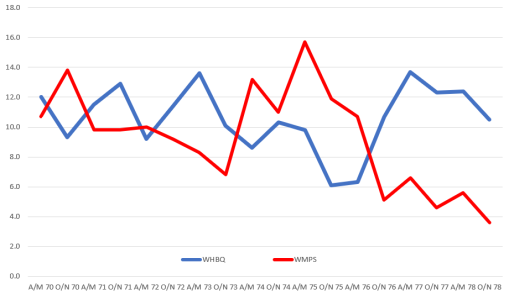
From the time of the introduction of the Drake approach through around 1973, WHBQ pretty consistenly beat WMPS, but the battle was quite close at times. In 1974, WMPS was strongly the winner, but by laate 1975 it was back to being behind 560. In '77 and '78, it was WHBQ almost 3 to 1 over WMPS.The one market where RKO did not dominate during the Drake years was Memphis. Although WHBQ was successful, they were often behind top 40 competitor WMPS which had a better signal and stable ownership with Plough.
Of course, in the 60's and 70's almost all the time WDIA was ahead of either of them. Again, in the pre-Arbitron dominance years, the survey area did not disfavor either Top 40 station, even at night.
Remember, Dees was in Birmingham well into the 70's and it was not until 1974 that his morning show on WMPS swung the ratings strongly towards them. In late 1976, suddenly WHBQ jumped way up and WMPS collapsed. In 1979, Dees went to LA and both WMPS and WHBQ were over bby then. In 1980, both averaged in the high 3's or low 4's in share, while WHRK on FM was nearly always #1 and in the double digits from 1980 till around 2002.WHBQ finally defeated WMPS when Rick Dees was fired from WMPS and went to WHBQ. I would argue that when John Long was PD of WHBQ in the late 1970s, they sounded better than any of their sister RKO stations including KHJ.
This is an interesting story! Dees once "thanked" me for making him leave WSGN in Birmingham, but I had never looked at "the rest of the story."
WMEX‘s signal was definitely inferior to WRKO anywhere in Boston. I’d still argue KHJ had a better signal all around in Los Angeles than KRLA and that 1110’s license issues kept them from being the competitor that an ABC or Storz or Plough would’ve been.
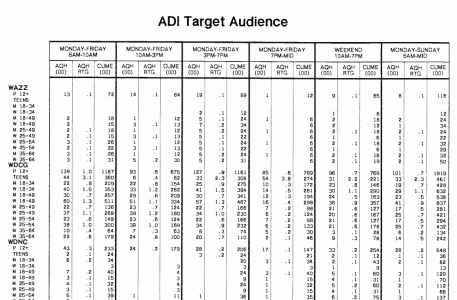
There is a mention in a Jan. 1975 R&R that Arbitron would soon be providing radio numbers for metro, TSA and ADI. Assume the ADI part never actually happened as I’ve never seen ADI ratings except maybe come numbers at one time.
As for Memphis, I don’t have any numbers from the 1960s at hand, but it was truly a close race between WMPS and WHBQ from 1970 until the late 1970s.
F1970 WMPS—13.8; WHBQ—9.3
S1972 WMPS—10.0; WHBQ—9.2
S1973 WHBQ—13.6; WMPS—8.3
S1974 WMPS–13.2; WHBQ—8.6
WMPS morning man in 1973/74 was Bob McClain who was the market’s first wacky dj with lots of pre recorded bits and voices. When Rick Dees replaced him in Aug 1974, I remember people saying, “he’s funny, but he’s no Bob McClain.”
In Spring of 1975 with Dees, WMPS had a 15.7 beating WDIA’s 12.1. WHBQ had a 9.8.
Spring of 1978 with Dees now at WHBQ, they had a 12.4, also beating WDIA’s 10.6. WMPS had only a 5.6 and would switch from top 40 to country.
There is a mention in a Jan. 1975 R&R that Arbitron would soon be providing radio numbers for metro, TSA and ADI. Assume the ADI part never actually happened as I’ve never seen ADI ratings except maybe come numbers at one time.
As for Memphis, I don’t have any numbers from the 1960s at hand, but it was truly a close race between WMPS and WHBQ from 1970 until the late 1970s.
F1970 WMPS—13.8; WHBQ—9.3
S1972 WMPS—10.0; WHBQ—9.2
S1973 WHBQ—13.6; WMPS—8.3
S1974 WMPS–13.2; WHBQ—8.6
WMPS morning man in 1973/74 was Bob McClain who was the market’s first wacky dj with lots of pre recorded bits and voices. When Rick Dees replaced him in Aug 1974, I remember people saying, “he’s funny, but he’s no Bob McClain.”
In Spring of 1975 with Dees, WMPS had a 15.7 beating WDIA’s 12.1. WHBQ had a 9.8.
Spring of 1978 with Dees now at WHBQ, they had a 12.4, also beating WDIA’s 10.6. WMPS had only a 5.6 and would switch from top 40 to country.

What people tend to get wrong is that none of Drake's wins were knockouts in the first round. Even WMEX stayed in format until 1975. KRLA was a significant threat to KHJ through 1969, and as we discussed in the San Francisco forum, KYA not only fended off, but beat KFRC in some timeslots---keeping KFRC's margin of victory down to a point or less, up until 1971.Don’t get me wrong, I love what Drake did with KHJ. Clearly in 1965, Boss Radio sounded better than KFWB or KRLA.
But RKO was lucky that their competition suffered from inferior signals and poor ownership. That definitely helped KHJ defeat KRLA, KFRC over KYA and WRKO over WMEX.
The one market where RKO did not dominate during the Drake years was Memphis. Although WHBQ was successful, they were often behind top 40 competitor WMPS which had a better signal and stable ownership with Plough.
WHBQ finally defeated WMPS when Rick Dees was fired from WMPS and went to WHBQ. I would argue that when John Long was PD of WHBQ in the late 1970s, they sounded better than any of their sister RKO stations including KHJ.
Not in the Pulse and Hooper survey areas. Back then, think about how the survey area was, in most cases, only the area that was a tool-free local call from "downtown"WMEX‘s signal was definitely inferior to WRKO anywhere in Boston.
Again, in the survey area the much higher power of KRLA made it better in those zones, and it was vastly better towards the north at night. Remember, the survey area was much smaller than what Arbitron introduced, but it took 7 to 8 years for agencies to start really preferring Arbitron.I’d still argue KHJ had a better signal all around in Los Angeles than KRLA and that 1110’s license issues kept them from being the competitor that an ABC or Storz or Plough would’ve been.
Those happened, but unless someone has the actual printed books, the data is not preserved anywhere except a university library in Atlanta. In any case, agencies seldom used anything except the Metro Survey Area.There is a mention in a Jan. 1975 R&R that Arbitron would soon be providing radio numbers for metro, TSA and ADI. Assume the ADI part never actually happened as I’ve never seen ADI ratings except maybe come numbers at one time.
I am still confused as to why Arbitron kept the "MSA" definition since the Census and OMB had their own "MSA" which was the Metropolitan Statistical Area and the two were and are often quite different.
"Huff" has the Memphis data going back to the mid-60's and perhaps he can detail the sequence.
It does seem like history has been written to say that Drake, especially in L.A., won immediately.What people tend to get wrong is that none of Drake's wins were knockouts in the first round. Even WMEX stayed in format until 1975. KRLA was a significant threat to KHJ through 1969, and as we discussed in the San Francisco forum, KYA not only fended off, but beat KFRC in some timeslots---keeping KFRC's margin of victory down to a point or less, up until 1971.
You would never think KRLA in their heavy automation period was any threat to KHJ.
I would think that in some markets (Detroit, St. Louis etc,) where the cities experienced an exodus in the 1960s and the suburbs expanded way out that R&B stations would've done better in Hooper or Pulse than Arbitron.Not in the Pulse and Hooper survey areas. Back then, think about how the survey area was, in most cases, only the area that was a tool-free local call from "downtown"
It is too bad that historic ratings aren't easier to obtain. Before the 1970s, when you start seeing them in various trades, the only numbers I've ever see is the occasional Claude Hall mention of a station or dj in Billboard.

Which exactly why I've spent the last 20+ years cataloging them all, with much credit due to James Duncan's incomparable American Radio volumes.I would think that in some markets (Detroit, St. Louis etc,) where the cities experienced an exodus in the 1960s and the suburbs expanded way out that R&B stations would've done better in Hooper or Pulse than Arbitron.
It is too bad that historic ratings aren't easier to obtain. Before the 1970s, when you start seeing them in various trades, the only numbers I've ever see is the occasional Claude Hall mention of a station or dj in Billboard.
Also, Arbitron did eventually print ADI data in market reports, though it was only one set of data at the very back of the book... I've never encountered anyone who ever actually cared about the ADI data for radio.
Attachments
I think it's human nature to think once you hit number one, you win.It does seem like history has been written to say that Drake, especially in L.A., won immediately.
You would never think KRLA in their heavy automation period was any threat to KHJ.
I agree with your disappointment in the availability of consistent rating numbers before the 70s. Here's what I've been able to scrape together over the years:
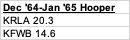
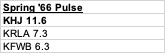
Sure, both KRLA and KFWB have taken a hit after a year of KHJ, but their share combined beats KHJ's.
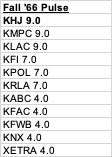
Same in the fall of '66.
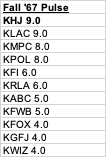
...and in the fall of '67, though it gets debatable here whether KFWB is still really in competition with KHJ. But KRLA is only 3 points back and tied for 5th---it's not a blowout.
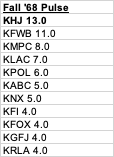
Fall '68, with KFWB all-news. KRLA's in the tank.
(more)
Fall of '69, and KRLA makes a comeback---best numbers in years:
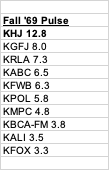
But KRLA's management blows up the PD, KRLA falls to a 4.0 in the fall of '70 and it's all downhill from there.
Still, that's four and a half years of, with the exception of fall '68, KRLA putting up a credible fight.
But KRLA's management blows up the PD, KRLA falls to a 4.0 in the fall of '70 and it's all downhill from there.
Still, that's four and a half years of, with the exception of fall '68, KRLA putting up a credible fight.
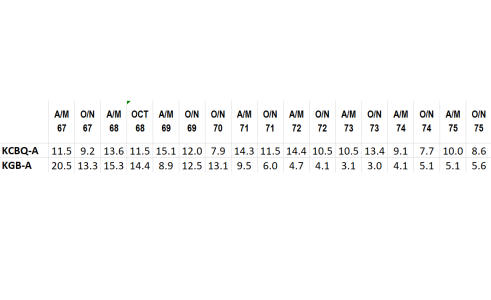
I don’t have numbers for it, but people who were there tell me San Diego was a see-saw battle between KGB (Drake consulted but not RKO-owned) and KCBQ from 1964-1972.
You would never think KRLA in their heavy automation period was any threat to KHJ.
And it wasn’t. That was the fall ‘68 book.
From air checks I’ve heard, KRLA sounded much better in 1969. I especially like Dick Sainte in the afternoon, who was a good competitor against RDS and later did weekends at KHJ.
I love seeing the ratings for KMPC. In addition to 1960s ratings info, I wish there were more 710 air checks especially from the 1960s.
One can credibly argue what was the best top 40 (KHJ, WLS, WFIL etc.) or best AOR (KMET, KSAN, KSHE etc.) but I don’t think KMPC has any legitimate competition for all time best MOR, except maybe sister station KSFO.
I love seeing the ratings for KMPC. In addition to 1960s ratings info, I wish there were more 710 air checks especially from the 1960s.
One can credibly argue what was the best top 40 (KHJ, WLS, WFIL etc.) or best AOR (KMET, KSAN, KSHE etc.) but I don’t think KMPC has any legitimate competition for all time best MOR, except maybe sister station KSFO.

When I visited LA with family in ‘77, KRLA sounded pretty weak IMO. Just seemed a bit lost. This was the period of 10Q, a somewhat short lived but great sounding station. But KHJ still sounded very good.
It was back and forth in '69 and '70 as KCBQ overtook KGB.I don’t have numbers for it, but people who were there tell me San Diego was a see-saw battle between KGB (Drake consulted but not RKO-owned) and KCBQ from 1964-1972.
Attachments
Where did WNEW-AM fit back then? Or late 1960s WNBC? I've heard some tape from mid 1970s WNEW, and it was more in the 'Chicken Rock' style of AC then the Adult Standards format it evolved into later.From air checks I’ve heard, KRLA sounded much better in 1969. I especially like Dick Sainte in the afternoon, who was a good competitor against RDS and later did weekends at KHJ.
I love seeing the ratings for KMPC. In addition to 1960s ratings info, I wish there were more 710 air checks especially from the 1960s.
One can credibly argue what was the best top 40 (KHJ, WLS, WFIL etc.) or best AOR (KMET, KSAN, KSHE etc.) but I don’t think KMPC has any legitimate competition for all time best MOR, except maybe sister station KSFO.
I have found that when listening to airchecks of 10-Q, I never need to drink espresso, Redbull or Rock Star.When I visited LA with family in ‘77, KRLA sounded pretty weak IMO. Just seemed a bit lost. This was the period of 10Q, a somewhat short lived but great sounding station. But KHJ still sounded very good.

In the 60's, WNEW (AM) was a *great* MOR station, absolutely top-notch personalities and (if you were into their styles of music) a wonderful mix of big band, jazz and Great American Songbook music. Gene Klavan (both with his partner Dee Finch and after Finch had to retire for health reasons) was a tour-de-force in Morning Drive. But yes, they lost their way for a decade or so in the 70's. I had the privilege of getting a tour of, and observing, WNEW one afternoon in late '67, and it was different from any station I'd seen before or since, with a physical facility on Fifth Avenue and 45th Street that harkened back to the golden era of radio.Where did WNEW-AM fit back then? Or late 1960s WNBC? I've heard some tape from mid 1970s WNEW, and it was more in the 'Chicken Rock' style of AC then the Adult Standards format it evolved into later.
WNBC (AM) was an early call-in talk station for a number of years in the 60's, and that format got scrapped for, to use your term, Chicken Rock until Don Imus got there in late 1971. Then it started to evolve into a real Top 40-heavy AC station. (Maybe "Hot AC" is a better description, before the term was coined.) But they never broke out of the shadow of WABC, probably because NBC management kept its fingers too deeply in their flagship station, and because they burdened them with network commitments like the hourly news. (WABC had that commitment too, but ABC had broken into 4 sub-networks by then, so the Contemporary Network 'casts sounded less burdensome than the ponderous 'casts from The NBC Radio Network.)
- Status
- This thread has been closed due to inactivity. You can create a new thread to discuss this topic.