That is a corollary to "the older I get the less I realize I know".But ignorance is definitely an excuse for getting old. If we knew more when young, we'd figure out some way not to ever get old!

That is a corollary to "the older I get the less I realize I know".But ignorance is definitely an excuse for getting old. If we knew more when young, we'd figure out some way not to ever get old!
WMEX continued to hang on (and even seriously challenge WRKO in 1971 under PD John Garabedian), but they did drive WBZ out of the format in rather short order. WRKO went top 40 in March '67, and by fall WBZ had already begun making changes (and Drake didn't even take control there until that fall), and had gone MOR in early 1968. And this was with a superior signal to WRKO. What hurt WBZ is that their airstaff was all over 30 and sounded it.What people tend to get wrong is that none of Drake's wins were knockouts in the first round. Even WMEX stayed in format until 1975.
I think it's fascinating and strange that KWIZ shows up in 1967 as that station, then as now, puts no signal in in LA day or night. Its 5 kW directional signal essentially covers only OC, portions of Long Beach, the far eastern SGV, and limited portions of the far western IE.I think it's human nature to think once you hit number one, you win.
I agree with your disappointment in the availability of consistent rating numbers before the 70s. Here's what I've been able to scrape together over the years:
View attachment 4349
View attachment 4350
Sure, both KRLA and KFWB have taken a hit after a year of KHJ, but their share combined beats KHJ's.
View attachment 4351
Same in the fall of '66.
View attachment 4352
...and in the fall of '67, though it gets debatable here whether KFWB is still really in competition with KHJ. But KRLA is only 3 points back and tied for 5th---it's not a blowout.
View attachment 4353
Fall '68, with KFWB all-news. KRLA's in the tank.
(more)
K-100, I think you mean KIQQ...In ‘77, KRLA was several lifetimes away from the station that had competed against Drake-era KHJ.
In fall 1971, Shadoe Stevens was named PD and took them essentially album rock. He and that approach lasted about a year.
Sixties-era KRLA jock/PD Reb Foster came in to try to right the ship with a risky attempt at predicting the hits—-“Future Rock”. It lasted three or four months.
In the spring of ‘73, KRLA went AC with two-man shows. They could only afford three of them (six jocks total), so the shows were live for 12 hours and then played back for 12 hours.
A few months later, that was scrapped and the whole station automated. Johnny Hayes and Evan Haning were the only voices.
In late 1976, former KHJ jock Billy Pearl and business partner Tom Greenleigh took over KRLA’s programming. It was still automated, but the music was focused and they were giving away money on the street. They beat KHJ in the winter ‘76/‘77 Arbitron, were hired away by K-100, where Bill Drake’s contract had just expired and KRLA slunk again into obscurity. And Pearl and Greenleigh flopped at K-100.
But in Arbitron, all those cities and areas were part of the LA Metro Survey Area.I think it's fascinating and strange that KWIZ shows up in 1967 as that station, then as now, puts no signal in in LA day or night. Its 5 kW directional signal essentially covers only OC, portions of Long Beach, the far eastern SGV, and limited portions of the far western IE.
I used to listen to them on a transistor radio in Inglewood in the 60s.I think it's fascinating and strange that KWIZ shows up in 1967 as that station, then as now, puts no signal in in LA day or night. Its 5 kW directional signal essentially covers only OC, portions of Long Beach, the far eastern SGV, and limited portions of the far western IE.
Same station, same call letters, different positioner.K-100, I think you mean KIQQ...
Have seen the current values system, and sorry, that is going to have to be a pass.I love the recollection of AM TOP 40. It was indeed a fabulous time. But this fabulous time is now 45 years old! Time to move on for us over 60. We can live in the past and enjoy it (nothing wrong with that) but realize we are now in a different era. How we over 60 accept the current values is important. If you don’t you will probably struggle.
David, are/were you familiar with Foreign Exchange lines?But in Arbitron, all those cities and areas were part of the LA Metro Survey Area.
And even when all the market had was Pulse and Hooper, the survey area was "Metro LA" that included all the suburbs that were toll free calls... so that included Glendale, Pasadena, Burbank, Long Beach and the areas that were just then starting to grow in the western SGV.
Yes, a physical connection into a distant exchange.David, are/were you familiar with Foreign Exchange lines?
If Pulse or Hooper lacked any office presence in some/most of the markets they surveyed, then yes, FX lines would have been exorbitant. But they could have subcontracted with persons who lived outside the core zones to outcall to other nearby communities that were non-toll for them. For instance, taking the NYC market, a sub living in Farmingdale could have called to W. Suffolk/E. Nassau numbers, another in Stamford could have hit Fairfield County CT, another one in West Orange maybe hits Union/Bergen Counties in NJ, etc. Not disputing that they didn't sell their services that way, but if they had wanted to be creative, there were possibilities that wouldn't have broken the bank. And had they done that, it's possible Arbitron might not have gotten the toehold and gained traction the way it did, destroying both other ratings companies in the process.Yes, a physical connection into a distant exchange.
But the Pulse and Hooper surveys did not have local offices in each market to do surveys from. And they did not have lines out of New York into each market, as I'm sure you know the costs of those.
They subcontracted with individuals that used home phones to do the calls. The survey areas were defined as being the "Central Zone"
And surveys were not done continuously. They were done in larger markets usually twice a year for 4 weeks (or less) so installing a line would not have been cost effective.
Pulse and Hooper had sales presence in various large agency centers, but the surveys themselves were done by local contract labor. They had meeting sessions, usually in the office of the company that did the local field work and then the people either used a phone bank at that center or used home phones.If Pulse or Hooper lacked any office presence in some/most of the markets they surveyed, then yes, FX lines would have been exorbitant. But they could have subcontracted with persons who lived outside the core zones to outcall to other nearby communities that were non-toll for them. For instance, taking the NYC market, a sub living in Farmingdale could have called to W. Suffolk/E. Nassau numbers, another in Stamford could have hit Fairfield County CT, another one in West Orange maybe hits Union/Bergen Counties in NJ, etc. Not disputing that they didn't sell their services that way, but if they had wanted to be creative, there were possibilities that wouldn't have broken the bank.
Arbitron achieved its dominance because they serviced agencies as much as they serviced stations. Once most agencies used Arbitron, stations cancelled Pulse and Hooper.And had they done that, it's possible Arbitron might not have gotten the toehold and gained traction the way it did, destroying both other ratings companies in the process.
And ratings, even now, do only as much as stations can afford to pay for.There's an expression in engineering -- I heard it from Admiral Grace Murray Hopper (Google the name) -- that there's a cost to doing something, but there's also a cost to not doing it. And often it's the "not doing it" cost that kills you. I never forgot that.

i guess you had a really selective radio with KTYM 1460 right in your backyard !I used to listen to them on a transistor radio in Inglewood in the 60s.
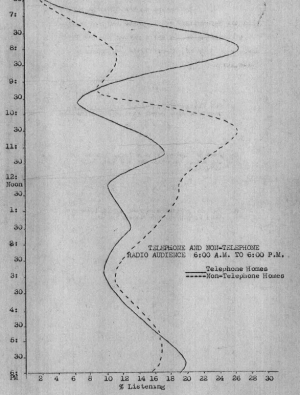
Interestingly, The Pulse's last ratings report ever issued was for San Juan, PR, around 1978 IIRC (I have the book somewhere, I think). It was done only door to door.Pulse originated in New York City in 1941 as an alternative to Crossley's telephone surveys by adding door-to-door research - there were still a lot of households without telephones. They found much different listening trends between interviews conducted over the phone and interviews conducted door-to-door, with more listening during the day for non-phone homes, though less in early mornings. (see attached)
Pulse continued to use a hybrid of telephone and door-to-door interviews into the 60s. The in-person surveying was obviously more time-consuming, more expensive and kept the survey area to a much more confined area of the city.
Eight dollar pocket transistor. We lived five miles due south of the stick. As the crow flies, it was only 25 miles to the KWIZ stick. At 5kw, not that hard.i guess you had a really selective radio with KTYM 1460 right in your backyard !
Ha Ha...I see you were at the dead end of the antenna !...most of K-Time's daytime pattern is aimed north toward the SFV where it's actually very strong ! Funny now that KVEN 1450 Ventura no longer exists KTYM could probably modify their pattern and crank their daytime power up to 50 kw. But even if their signal covered Ventura county would anybody listen...they're a religious station broadcasting in Spanish...oh well...Eight dollar pocket transistor. We lived five miles due south of the stick. As the crow flies, it was only 25 miles to the KWIZ stick. At 5kw, not that hard.
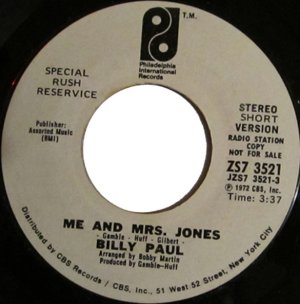
Heres another fascinating KHJ air check from 1973. Was it a common practice to cut into longer songs back then? I noticed this on “Me and Mrs Jones” and “Photograph”?