
No, but I do wish Mix all the best.Why is that unfortunate though? Do you want a different format or something?

-
Get involved.
We want your input!
Apply for Membership and join the conversations about everything related to broadcasting.
After we receive your registration, a moderator will review it. After your registration is approved, you will be permitted to post.
If you use a disposable or false email address, your registration will be rejected.
After your membership is approved, please take a minute to tell us a little bit about yourself.
https://www.radiodiscussions.com/forums/introduce-yourself.1088/
Thanks in advance and have fun!
RadioDiscussions Administrators
You are using an out of date browser. It may not display this or other websites correctly.
You should upgrade or use an alternative browser.
You should upgrade or use an alternative browser.
96.1 Now has flipped to Mix 96.1
- Thread starter saradio1
- Start date
iHeart would disagree with you.I doubt the format will succeed long-term without tweaks to more English 80s & 90s titles.
Below is a snippet from the census. One point that stands out is the number of Spanish speakers is shrinking in SA.
- 2013–2017: Just over 33% of people over the age of five spoke Spanish at home
- 2018–2022: 30.8% of people over the age of five spoke Spanish at home
iHeart would disagree with you.
Not sure how it did in the demos, but the 6+ ratings in its first month were down about half a point from its last book as a CHR, which was a little high relative to the previous year. The 6+ numbers were, overall, about flat.

That does not match the Nielsen "Spanish Dominant" figure, which is well below 20% of all Metro Survey Area Hispanics.I doubt the format will succeed long-term without tweaks to more English 80s & 90s titles.
Below is a snippet from the census. One point that stands out is the number of Spanish speakers is shrinking in SA.
- 2013–2017: Just over 33% of people over the age of five spoke Spanish at home
- 2018–2022: 30.8% of people over the age of five spoke Spanish at home
With less than 20% of Hispanics being Spanish dominant, those other nearly 85% will not likely listen to a station with any Spanish talk or music.
Remember, in multi-generational Hispanic homes, Spanish may be used to speak to the oldest generation, but it is not the language of the younger one or younger ones. We speak Spanish to grandma (Que Dios la bendiga), but not among the kids and their parents today.
With the return of Q101.9 regular programming. I don't see Mix 96.1 gaining traction.Not sure how it did in the demos, but the 6+ ratings in its first month were down about half a point from its last book as a CHR, which was a little high relative to the previous year. The 6+ numbers were, overall, about flat.
One thing that KONO offers is the "Wow" factor to its playlist. Meaning they play songs from the 80s that no other station in SA airs. Who else in SA plays Right Said Fred- I'm too sexy, En Vogue-My Lovin' Milli Vanilli- Blame It on the Rain and Girl You Know It's True, and others?
Right Said Fred: I'm too Sexy
Robert Douglas
Banned
Purely anecdotal: I'm not a people watcher, I'm a people listener. I walk the North Star mall in S.A. daily for exercise. People of all ages are speaking Spanish. You don't hear that much English.That does not match the Nielsen "Spanish Dominant" figure, which is well below 20% of all Metro Survey Area Hispanics.
With less than 20% of Hispanics being Spanish dominant, those other nearly 85% will not likely listen to a station with any Spanish talk or music.
Remember, in multi-generational Hispanic homes, Spanish may be used to speak to the oldest generation, but it is not the language of the younger one or younger ones. We speak Spanish to grandma (Que Dios la bendiga), but not among the kids and their parents today.
The new 96.1, like so many radio stations, is a bit distorted, but the songs and the memories with them are really great.
Remember, that particular mall is a favorite for Mexicans visiting the U.S. Fewer than you would expect go to Houston; that city is too big and more expensive. The border is fine for occasional shopping by those close by, but San Antonio is more of a destination.Purely anecdotal: I'm not a people watcher, I'm a people listener. I walk the North Star mall in S.A. daily for exercise. People of all ages are speaking Spanish. You don't hear that much English.
The new 96.1, like so many radio stations, is a bit distorted, but the songs and the memories with them are really great.
And another reason why you likely hear more Spanish: Families like mine tend to do things in groups... family, friends, coworkers. And they socialize while out visiting, shopping and eating.
A major destination for Mexican shoppers are the Premium and Tanger Outlet centers in San Marcos. Every time we visit there it is fascinating to walk through the parking lots to see the large number of cars with Mexican license plates, some from states deep within the country, not just the border region.Remember, that particular mall is a favorite for Mexicans visiting the U.S.
Also interesting to see some of the car brands with those Mexican plates, as there are many types of vehicles that are not sold in the U.S. We’ve noticed a recent increase in Chinese autos which are becoming more common in Mexico.
Some markets with sizable Hispanic populations just have a Rhythmic Contemporary station with no true CHR - Top 40 outlet.
--Fresno has two Rhythmic stations in its top 10 but no true Top 40 - CHR.
--El Paso also has two Rhythmic stations in its top 10. One is in the U.S. and one is in Mexico but broadcasts in English and Spanish.
--McAllen-Brownsville only has a Rhythmic station, which is usually #1. But of course, that's the most Latino market in the U.S. Nielsen says its Hispanic population is 93%! Could that be true?
--For many years Denver only had KQKS, a rhythmic station. In 2021, iHeart flipped its own underperforming rhythmic station, KPTT, to KDHT, a mainstream Top 40 outlet.
--Fresno has two Rhythmic stations in its top 10 but no true Top 40 - CHR.
--El Paso also has two Rhythmic stations in its top 10. One is in the U.S. and one is in Mexico but broadcasts in English and Spanish.
--McAllen-Brownsville only has a Rhythmic station, which is usually #1. But of course, that's the most Latino market in the U.S. Nielsen says its Hispanic population is 93%! Could that be true?
--For many years Denver only had KQKS, a rhythmic station. In 2021, iHeart flipped its own underperforming rhythmic station, KPTT, to KDHT, a mainstream Top 40 outlet.
Remember, that particular mall is a favorite for Mexicans visiting the U.S. Fewer than you would expect go to Houston; that city is too big and more expensive. The border is fine for occasional shopping by those close by, but San Antonio is more of a destination.
When I was a teenager, I used to shop at Windsor Park Mall in the summers. It was a melting pot of all kinds of people, and, due at least in-part to the large military population, you heard plenty of East and West Coast accents in addition to more traditional Texas twang and Mexican Spanish. Last time I was there, Windsor Park was a decaying empty hulk of a structure. If you look at the malls, you can see part of why advertising is in a recession. San Antonio was under-malled 30 years ago, but, now, it has basically one, North Star, which is about what most decent sized cities have. When I was growing up, almost all of those stores in Windsor Park Mall advertised on Power 93, Q96, and KTFM. They obviously can’t advertise now because those that didn’t move to or already have a presence at North Star Mall simply don’t exist anymore.
Some markets with sizable Hispanic populations just have a Rhythmic Contemporary station with no true CHR - Top 40 outlet.
One could make a case that rhythmic contemporary is CHR for those markets. In the 80’s, El Paso had mainstream CHR on 92 KFM and B94, and an adult skewing CHR in Z93. Power 102 launched around the middle of the decade. By the end of 1990, only Power 102 and Z93 remained. 92 KFM was the first to bow out, and B94 went bankrupt and left the air altogether. Z switched to classic rock in the mid-90’s for six months to a year before going AC as Kiss.
--McAllen-Brownsville only has a Rhythmic station, which is usually #1. But of course, that's the most Latino market in the U.S. Nielsen says its Hispanic population is 93%! Could that be true?
Probably. Laredo is also about that high if not slightly higher.
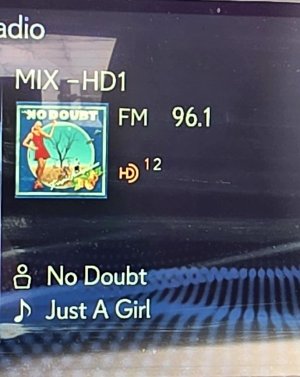
As of today, Mix 96.1 has tweaked the playlist to 99% English. The station presentation and contest are still in Spanish.

 mix961.iheart.com
Encuentra las canciones más recientes en Mix 96.1
Encuentra las canciones más recientes en Mix 96.1, Tus Favoritas De Siempre
If ratings are low, the English presentation is the problem. Remember, SA's Hispanics are mostly English-dominant Tejanos.As of today, Mix 96.1 has tweaked the playlist to 99% English. The station presentation and contest are still in Spanish.
Encuentra las canciones más recientes en Mix 96.1
Encuentra las canciones más recientes en Mix 96.1, Tus Favoritas De Siempre
Interestingly, the market has a history of the inverse, Spanish music with English presentation: the once legendary Tejano stations.
I'm confused. Mix 96.1 never had an English presentation. The problem is a consultant or research telling Iheartradio that English and Spanish 80's and 90's music would be a hit in SA. Mix 96.1 needs to update its presentation to English and the two dj's on the station should speak bilingual or full English for a better connection with the city.If ratings are low, the English presentation is the problem. Remember, SA's Hispanics are mostly English-dominant Tejanos.
Interestingly, the market has a history of the inverse, Spanish music with English presentation: the once legendary Tejano stations.
It's all 80s and 90s English titlesWhat is this format actually called? I looked at the ratings it once said Spanish AC now it says Spanish hits?
Attachments

It's not universally called anything yet. Nielsen has a list of formats from which stations can choose to identify themselves for advertisers. WMIA/Miami is using "Spanish Adult Hits," WOEX/Orlando is using "Spanish Contemporary," while KXXM is using "Adult Hits."What is this format actually called? I looked at the ratings it once said Spanish AC now it says Spanish hits?
Most trade publications will simply use what Nielsen uses as a format descriptor. RadioInsight has created a new, more descriptive "Bilingual AC" label for these stations.
They are trying to see if what works in Orlando and Miami can be made to work in markets with much lower first generation immigrants (or migrants in the case of Orlando).I'm confused. Mix 96.1 never had an English presentation. The problem is a consultant or research telling Iheartradio that English and Spanish 80's and 90's music would be a hit in SA.
This format is modeled after one single station: WFID in Puerto Rico. iHeart's programming head was formerly PD of that station.Mix 96.1 needs to update its presentation to English and the two dj's on the station should speak bilingual or full English for a better connection with the city.
A bit of history: in 1982 I was hired as consultant to WFID that wanted to move away from Beautiful Music to a sophisticated AC format. We decided on a majority of songs in English with a smattering of Spanish language ballads, mostly by local Puerto Rican artists. It was very successful. Under a later PD, Pedro González, the presentation was enhanced with local prestige talent. The term used inside the station was "snob appeal" (yes, we use lots of English terms on the Island).
The target was middle class women, who generally went to bilingual private schools and colleges. A side benefit was that this described nearly every media planner and buyer at Puerto Rico's 120 ad agencies.
For the format to work, you have to have women who speak Spanish only or are bilingual and bicultural who grew up listening to those songs that the station plays. Adding a few songs in Spanish gives cultural authenticity and a sense of "it's for me".
The question is whether in San Antonio there are enough such potential listeners.
In Miami and Orlando, there are hundreds of thousands who grew up either in PR (Orlando) or various unstable nations (Miami) listening to stations "back home" that played English music (a very common format in Latin America, whether it be pop, rock or AC) and who would gravitate to a station that had a better sense of "belonging" than pure "gringo" targeted stations. And the music will be a little different as the English hits in Latin America are somewhat different.
And we have to remember that the music in each market will be different. The Puerto Ricans in Orlando will lean towards more rhythmic AC oldies, while those in Miami will like more mainstream and even rock-leaning songs.It's not universally called anything yet. Nielsen has a list of formats from which stations can choose to identify themselves for advertisers. WMIA/Miami is using "Spanish Adult Hits," WOEX/Orlando is using "Spanish Contemporary," while KXXM is using "Adult Hits."
Most trade publications will simply use what Nielsen uses as a format descriptor. RadioInsight has created a new, more descriptive "Bilingual AC" label for these stations.
In San Antonio, the influence will be the rhythmic and CHR stations locally, as the market has fewer first generation "Spanish only" residents than any other Texas PPM market.
Yes. That figure seems low to me.--McAllen-Brownsville only has a Rhythmic station, which is usually #1. But of course, that's the most Latino market in the U.S. Nielsen says its Hispanic population is 93%! Could that be true?
I meant "the Spanish presentation". My apologies. If it were an English-language AC with an English-language presentation and a focus on Hispanics, it would probably do well. Even country formats in SA target Hispanics, but again, those are the Tejanos.I'm confused. Mix 96.1 never had an English presentation. The problem is a consultant or research telling Iheartradio that English and Spanish 80's and 90's music would be a hit in SA. Mix 96.1 needs to update its presentation to English and the two dj's on the station should speak bilingual or full English for a better connection with the city.
Even when Tejano was big, the people listening to Tejano stations largely didn't speak Spanish in daily life. Hence the jocks spoke English.