You’re right, David. I was being cautious by saying they rarely have a rating higher than 1, since I might have missed a highly rated HD station. The ones I can remember are .4 or less for HD classical.I don't know of a classical HD-2 or beyond that does not have a translator that gets more than a few tenths of a share point. Are you familiar with any that do better than what I recall?
Calling Huff!

-
Get involved.
We want your input!
Apply for Membership and join the conversations about everything related to broadcasting.
After we receive your registration, a moderator will review it. After your registration is approved, you will be permitted to post.
If you use a disposable or false email address, your registration will be rejected.
After your membership is approved, please take a minute to tell us a little bit about yourself.
https://www.radiodiscussions.com/forums/introduce-yourself.1088/
Thanks in advance and have fun!
RadioDiscussions Administrators
You are using an out of date browser. It may not display this or other websites correctly.
You should upgrade or use an alternative browser.
You should upgrade or use an alternative browser.
A Classical Station is #3 in Phoenix?
- Thread starter Gregg.
- Start date
This is very true. After the advent of recorded music, art music went in an avant-garde direction with composers like Schoenberg and that music is an acquired taste. People who like it probably won't be turning to the radio to hear it. The average classical listener wants to hear pieces from Bach and Vivaldi up through Rachmaninoff or maybe onward to Shostakovich, but isn't interested in atonality. Any attempt to branch into the modern era would need to be focused on film music and not traditional art music.Having owned a classical station, I can tell you that.... at least back then... playing anything from later than 1920 was a total kiss of death and resulted in an amazing number of complaint calls for a station with a very limited audience.
Any attempt to branch into the modern era would need to be focused on film music and not traditional art music.
You mean like Gershwin. In his day, he was a popular composer. Now he's seen as a classical composer because he worked with orchestras. But his music is very melodic, like popular music.
The same thing happened to jazz. By the 70s, it became atonal and experimental. The Art Ensemble of Chicago. Sonny Rollins. Long drawn out solos that went nowhere. That's why the stations that still play jazz stick with BeBop and the pre-60s era.
Any attempt to branch into the modern era would need to be focused on film music and not traditional art music.
Define "film music." Theatrical releases? (e.g., take your pick: Danny Elfman, John Williams, Hans Zimmer). Netflix? Bollywood? Independent art-house? I really don't see Phoenix taking the lead on this, like ever. 91.5 is outsourced to NPR most of the day and the other station we've got is way too traditional.
Classical Music doesn't have to be below a 1.0. I blame this on HD channels and using syndication, especially Classical 24. Classical benefits from playing the entire work and being accessible. Each city has a slightly different classical music bent to it. Classical listeners state an announcer that know the music is important (and yes it can be easily voice tracked). Take a look at Seattle, Portland. Austin's KMFA does well typically. From what I can tell, if you do it yourself versus paying Classical 24, you can usually get about a 2 in most markets. That's nowhere near #1 but a 2 is much better than what the HD Classical 24 stations are getting. Classical simply does well is some cities. WCPE in Raleigh Durham with a 2.0

I'm in San Diego and love WCPE... Very listenable and love their wide playlist. WFMT is a bit stodgey.Classical Music doesn't have to be below a 1.0. I blame this on HD channels and using syndication, especially Classical 24. Classical benefits from playing the entire work and being accessible. Each city has a slightly different classical music bent to it. Classical listeners state an announcer that know the music is important (and yes it can be easily voice tracked). Take a look at Seattle, Portland. Austin's KMFA does well typically. From what I can tell, if you do it yourself versus paying Classical 24, you can usually get about a 2 in most markets. That's nowhere near #1 but a 2 is much better than what the HD Classical 24 stations are getting. Classical simply does well is some cities. WCPE in Raleigh Durham with a 2.0
Gershwin had a decidedly Classical side. "Rhapsody In Blue" and other similar compositions were absolutely not "pop" and were linked into 17th, 18th and 19th century music as "20th century music" along with Stravinsky, according to my music teacher 60+ years ago.You mean like Gershwin. In his day, he was a popular composer. Now he's seen as a classical composer because he worked with orchestras. But his music is very melodic, like popular music.
The same thing happened to jazz. By the 70s, it became atonal and experimental. The Art Ensemble of Chicago. Sonny Rollins. Long drawn out solos that went nowhere. That's why the stations that still play jazz stick with BeBop and the pre-60s era.

Phoenix has had the Reel Music on Saturdays for years: Reel MusicDefine "film music." Theatrical releases? (e.g., take your pick: Danny Elfman, John Williams, Hans Zimmer). Netflix? Bollywood? Independent art-house? I really don't see Phoenix taking the lead on this, like ever. 91.5 is outsourced to NPR most of the day and the other station we've got is way too traditional.
Rhapsody in Blue was orchestrated by Ferde Grofé, best known for his own Grand Canyon Suite. Grofé composed a large number of works in a similar “symphonic jazz” styling.Gershwin had a decidedly Classical side. "Rhapsody In Blue" and other similar compositions were absolutely not "pop" and were linked into 17th, 18th and 19th century music as "20th century music" along with Stravinsky, according to my music teacher 60+ years ago.
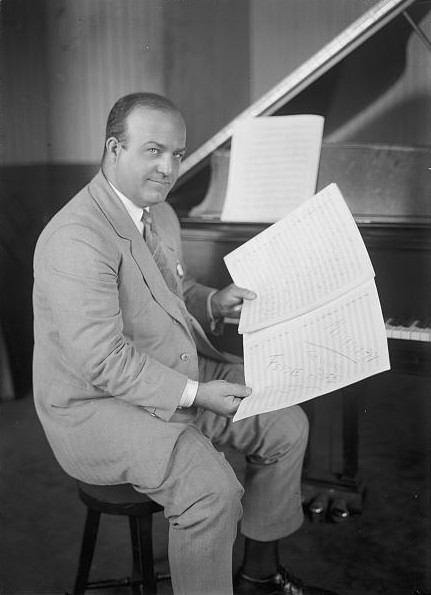
Ferde Grofé - Wikipedia
- Status
- This thread has been closed due to inactivity. You can create a new thread to discuss this topic.