Ooops, I meant CFTRI guess WNZK figured they'd interfere with CHUM less at night even though they're on 680.

-
Get involved.
We want your input!
Apply for Membership and join the conversations about everything related to broadcasting.
After we receive your registration, a moderator will review it. After your registration is approved, you will be permitted to post.
If you use a disposable or false email address, your registration will be rejected.
After your membership is approved, please take a minute to tell us a little bit about yourself.
https://www.radiodiscussions.com/forums/introduce-yourself.1088/
Thanks in advance and have fun!
RadioDiscussions Administrators
You are using an out of date browser. It may not display this or other websites correctly.
You should upgrade or use an alternative browser.
You should upgrade or use an alternative browser.
AM Frequency of the Week: 1000
- Thread starter cyberdad
- Start date
The CRTC required a unique call letter set for the 730. It was originally CHIR. Later, they allowed numerical suffixes, and it became CHYR-7. Eventually, after a treaty change, they were able to get authorization to run at Night with 1000 watts at minimum efficiency, and separately with 700 watts input to get that efficiency with their 6 tower Night DA. A radio aficionado who rivals David convinced WLW 700 to complain about interference from CHYR on 710 at Night, and they had to return to 730 for a while at Night. It helped them though to convince the CRTC to allow them to move to FM on 96.7, which required negotiated NINE facility restrictions to US stations, more than any other Canadian station. It required a DA with greater than 20 dB nulls, which was not allowed in the Agreement with Canada. The International Bureau objected, but eventually let it stand. Considering all the Translator DAs that have more than 20 dB nulls, it would probably not meet much resistance today.
WOR 710 is still required to protect the vacant CHYR Night Facility on 710, under the Agreement with Canada.
WOR 710 is still required to protect the vacant CHYR Night Facility on 710, under the Agreement with Canada.
Last edited:
From my post in Cheyenne, WY:
Nothing in the daytime, with the exception of a morning catch of 1000 KSOO Sioux Falls, SD.
Evenings: KKIM Albuquerque before they go low power.
Nights: Generally nothing, with some KOMO Seattle.
Nothing in the daytime, with the exception of a morning catch of 1000 KSOO Sioux Falls, SD.
Evenings: KKIM Albuquerque before they go low power.
Nights: Generally nothing, with some KOMO Seattle.
Welcome to the board!From my post in Cheyenne, WY:
Nothing in the daytime, with the exception of a morning catch of 1000 KSOO Sioux Falls, SD.
Evenings: KKIM Albuquerque before they go low power.
Nights: Generally nothing, with some KOMO Seattle.
Thank you!Welcome to the board!


My guess is you're hearing XEOY from Mexico City. I hear it every so often under WMVP, usually in winter. When I was in college in Iowa during the late '60s, XEOY was a pest for WCFL almost every night. They had...and presumably still have....a unique sounder that makes it an easy station to ID.Night: WMVP blasts in here. Excellent signal,....
....I've also received what sounds like weak Spanish/Latin music & talk on 1000 KHz which I've been unable to positively ID. Not a peep from KTOK or KOMO here -- I've tried for them many times unsuccessfully.

Here it is:My guess is you're hearing XEOY from Mexico City. I hear it every so often under WMVP, usually in winter. When I was in college in Iowa during the late '60s, XEOY was a pest for WCFL almost every night. They had...and presumably still have....a unique sounder that makes it an easy station to ID.
Yup, I remember it well. Used to hear it when WCFL was off the air.Here it is:
Scroll down to the 6th photo line: RADIO STATION PHOTOS: Mexico City 1963Yep...I remember it without the little vocal tag at the end. I first heard it under a significantly weaked WCFL in 1966 in Iowa...and it took me a while to figure out what the heck it was!
That is the Radio Mil studio location out on Insurgentes Sur in 1963. Also home to 590, 1380 and 1410 AM.
I can understand why WCFL was weak at Night. I just can't explain why you said it was so weak in the Daytime to the West. It had very shallow nulls and a minor lobe, equivalent to a 50 kW Class B like WHB 810 Days.
Here's what I can say, during their Top 40 days I was in De Kalb, Il about 65 miles west of Chicago. During the day WLS was twice as strong as WCFL. At night the difference was about 10 to 1 in favor of WLS.I can understand why WCFL was weak at Night. I just can't explain why you said it was so weak in the Daytime to the West. It had very shallow nulls and a minor lobe, equivalent to a 50 kW Class B like WHB 810 Days.
Maybe the WCFL signal crossed the sandier areas with lower real conductivity in Northwest Illinois and WLS crossed less of it on the way to Iowa? The late Glen Clark of WLS and DA Engineering fame, including the new WMVP array, said the conductivity was quite close to M-3 right around Chicago. He did measurements when WLS tried to move to Addison. One WLS/WENR site, used for many years, was 4-5 miles South of WCFL just South of Downers Grove. They should probably have stayed. I found the coordinates somewhere online. Can't find them now.
Glen Clark on Audio Prisms and WLS vs. WCFL signals.
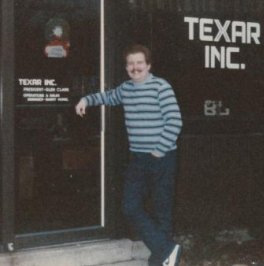
 www.thebdr.net
Glen Clark on Audio Prisms and WLS vs. WCFL signals.
The Audio Prism Story
[June 2011] In the history of audio processing, the TEXAR Audio Prism holds its own place as one of the key tools in the arsenals of stations fighting to produce their “signature” sound and stand
www.thebdr.net
Last edited:
I found the WLS coordinates South of Downers Grove.
I can only speak to where I was in southeast Iowa. About 25 miles west of the Mississippi river. Considering the distance and dial position the day signal was about what would be expected. In my opinion, nothing wrong with it from a distance of nearly 200 miles east-southeast of the transmitter. It was weak, but WLS was only fair at best. The problem was that the signal where I was got trashed by WCAZ (990), a 1kw non-directional daytimer that got out very well. Virtually all of Illinois has decent ground condictivity. Even the rugged terrain in extreme northwest Illinois, as well as the other area of rugged terrain in the far southern part of the state.I can understand why WCFL was weak at Night. I just can't explain why you said it was so weak in the Daytime to the West. It had very shallow nulls and a minor lobe, equivalent to a 50 kW Class B like WHB 810 Days.
Those are some great shots. I've viewed them before.Scroll down to the 6th photo line: RADIO STATION PHOTOS: Mexico City 1963
That is the Radio Mil studio location out on Insurgentes Sur in 1963. Also home to 590, 1380 and 1410 AM.
One question comes to mind about one of those stations you mentioned, wasn't XEMP (710) short-spaced with second adjacents on 690 and 730? If so, how did that work in "the real world"?
Perhaps on the M-3 Map. I know of no "rugged terrain" with good conductivity in real life though. I'd like to see measured radials that cross those areas.I can only speak to where I was in southeast Iowa. About 25 miles west of the Mississippi river. Considering the distance and dial position the day signal was about what would be expected. In my opinion, nothing wrong with it from a distance of nearly 200 miles east-southeast of the transmitter. It was weak, but WLS was only fair at best. The problem was that the signal where I was got trashed by WCAZ (990), a 1kw non-directional daytimer that got out very well. Virtually all of Illinois has decent ground condictivity. Even the rugged terrain in extreme northwest Illinois, as well as the other area of rugged terrain in the far southern part of the state.
Did you ever go to Eldon, IA and see the "American Gothic" farm house? It was owned for a while by Carl E. Smith, CIE founder, and author of the the DA Primer published in the early NAB Engineering Handbooks.
il_fullxfull.776810010_tlgm.jpg
When we get to 1120 I'll have to remember to discuss the anomaly where KMOX had a sharply weaker signal in Quincy supposedly having something to do with the bluffs, which I don't getI can only speak to where I was in southeast Iowa. About 25 miles west of the Mississippi river. Considering the distance and dial position the day signal was about what would be expected. In my opinion, nothing wrong with it from a distance of nearly 200 miles east-southeast of the transmitter. It was weak, but WLS was only fair at best. The problem was that the signal where I was got trashed by WCAZ (990), a 1kw non-directional daytimer that got out very well. Virtually all of Illinois has decent ground condictivity.. Even the rugged terrain in extreme northwest Illinois, as well as the other area of rugged terrain in the far southern part of the state.
M-3 Color (Detailed IL Area). Take with a grain of NaCl, which with enough of them, you could improve the Mississippi River conductivity, and Lake Michigan.
30e.jpg
The Bluffs are most likely the sandy yellow areas on this map, next to the Mississippi River. The Sleeping Bear Dunes area, near Crystal Lake West of Traverse City, and David's childhood vacation spot, also have very bad conductivity in the real world. It would be interesting to measure the WTMJ FI on Lake Michigan South of the dunes, and then on the Northeast side of the dunes.
Note the Gray Bedrock in the extreme NW corner of Illinois. I doubt that is much better than Long Island.
30e.jpg
The Bluffs are most likely the sandy yellow areas on this map, next to the Mississippi River. The Sleeping Bear Dunes area, near Crystal Lake West of Traverse City, and David's childhood vacation spot, also have very bad conductivity in the real world. It would be interesting to measure the WTMJ FI on Lake Michigan South of the dunes, and then on the Northeast side of the dunes.
Note the Gray Bedrock in the extreme NW corner of Illinois. I doubt that is much better than Long Island.
Last edited:
In De Kalb all the big Chicago signals came in better than WCFL during the day. This includes WIND and the old WAIT on 820.Maybe the WCFL signal crossed the sandier areas with lower real conductivity in Northwest Illinois and WLS crossed less of it on the way to Iowa? The late Glen Clark of WLS and DA Engineering fame, including the new WMVP array, said the conductivity was quite close to M-3 right around Chicago. He did measurements when WLS tried to move to Addison. One WLS/WENR site, used for many years, was 4-5 miles South of WCFL just South of Downers Grove. They should probably have stayed. I found the coordinates somewhere online. Can't find them now.
Glen Clark on Audio Prisms and WLS vs. WCFL signals.
The Audio Prism Story
[June 2011] In the history of audio processing, the TEXAR Audio Prism holds its own place as one of the key tools in the arsenals of stations fighting to produce their “signature” sound and stand
- Status
- This thread has been closed due to inactivity. You can create a new thread to discuss this topic.