• Get involved.
    We want your input!
    Apply for Membership and join the conversations about everything related to broadcasting.

    After we receive your registration, a moderator will review it. After your registration is approved, you will be permitted to post.
    If you use a disposable or false email address, your registration will be rejected.

    After your membership is approved, please take a minute to tell us a little bit about yourself.
    https://www.radiodiscussions.com/forums/introduce-yourself.1088/

    Thanks in advance and have fun!
    RadioDiscussions Administrators

AM HD TURNOFF PACE ACCELERATES

Last week I was driving to Raleigh, NC and was disappointed to hear that WRVA in Richmond, VA wasn't transmitting HD anymore. I suspect their original HD Exciter or exporter bit the dust.

From what I hear in speaking with CE's who were doing AM-IBOC, the problem has been keeping the original almost-prototype exciters with spinning hard drives from failing. The manufacturers have pretty well discontinued support of these devices and repairs can take months. Contrary to what some on this forum believe, that public (DX'ers) pressure is the reason, in reality once stations have gone through their main and backup exciters, they just don't bother anymore.
 
T
Sorry to hear about all the laziness and lack of quality in broadcast material, although it would explain much. Especially why stations used to sound so much better when they broadcast CDs instead of compressed music.

Huh? Most CDs today are highly compressed as part of the production process. If you compare the waveforms of a cross-section of record albums on vinyl. from the pre-CD era with a selection of CDs from the last decade or so, you will instantly see the difference; the CD's often approach square wave appearances, with highly clipped peaks. There is considerably more compression across the entire spectrum of contemporary music worldwide.
 
Nope - the first song I saw distributed in .Wav format was "Jesus Freak" by DC Talk. It is rather long by radio standards, nearly 4 minutes. As I recall it was slightly more than 10 Meg.

I just finished putting together the track list for the new release CD and download music service for radio that I produce weekly. There are 18 songs, of varying lengths within the range of contemporary music. This week we went from 3:02 to 5:43. The file sizes range from 6.96 megs on the short side to just under 13 megs on the biggest... in 320 kbs MP3, the preferred format by radio internationally.

This week, every song that came from record labels came as a 256 kbs or 312 kbs MP3, and there were no wav files distributed. The preferred distribution is via attachment to an email, with a growing usage of links in an email to a secure download site that does not have the complications of FTP or separate sites such as passwords (the labels fear adding extra steps as often that means that programmers will not even audition the song due to lack of time).

A few offer a choice of MP3 and wav, with the MP3 being as I just mentioned an average of 8 mb, while the wave format file can be between 36 and 55 mb based on my experience in doing this particular project going back to the dawn of radio's use of digitized music.

Is is easy to buy hardware that has multiple hard drive bays, cheap and available. I just see no more need for compression - it is laziness on the part of somebody. I also see no need for emailing, there are numerous cloud services that are free or very inexpensive, we transfer large files that way all the time. In fact, it is preferable to use cloud storage because Outlook has this incredibly kludgy mailbox structure that gives you no warning that your mailbox is full. I get mad at people who attach large files to emails instead of using cloud or ftp - because they are filling up that mailbox quota.

Kelly already mentioned the fact that the cost of storage is not as simple as single hard drives. You have to add in the servers the drives are in and the peripheral gear, plus onsite and offsite redundancy for failures and emergencies. So one 50 mb song requires as much as 300 mb of storage in wav format. Many broadcasters also have in-house "cloud" storage in the form of centralized backups of all stations. Here we have to add in the costs of bandwidth to make this system possible as well as the immense requirements of storing the music (even if only single copies are kept on the central server and not "one per station") a year or so of commercials, audio logger "tapes", morning show and "best of" bits, production music, special programs that need to be archived, etc. Most recent local and off-site installs storage I have seen lately use enterprise level SSD drives, which are not cheap but which reduce size, energy consumption, and have better MTBF figures.

As usual and customary, your lack of knowledge of radio station procedures (now extending to record company procedures) leads you to failed conclusions.
 
The present implementation of HD on AM frequencies causes interference to other stations. The HD signal covers three channels.
 
The present implementation of HD on AM frequencies causes interference to other stations. The HD signal covers three channels.

And yet the federal agency charged with the responsibility of overseeing the spectrum has not only approved this implementation, but also promotes it. How can that be?
 
There was a request many, many months ago requesting changes and upgrades for the AM band, and the FCC has yet to act upon it; HD/all digital AM band is NOT the answer. Moving the sub 50KW AM stations to TV5/6 would be a better option for many local AM stations, and the remaining clear channel stations moving to 30KHz spacing and 1MW analog power with 15KHz stereo frequency response is the better answer in my book.
 
Moving radio stations to other parts of the spectrum is an impractical idea. The FCC has addressed that before.

They have completely shut down the use of TV5/6 for broadcast radio.
 
Moving radio stations to other parts of the spectrum is an impractical idea. The FCC has addressed that before.

They have completely shut down the use of TV5/6 for broadcast radio.

Doubt there will be any change to that stance for the rest of the Obama administration.

RE: rampart audio compression on recorded CD's by labels, that's why I gave up on buying CDs. They sound like crap, they're fatiguing. Why spend money on crappy audio in perfect .wav format when you can download for free, crappy audio in less perfect 128 kb MP3? Granted that's for personal use, I know that for broadcast it needs at least 320 kb MP3 or better.

AM HD, who cares? If you managed to get a 250 w FM translator, in most instances the 250 w FM will cover more effectively at night more territory than the AM of 1 kW or less, especially if there are a lot of sticks in the DA. It isn't just AM HD that's getting turned off, it's AM at night that's starting to go away with the sub 1 kW crowd.
 
The present implementation of HD on AM frequencies causes interference to other stations. The HD signal covers three channels.

But that occurs mainly to listeners outside the market in what could be considered "fringe" coverage from or to adjacent channels. These days, stations aren't concerned with coverage outside their markets because there is no revenue attached. Again, it seems like only those interested in distance listening are actually affected.
 
When WJR was running HD-AM, I was 32 miles from their 50KW Omni, and static crashes would drop the HD and another 6 seconds until it acquired the HD signal again, then another static crash and this whole cycle repeated itself over and over. All digital claims to work with even less power, making me think it would be even more prone to total loss of signal, but no analog to fall back on. Just can't see an all digital medium wave service without a supplemental analog channel.
 
Once again, this is a decision for the FCC, not local radio stations, radio companies, or amateurs on a radio discussion board. And they have been consistently advocating and promoting HD. A few years ago, the head of the Mass Media Bureau could not understand why more stations aren't broadcasting in HD.
 
When WJR was running HD-AM, I was 32 miles from their 50KW Omni, and static crashes would drop the HD and another 6 seconds until it acquired the HD signal again, then another static crash and this whole cycle repeated itself over and over. All digital claims to work with even less power, making me think it would be even more prone to total loss of signal, but no analog to fall back on. Just can't see an all digital medium wave service without a supplemental analog channel.

And my counter to that would be; the chances you would go under freeway overpasses, drive into tunnels, under utility power lines or through an urban jungle, causes much more frequent disruptions to AM radio listening than when a lightning storm occurs. Most of those disruptions are quite loud and noisy too. The reality is, if the stations would drop the analog portion altogether leaving more room for data, reliability of reception would be better, out of channel interference much less, and audio quality higher than the way analog-only or analog/digital hybrid AM is now.

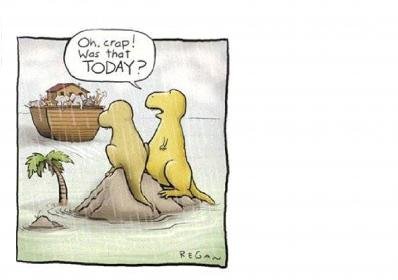
Oh Crap.jpg
 

Attachments

  • Oh Crap.jpg
    Oh Crap.jpg
    7.8 KB · Views: 3
Last edited:
Sorry the cartoon uploaded really small, then each time I resized it, I couldn't delete the prior.
 

Attachments

  • Oh Crap.jpg
    Oh Crap.jpg
    3.1 KB · Views: 4
  • Oh Crap.jpg
    Oh Crap.jpg
    4 KB · Views: 3
Last edited:
And my counter to that would be; the chances you would go under freeway overpasses, drive into tunnels, under utility power lines or through an urban jungle, causes much more frequent disruptions to AM radio listening than when a lightning storm occurs. Most of those disruptions are quite loud and noisy too. The reality is, if the stations would drop the analog portion altogether leaving more room for data, reliability of reception would be better, out of channel interference much less, and audio quality higher than the way analog-only or analog/digital hybrid AM is now.

View attachment 602

So do you think if the FCC allowed for all-HD on the AM band it would be feasible. I.e., as you seem to have connections in the radio real world -- you think it would extend the life of the AM band? -- or would it just drive more listeners to other platforms instead?
 
Status
This thread has been closed due to inactivity. You can create a new thread to discuss this topic.


Back
Top Bottom