CHML 900 went to the history books today. In NYC,we need two sports stations on AM like a whole in the head. Why isn't 1560 back on the air????

-
Get involved.
We want your input!
Apply for Membership and join the conversations about everything related to broadcasting.
After we receive your registration, a moderator will review it. After your registration is approved, you will be permitted to post.
If you use a disposable or false email address, your registration will be rejected.
After your membership is approved, please take a minute to tell us a little bit about yourself.
https://www.radiodiscussions.com/forums/introduce-yourself.1088/
Thanks in advance and have fun!
RadioDiscussions Administrators
You are using an out of date browser. It may not display this or other websites correctly.
You should upgrade or use an alternative browser.
You should upgrade or use an alternative browser.
AM Radio is dying
- Thread starter Ronnie Milsoup
- Start date
- Status
- Not open for further replies.

Wow! CHML is gone? I'll have to check out 900 tonight and see what dominates the frequency now. CHML has always had a very strong nighttime signal here in New England, pounding in on winter nights with junior hockey (OHL) play-by-play.

Much like the zombies of the Walking Dead, the band is mostly shuffling along, kind of mumbling and gradually decaying.

Just don't get near them. What little brains of some who think AM is still popular could be at risk.Much like the zombies of the Walking Dead, the band is mostly shuffling along, kind of mumbling and gradually decaying.

AM radio is like the joke about going bankrupt, "How did AM die? Slowly at first, then all at once."

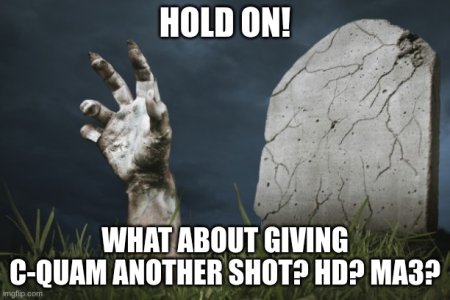
It became obsolete in 1980. Major Armstrong said it was obsolete in 1938.
Did we need two news stations on AM? Did we need two conservative talk stations on AM? Shall I continue?
It's better than ethnic or religious, right? Because that's what's left.
In NYC, we need two sports stations on AM like a whole in the head.
Did we need two news stations on AM? Did we need two conservative talk stations on AM? Shall I continue?
It's better than ethnic or religious, right? Because that's what's left.


Because they don't yet have a new transmitter site. They sold the old one for, perhaps, five times what the station was worth. Now they need a new site to return to full power.Why isn't 1560 back on the air????
But they ARE on the air.... with an STA (Special Temporary Authorization) to run very low power from a temporary site.
Remember, at 1560 that is not a very valuable station. A 1000 watt station on 550 would cover as well!
Sure, they tried stereo back in the 80's, but music radio listeners had already left for FM. That, and AM stereo wasn't as good as FM, certainly not worth purchasing a new radio for.AM’s just so awful to listen to on a sound quality level. Is there anything that could be done or is that just the relic of the technology?
About 20 years ago they tried AM-HD. The problem there was the digital sidebands would create noise to adjacent stations, especially at night. And of course there were the old duffers who claimed there was nothing wrong with analog AM quality. Most of them had grown up with AM, were suffering age-related hearing loss, and were willing to look past the drastically inferior quality of AM. These folks objected to the sideband noise, raising complaints with the FCC and stations operating AM-HD. In the end, equipment manufacturers of AM HD transmission gear saw little to no demand, leaving the remaining stations running AM-HD to have their unsupported equipment run until it finally died.
Of course, the big reason AM will never have a chance to catch on again is average consumers stopped buying radios easily thirty years ago. Now you have smartphones, streaming, Apple CarPlay, and the only radio reception is being heard in vehicles.


But they [1560] ARE on the air.... with an STA (Special Temporary Authorization) to run very low power from a temporary site.
Family Radio turned it off in March and sold the transmitter building with the old FM tower and temporary slant wire antenna in West Orange, NJ. Highly doubt that signal is ever returning.
"" AM will never have a chance to catch on again is average consumers stopped buying radios ""
If the FCC required FM broadcast car radios to include the AM broadcast band then AM would have a better chance at life.
"" the digital sidebands would create noise to adjacent stations, especially at night. ""
AM hybrid HD IBOC should never have been allowed at night.
Inferior as it may be, AM radio still offers some broadcasters to get on the air at all where the FM band is full. Then as finances permitted those broadcasters might upgrade to FM.
"" But they ARE on the air.... with an STA (Special Temporary Authorization) to run very low power from a temporary site.""
The dollar amount Family Radio got for that NJ site did not jump out to me as spectacular. The circumstances point out yet another hurdle to get an AM on the air, unexpected blanketing or other problems that don't show up until the build out to the construction permit was done and then complaints from nearby persons or entities. One Class A (I think Chicago) recently moved their transmitter a couple of miles and had to cut their 50KW to 35KW.
If the FCC required FM broadcast car radios to include the AM broadcast band then AM would have a better chance at life.
"" the digital sidebands would create noise to adjacent stations, especially at night. ""
AM hybrid HD IBOC should never have been allowed at night.
Inferior as it may be, AM radio still offers some broadcasters to get on the air at all where the FM band is full. Then as finances permitted those broadcasters might upgrade to FM.
"" But they ARE on the air.... with an STA (Special Temporary Authorization) to run very low power from a temporary site.""
The dollar amount Family Radio got for that NJ site did not jump out to me as spectacular. The circumstances point out yet another hurdle to get an AM on the air, unexpected blanketing or other problems that don't show up until the build out to the construction permit was done and then complaints from nearby persons or entities. One Class A (I think Chicago) recently moved their transmitter a couple of miles and had to cut their 50KW to 35KW.
WFME is coming back on the air. Filed today with the FCC:
"IN ORDER TO PERMIT CONTINUED OPERATION OF WFME, FSI HAS ALSO CONDUCTED DILIGENT SEARCH FOR A
REPLACEMENT STA SITE AND NOW PROPOSES THE USE OF A TEMPORARY INSTALLATION AT THE SITE OF TWO OTHER
AM BROADCAST STATIONS, WPAT AND WNSW. THIS SITE MAY BE UNSUITABLE FOR PERMANENT OPERATION BECAUSE
OF THE TOWER HEIGHT BUT HAS BEEN PREVIOUSLY SUCCESSFULLY USED FOR STA OPERATION BY A STATION ON 1530
KHZ (DWJDM). THIS SITE IS LOCATED IN REASONABLE PROXIMITY TO THE COMMUNITY OF LICENSE OF WFME, NEW
YORK, NY, ABOUT 25 KM WEST OF THAT COMMUNITY.
IN THE INTERIM, THE LICENSEE RESPECTFULLY REQUESTS FROM THE COMMISSION GRANT OF ENGINEERING SPECIAL
TEMPORARY AUTHORITY TO OPERATE AT 10 KW FOR BOTH DAY AND NIGHTTIME OPERATION AT THE WPAT AND WNSW
SITE (ASR #1241950) TO CONTINUE TO SERVE THE NEW YORK CITY COMMUNITY OF LICENSE"
"IN ORDER TO PERMIT CONTINUED OPERATION OF WFME, FSI HAS ALSO CONDUCTED DILIGENT SEARCH FOR A
REPLACEMENT STA SITE AND NOW PROPOSES THE USE OF A TEMPORARY INSTALLATION AT THE SITE OF TWO OTHER
AM BROADCAST STATIONS, WPAT AND WNSW. THIS SITE MAY BE UNSUITABLE FOR PERMANENT OPERATION BECAUSE
OF THE TOWER HEIGHT BUT HAS BEEN PREVIOUSLY SUCCESSFULLY USED FOR STA OPERATION BY A STATION ON 1530
KHZ (DWJDM). THIS SITE IS LOCATED IN REASONABLE PROXIMITY TO THE COMMUNITY OF LICENSE OF WFME, NEW
YORK, NY, ABOUT 25 KM WEST OF THAT COMMUNITY.
IN THE INTERIM, THE LICENSEE RESPECTFULLY REQUESTS FROM THE COMMISSION GRANT OF ENGINEERING SPECIAL
TEMPORARY AUTHORITY TO OPERATE AT 10 KW FOR BOTH DAY AND NIGHTTIME OPERATION AT THE WPAT AND WNSW
SITE (ASR #1241950) TO CONTINUE TO SERVE THE NEW YORK CITY COMMUNITY OF LICENSE"
"" AM will never have a chance to catch on again is average consumers stopped buying radios ""
If the FCC required FM broadcast car radios to include the AM broadcast band then AM would have a better chance at life.
Congress is working on such legislation right now. However, you can lead a horse to water. You can't make him drink.

Tweaks Being Considered To Bill That Would Keep AM Radio In Cars.
The House Commerce Committee canceled a planned vote last week on the bill that has become a top priority for the radio industry. The Committee was to have voted on
AM’s just so awful to listen to on a sound quality level. Is there anything that could be done or is that just the relic of the technology?
Efforts to improve the sound quality have routinely fallen flat. As others have pointed out, that train left the station a long time ago. Any solution other than incentivizing further sign-offs would require buying new radios. People stopped doing that a long time ago. The FCC tried to find ways to revitalize AM, and the only solution it found was giving AM a place on the FM dial.
Keep-in-mind, also, that the biggest problem for AM wasn't sound quality but coverage. AM was designed for America the way it was 70+ years ago. Urban sprawl, for the most part, didn't exist. Suburbs and planned communities were new concepts. No one predicted Atlanta, Phoenix, and Denver would become trendy places to live. Even in the early 1980's, you could tell you left Dallas before you arrived in Plano. No matter what you do to improve the sound quality, people who can't hear you won't listen. AM's covered cities as they were when the transmitters went up, not as they are now. Even medium-sized towns no one regularly thinks about, like Wichita, Tulsa, and Little Rock, are a lot different than they were in the 1940's and 50's.
"" AM will never have a chance to catch on again is average consumers stopped buying radios ""
If the FCC required FM broadcast car radios to include the AM broadcast band then AM would have a better chance at life.
Maybe, but most every car has AM, and AM is no more than 10% of total listening. In some markets, it's not even 5%. The decline of AM began when a sizeable percentage of cars had only AM radios. People aren't going to listen to programming they can't hear, and they're certainly not going to listen to anything that doesn't interest them.
WFME is coming back on the air. Filed today with the FCC:
Wow, I stand corrected. Quite a coincidence for that filing to happen today just in time for these comments.
Going back to the early days of FM - it seemed there was at least some thought of an AM to FM migration. Many AMs were given FM licenses and simulcast at least at first. If the idea was to migrate to a newer technology, that would have made the most sense to continue with. Then the priority seemed to shift to expanding the number of radio stations using both bands. Simulcasting was discouraged/restricted and a lot of AM and FM licenses were given out independently. A lot of AMs that had an FM sold them off to make a quick buck. Even Westinghouse in the early 80's decided to focus on AM and sold their FMs.
If that "migration" had happened, this whole thing now may be less painful. I think a lot of people are just sad to see their favorite station brands disappearing. Of course, stations have always been "disappearing" just from format changes but losing a WCBS or a CHML really hits home.
I know revenue is drastically down for radio over a prolonged number of years. There are just way too many stations which was a problem even when revenue was better. All these AM/FM simulcasts going on today (specifically using a full power FM to simulcast an AM) are more about lack of knowing what to do with the FM than it is about saving the AM. The AM format must have appeal if it is worth putting on FM. In the case of WINS FM/KROCK the station never found its footing since losing their morning show to Sirius. "Let's just put WINS on there".
Radio needs some new thinking to bring in a new audience. I'm not saying I have any ideas - I'm just making the observation. Mason Kelter Liveline is an example as the show seems to be appealing to a younger audience prying them away from their phones. A lot of it is just looking to the past and refreshing it for today. Lots of bantor, lots of callers and requests. Using the requests to figure out what music the audience wants. I think talk radio could do similar - get some fresh out of college talent who are funny and can bantor with a younger crowd. WBZ has Matt Shearer who is a step in that direction for news radio.
Meanwhile I'm just listening to AM about 80% of my radio listening time enjoying it while it's still around whether its music, news, talk or whatever. AM sounds good on older wideband radios of which I have many so I'm putting them to good use. There is a cquam station nearby I listen to a lot which sounds great but I know that is not going to bring in many 20-year-olds. I'll just enjoy it as long as it's around.
If that "migration" had happened, this whole thing now may be less painful. I think a lot of people are just sad to see their favorite station brands disappearing. Of course, stations have always been "disappearing" just from format changes but losing a WCBS or a CHML really hits home.
I know revenue is drastically down for radio over a prolonged number of years. There are just way too many stations which was a problem even when revenue was better. All these AM/FM simulcasts going on today (specifically using a full power FM to simulcast an AM) are more about lack of knowing what to do with the FM than it is about saving the AM. The AM format must have appeal if it is worth putting on FM. In the case of WINS FM/KROCK the station never found its footing since losing their morning show to Sirius. "Let's just put WINS on there".
Radio needs some new thinking to bring in a new audience. I'm not saying I have any ideas - I'm just making the observation. Mason Kelter Liveline is an example as the show seems to be appealing to a younger audience prying them away from their phones. A lot of it is just looking to the past and refreshing it for today. Lots of bantor, lots of callers and requests. Using the requests to figure out what music the audience wants. I think talk radio could do similar - get some fresh out of college talent who are funny and can bantor with a younger crowd. WBZ has Matt Shearer who is a step in that direction for news radio.
Meanwhile I'm just listening to AM about 80% of my radio listening time enjoying it while it's still around whether its music, news, talk or whatever. AM sounds good on older wideband radios of which I have many so I'm putting them to good use. There is a cquam station nearby I listen to a lot which sounds great but I know that is not going to bring in many 20-year-olds. I'll just enjoy it as long as it's around.
- Status
- Not open for further replies.