• Get involved.
    We want your input!
    Apply for Membership and join the conversations about everything related to broadcasting.

    After we receive your registration, a moderator will review it. After your registration is approved, you will be permitted to post.
    If you use a disposable or false email address, your registration will be rejected.

    After your membership is approved, please take a minute to tell us a little bit about yourself.
    https://www.radiodiscussions.com/forums/introduce-yourself.1088/

    Thanks in advance and have fun!
    RadioDiscussions Administrators

Are broadcast networks becoming obsolete 10-20 yrs from now?

Fraiser isn't a talk show host. He does something that isn't done much on the radio anymore: He was an advice host.

I always thought he was a male version of Dr. Toni Grant, who gave psychological advice on talk radio in LA:


In fact Toni Grant was on KABC-AM at the same time frame when Michael Jackson was on that station. But I can see how she was the referencetto Frasier here.
 

Umm I wonder if Frasier and his radio scenes are parodies of Michael Jackson the Late Los Angeles Talk host. I know I seen some airchecks where Michael Jackson was considered a legendary talk host for the era. This is where the directors and scriptwriters decided that the characters should sound like Michael Jackson the talk host.
Not at all. Yes, Michael Jackson was considered a legendary talk show host. But Frasier Crane was developed, speech pattern and all (which isn't terribly similar to Michael Jackson), as a character on CHEERS, nine years before he was spun off with his own program (FRASIER) as a radio psychologist.

As for inspiration for that role, remember that the producers and writers were in Los Angeles, wanted to make FRASIER believable as a successful radio psychologist (Dr. Toni was) and wanted to make him likable (Dr. Laura wasn't).
 
As for inspiration for that role, remember that the producers and writers were in Los Angeles, wanted to make FRASIER believable as a successful radio psychologist (Dr. Toni was) and wanted to make him likable (Dr. Laura wasn't).
Indeed, there was one episode that was an obvious parody of Dr. Laura as the very judgmental "Dr. Nora", played perfectly by Christine Baranski.
 
Apologies for further hijacking this thread to discuss The Soup Nazi episode, but for @michael hagerty and others interested, there's a video on Youtube, interviewing the writer of that episode and the actors from Seinfeld (out of character) to give the full background story and how it came together. With about a minute left in the video, they discuss the cast of Seinfeld visiting the actual soup restaurant and how livid the owner was toward all of them.
 
Given that many of the newer, even popular shows are being exclusive to streaming services like Netflix, Hulu, Disney+, etc, had been on network TV for one season and then gets picked up by streamers, and the fact that NBC is considering cutting back programming hours like eliminating the 10pm slot altogether, I do believe that within the next decade or so, broadcast networks will eventually stop investing in original programming and become more of a syndication service like MyNetworkTV showing mostly reruns, even more live sports. A long time ago, way before streaming media and also before cable became commonplace, all of the original scripted programming(even superhero shows) can be easily found on network TV. Back then, even Fridays and Saturday nights have shows that were a ratings success, including Dukes of Hazzard and Dallas, and ABC's TGIF comedy blocks. Times have changed, and recently, they become "graveyard slots", with Saturdays preserved for mostly live sporting events. I wouldn't be surprised if one of the networks eliminates its Saturday night programming altogether.

With the CW being sold, and many of its popular shows are either cancelled or given their final seasons, this is a pure example on how network TV is trying to survive in the age of streaming media. This applies to the cable networks too. And finally, it's now becoming more rare for network TV to run made-for-TV movies, most of which are now being exclusive to streamers.

If this trend continues, broadcast TV will eventually disappear.....

As is often the case, I believe the underlying issue is greed. Networks have plenty of income with all those endless,
mindless commercials, fees from cable, satellite and streaming too, in some cases. Network executives seem to be
passing on costlier programs to produce. In the end, fewer and fewer people will watch. They are signing their own
epithet.......
 
As is often the case, I believe the underlying issue is greed. Networks have plenty of income with all those endless,
mindless commercials, fees from cable, satellite and streaming too, in some cases. Network executives seem to be
passing on costlier programs to produce. In the end, fewer and fewer people will watch. They are signing their own
epithet.......
What you’re missing, Joe, is that, as broadcast TV ratings decline, so does what the networks can charge for those commercials.

And given that trends suggest a renaissance for broadcast TV ain’t gonna happen, it would only make sense to cut costs. Remember, these networks are part of publicly-traded corporations, with a fiduciary respons to stockholders.

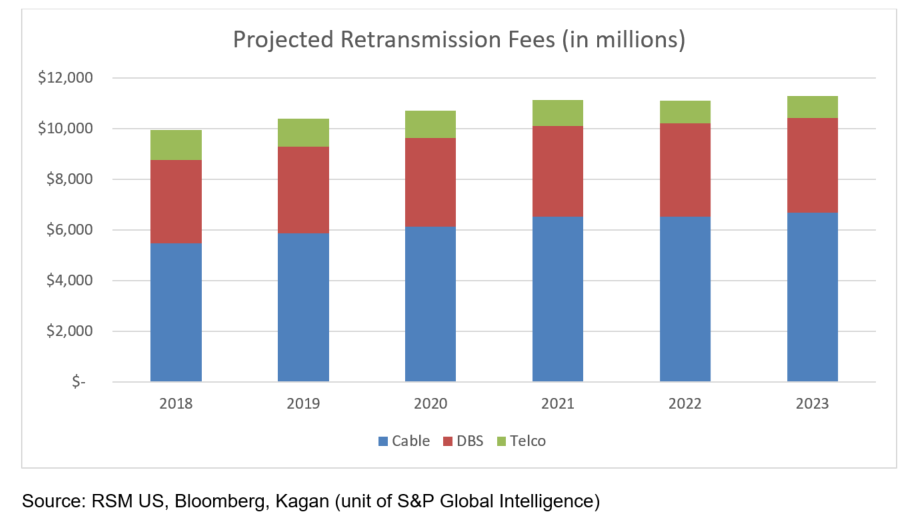
As for retransmission fees, those are paid to station owners, not the networks, and it’s only been in the last decade or two that the networks have started demanding a cut of that in their affiliation agreements. Why? To offset declining commercial revenue.

 
What you’re missing, Joe, is that, as broadcast TV ratings decline, so does what the networks can charge for those commercials.

And given that trends suggest a renaissance for broadcast TV ain’t gonna happen, it would only make sense to cut costs. Remember, these networks are part of publicly-traded corporations, with a fiduciary respons to stockholders.
Correct. If anyone is greedy, it's the investors/gamblers of Wall Street who exert constant pressure on all publicly traded corporations to deliver profits at a much higher level than a privately held corporation would need to deliver.
 
What you’re missing, Joe, is that, as broadcast TV ratings decline, so does what the networks can charge for those commercials.

And given that trends suggest a renaissance for broadcast TV ain’t gonna happen, it would only make sense to cut costs. Remember, these networks are part of publicly-traded corporations, with a fiduciary respons to stockholders.

As for retransmission fees, those are paid to station owners, not the networks, and it’s only been in the last decade or two that the networks have started demanding a cut of that in their affiliation agreements. Why? To offset declining commercial revenue.

With all the garbage the networks are offering, it's no wonder viewers are turning elsewhere. The networks and OTA
stations are a self fulfilling prophecy. If they continued to offer quality programming, as in the past, viewers would not
have any need to find alternatives....... Let's not forget that networks/OTA television revenues started dropping AFTER
the quality of programming declined.......
 
Correct. If anyone is greedy, it's the investors/gamblers of Wall Street who exert constant pressure on all publicly traded corporations to deliver profits at a much higher level than a privately held corporation would need to deliver.
Other countries manage to deliver quality network programming that hasn't declined over the past 20+ years.
U.S. network executives need to find alternative sources to fund programming and development.
 
Let's not forget that networks/OTA television revenues started dropping AFTER
the quality of programming declined.......
When would you say the quality of programming on the 3 (or 4, depending on the year you cite) major broadcast networks began to decline? Because the decline in the share of audience watching broadcast has declined slowly over many years. Obviously it was nearly 100% in the 1970s, and is at a record low of around 25% today.

I personally agree with you that there is little on broadcast TV worth watching, but of course the chairman of the FCC thought the same thing 60 years ago, when he made his "vast wasteland" remarks.
 
With all the garbage the networks are offering, it's no wonder viewers are turning elsewhere. The networks and OTA
stations are a self fulfilling prophecy. If they continued to offer quality programming, as in the past, viewers would not
have any need to find alternatives....... Let's not forget that networks/OTA television revenues started dropping AFTER
the quality of programming declined.......
When would you say the quality of programming on the 3 (or 4, depending on the year you cite) major broadcast networks began to decline? Because the decline in the share of audience watching broadcast has declined slowly over many years. Obviously it was nearly 100% in the 1970s, and is at a record low of around 25% today.

I personally agree with you that there is little on broadcast TV worth watching, but of course the chairman of the FCC thought the same thing 60 years ago, when he made his "vast wasteland" remarks.

I think saying "the networks are failing because their programming and offerings recently are crap" is obviously part of the equation, but that's only one (small) part of what's led to their falling out of favor. The bigger picture (pardon the pun) is that viewer tastes and habits have changed - in many ways. Terms like "binge watching" weren't even spoken a decade ago or less. Being able to watch multiple seasons of thousands of TV shows and movies at ones' leisure, rather than when they're scheduled to air wasn't a thing in the 1970s. Sure there were VCRs in the 80s and TiVo starting in the early 2000s, but nothing on the scale of today where anyone with a cable or dish subscription or an internet connection can watch nearly whatever they want, whenever they want. That's to say nothing of the quality of the programming and content on streaming services like HBO, Netflix, Amazon and Apple which blow network sitcoms out of the water, can be binge watched all weekend long if one wishes, and are now the stuff of watercooler talk at work. Throw in the relatively cheap cost of huge flat screen Smart TVs and quality sound systems and who really wants to watch network sitcoms or the network's "movie of the week', only at the time it's scheduled per the TV Guide listing, with commercials, and no ability to do things like pause or fast forward? While it's somewhat sad to see the demise of network OTA TV as it was once known and programmed, whether some want to agree or wish to embrace newer the technologies, what can't be argued is that viewer options and programming availability are better now than they were in the 70s and 80s. And if you still want to watch that older programming from the 70s and 80s that was supposedly so much better, you can - on demand or via the web.
 
Other countries manage to deliver quality network programming that hasn't declined over the past 20+ years.
Name those countries.

I'll bet every one you can name has a large taxpayer-funded government participation in what you call "quality" programming. Whether it is the BBC, NHK or the RAI or even the somewhat lesser CBC, it involves government intervention and funding via taxes.
 
Status
This thread has been closed due to inactivity. You can create a new thread to discuss this topic.


Back
Top Bottom