I think that there are some TV stations that rebroadcast the audio from a co-owned radio station on their TV stations SAP\alternate audio stream, which normally is used for the Descriptive Video Service (DVS).Aren't there some TV stations with radio on their subchannels now even though they can only be heard on TVs or possibly online? How do they have to handle music licensing, or are they mainly talk?

-
Get involved.
We want your input!
Apply for Membership and join the conversations about everything related to broadcasting.
After we receive your registration, a moderator will review it. After your registration is approved, you will be permitted to post.
If you use a disposable or false email address, your registration will be rejected.
After your membership is approved, please take a minute to tell us a little bit about yourself.
https://www.radiodiscussions.com/forums/introduce-yourself.1088/
Thanks in advance and have fun!
RadioDiscussions Administrators
You are using an out of date browser. It may not display this or other websites correctly.
You should upgrade or use an alternative browser.
You should upgrade or use an alternative browser.
ATSC 3.0 Radio
- Thread starter kfbkfb
- Start date

Unless they're an LPTV, the SAP is only supposed to be used when the program is available in another language, like Spanish, or Descriptive Audio in the event of severe weather alerts, or some other public safety situation.I think that there are some TV stations that rebroadcast the audio from a co-owned radio station on their TV stations SAP\alternate audio stream, which normally is used for the Descriptive Video Service (DVS).
Not saying that some stations aren't, or haven't been fooling around with their SAP, but if a viewer inadvertently pressed the SAP button on their remote, heard some radio audio, then complained to the Commission, that station would have some 'splainin' to do.

Back in the 80's, one of the local stations in Tampa Bay sent their spots to various radio stations using their SAP channel. They sent the spots at the same time every day and the audio quality was very good.Unless they're an LPTV, the SAP is only supposed to be used when the program is available in another language, like Spanish, or Descriptive Audio in the event of severe weather alerts, or some other public safety situation.
Not saying that some stations aren't, or haven't been fooling around with their SAP, but if a viewer inadvertently pressed the SAP button on their remote, heard some radio audio, then complained to the Commission, that station would have some 'splainin' to do.

Back in the 80's, one of the local stations in Tampa Bay sent their spots to various radio stations using their SAP channel. They sent the spots at the same time every day and the audio quality was very good.
Back in the 80s and 90s we had something called the Connecticut Radio Network that fed news and weather for various radio stations to record from the SAP Channel of WTNH Channel 8 the local ABC affiliate. During the off times on a loop you would hear "You're listening to an off air service of the Connecticut Radio Network. If you're trying to listen to Channel 8 your TV needs to be set to Main or Stereo Audio. Programming Copyright CRN."
I think that some stations have even broadcasted NOAA Weather Radio, or something similiar to it, on the SAP audio stream on a digital subchannel.

Interesting. I assumed SAP was a feature of Digital TV (ATSC). I don't remember hearing anything about it until the early 2000s.Back in the 80's, one of the local stations in Tampa Bay sent their spots to various radio stations using their SAP channel.
SAP has been around since 1984.

At one time WBBJ in Jackson, TN was running ABC programming on 7.2, supposedly with Spanish. But it eventually got to where they were running the same programming as on 7.1 in English, so it was a waste. They finally shut it down and have done nothing with it since.

Interesting. I assumed SAP was a feature of Digital TV (ATSC). I don't remember hearing anything about it until the early 2000s.
SAP was initially a component of BTSC (MTS) multiplex audio which was introduced in the mid-80s. IIRC it was on a subcarrier around +78 kHz, technically a wideband SCA. In fact some SCA demuxers like Dr Elving's "Elf-2A" module could be tuned to receive SAP audio when installed into a TV set's audio section, or a multiband radio receiver. I actually had such a receiver (a revision-B Sony ICF36) with that very module and it did a very good job receiving Oregon Propaganda Broadcasting's former Golden Hours radio reading service. There was another narrowband subcarrier component around +102 kHz that was mostly used for telemetry and internal communication within the station (the latter of which, around here, anyways, most TV stations used 450/455 MHz IFB for).
Of course these days SAP is just another AC3 component of an ATSC programme stream.
Back in the 80's, one of the local stations in Tampa Bay sent their spots to various radio stations using their SAP channel. They sent the spots at the same time every day and the audio quality was very good.
KGW were doing that in the late 90s and early 2000s during the evening news periods. The rest of the day was just a recorded loop of Belo Guy (that deep-voiced announcer guy who, I swear, was on virtually all Belo-owned stations in the Northwest) describing what SAP was and that it wasn't the main audio channel, followed by a lady presumably reading the same copy in Spanish over a telephone. I know I have some tape of it somewhere....
Last edited:
I believe that the television SAP audio included dbx noise reduction.
It did, as did IIRC the main audio and stereo difference according to the standard, but I don't know if all stations running BTSC used it. Certainly the majority probably should have, at least.
I don't believe KGW did when Belo Guy/Spanish Phone Operator Lady were on. The difference between monitoring on a Panasonic PV-9662 VCR (which had DBX always present, and you couldn't disable it) and the Sony was like listening to a worn-out cassette tape versus a CD, respectively! OPB used it on Golden Hours and you could tell from the pumpy, companded effect it had sometimes, listening on a non-DBX rig like the Sony, but always sounded great on VCRs. It seemed to be most noticeable during the live morning and evening live newspaper readings, probably from the DBX reacting to whatever processing they used in the studio.
I don't believe KGW did when Belo Guy/Spanish Phone Operator Lady were on. The difference between monitoring on a Panasonic PV-9662 VCR (which had DBX always present, and you couldn't disable it) and the Sony was like listening to a worn-out cassette tape versus a CD, respectively! OPB used it on Golden Hours and you could tell from the pumpy, companded effect it had sometimes, listening on a non-DBX rig like the Sony, but always sounded great on VCRs. It seemed to be most noticeable during the live morning and evening live newspaper readings, probably from the DBX reacting to whatever processing they used in the studio.
Last edited:
Only the stereo difference L-R was dbx encoded. This permitted mono receivers to receive the L+R audio without the need for special dbx decoding.It did, as did IIRC the main audio and stereo difference according to the standard, but I don't know if all stations running BTSC used it. Certainly the majority probably should have, at least.

Second audio program - Wikipedia
 en.wikipedia.org
SAP channel contains mono audio which has been dbx-encoded...60 Hz to 12 kHz
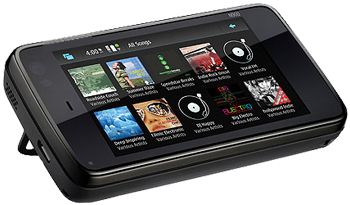
Ludwig Preps for Launch of ATSC Radio
POMPANO BEACH, FLA. Ludwig Enterprises is building a network of affiliates for a new radio network using the Mobile DTV transmission standard. The South Florida company says it developed and patented a portable handheld radio The One that receives
 www.tvtechnology.com
ATSC 1.0 Radio
Kirk Bayne
mono audio which has been dbx-encoded
Well, they were supposed to but not everybody did. You could tell which ones weren't using DBX because the SAP audio would sound muffled and distorted when listening on DBX equipment, like playing a cassette tape recorded without Dull-by NR on a deck with its NR compander switched on.
Only the stereo difference L-R was dbx encoded. This permitted mono receivers to receive the L+R audio without the need for special dbx decoding.
Facepalm. Yeah, I realised that yesterday after I logged out and it was too late to edit my post. "Uhh... wait a moment:"

Last edited:
DBX TESTS SHOW THAT SOME `STEREO` TVS DON`T REPRODUCE REAL STEREO
Trick or treat? Stereo TV was unmasked on Halloween in New York City. The company responsible for licensing the North American stereo TV system, dbx, announced that some TV sets sold as stereo are not really stereo.
www.chicagotribune.com
The Sharp, Magnavox and RCA/GE sets contained no dbx circuitry.
Kirk Bayne
I remember some '80s/'90s TVs were advertised as "Dual Speaker" -- if you connected a VCR or DVD player to them you'd get stereo, but they lacked the MTS decoder, so the built-in TV tuner was mono.
The New Jersey Network (NJN) used the SAP of their TV channels to simulcast their radio network. I noticed other stations that used SAP to transmit the local NOAA Weather Radio.
The New Jersey Network (NJN) used the SAP of their TV channels to simulcast their radio network. I noticed other stations that used SAP to transmit the local NOAA Weather Radio.
If you're talking about the kind of sets I'm thinking of, those were mostly a late-70s-early-to-mid-80s, pre-BTSC thing. Before MTS came about, many cable networks would send stereo audio as an FM broadcast band "station" on the cable (example here), and some PBS members that operated FM stations would sometimes do it with certain begathon programming (concerts and stage plays). The idea was you'd connect your FM tuner to the TV set's line inputs, set the tuner to the broadcast frequency and engage the TV's "simulcast" mode which would pipe the tuner's audio through itself. There were also standalone TV stereo tuners that came out not long after BTSC was standardised. My dad had one (a Realistic) connected to the stereo system, but he eventually ditched it after we got our first stereo VCR in the early 90s.
KPXG simulcast KIG98 and later WXL96 over its SAP subcarrier. Oregon Propaganda Broadcasting of course carried the legendary Golden Hours radio reading service from the mid 90s (after ditching SCA) until May 2008 when Portland Central News Agency, realising it was an "alternative" news source, declared it "revolutionary" and contrary of the party's official agenda and jettisoned it entirely. Oregon Council for the Blind immediately continued it as a stream until shortly after Golden Hours' longtime PD's death in late 2018.
KPXG simulcast KIG98 and later WXL96 over its SAP subcarrier. Oregon Propaganda Broadcasting of course carried the legendary Golden Hours radio reading service from the mid 90s (after ditching SCA) until May 2008 when Portland Central News Agency, realising it was an "alternative" news source, declared it "revolutionary" and contrary of the party's official agenda and jettisoned it entirely. Oregon Council for the Blind immediately continued it as a stream until shortly after Golden Hours' longtime PD's death in late 2018.
- Status
- This thread has been closed due to inactivity. You can create a new thread to discuss this topic.