• Get involved.
    We want your input!
    Apply for Membership and join the conversations about everything related to broadcasting.

    After we receive your registration, a moderator will review it. After your registration is approved, you will be permitted to post.
    If you use a disposable or false email address, your registration will be rejected.

    After your membership is approved, please take a minute to tell us a little bit about yourself.
    https://www.radiodiscussions.com/forums/introduce-yourself.1088/

    Thanks in advance and have fun!
    RadioDiscussions Administrators

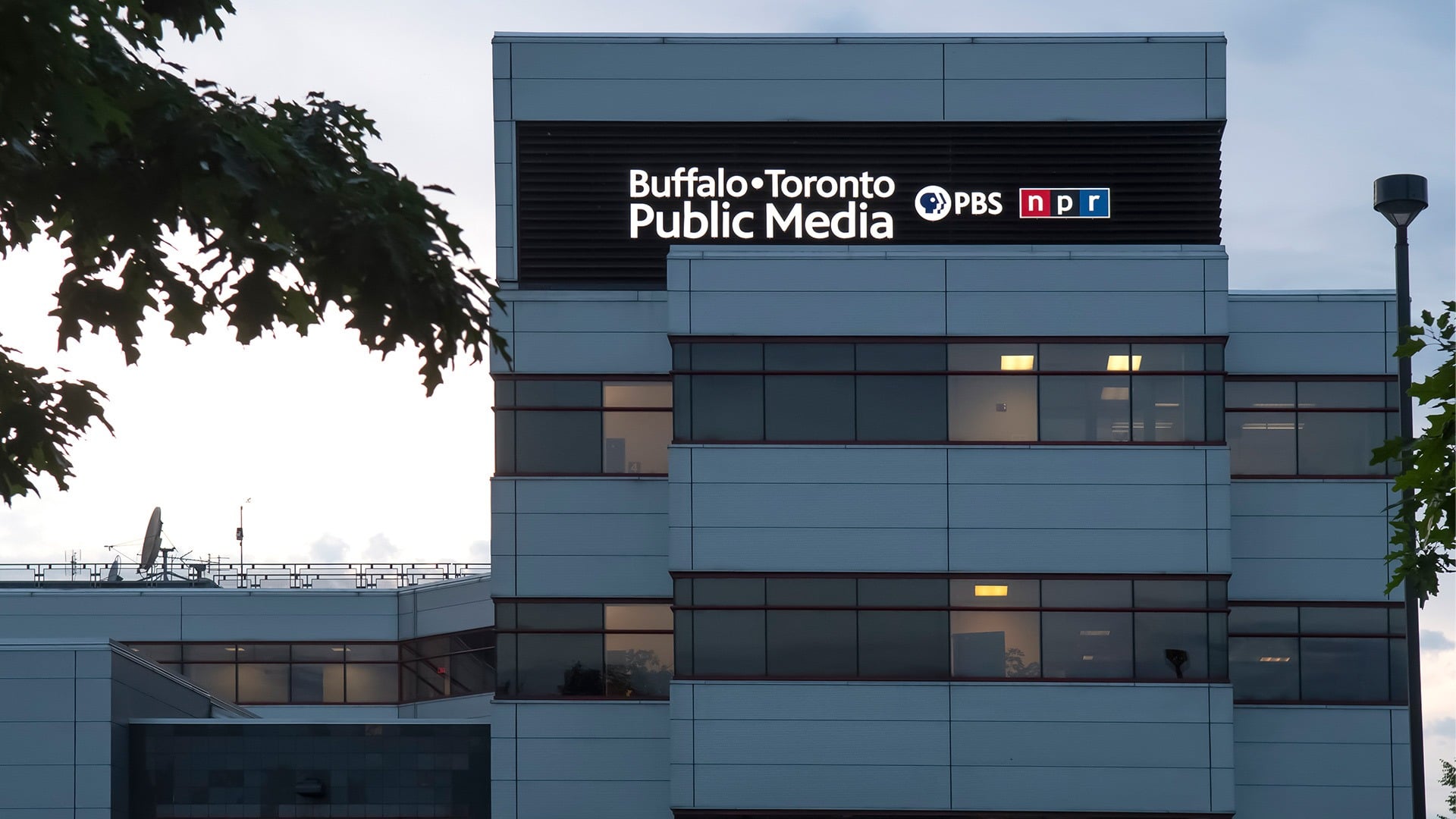
Buffalo Big Changes for BTPM at 88.7 FM and 94.5 FM

If you look at WBFO's programming now, you'll see that there are a few hours a day dedicated to local shows. There are also several hours a day filled by non-NPR shows that don't have the restrictions on sponsorship that NPR does.

Since the Corporation for Public Broadcasting no longer exists, will NPR rethink its policy of not allowing its content on a commercial station? Selling its content to local stations is its primary source of funds and those local stations lost their CPB funding. The question of whether NPR can survive without the pittance it received from the CPB is less of a question than whether it can survive without income from struggling local stations. So far, corporate sponsorships and the limits NPR sets on messaging haven't nearly made up the lost funding.

If NPR changes their policy it will likely affect programming on both stations. If not, BTPM will likely try to fill the funding gap by offering more commercial content on 94.5.

 
Since the Corporation for Public Broadcasting no longer exists, will NPR rethink its policy of not allowing its content on a commercial station?

Probably not. NPR is still covered under the public broadcasting act. That law wasn't repealed.

Currently the FCC is investigating NPR & PBS for its funding announcements. Having its programming on commercial stations would complicate that investigation.


WNED is just one station. AFAIK it's the only station that has made this change. I'm not aware that WNED carried any NPR programming. So there really isn't a net loss to NPR in this change.
 
If you look at WBFO's programming now, you'll see that there are a few hours a day dedicated to local shows. There are also several hours a day filled by non-NPR shows that don't have the restrictions on sponsorship that NPR does.

Since the Corporation for Public Broadcasting no longer exists, will NPR rethink its policy of not allowing its content on a commercial station? Selling its content to local stations is its primary source of funds and those local stations lost their CPB funding. The question of whether NPR can survive without the pittance it received from the CPB is less of a question than whether it can survive without income from struggling local stations. So far, corporate sponsorships and the limits NPR sets on messaging haven't nearly made up the lost funding.

If NPR changes their policy it will likely affect programming on both stations. If not, BTPM will likely try to fill the funding gap by offering more commercial content on 94.5.

In the short term (the next two years or so), NPR and its stations will not need to become commercial outlets. While not as much as the CPB was allocating, the current funding mechanisms will allow most of the NPR stations to stay with their current programming at least through 2027. Also, as one of its last acts, the CPB did negotiate an Internet music licensing deal with the RIAA that is paid through the end of 2027 as well. The more challenging thing in the short term is those stations who got permission from the FCC to expand with both licensed full power and translator simulcasters who now have to find the money to get those stations on the air under the limits imposed by the FCC.

In the long term (and this might prove to be a short term challenge as well) is the behavior of this administration towards media that either publicly criticizes it or allows those who publicly criticize it to have a platform. The purchasing of WBD by Paramount-Skydance plays into this narrative as well as FCC Chairman Brett Carr's investigation into "The View," and his challenges of late night network talk shows that invite people such as aspiring Texas Democrat James Talarico on to talk without allowing a response from his opposition. Put another way, the current Administration's efforts to destroy critical coverage of its leader and his policies could ultimately spell doom for public radio and television, regardless of whether they are advertiser-supported or not.
 
Since the Corporation for Public Broadcasting was officially dissolved in January 2026, there is no funding mechanism as outlined by the Public Broadcasting Act of 1967. Is there any reason that NPR has to follow the strictures of a corporation that no longer exists, even if it was written into the law? What makes it different from any other syndicator of public interest and news programming now that it no longer receives public funding? The money that comes from affiliates no longer comes from a defunct CPB. NPR (and PBS) are not mentioned in the Public Broadcasting Act, so what's to prevent them from acting in their own best interests as a program provider?
 
Is there any reason that NPR has to follow the strictures of a corporation that no longer exists, even if it was written into the law?

Conversely, is there any reason to change the basic concept of an organization simply for one station?

What makes it different from any other syndicator of public interest and news programming now that it no longer receives public funding?

That its board of directors is drawn from non-commercial radio stations, and they determine the way the company operates.

NPR (and PBS) are not mentioned in the Public Broadcasting Act, so what's to prevent them from acting in their own best interests as a program provider?

See above. BTW NPR has engaged in for-profit enterprises, so that's not off the table. However, with regards to the three programs specified by BTPM, they are formatted and aimed at non-commercial radio stations. As I said, none of those programs air on WNED, and they will continue to air where they've been. So there's no money lost by NPR.
 
I didn't see where they said they'd have "local hosts."
How else can they do this? What national shows would WNED run that fit what the press release describes? There are a couple of syndicated hour-long magazine shows that air live at 5 a.m., "This Morning" with Gordon Deal and "America in The Morning" with John Trout. But that's not going to get decent ratings if WBEN has a local morning news and info show while WBFO has "Morning Edition" with NPR and local news.

What about the rest of the day? WNED can't run syndicated conservative talk shows. Could you imagine if WNED starts airing Sean Hannity and Mark Levin? The donors who previously supported NPR affiliate WBFO and Classical outlet WNED would tar and feather the management.

I honestly don't know of any moderate, balanced, nationally-syndicated shows that would fulfill what the press release says: "Local, national and world news, public affairs, entertainment..."
 
Conversely, is there any reason to change the basic concept of an organization simply for one station?


That its board of directors is drawn from non-commercial radio stations, and they determine the way the company operates.


See above. BTW NPR has engaged in for-profit enterprises, so that's not off the table. However, with regards to the three programs specified by BTPM, they are formatted and aimed at non-commercial radio stations. As I said, none of those programs air on WNED, and they will continue to air where they've been. So there's no money lost by NPR.
This would not be a change that would affect only one station. There are hundreds of NPR and PBS stations facing major budget deficits. The consolidation of public broadcasting is in progress, with statewide and regional groups of stations coming together under direction of those stations that are financially most sound. More and more stations in smaller and medium markets are turning into translators under centralized control. In some cases, stations are being sold to the most solvent major public stations in their area. A good example is what happened at Penn State. Their NPR and PBS stations were about to go dark until they were sold the Philadelphia's WHYY.

NPR and PBS themselves will either need to generate more revenue or keep cutting programs and personnel. At this point, NPR, PBS, and many stations are likely trying to hang on until the mid-term elections determine if salvation may be possible through an act of Congress. That still leaves them under threat with each change of administration in the future, and the hope that there will be a new CPB established. Perhaps it may make more sense for all of the above to take actions that leave them less dependent on government funding.
 
How else can they do this? What national shows would WNED run that fit what the press release describes?

The press release is incredibly vague. They could accomplish what the press release says by playing music and doing hourly newscasts. Nowhere in there do they say it will be a local talk station.
 
This would not be a change that would affect only one station. There are hundreds of NPR and PBS stations facing major budget deficits.

Correct, but only a handful are in the commercial band and can add commercials. So WNED's situation is relatively unique.

NPR and PBS themselves will either need to generate more revenue or keep cutting programs and personnel.

You sound like Bob Pittman. NPR doesn't have stockholders or investors to answer to. In its current operating structure, they report to their affiliates, That's how the company was redesigned in 1984 after the Reagan budget cuts. Those affiliates tend to be pretty possessive about the programming NPR creates. So for NPR to change its structure, it needs for its affiliates to be on board with what they're doing.

I also don't see a big market for what NPR does at commercial radio. If anything, commercial stations are dropping national news from CBS and ABC to the point where those networks are cutting programs and personnel. The NPR programs being discussed in this thread aren't long form, single host talk shows. They're multi-host news shows. Very different from what commercial radio does.
 
This would not be a change that would affect only one station. There are hundreds of NPR and PBS stations facing major budget deficits. The consolidation of public broadcasting is in progress, with statewide and regional groups of stations coming together under direction of those stations that are financially most sound. More and more stations in smaller and medium markets are turning into translators under centralized control. In some cases, stations are being sold to the most solvent major public stations in their area. A good example is what happened at Penn State. Their NPR and PBS stations were about to go dark until they were sold the Philadelphia's WHYY.
Actually, the growth of big public radio stations purchasing smaller stations and then simulcasting the programming of the larger stations began at least a couple of decades ago with St. Louis' KWMU-FM purchasing both the Quincy, IL, and Rolla, MO stations for simulcast. And it was prior to Donald Trump taking office the first time that WHYY began simulcasting its programming on several south New Jersey radio stations, WNYC began programming the north New Jersey public radio stations, and KCRW purchased the 99.7 frequency in the San Luis Obispo, CA market (which it is now trying to sell to Dimes Media Corporation). The closure of the CPB might, in fact, slow some of that activity down as stations used CPB grants to fuel their expansions.
 
Maybe. But then that would only be a one-time payment. If they lease it out, they get paid continually. That's more of what they need.

Audacy got $15 million for WTSS a few years ago. Station values are going down. They might do better with a long term lease.
Audacy did not get 15 million for WTSS. More like 7 million. There was another large station in a major market that was sold with WTSS
 
And it was prior to Donald Trump taking office the first time that WHYY began simulcasting its programming on several south New Jersey radio stations, WNYC began programming the north New Jersey public radio stations.

It was Gov. Chris Christie, who's a commentator on ABC News as an anti-Trump Republican, that made this move. He got rid of New Jersey's state support for its PBS and NPR stations. They had originally been set up because New Jersey is the 11th largest state in population and had almost no television stations and few radio stations focused on New Jersey news.

Christie did other anti-spending things in New Jersey when he thought he'd have a shot at the presidency. Now, as Ted says, the small chain of NJ NPR stations is a simulcast of either WHYY-FM or WNYC-FM. And the TV stations, currently run by WNET, are slated to go off the air in a few months.
 
Yes you’re right, it was with Memphis.
That was WLFP; their country format and call letters moved up the dial to 99.7(WMC-FM; FM 100)a couple of years ago. If you think WBKV has a blowtorch for a signal, WLFP can outdo it and then some; 290 kW horizontal and 96 kW vertical. (It was grandfathered in after a 1962 FCC ruling capped power for most stations at 100 kW.)
 
Having watched the conversation unfold, let me offer my two cents for what they're worth: It seems to me that BTPM is trying to bring about the next generation of WEBR when it was one of the city's 2 NPR affiliates; it was all news during the day and ran Jazz in the Nighttime with Al Wallack during nights and overnights. The only differences are that THIS version will also add sports(migrating HS football in season from 88.7)and instead of jazz at night, we get The Bridge at night. As yet, we don't even know what shows BTPM will air on 94.5; the press release was vague by design and I suspect more pieces will be added in the weeks to come . I will agree with whoever said they're going to need some guidance to get 94.5 off the ground properly.
 
I will agree with whoever said they're going to need some guidance to get 94.5 off the ground properly.

There aren't a lot of places to go for that kind of guidance. It sounds like whatever format that appears on 94.5, it will sound more like 88.7 than WBEN. If so, it may be tough to get traditional advertisers to buy into something like that. One would think the first people they'd talk to are their existing funders and sponsors. They are already pre-sold on this style of radio. The thing they don't want to do is cannibalize the 88.7 audience for 94.5. One way around it is to move all the local reporting you used to hear during Morning Edition and All Things Considered only on 94,5.
 
There aren't a lot of places to go for that kind of guidance. It sounds like whatever format that appears on 94.5, it will sound more like 88.7 than WBEN. If so, it may be tough to get traditional advertisers to buy into something like that. One would think the first people they'd talk to are their existing funders and sponsors. They are already pre-sold on this style of radio. The thing they don't want to do is cannibalize the 88.7 audience for 94.5. One way around it is to move all the local reporting you used to hear during Morning Edition and All Things Considered only on 94,5.
I wouldn't have a problem with that solution. Plus, and you can correct me if I'm wrong, hasn't BTPM partnered with Investigative Post in the past? (Yes, I know they've worked with Channels 2 and 7, but there's no reason they can't bring it to 94.5....especially with its profile increasing locally and nationally of late. They would fit in PERFECTLY with this format.)

Also, they can position themselves thusly: "Other stations bring noise to the news. We don't."
 
BTPM CEO Tom Calderone talked more about the new format for WNED. He says it will be mainly news based. They're talking to podcasters about programming, as well as taking ideas from the news staff. The locally produced news programming will all appear on WNED. American Public Radio has given them permission to air their programs on a commercial station. He said the sports programming will be broadcasts of high school sports.

 
BTPM CEO Tom Calderone talked more about the new format for WNED. He says it will be mainly news based. They're talking to podcasters about programming, as well as taking ideas from the news staff. The locally produced news programming will all appear on WNED. American Public Radio has given them permission to air their programs on a commercial station. He said the sports programming will be broadcasts of high school sports.

This sounds like a good, strategic plan to me. WBEN has turned from a once trusted news station, to a rambling, novice, talk station focusing on such important topics as “favorite ice cream, favorite sandwich, favorite color, etc”

WBEN is a news station in the morning only. Otherwise, it’s a very bad talk station, and ratings reflect that as they are highest in morning, steadily falling every hour, bottoming out on the Bauerle Clown Show.

The News Director should be ashamed of what this once trusted beacon of local news has become

There is can absolute hole for real news, features, commentary all day long. 94.5 can fill this void. Plus, it’s FM. Sounds way better.

When I purchased WHLD, I did it because I knew WBEN was a station without a mission. What I set out to do is shave off very conservative listeners, because WBEN is clearly not conservative.

That was a mistake on my part. Simply conservative was not the way to go, and we are addressing that.

If I know Tom C, 94.5 will be local, useful, professional, and informative. Perhaps different takes on the news and events.

They have a chance to seal WBEN’s fate
 
BTPM CEO Tom Calderone talked more about the new format for WNED. He says it will be mainly news based. They're talking to podcasters about programming, as well as taking ideas from the news staff. The locally produced news programming will all appear on WNED. American Public Radio has given them permission to air their programs on a commercial station. He said the sports programming will be broadcasts of high school sports.


Since the APM programs involved (Marketplace comes immediately to mind) are, and will continue to be, built with few places inside the programs for ad insertions, I'm guessing that you will be hearing a lot fewer commercials on the new WNED-FM than you would, say, on either WBEN or even WHLD for that matter.


Back
Top Bottom