• Get involved.
    We want your input!
    Apply for Membership and join the conversations about everything related to broadcasting.

    After we receive your registration, a moderator will review it. After your registration is approved, you will be permitted to post.
    If you use a disposable or false email address, your registration will be rejected.

    After your membership is approved, please take a minute to tell us a little bit about yourself.
    https://www.radiodiscussions.com/forums/introduce-yourself.1088/

    Thanks in advance and have fun!
    RadioDiscussions Administrators

Broadcast Antenna towers

A

Avid Listener

Guest
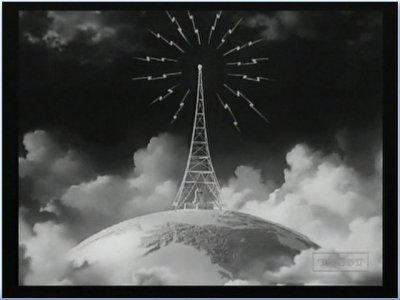
In keeping with all the other threads in here about obscure and irrelevant trivia, who can name which TV stations use guy-wire supported antenna towers and which stations use self-supporting antenna towers? And, are programs better to watch if they're broadcast from an antenna perched atop a tower that looks like a replica of the Eiffel Tower?
 
Companion question: Now that so many of us receive video via cable rather than having our own antenna: Can you tell if your cable system brings you an off-the-air feed from one of those tower-thingies.... or if your cab le system gets a direct digital feed from the station that bypasses the transmitter-and-tower mechanism?

Or is that permitted? Does direct feed trigger some copyright issues that are different than delivering the off-the-air signal?
 
Here in Philly, the two biggest providers of cable, Comcast and Verizon both get the broadcast channels directly by fiber. If the station goes off the air due to antenna problems, the cable customers never lose the signal.
 
Here's the easy version: All modern TV broadcasts originate from guyed masts.
Exceptions for:
- stations broadcasting from very short towers on very high terrain, e.g. Mt. Washington, NH.
- stations broadcasting from multi-purpose buildings, such as the Willis Tower in Chicago.

It is economically infeasible to build a self-supporting tower tall enough to fully serve a television market. I don't believe I've ever seen a self-supporter over 500ft, and most TV masts are 900-1000ft tall.
 
The only self-supported tower I know of anywhere in the Midwest is the tower for WITI in Milwaukee, which is 1,078 ft and still carries the digital signal, though it took nearly a year and mid-day signal shutdowns to do it, while the other stations in Milwaukee were able to get their upgrades in during weekend off-air times.
 
Here's the easy version: All modern TV broadcasts originate from guyed masts.
Exceptions for:
- stations broadcasting from very short towers on very high terrain, e.g. Mt. Washington, NH.
- stations broadcasting from multi-purpose buildings, such as the Willis Tower in Chicago.

It is economically infeasible to build a self-supporting tower tall enough to fully serve a television market. I don't believe I've ever seen a self-supporter over 500ft, and most TV masts are 900-1000ft tall.
WBTV Charlotte, NC has built a taller tower, but they started out with one of these. The reason it was tall enough is that it was on top of a mountain. The mountain was as tall as the tower, so adding the two together meant it was one thousand feet above the surrounding area.
 
I thought KVLY 11 Fargo ND was #1 in the record books. Over 2000 feet. KXJB is a few feet below that.

-crainbebo
 
Impressive, but highly impractical...

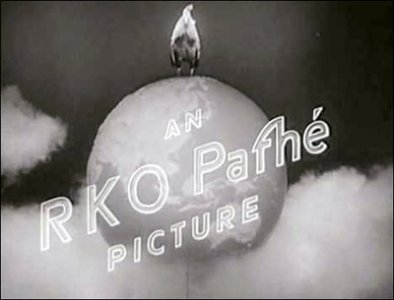
Even less practical was this antenna in the shape of a huge rooster. It was, however, used for talk radio, whose advertisers' main concern is the size of your..."C@c%-a-doodle-doo!"
 

Attachments

  • rko-pathe-logo-2-4001.jpg
    rko-pathe-logo-2-4001.jpg
    57.2 KB · Views: 8
Last edited:
Status
This thread has been closed due to inactivity. You can create a new thread to discuss this topic.


Back
Top Bottom